
| Sourced from 5 independent sources (6 reports) · no points in dispute |
CTV News, Global News, CBC, Le Devoir, and Journal de Québec
Most key facts are confirmed by more than one independent source; a few details come from a single outlet.
9 key facts · 7 corroborated · none disputed
Why some reports were counted once
Journal de Québec and TVA Nouvelles — the same report, published near-identically, counted once.
When several outlets publish the identical article — often because they ran the same wire-service story — we count it as one source, not several, so the count reflects independent reporting rather than how widely one story was republished.
This summary is compiled from the independent sources listed above.
Jeffrey George Ewert, a convicted murderer, was back in custody Saturday after the Correctional Service of Canada suspended his conditional release and issued a suspension warrant while it conducts a further assessment.
Ewert, who is serving a life sentence for second-degree murder and attempted murder connected to violent attacks in British Columbia in 1984, had been on day parole and taking law courses at McGill University in Montreal.
Conditional release suspended
CSC said Ewert had returned to custody while officials undertake “a more thorough assessment of the situation.”
The agency said it may suspend an offender’s conditional release when it has reasonable grounds to believe release conditions have been breached or that a person’s risk can no longer be safely managed in the community. A suspension is followed by a review under the post-release decision-making process, which can include further consideration by the Parole Board of Canada.
CBC News reported that two sources confirmed Ewert had been picked up Friday before his return to custody.
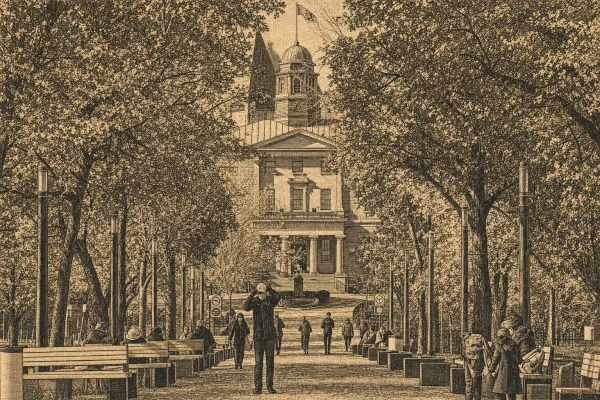
Before the suspension, Ewert’s presence at McGill became a contentious issue among students, bringing competing concerns about campus safety, access to education and rehabilitation into sharp focus.
McGill campus debate deepens
Ewert was granted day parole in 2025 after spending about 40 years in prison. He had been taking law courses at McGill before the university removed him from campus in early October.
The decision prompted multiple petitions. One said students felt unsafe and did not want Ewert on campus. Another argued that excluding him would undermine education and rehabilitation, citing Ewert as an Indigenous man and a survivor of the Sixties Scoop.
McGill said the safety and security of “our students is paramount.” In a message to the university community, McGill senior vice-president Angela Campbell said McGill had received information that could compromise the security of the learning environment.
Campbell also emphasized that “a criminal record, alone, does not prevent a person from studying at McGill,” while saying the university has a duty to protect its community.
The dispute has not produced an easy consensus. Students seeking Ewert’s exclusion have focused on their own sense of safety in a learning environment. Those seeking his return have framed the issue around what rehabilitation and reintegration should mean in practice.
Ewert’s convictions and parole risk assessment
Ewert’s convictions stem from violent attacks in British Columbia in 1984, including an attack on a 15-year-old girl who survived with severe after-effects.
CBC reported that Ewert’s parole was extended for another six months in June 2026. According to CBC, official parole documents described his risk of reoffending as moderate to high, alongside close supervision and clinical follow-up.
CSC said conditional release may be suspended when there are reasonable grounds to believe release conditions have been breached or that a person’s risk can no longer be safely managed in the community. Its suspension decision has placed Ewert back in custody while that assessment proceeds, leaving the wider McGill debate over safety, access to education and rehabilitation unresolved.
French-language reports were read in machine translation; the links go to the originals.
Reader-funded. No ads. No paywall.
The Canada Report is independent, reader-funded Canadian news — no advertisers, nothing behind a paywall, kept free for everyone. If you value it, you can help keep it that way.
Support The Canada Report →Source 1 | Source 2 | Source 3 | Source 4 | Source 5 | Source 6