

Heads up: some of the links in this post are affiliate links. That means if you click and purchase, we may get a commission. It's how we keep this site running without cluttering it with ads.
A vacuum sealer earns its space in a Canadian kitchen when it matches the way you buy food. For a household that portions Costco meat, freezes Okanagan cherries or Fraser Valley blueberries, or preps B.C. salmon for sous vide, an external sealer can reduce freezer burn and make portions easier to label and stack. With grocery prices climbing 4.7%, led by fresh berries and beef, wasting less of what you buy matters more than ever. For cooks who regularly portion soups, stews, sauces and juicy marinades, a chamber machine changes the equation because liquids stay inside the bag during sealing. This guide is a curated selection based on published specifications, prices, ratings and buyer feedback, not firsthand trials. The right choice is not automatically the most powerful machine. Counter space, bag costs, the foods you seal most often and your willingness to manage moisture matter more. Canadian buyers should also confirm that a machine’s listed voltage and plug suit their home before ordering, particularly with imported models.
Quick Overview: Our Top Picks
| Product | Best For | Why We Love It | Price |
|---|---|---|---|
| Versatile food storage | Automatic sealing, a built-in handheld sealer and a rapid marinate mode add flexibility, with a listed five-year limited warranty. | $247.95 CAD | |
| Tight budgets | Affordable starter kit includes bags, hose, multiple modes, and a three-year quality commitment. | $49.99 CAD | |
| Small kitchens | Vertical storage, wet-and-dry settings, and reduced bag waste suit space-conscious everyday food preservation. | $149.95 CAD | |
| Frequent batch sealing | Six functions, strong suction, included rolls, and support for continuous sealing offer useful versatility. | $89.99 CAD | |
| Pantry storage | Cordless jar sealing helps preserve dry goods and leftovers without requiring a full-size vacuum machine. | $35.99 CAD | |
| Serious liquid sealing | Chamber technology handles soups, sauces, marinades, and other liquid-rich foods with less sealing mess. | $871.04 CAD | |
| Compact chamber sealing | Adjustable controls, a four-litre chamber, and replaceable seal bar support repeatable family-size batches. | $509.40 CAD |
FoodSaver 2-in-1 Sealer
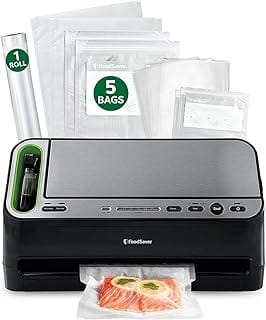
The FoodSaver V4400 is the premium external sealer for a household that wants one machine to handle freezer bags plus compatible containers, canisters and zipper bags. Its retractable handheld sealer avoids a separate attachment for those accessories, while automatic bag detection aims to simplify ordinary vacuum-and-seal jobs. Rapid marinate mode is a useful extra for cooks who make weeknight marinades rather than simply freezing bulk meat. The listing advertises a five-year limited warranty, which would stand out in this category, though the spec sheet says one year, so confirm the terms before you buy. Buyers frequently praise its speed, suction and straightforward operation. The main caution is practical: one buyer notes that very large inexpensive rolls do not fit in the unit. It is also a substantial 4.54 kg machine, so it suits a dedicated prep area more than a tiny condo drawer.
Check FoodSaver 2-in-1 Sealer on Amazon for current availability.
Pros
- Retractable handheld sealer works with compatible containers, canisters and zipper bags
- Automatic bag detection and rapid marinate mode add convenience
- Listed with a five-year limited warranty (confirm terms before buying)
Cons
- A buyer reports that very large rolls may not fit
- At 4.54 kg, it is not the most compact storage choice
Bonsenkitchen Vacuum Sealer
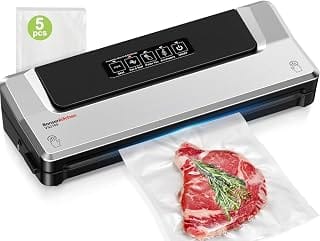
Bonsenkitchen’s VS2100 is the budget-minded external sealer for someone who wants to start freezing meal portions, meat or sous vide bags without committing much counter space or money. It includes five vacuum bags, an air-suction hose, two external interfaces and instructions, so there is enough in the box to learn the routine. Four modes offer more flexibility than a bare-bones seal-only unit, and the manufacturer states it can seal 30 bags continuously in 15 minutes. Its three-year quality commitment is generous in this price class. Buyer feedback is mostly positive about ease of use and routine sealing, though one recurring reality is worth taking seriously: some users say a good seal can take a few attempts. This is a practical value pick, not the choice for regular liquid-heavy work.
Check Bonsenkitchen Vacuum Sealer on Amazon for current availability.
Pros
- Starter kit includes bags, suction hose and external interfaces
- Four modes and stated continuous-sealing capability
- Three-year quality commitment with lifetime technical guidance
Cons
- Some buyers report occasional inconsistent seals
- Not designed as a chamber solution for soups or sauces
FoodSaver PowerVac Sealer
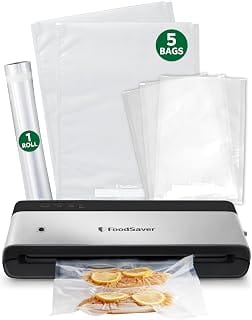
The FoodSaver PowerVac VS0150 is aimed squarely at the small-kitchen buyer. Its vertical storage design is its strongest argument: a sealer that can stand in a cupboard is more likely to come out for weekday leftovers and bulk grocery portions. Dry and moist settings cover the basics, and the built-in alignment drip tray is removable for cleanup. It comes with an 11-inch by 8-foot roll, three quart bags and two gallon bags, letting a new owner make a few different portion sizes immediately. The manufacturer also states 35% less bag waste than previous FoodSaver models. Buyers commonly describe it as effective for the price, but one review notes that closing it for vacuuming can be a little difficult. Choose it for constrained space, not for high-volume production or liquid foods.
Check FoodSaver PowerVac Sealer on Amazon for current availability.
Pros
- Stores vertically to save counter and cupboard space
- Dry and moist settings with a removable alignment drip tray
- Includes a roll plus quart- and gallon-sized bags
Cons
- A buyer reports the lid can be difficult to close for vacuuming
- Handheld sealer for other FoodSaver accessories is sold separately
Mesliese Vacuum Sealer
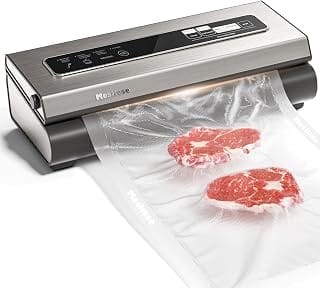
Mesliese’s 6-in-1 sealer is a strong middle-ground choice for a frequent meal-prepper who wants more controls than a basic external machine. It offers dry and moist modes, normal and soft vacuum options, seal-only and vacuum-and-seal functions, plus a hose for compatible canisters, jars or wine bottles. A stated maximum 90 kPa suction level, 12 mm heating strip and five-layer heating wire suggest an emphasis on firm, repeatable bag seals. The package is notably complete: two 8-inch by 6.6-foot rolls, five BPA-free 11-inch by 16-inch bags, a hose and replacement sealing sponges are included. It is compact at 14.9 by 5.7 by 3.5 inches and carries a five-year warranty. Buyers often mention simple setup and reliable results. Still, it remains an external sealer, so wet soups and loose sauces need pre-freezing or another method.
Check Mesliese Vacuum Sealer on Amazon for current availability.
Pros
- Dry, moist, normal and soft settings suit different foods
- Generous bundle includes rolls, pre-cut bags, hose and replacement gaskets
- Five-year warranty and compact stated dimensions
Cons
- Liquid-rich foods still require care because this is an external sealer
- The many modes may be more than an occasional user needs
UNERVER Mason Jar Sealer
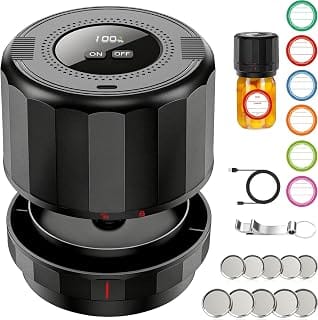
The UNERVER Mason jar vacuum sealer fills a narrower but useful role: keeping dry pantry foods such as nuts, coffee, cereal and spices in Mason jars after opening a large package. It works with regular- and wide-mouth Mason jar lids, uses one-button operation and includes 12 label papers with a pen. Its lightweight cordless format is far easier to store than a full bag sealer, making it appealing for a single-person household or a pantry-focused buyer. Reviewers often mention strong seals and easy operation; one specifically appreciated the included tool for removing a tightly sealed lid. The limitation is decisive, not minor. This is not a bag vacuum sealer for freezer portions, and vacuum-sealing a jar is not the same as safe home canning. The listed 12-month warranty is also shorter than several full-size alternatives.
Check UNERVER Mason Jar Sealer on Amazon for current availability.
Pros
- Fits regular- and wide-mouth Mason jar lids
- Cordless, compact format is easy to store
- Includes labels, pen and a 12-month warranty
Cons
- Cannot replace a bag sealer for meat, freezer portions or sous vide
- Vacuum-sealed jars are not a substitute for proper canning
Avid Armor USV32 Chamber Sealer
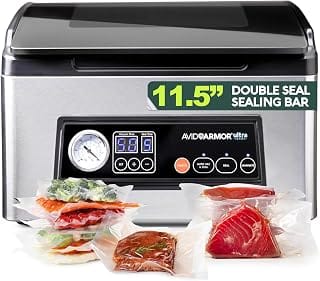
The Avid Armor USV32 is for the serious freezer-stock builder: someone processing a fall moose or deer, a side of Prairie beef, a summer's catch from cottage country, large meal-prep batches or many liquid-rich foods. As a chamber sealer, it can seal soups, sauces, marinades and fresh meat juices without relying on the liquid-management tricks external sealers need. Its 11.5-inch sealing bar is useful for broader pouches, and the stainless-steel construction and 11.98 kg weight point to a machine intended to stay on a stable counter or cart rather than move in and out of a cabinet. Buyer feedback repeatedly highlights powerful vacuum performance, strong seals and an easier batch workflow. There is no escaping the trade-off. It takes space, costs far more than an external model and is excessive for somebody sealing a few chicken breasts each month. It runs on a standard household outlet.
Check Avid Armor USV32 Chamber Sealer on Amazon for current availability.
Pros
- Chamber design is suited to soups, sauces, marinades and juicy foods
- 11.5-inch sealing bar supports wider bags
- Buyers frequently praise seal strength and batch-work convenience
Cons
- Heavy 11.98 kg format needs committed counter or storage space
- A high-cost option for occasional freezer portions
Avid Armor USV20 Chamber Sealer
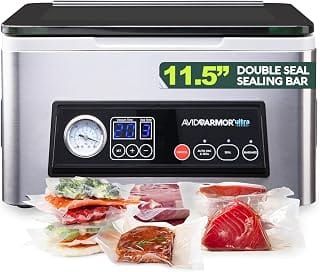
The Avid Armor USV20 is the chamber-sealer recommendation for a home cook who needs real liquid capability but has less room than a high-volume machine demands. Its 4 L stainless-steel chamber measures 12.25 by 8.5 by 3 inches, while the full body is listed at 14 by 12 by 8.25 inches and 7.85 kg. Adjustable vacuum time from 15 to 60 seconds and seal controls allow more deliberate handling of delicate foods, fresh meat, soups and marinades. The 11.5-inch heating bar and compatibility with smooth pouches up to 11 by 10 inches make it especially compelling for frequent prep, where pouch costs matter. Buyers often mention consistent sealing and the double seal at the bag edge. The caveats are the premium upfront investment and a small learning curve with settings. It runs on a standard household outlet.
Check Avid Armor USV20 Chamber Sealer on Amazon for current availability.
Pros
- Chamber design handles wet foods and marinades
- Adjustable 15- to 60-second vacuum time and seal controls
- Uses smooth pouches up to 11 by 10 inches
Cons
- Premium upfront cost and 7.85 kg footprint
- Buyers mention a learning curve for selecting settings
How to choose the best vacuum sealer in Canada
Start with your freezer habits, not a feature list. An external sealer is the sensible choice for most homes that freeze dry or lightly moist foods in portions: chicken breasts, steaks, coffee, berries, vegetables, jerky and leftovers that have been chilled first. It is usually smaller, less expensive and suited to embossed channel bags or rolls. A chamber sealer costs more and occupies more room, but it is the better tool for soups, sauces, marinades and fresh meat with a lot of purge because the bag sits inside a sealed chamber rather than hanging outside the machine.
Then consider volume. Someone sealing a few portions after grocery shopping can favour compact storage and simple controls. A hunter, angler, gardener or bulk shopper may value continuous sealing, a wider seal bar and controls for soft foods. Bag spending deserves equal attention. External machines commonly need textured bags, while chamber machines use smooth pouches that can cost less over time. Finally, check included bags, warranty terms and the stated electrical requirements. A machine that is excellent on paper is a poor Canadian purchase if its plug or voltage is not suitable for your kitchen.
Types of vacuum sealers (chamber vs. external)
External vacuum sealers pull air from an open-ended bag, then heat-seal the edge. They are the familiar countertop style and are a practical fit for dry goods, frozen meat, meal-prep portions and sous vide bags. Their main limitation is wet food: liquid can travel toward the sealing channel, interrupt the vacuum or compromise the seal. Freezing a sauce or patting meat dry before sealing helps.
Chamber sealers place the whole bag in a chamber. As air leaves the chamber and bag together, liquid is less likely to be drawn out of the pouch. That makes them a strong match for chili, stock, stews, marinades and juicy cuts. They can also be gentler on fragile foods when vacuum time is adjustable. The trade-off is plain: chamber units are heavier, larger and much dearer upfront. Their major long-term advantage is compatibility with smooth pouches, which are generally less specialized than textured external-sealer bags. A jar-only vacuum device is a separate category, useful for pantry storage but not a substitute for sealing freezer bags.
Key features to look for
Choose controls that solve a real food problem. A moist setting is useful for meat and cooked foods with surface moisture; a dry setting suits beans, coffee and dehydrated foods. Soft or adjustable vacuum control helps protect delicate foods, while a seal-only button lets you make bags from a roll or reseal a package without vacuuming it.
For frequent batch work, look for stated continuous-sealing capacity and an easy-to-clean drip area. An integrated cutter and roll storage can keep a busy prep session moving, though neither matters much if you mainly use pre-cut bags. A hose or external port can support compatible canisters, jars or bottle stoppers, but confirm the accessories you want are included or available separately. Seal width matters too: a wider heating strip is intended to create a more substantial seal, while a chamber sealer with adjustable seal time gives more control over different pouch materials. Warranty length can be meaningful, but read it alongside the manufacturer’s stated support and replacement terms. A long warranty is useful only if the seller honours it.
Vacuum sealing bags and rolls: what to buy
Buy bags for the machine type first. External sealers generally use textured or channel bags because their surface helps air travel toward the vacuum port. Smooth bags are typically intended for chamber sealers and may not vacuum properly in a standard external machine. Do not assume every bag is interchangeable simply because it fits under the seal bar.
Pre-cut bags are quick for routine portions. Rolls create less wasted material when you are packing awkward cuts, long fish fillets or family-sized portions, since you make each bag to length. Leave enough empty material above the food for a clean, dry seal and for a second seal if desired. For freezer use, choose bags made for vacuum sealing rather than ordinary zip bags. Keep rolls and pouches clean and dry, and avoid overfilling. For chamber machines, the ability to use smooth pouches can reduce ongoing supply costs for households that seal large quantities. Jar systems require compatible Mason jar lids and are best reserved for dry pantry goods and chilled leftovers rather than replacing proper heat canning.
Food safety and storage tips for vacuum sealing
Vacuum sealing extends useful storage quality; it does not make food shelf-stable or replace safe handling. Refrigerate or freeze perishables promptly, keep your refrigerator cold, and use clean hands, utensils and work surfaces. Divide large packages into meal-sized portions so you do not repeatedly thaw and refreeze food. For soups and leftovers you would rather not bag at all, a set of freezer-safe meal prep containers is the simpler route. Label every bag or jar with its contents and date. A freezer full of anonymous packages is where good intentions go to waste.
Cool cooked foods before sealing, but do not leave them at room temperature longer than food-safety guidance allows. For soups, sauces and marinades in an external sealer, freeze the liquid until firm or at least very cold before sealing; otherwise it can enter the vacuum channel. Vacuum-sealed foods can still spoil if stored incorrectly, and low-oxygen packaging is not a cure for poor temperature control. Thaw frozen food safely in the refrigerator, in cold water when appropriate, or by microwave if cooking immediately afterward. Follow Canadian food-safety guidance for storage times, cooking temperatures and home-preserved foods.
How to use a vacuum sealer (step-by-step)
First, prepare the food. Pat raw meat dry, cool cooked food safely, and pre-freeze loose berries or wet items when an external sealer is involved. Cut a bag with several centimetres of clear space above the food. If using a roll, seal one end before filling it.
Place food in a single, reasonably flat layer. Keep oil, crumbs and moisture away from the bag’s top edge, as residue can interfere with a heat seal. Lay the open end flat in the machine’s sealing area according to its instructions, choose dry, moist, soft, manual or vacuum-and-seal mode as appropriate, then start the cycle. Check that the seal line is continuous and that the bag holds its vacuum after a short pause. If it does not, cut below the failed seal and try again with a cleaner, longer bag.
For chamber models, arrange the open end of a smooth pouch across the sealing bar inside the chamber and select the vacuum and seal settings. For jar sealers, use compatible lids, make sure the jar rim is clean, then use the supplied adapter. Label and refrigerate or freeze food right away.
Common mistakes to avoid
The most common error is trying to vacuum a wet bag in an external machine without managing the liquid. Chilling or pre-freezing the food can prevent a messy channel and a weak seal. Another is filling the bag too high. Leave a clean, dry margin at the top so the heating strip can do its job.
Do not use vacuum sealing as a substitute for canning. Removing air from a Mason jar does not make low-acid foods shelf-stable. Treat vacuum-sealed jars of nuts, coffee, cereal and leftovers as pantry or refrigerated storage according to the food involved, not as preserved canning goods. Avoid sealing sharp bones or shell fragments without protecting the bag; a folded piece of suitable material around a sharp edge can help prevent punctures. Delicate foods can be crushed under a strong vacuum, so use a soft setting, shorter vacuum time or freeze them first. Finally, resist storing every food indefinitely. Date labels and a simple freezer rotation system are still necessary.
Maintenance and troubleshooting
Unplug the machine before cleaning. Wipe the exterior and sealing area with a soft damp cloth, and follow the manufacturer’s instructions for removable drip trays, chambers and accessories. Never let food residue build up around the seal bar or gasket. Store the lid as directed rather than forcing it shut for long periods if the manual advises against it; this can help protect the sealing surfaces.
If a bag will not seal, start with the basics: check that the bag is positioned correctly, the open end is dry and wrinkle-free, and no food is caught in the sealing zone. Recutting the bag to create a clean edge often solves the issue. If the machine removes little air, inspect the bag for punctures and make sure it is the correct textured or smooth type for that machine. For a chamber sealer, check that the pouch lies correctly on the sealing bar and that the lid gasket is clean. Replace worn gaskets, sealing strips or chamber seal bars only with suitable parts. If problems persist, use the manufacturer’s warranty or technical-support channel rather than continuing to operate a malfunctioning appliance.
Frequently asked questions about vacuum sealers in Canada
Which vacuum sealer is best for wet foods like soups and marinades?
A chamber sealer is the better fit for frequent soups, sauces and marinades because the bag is sealed inside the chamber, rather than having liquid pulled toward an external machine’s vacuum port. The Avid Armor USV20 and USV32 are the relevant choices here. The USV20 adds adjustable vacuum time and seal controls, while the USV32 has an 11.5-inch sealing bar and is positioned for liquid-rich foods. For occasional wet foods with an external sealer, chill or freeze the food first.
Is a compact vertical-storage sealer better for a small Canadian kitchen?
It can be. The FoodSaver PowerVac VS0150 is designed to store vertically, which makes sense for a condo kitchen or a cupboard with limited shelf width. It also has dry and moist settings and a removable bag-alignment drip tray. The compromise is that compact external sealers do not offer the liquid-handling flexibility of a chamber machine, so it is best for typical freezer portions rather than regular batches of soup or sauce.
Should I choose a chamber sealer or external sealer for sous vide?
An external sealer is sufficient for many sous vide cooks sealing dry or lightly moist proteins in standard portions. It is smaller and has a much lower initial cost. Choose a chamber sealer if you regularly seal marinades, very juicy meat, fish or prepared sauces for sous vide. Chamber models also accept smooth pouches, which can be attractive for frequent prep. The choice comes down to the foods you bag, not sous vide alone.
Which option offers lower long-term bag costs for frequent meal prep?
A chamber sealer is generally the stronger long-term bag-cost choice because it uses smooth pouches. The Avid Armor USV20 specifically states compatibility with smooth pouches up to 11 by 10 inches. External sealers commonly require textured bags or rolls, which are more specialized. The upfront cost and counter space of a chamber unit are much higher, so the savings make the most sense for people sealing a substantial volume of meals.
Is a five-year warranty worth choosing over shorter coverage?
For a machine used often, five-year coverage is a meaningful advantage if the manufacturer’s support is accessible and the warranty terms suit your situation. The Mesliese 6-in-1 lists five-year coverage and the FoodSaver V4400 advertises a five-year limited warranty (its spec sheet says one year, so confirm), while the Bonsenkitchen lists a three-year quality commitment and the UNERVER jar sealer lists 12 months. Warranty should not override the machine type: a five-year external sealer is still not the right tool if liquid-rich foods are your main reason for buying.