
Based on coverage from Global News, The Epoch Times, Castanet, Times Colonist, Kelowna Capital News, and Salmon Arm Observer.
A private member’s bill inspired by the killing of Kelowna, B.C., mother Bailey McCourt is now officially law.
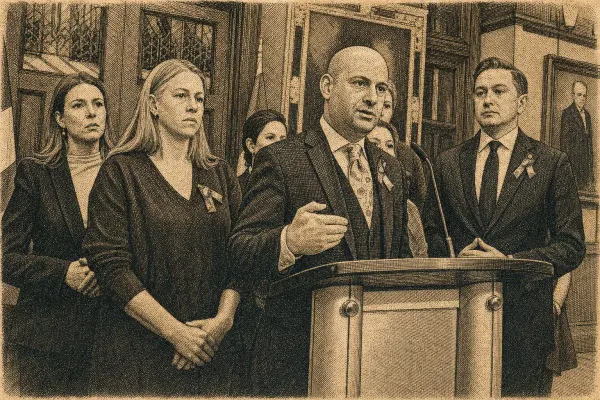
Bill C-225, widely known as Bailey’s Law, received royal assent Wednesday, a day after it passed third reading in the Senate. That final step means the bill is locked in, and the Criminal Code changes are expected to take effect within 30 days, according to Conservative MP Frank Caputo, who sponsored it.
McCourt’s aunt and family spokesperson Debbie Henderson called it a “bittersweet day” on Parliament Hill, saying McCourt’s daughters will know their mom “has left behind a legacy… that will make a difference.”
Bailey’s Law becomes Canadian law
Royal assent is the formal moment when a bill becomes law. Caputo said that means “nothing can change it now,” and that the Criminal Code updates will be on the books within about a month.
Several reports also point to how unusual the timeline is for a private member’s bill. Caputo said he doesn’t think “we’ve ever seen a private member’s bill make it through in less than a year,” and he credited bipartisan support and sustained pressure from McCourt’s family.
Kelowna killing that sparked Bill C-225
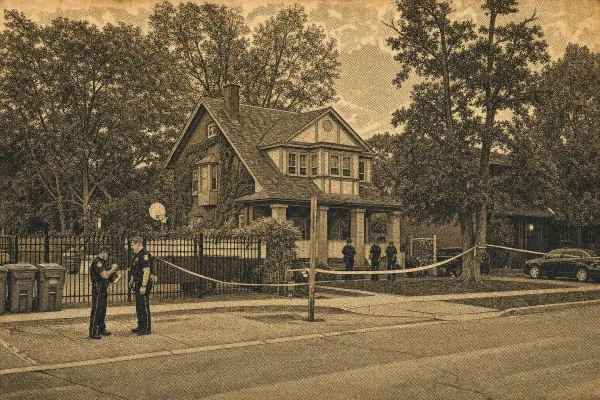
Bailey McCourt was 32 and a mother of two. She was killed after a daytime attack in a Kelowna parking lot on July 4, 2025.
Her estranged husband, James Plover, is charged with first-degree murder. Sources differ slightly on the trial schedule: The Canadian Press says he is scheduled to stand trial in 2027, while Castanet reports a September 2027 trial date.
One report also adds context around bail, saying the alleged killer was a former partner who had been released on bail hours before the attack.
New Criminal Code offence for intimate partner violence
One of the biggest practical changes is a new, distinct Criminal Code offence for violence against an intimate partner. Instead of being grouped under general assault, incidents can be tracked specifically as intimate partner violence.
Caputo framed that shift as a major change in how the justice system labels and measures this kind of harm: “No longer will you have assault being the charge when somebody abuses their intimate partner.”
First-degree murder tied to coercive control
Bailey’s Law also changes how certain intimate partner killings can be charged.
Under the new law, first-degree murder can apply when a killing happens as part of a pattern of coercive or controlling conduct in an intimate relationship, even when traditional “planning and deliberation” may be harder to prove. Multiple outlets describe this as allowing first-degree murder charges in intimate partner killings regardless of whether the act was premeditated, if that coercive-control pattern is established.
The bill also affects sentencing in lesser homicide outcomes. In manslaughter cases connected to intimate partner violence, sentencing provisions would require courts to consider parole ineligibility ranges of 10 to 25 years. Other reports describe it as requiring the court to consider life sentences in some manslaughter cases, with no parole eligibility for at least 10 years.
Henderson said tougher sentencing provisions matter for families, describing the relief of not having to face parole hearings “anytime soon” when longer ineligibility periods apply.
Bail and evidence rules also tightened
Two other reforms in Bill C-225 target the early and messy stages of criminal cases.
First, it extends how long police can retain seized evidence from 90 days to 180 days, which is meant to reduce pressure in complex investigations involving digital or forensic material.
Second, it strengthens reverse onus bail provisions. That means an accused person with a prior intimate partner violence conviction, or an existing peace bond, would have to show why their detention is not justified.
Even with the bill now law, both Caputo and Henderson argue the work is not done. Henderson is calling on B.C. to add protections such as GPS monitoring with geofencing and real-time alerts for victims.
McCourt’s family is also preparing to mark the first anniversary of her death on July 4, inviting the community to Cupcasions on Kent Road from 10 a.m. to 2 p.m. for a fundraiser supporting further advocacy on intimate partner violence.
Support Independent Canadian News Analysis
The Canada Report is supported by readers like you. If this article helped you understand what’s happening, you can support our work with a one-time tip.
Support The Canada ReportSource 1 | Source 2 | Source 3 | Source 4 | Source 5 | Source 6