
Heads up: some of the links in this post are affiliate links. That means if you click and purchase, we may get a commission. It’s how we keep this site running without cluttering it with ads.
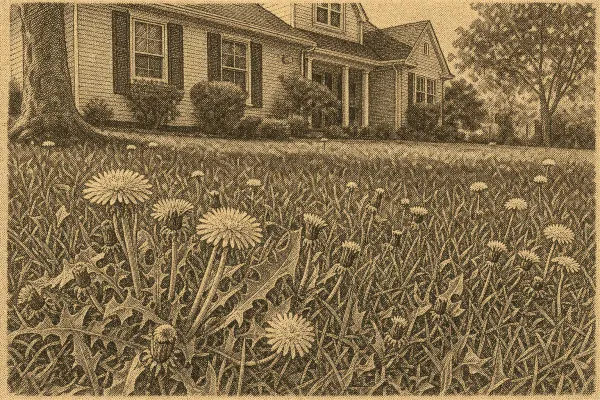
Late April in Southern Ontario: the snowbanks are finally gone, the daytime high nudges 12°C, and your lawn—freshly revealed from months of crusty snowmelt and a little salt splash from the road—has somehow turned aggressively yellow. Not from spring sunshine. From dandelions. They’re lining the sidewalk seams, wedging into driveway cracks, and colonizing every thin patch of turf like they paid rent.
If you’ve tried mowing them down, you already know the bad news: those plants aren’t annual “one-and-done” weeds. Their taproots can drive 20–30 cm deep, and if even a chunk stays behind, they’ll often bounce back. Add a gusty week in Calgary or Regina (those puffball seeds travel), or the steady spring damp of the Lower Mainland, and it can feel like you’re losing ground overnight.
This guide is about getting to a practical near-zero presence—without wrecking your grass. We’ll cover why they keep returning, how to tell dandelions from clover at a glance, and the timing that matters most (spring prevention, fall root control). You’ll also get clear, Canada-appropriate options: hand removal that actually works, realistic “natural” spot treatments, and what chemical products may or may not be allowed where you live. The goal isn’t a single magic spray. It’s a repeatable, season-by-season plan that makes your yard a lousy place for dandelions to live.
Why dandelions keep coming back in Canadian lawns
Dandelions are built for persistence, and our climate gives them plenty of openings. The plant you see is only half the story: beneath the rosette of jagged leaves is a taproot that commonly runs 15–30 cm deep, and in loose soil it can go farther. When you mow, you’re basically giving it a haircut. Even when you snap off the top while pulling, a small chunk of root can regenerate into a new plant, especially once soil warms in spring.
They also spread like crazy. Each puffball can carry hundreds of seeds, and in windy prairie cities like Regina or Lethbridge those parachutes travel across open lots and new subdivisions. In older neighbourhoods, they hopscotch along boulevard strips and sidewalk seams, then move into thin turf. Dandelions overwinter well, too—under snow cover they’re insulated, and they’re ready to grow the moment the ground thaws.
A few Canada-specific factors tilt the playing field in their favour:
- Freeze–thaw cycles loosen soil and create tiny gaps where seedlings take hold (common in Southern Ontario, the Prairies, and parts of Atlantic Canada).
- Salt splash and compaction along driveways and sidewalks weaken grass, leaving bare patches.
- Spring moisture followed by early-summer heat (think 28–32°C stretches) stresses cool-season turf, especially if it’s cut short.
Dandelions vs clover trips people up. Clover has small round leaflets (often with a pale “V”), creeps along the surface, and makes white or pinkish pom-pom flowers. Dandelions have a single yellow flower on a hollow stem and a leaf rosette that hugs the ground. Clover often signals low nitrogen and can be a helpful “green filler” in mixed lawns; dandelions tend to capitalise on thin turf and disturbed soil.
Expectations matter: “eradication” is a trap. A realistic goal in a residential yard is near-zero presence—meaning you might still spot a few each season, but you’re preventing flowering, removing roots at the right times, and keeping grass thick enough that new seedlings struggle.
Best time to remove dandelions in Canada for long-term results
Timing is the difference between a weekend of satisfying weed pulls and a summer of déjà vu. The two best windows are early spring (before flowers mature) and fall (when the plant is fuelling its root for winter). Spring removal stops seed production; fall work hits the taproot when the plant is actively storing energy—often your highest-impact effort of the year.
In practical terms, aim for soil that’s moist but not muddy. The day after a steady rain, or after a deep watering, is perfect: the ground gives, and you’re more likely to extract the full root instead of snapping it. Avoid frozen ground and avoid yanking weeds during heat stress—when turf is already struggling, you’ll create bigger bare patches.
Regional cues help more than calendar dates:
- Coastal BC (Lower Mainland, Vancouver Island): you can often start in late February or March during mild spells, then do a major fall push in September–October.
- Southern Ontario (GTA to Windsor): spring work often lines up with late April into May; fall is typically mid-September through October.
- Prairies (Calgary, Saskatoon, Winnipeg): spring can be compressed—watch for consistent daytime highs above 10°C and soil thaw; fall work is excellent from late August into September before hard frosts.
- Atlantic Canada (Halifax, Saint John): spring can be cool and damp; you’ll often get a longer fall window into October.
A simple seasonal rhythm that works across most of Canada:
- Spring (4–12°C soil warming): remove plants before they set seed; patch thin turf immediately.
- Summer (20–30°C): focus on turf health; only spot-treat or pull after rain. Respect drought restrictions—saving your lawn matters more than chasing every weed.
- Fall (cool nights, active growth): your main root-focused push; overseed and feed to thicken turf.
- Winter: clean and sharpen tools, plan seed and soil products, and note where weeds clustered (edges, salt zones, compacted paths).
If you only have energy for one season: choose fall. It’s where long-term progress is made.
Best dandelion removal methods for near-zero presence without wrecking your lawn
For most homeowners, the most reliable route is a mix of root-first removal plus immediate repair so weeds don’t reclaim the space. Mechanical removal works because it’s targeted and doesn’t depend on product rules in your province.
Hand removal that actually works
Use a tool designed for taproots, not a trowel that tears up a dinner-plate-sized crater. Good options in Canada include a fishtail weeder/dandelion knife (great control in tight turf) or a stand-up weed puller (easier on your back for larger lawns). The technique matters:
1. Work when soil is damp.
2. Slide the blade down beside the root at a slight angle.
3. Wiggle to loosen, then lift steadily—don’t yank.
4. If it snaps, dig once more to remove the remaining chunk rather than “hoping it won’t return.”
Then do the part many people skip: backfill and reseed the hole the same day. Sprinkle a pinch of topsoil or compost, add grass seed, press it in with your shoe, and keep it lightly moist for 10–14 days. Bare soil is an invitation.
Hardscapes and cracks
Dandelions love driveway edges, pavers, and gravel where turf can’t compete. For these spots:
- Use a crack weeder/scraper for the crown and root.
- Boiling water works well on patio seams (not lawns).
- Flame weeding can be effective on gravel, but only where permitted and safe—avoid dry conditions and keep well away from mulch and siding.
Natural sprays
Horticultural vinegar and soap mixes can scorch leaves, but they often don’t kill the full root, so treat them as suppression for hardscape weeds or small outbreaks. They can also burn skin and eyes—handle like a real chemical, because it is.
Chemical options and Canadian rules
Cosmetic lawn pesticides are restricted in many provinces and municipalities (Ontario, for example, has strict limits). Where permitted, you may see selective broadleaf herbicides for lawns or iron-based products marketed as lower-risk. Pros: less labour, useful for heavy infestations. Cons: you must follow the label exactly, avoid windy days, and protect pollinators—never spray blooming weeds.
If you’re stuck in a cycle of re-growth, it’s usually because the lawn stays thin. Removal is step one; the long game is turf density.
Long-term dandelion solutions that make your lawn inhospitable to weeds
If you want a yard that *stays* clean-looking, you’re really building a lawn that doesn’t leave dandelions room to land. The goal is dense turf, resilient roots, and fewer stressed patches along edges and high-traffic routes.
Thicken the turf
Cool-season grasses (common across most of Canada) respond best to overseeding in late summer to early fall when nights cool off and weeds slow down. Aim for a simple approach: after you remove a dandelion, don’t leave a crater.
- For small holes: pinch of soil + seed + foot-tamp.
- For larger thin areas: rake lightly, broadcast seed, then topdress with 0.5–1 cm of compost.
- Keep the surface consistently damp until germination (often 7–21 days depending on species and temperature).
Mowing is another quiet superpower. Set your mower higher—around 7–9 cm for most lawns—so grass shades the soil and dandelion seedlings struggle. Mow often enough that you’re not removing more than a third of the blade at once. Short, scalped turf is basically a welcome mat for weeds.
Fix the soil issues dandelions exploit
Compaction near walkways and play areas is a classic. If your screwdriver won’t push into the lawn easily, consider core aeration (pulling plugs, not spike aeration) in fall. Follow with compost topdressing to improve structure over time.
A basic soil test (often available through garden centres or provincial labs) helps you avoid guessing. Watch for:
- pH extremes that stress turf
- low nutrients that slow recovery after pulling weeds
- imbalances from repeated “quick fixes”
Water and fertilise for resilience
Deep, infrequent watering encourages grass roots to chase moisture—think a thorough soak, then letting the top few centimetres dry before watering again (adjust for local restrictions). In many regions, a fall-focused fertilising plan supports root growth without pushing fragile, disease-prone summer growth.
Edges are where invasions start
Sidewalk seams, driveway borders, fence lines—these spots get heat, salt, and foot traffic. A monthly “edge walk” with a crack tool and a handful of seed for nearby thin turf prevents the slow creep that turns into a yard-wide problem.
Step-by-step Canadian action plan for a dandelion-free looking yard
You don’t need a perfect lawn program. You need a repeatable routine that matches Canadian seasons and doesn’t fall apart the first time a heat wave hits. Here’s a workflow that gets you to “practical near-zero” over a couple of seasons.
Week 1–2 in spring (after thaw, soil workable)
Walk the property with a bucket and a weeding tool. Focus on the hotspots first: south-facing slopes, boulevard strips, and anywhere salt piled up.
- Pull or spot-treat before flowers mature.
- Immediately fill and seed any holes.
- If you’re seeing lots of bare patches, plan an overseed rather than chasing individual weeds forever.
Weeks 3–8
Set your mowing height to 7–9 cm and stick with it. This alone reduces new seedlings.
- Keep mower blades sharp (ragged cuts stress grass).
- Water only if needed; if you must irrigate, do it early morning.
- Stay on top of driveway cracks and pavers—don’t let them become seed factories.
Early summer (hot, dry stretches)
When temperatures climb into the high 20s°C, shift priorities. Protect turf first.
- Spot control only, ideally after rain.
- Skip aggressive pulling in baked soil—it creates bigger wounds than weeds.
- If compaction is obvious but it’s scorching out, wait for late summer/fall for aeration.
Late summer to fall (your biggest gains)
This is where the lawn changes character.
- Core aerate if the lawn is compacted.
- Overseed thin areas and any spots you repaired earlier in the year.
- Apply a fall fertiliser (follow local guidance and label directions) to build roots going into winter.
Track progress without obsessing
Pick a simple metric: count weeds in a 9 m² (about 100 sq ft) area in three spots (front, back, side). Write it down monthly. If numbers aren’t dropping season to season, escalate: improve overseeding, address compaction, or consider a licensed pro—especially for large lots or repeated failures.
Done consistently, this plan doesn’t just knock dandelions back. It changes the yard so they have fewer places to start.
How to Choose the Best Dandelion Control Plan for Canadian Conditions
For near-zero dandelion presence, choose a plan that matches your region, lawn type, and tolerance for chemicals versus natural approaches. In coastal B.C., mild winters and long growing seasons mean repeat pressure; in the Prairies, hot, dry spells and compacted soils can favour tap-rooted weeds; in Southern Ontario and the Maritimes, spring/fall moisture drives fast regrowth. Timing matters: target plants when they’re actively moving energy to roots (cooler shoulder seasons, roughly 10–20°C), and expect follow-ups. Also decide whether you’ll accept clover as a “friendly” groundcover or aim for a uniform turf, because that choice changes what products and practices make sense.
Key Features to Look For
Seasonal Timing and Repeatability
The best results come from scheduling rather than one-off treatments. Plan major interventions in early fall (often September) and again in spring once growth is steady and daytime highs sit around 10–20°C. Avoid aggressive work during heat waves above ~25°C or drought restrictions common in parts of Alberta and Saskatchewan, when turf is stressed and recovery is slow. Whatever method you pick—digging, spot treatments, or overseeding—build in a second pass 2–4 weeks later and a check after the first mowing cycle to catch misses before they flower and seed.
Root-Kill Capability (Taproot Depth)
Dandelions return when the taproot is snapped and left behind. Look for tools and products that reliably address the full root: a long weeding fork, a stand-up puller that extracts a deep plug, or a spot-applied herbicide labelled for broadleaf weeds (chemical option). For organic-leaning yards, repeated manual removal plus thick turf competition is the realistic path; “burn-down” sprays may scorch leaves but often spare roots. If you’re aiming for minimal recurrence, prioritise methods proven to kill or remove the root, not just the top growth.
Lawn Recovery and Competition Strategy
Elimination is half removal, half replacement. Choose a plan that includes overseeding and soil improvement so grass fills gaps quickly. In shady or compacted areas, dandelions exploit thin turf; aeration, topdressing, and a suitable seed mix (sun vs shade) help your lawn outcompete new seedlings. Keep mowing height higher (about 7–9 cm) to shade soil and reduce germination. Fertility matters too: steady nutrition supports turf density, but avoid over-fertilising during summer stress.
Product and Method Fit: Chemical vs Natural
Decide upfront what “acceptable” means for your household and local rules. Chemical spot treatments can be efficient for scattered plants and are often the fastest route to near-zero, but always follow label directions and check provincial/municipal restrictions (many areas limit cosmetic pesticide use). Natural approaches rely on persistence: hand-pulling after rain, thickening turf, and targeted spot tactics like boiling water on driveway cracks (not lawns). If clover is present, note it’s often more tolerant of some broadleaf controls and can be a deliberate alternative groundcover—great for pollinators, less ideal if you want a uniform grass-only look.
Frequently Asked Questions
Q: How do I get rid of dandelions in my lawn without wrecking the grass?
Start with targeted removal, not blanket treatments. After a rain (or a deep watering), use a dandelion fork to pry out the entire taproot; if you snap it off, it often regrows. For scattered plants, spot-treat only the rosettes rather than the whole lawn. Then thicken turf so new seeds can’t establish: mow higher (about 7–9 cm / 3–3.5 in), overseed thin areas, and topdress with a thin layer of compost in spring or early fall. In much of Canada, the “near zero” look comes from combining removal with better turf density, not from one single product.
Q: Why are dandelions so hard to eliminate long-term?
Dandelions are persistent because of their deep taproot, long seed season, and ability to thrive in compacted or nutrient-poor soil. A single plant can reseed widely on windy days, and even small root fragments can re-sprout. They also take advantage of bare spots caused by winter kill, pet urine, drought stress, or heavy foot traffic—common issues from Southern Ontario subdivisions to Prairie yards. Long-term success usually means fixing the conditions they like: relieve compaction (core aeration), keep grass dense with overseeding, and avoid scalping. Think of them as a “symptom plant” that shows where the lawn is thin or stressed.
Q: What’s the best time of year to remove dandelions in Canada?
Early fall is often the most effective window because dandelions are sending energy back into their roots for winter, so removal or spot treatments hit them when they’re most vulnerable. Spring also works well, especially right after rain when the soil is soft and taproots pull out more cleanly. Avoid trying to “win” in midsummer heat in places like the Prairies or Interior BC—stressed grass opens space for new weeds. If you’re trying to prevent seed spread, remove flowers before they puff, but don’t panic if a few go to seed; a thick lawn is what stops the next generation.
Q: Chemical vs natural approaches—what actually works in Canadian yards?
Natural approaches (hand-digging, improving turf density, corn gluten meal as a pre-emergent in some cases, and spot applications of chelated iron products where available) can get you very close to weed-free, but they require consistency. Chemical options are more limited for homeowners in many provinces due to cosmetic pesticide rules (for example, Ontario and Quebec restrict many traditional herbicides). Where permitted, selective broadleaf herbicides can reduce labour, but they still won’t solve thin turf or compacted soil. For most homeowners, the most reliable “Canadian-compliant” plan is mechanical removal plus lawn renovation: aerate, overseed, topdress, and mow high.
Q: Dandelions vs clover—should I treat them the same way?
Not exactly. Dandelions are deep-rooted and usually signal compaction or thin turf, while clover often shows up when nitrogen is low. Many Canadian homeowners in Atlantic Canada and the Lower Mainland even choose to keep some clover because it stays green in summer and supports pollinators. If your goal is a near-zero weed look, improve nitrogen levels (slow-release fertilizer or compost) to discourage clover, and focus on removing dandelions by the root. Also note that some broadleaf controls will knock back clover more readily than dandelions, so you may need different tactics depending on which weed is dominant.
Q: What maintenance plan keeps dandelions from coming back year after year?
Plan for two key seasons: spring touch-ups and fall renovation. In spring, walk the lawn weekly for 10 minutes and dig any new rosettes before they mature. Keep mowing height high and avoid removing more than one-third of the blade at a time. In late summer/early fall, core-aerate compacted areas, overseed with a region-appropriate mix (e.g., drought-tolerant fescues for the Prairies, shade-tolerant blends for coastal BC), and topdress lightly with compost. Water deeply but less often to encourage deep grass roots. This routine gradually crowds out dandelions and reduces the seedling “window.”
Q: How much does long-term dandelion control cost, and what’s the best value?
The lowest-cost route is DIY: a $15–$30 dandelion weeder, a bag of seed, and one fall aeration (either a rental or a service call). Hiring a lawn care company for aeration and overseeding typically costs more but can be good value if your lawn is large or compacted. Spot products (like iron-based weed controls where sold) add ongoing expense and may need repeat applications. The best value for most Canadian homeowners is investing in turf density—seed, soil improvement, and mowing practices—because once the lawn thickens, you spend less time digging and fewer dollars on repeat treatments each season.
Q: What technical details matter most (soil, mowing height, overseeding specs)?
Three specs make a big difference: mowing height, soil compaction, and seed choice. Keep most cool-season lawns at roughly 7–9 cm (3–3.5 in); shorter cuts let sunlight hit the soil and help dandelion seedlings. If the ground feels hard or water puddles, core aeration is more effective than “spike” aeration because it removes plugs and improves root zone oxygen. For overseeding, choose blends suited to your region—fine fescues for low-input lawns, perennial rye for quick fill, or Kentucky bluegrass where irrigation is reliable. In much of Canada, overseeding in early fall gives the best germination and competition against weeds.
Final Thoughts
A near zero dandelion presence comes from combining removal, prevention, and timing. Start by tackling existing plants properly: dig out the full taproot after a soaking rain or irrigation so it slides out cleanly, then bag flower heads so you’re not spreading seed. For natural control, spot-treat rosettes with boiling water or an approved iron-based product, then overseed bare patches right away. If you choose chemical options, use a selective broadleaf herbicide only where needed, follow the label to the letter, and keep pets and kids off the area until it’s safe—spot treatment beats blanket spraying every time.
Next, make your lawn a poor host. Mow high (about 7–8 cm), fertilize appropriately, and water deeply but less often to build thick turf that crowds weeds out. In places like Southern Ontario’s spring flush, act early, then repeat in early fall when plants are storing energy in their roots. Stay consistent for a full season, and you’ll trade endless dandelion battles for a lawn that simply doesn’t give them room to win.