
Sourced from 4 independent sources · 1 point in disputeHow we sourced thisCJME, Prince Albert Daily Herald, Global News, and CTV News
Sources agree on most key facts but differ on 1 point.
10 key facts · 9 corroborated · 1 disputed
Where sources differ
The number of CUPE 5430 health-care workers or members represented in the strike-vote context
CJME: CUPE 5430 represents 7,000 members who will cast ballots.
Prince Albert Daily Herald: CUPE 5430 represents about 14,000 health-care workers.
Global News: CUPE Local 5430 represents more than 14,000 health-care workers.
CTV News: CUPE 5430 represents nearly 14,000 health-care workers.
This summary is compiled from the independent sources listed above.
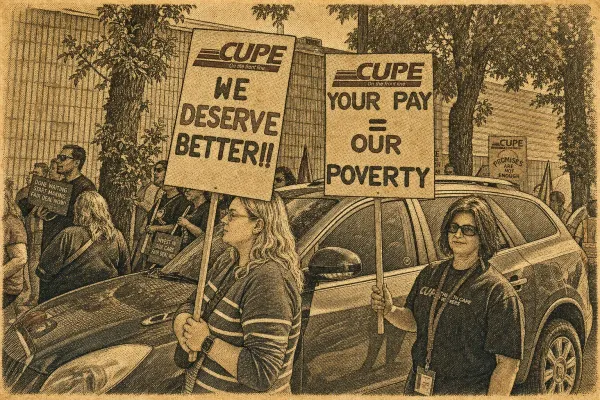
Saskatchewan health-care workers represented by CUPE 5430 are moving toward a strike vote in September, raising the stakes in a labour dispute that has already stretched well beyond the life of their last collective agreement.
The union, which represents thousands of health-care workers in the province, says members have been without a new collective agreement since their previous contract expired in 2023. CUPE 5430 says stalled bargaining, worsening workloads, short staffing and years without meaningful wage improvements pushed it to call the vote.
Strike vote planned for September
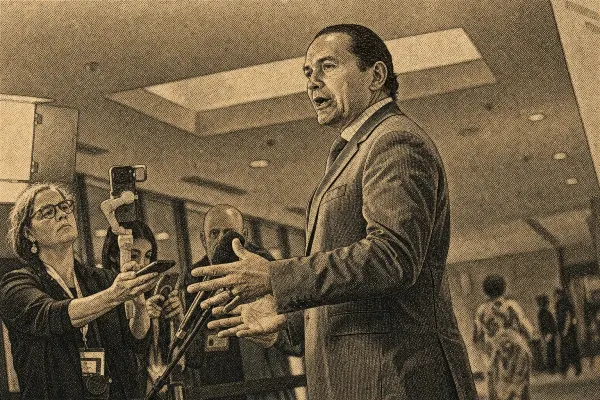
CUPE 5430 President Bashir Jalloh has framed the vote as a reluctant step, not a preferred one.
“No one wants job action. But people also cannot continue carrying a system that refuses to value their work,” Jalloh said in the union’s announcement, according to CTV News.
The planned vote would ask workers whether they are prepared to authorize possible job action if bargaining does not produce a new agreement. According to the Prince Albert Daily Herald, a successful strike vote would not automatically send members on strike, but would authorize job action if no agreement is reached.
That distinction matters in a health-care setting, where even the possibility of labour disruption can quickly become a public concern. But the union’s message is that the status quo is already hurting the system.
Wages and staffing at centre
CUPE 5430 says low wages and staffing shortages are damaging recruitment and retention in Saskatchewan health care. Jalloh has identified wages, the use of contract workers and employer proposals to relocate or move employees as major bargaining disputes.
“The biggest problem we have in the health care system in Saskatchewan is the short staffing. We do not have the staff to do the job,” Jalloh told Global News.
He has also argued that unresolved wage and staffing problems will leave remaining workers exhausted and lead to longer patient wait times or delays.
“When health care workers leave because they cannot afford to stay, everyone feels the impact,” Jalloh said, according to CTV News. “Patients wait longer for care. Families experience delays. Remaining staff become exhausted. This isn’t just a workers’ issue, it’s a public issue.”
The union says the pressures are being felt after years without meaningful wage improvements. Jalloh has said workers have waited long enough for a deal.
“If the employer continues to ignore the realities facing frontline workers, our members will have to consider every option available to them to achieve a fair agreement,” he said in the union’s announcement.
Disputes over contract workers
Beyond wages, CUPE 5430 is raising concerns about how contract workers are used and how employees could be moved within the system.
Jalloh has said those issues have become major sticking points at the bargaining table. He argues the union’s position is tied to job security, working conditions and the broader problem of filling vacancies.
“They do not want to address the elephant in the room, which is the low wages,” Jalloh told Global News. “And if you don’t do that, this problem we have is going to keep compounding. People are going to leave.”
The union says staffing shortages are already worsening workloads. Its argument is that moving workers around or relying on contract workers does not solve the underlying problem of recruitment and retention.
“This is not something that we want to do,” Jalloh told Global News. “We have waited for that long. We know the effect of the current situation. Our members do not want to go on strike.”
Province urges continued talks
Health Minister Jeremy Cockrill says negotiations are ongoing and has urged employers and unions to keep working toward an agreement at the bargaining table.
“Our government knows the best deals are reached at the bargaining table and we continue to ask that employers and unions sit down and work together to find an agreement that works for health care workers, employers, patients, and communities,” Cockrill said in a statement reported by Global News.
Cockrill has also said the province is reinvesting administrative savings into front-line care, including $10.4 million from eliminating 26 senior leadership positions in June 2025.
For now, the dispute sits between those two positions: a union saying its members are exhausted and undervalued, and a government saying the path forward remains negotiation.
The September vote will not, on its own, settle that divide. But it will show how far CUPE 5430 members are prepared to go if bargaining does not produce a new collective agreement.
Reader-funded. No ads. No paywall.
The Canada Report is independent, reader-funded Canadian news — no advertisers, nothing behind a paywall, kept free for everyone. If you value it, you can help keep it that way.
Support The Canada Report →