

Heads up: some of the links in this post are affiliate links. That means if you click and purchase, we may get a commission. It’s how we keep this site running without cluttering it with ads.
May in Canada can grow grass faster than you can book a haircut. One warm snap—say 18°C after weeks of melt—and suddenly your lawn is a shaggy carpet with puddled low spots, last fall’s leaves stuck like wet paper, and a minefield of soccer balls and dog toys. In southern Ontario, that thawed clay can rut if you mow too heavy; in coastal BC, it’s the endless drizzle that turns every cut into clumps. (Funny how we obsess over summer gear, then get blindsided—same energy as hunting for the right snow shovel for Canada when -30°C hits overnight.)
This guide is Canada-first: pick a robot mower that matches your mowable area (not your lot size), handles real obstacles, and doesn’t overpromise on slopes when the grass is wet. We’ll compare options from roughly $500 to $4,000 CAD, but for the most common small suburban yards—up to 0.2 acres—the eufy E15 is the sweet spot: auto-mapping, multi-zone control, AI obstacle avoidance, app scheduling, 18° slope rating, and a 1–3" cut height, with standout buyer validation at 4.7 stars across 512 reviews.
Quick Overview: Our Top Picks
| Product | Best For | Why We Love It | Price |
|---|---|---|---|
| Smaller city lots | Smart mapping and AI avoidance deliver hands-off cuts without complex setup. | $1699.99 CAD | |
| Multi-zone family yards | More coverage (0.3 acres) with easy zone control, keeping every section consistently trimmed. | $2199.99 CAD | |
| Steep hill properties | All-wheel drive handles slopes up to 80% (38.6°) on properties up to 0.75 acre. | $3999.00 CAD | |
| Quiet neighbourhood mowing | Whisper-quiet operation and proven wire boundary control make it set-and-forget reliable. | $952.43 CAD | |
| First-time robot mower buyers | Affordable entry with vision guidance and low-noise mowing for smaller Canadian lawns. | $499.99 CAD | |
| Wire-free edge perfectionists | LiDAR mapping and zero-edge cutting deliver crisp borders without perimeter wire hassles. | $1399.00 CAD |
eufy E15 Robot Mower
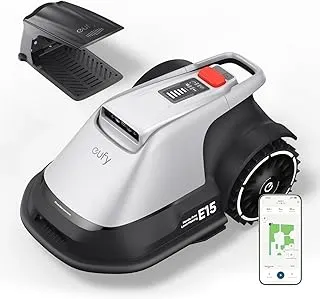
If you’ve got a typical Canadian small suburban lawn and you want set-it-and-forget-it trimming without paying for a unit sized for an acreage, the eufy E15 is the sweet spot. It’s built for yards up to 0.2 acres (about 8,700 sq ft), with auto mapping and multi-zone management so it can handle front/back sections without you babysitting it. Navigation is vision-based with AI obstacle avoidance, which is exactly what you want around kid toys, patio clutter, and the random spring debris that shows up after snowmelt. At 61.01 x 32 x 12.7 cm and 19.49 kg, it feels substantial and planted—helpful on uneven lots common in older neighbourhoods—and it’s app-controlled for easy scheduling through fast-growing spring weeks, lighter summer cuts, and a clean fall shutdown before storage. It’s also a strong value at $1,699.99 CAD with a 4.7★ average from 512 reviews, and it currently carries Amazon’s Choice for robot lawn mowers.
Pros
- Excellent buyer ratings: 4.7★ from 512 reviews
- Auto mapping and multi-zone control for typical suburban yards
- AI obstacle avoidance helps around toys and yard clutter
Cons
- 0.2-acre limit won’t suit larger or sprawling properties
- Heavier 19.49 kg unit to move for off-season storage
eufy E18 Robot Mower
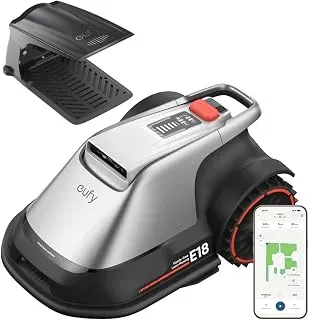
If you like the idea of a hands-off lawn but your yard is bigger than the E15 can handle, the eufy E18 is the step-up pick: it maps up to 0.3 acres (about 13,000 sq ft) versus the E15’s 0.2, so it’s the better fit for wider lots or several distinct zones. It’s rated 4.7★ from 512 reviews, and like the E15 it uses pure-vision auto mapping with AI obstacle avoidance—handy for the real suburban stuff: toys on the grass, edging near walkways, and the occasional surprise left by pets. At 61.01 x 32 x 12.7 cm and 12.7 kg, it’s actually lighter than the E15, which makes it easier to lift for fall shutdown and winter storage—very much a Canadian reality once growth slows and frost hits. You also get app control and multi-zone management for front/back yards or tricky older-neighbourhood lots. Both eufy units share the same 18° slope rating, so the E18 is about more coverage, not steeper terrain.
Pros
- Handles larger yards up to 0.3 acres (13,000 sq ft)
- Highly rated (4.7★) with 512 reviews
- Lighter than the E15 at 12.7 kg, easier to store
Cons
- Premium price for small-to-medium Canadian lawns
- Same 18° slope limit as the E15—not for steep terrain
Mammotion LUBA 3 AWD Mower
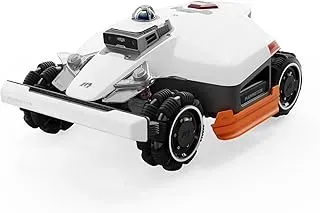
If your property has real slopes and serious square footage, the Mammotion LUBA 3 AWD 3000H is the go-anywhere flagship in this lineup. Its headline spec is the one that matters for tricky Canadian yards: all-wheel drive that climbs slopes up to 80% gradient (about 38.6°)—far beyond the 18° most vision mowers manage—plus coverage for properties up to 0.75 acre. It navigates with a tri-fusion system (360° LiDAR + RTK + AI vision) and identifies 300+ obstacle types, so it stays confident rather than fussy on uneven, bumpy terrain. It’s a substantial machine at 69.09 x 53.34 x 27.94 cm and 24.27 kg, which actually helps with traction when spring lawns get thick and damp. There’s no assembly required and it runs on an included lithium-ion battery (up to 175 minutes per charge). Buyer feedback is strong at 4.4★ across 204 reviews, but it’s priced like a true flagship.
Pros
- All-wheel drive handles slopes up to 80% (38.6°)
- Covers up to 0.75 acre with tri-fusion LiDAR/RTK/vision navigation
- No assembly required; strong obstacle handling (300+ types)
Cons
- Very expensive at $3,999 CAD
- Big and heavy (24.27 kg) to move for storage
GARDENA SILENO City Mower
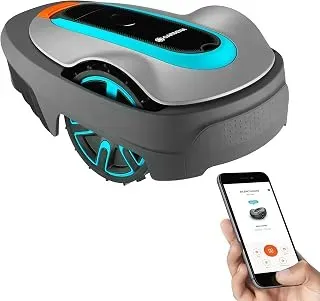
If you want a quiet, dependable robot mower for a typical Canadian suburban yard and you don’t mind a boundary-wire setup, the GARDENA SILENO City is a proven pick. It’s an older, well-established model (on the market since 2017) rather than a flashy new release, and that maturity is part of the appeal—it does one job reliably, at one of the quietest noise levels in its class (around 57 dBA) for lawns up to 5,400 sq ft. The mower itself is compact at 55.88 x 38.1 x 22.86 cm and weighs just 7.2 kg, so it’s the easiest unit here to move for spring cleanup or fall storage. It runs on an included lithium-ion battery and comes with the essentials: the robotic mower, wire pegs, and a charging station. Control is via Bluetooth app for quick schedule changes during fast spring growth or coastal rain. It’s made in Europe and backed by a 3-year manufacturer warranty. At 4.0★ across 242 reviews, it has the lowest rating of our picks, but it’s a long-running, predictable performer.
Pros
- Among the quietest in its class (~57 dBA)
- Lightest unit here (7.2 kg); includes wire pegs and charging station
- 3-year warranty on a long-proven, mature model
Cons
- Boundary wire install takes time and planning
- Lowest rating of our picks (4.0★) and not as hands-off as wire-free models
YARDCARE V100 Robot Mower
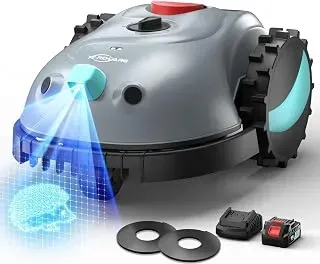
The 2026 YARDCARE V100 is the budget entry point here—a “set it and mostly forget it” robot mower aimed at smaller Canadian yards up to about 1,600 sq ft, where you want consistent trims without weekly push-mowing. At $499.99 CAD it’s the cheapest robot in this guide, and it skips boundary wires entirely: setup uses an included 32-ft magnetic strip to mark no-go zones, so there’s no digging. It runs on an included 18V battery and arrives as a single unit with no assembly required. In the box (parcel dimensions 54 x 41.4 x 30 cm) it’s a 12.08 kg machine, so it feels like a real yard tool rather than a toy. The V100’s HD vision navigation and smart obstacle detection (up to 150 obstacle types) are geared toward typical suburban realities—kids’ toys, patio furniture, and the random stick storm after a windy coastal day. Buyer validation is still building at 4.2★ across 61 reviews.
Pros
- Cheapest robot mower here at $499.99; no boundary wire needed
- HD vision navigation for everyday suburban obstacles
- No assembly; included 18V battery and magnetic no-go strip
Cons
- Limited to small lawns (about 1,600 sq ft)
- Newer model with only 61 reviews—less track record than top picks
MOVA LiDAX Ultra 1000 Mower
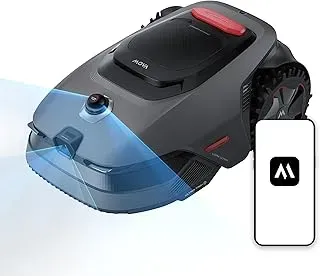
The MOVA LiDAX Ultra 1000 is a premium, wire-free robot mower aimed at homeowners who want clean edges and hands-off cutting without laying a boundary wire. It uses 360° 3D LiDAR plus AI vision for auto mapping (no RTK station needed), covers about a quarter-acre, and handles slopes up to 45%—more capable on grades than the eufy units, if less than the Mammotion. Its zero-edge cutting trims within about 2 inches of walls and hedges, and it manages up to 150 zones across dual maps—handy if your front and back lawns are split, or you’ve got tricky side yards common in older Canadian neighbourhoods. Physically it’s a substantial unit at 86.36 x 50.8 x 40.64 cm and 13.61 kg. For Canadian ownership, the 3-year manufacturer warranty helps if you’re running it hard through wet spring growth, then doing a proper fall shutdown and indoor storage. It’s rated 4.3★ across 33 reviews, and assembly is required, so plan a bit of setup time.
Pros
- Wire-free mapping with 360° 3D LiDAR and AI vision (no RTK)
- Zero-edge cutting plus up to 150 managed zones with dual maps
- Handles 45% slopes and is backed by a 3-year warranty
Cons
- Newer model with only 33 reviews
- Assembly required before first use
Wire-Free Robot Lawn Mower vs Boundary-Wire Robot: Which Do You Need?
Most Canadians shopping for robot lawn mowers end up choosing between newer wire-free models (vision/RTK navigation) and the classic boundary-wire setup. Wire-free mowers—like our #1 pick, the eufy E15—save a lot of installation hassle: no trenching, no chasing wire breaks after a harsh freeze/thaw, and it’s easier to adjust zones when you redo a garden bed or add a playset. They also tend to be better around typical suburban obstacles (toys, patio furniture, pet “surprises”) thanks to smarter obstacle avoidance and app-based multi-zone management.
Boundary-wire robots can still be a smart buy if you want predictable edges and you don’t mind upfront labour. They’re often less picky about lighting and can be steady performers on simple, open lawns—useful in older neighbourhoods with uneven lots where sightlines can be messy. In coastal B.C. rain and spring growth, either type can work, but wire-free models are generally easier to pause, re-map, and restart after muddy weeks or landscaping changes. Choose wire-free for convenience and flexibility; choose boundary wire for maximum simplicity once installed (and if you’re handy enough to maintain it).
Budget vs Premium: What's the Difference?
In Canada, robot lawn mower pricing runs roughly from ~$500 “entry” models to ~$4,000 premium systems. Budget options can make sense for small, flat yards where you just want the lawn kept short and don’t mind more setup time and less refined obstacle handling. The trade-off is usually in navigation and “babysitting”: more rescues when the grass is wet in spring, more missed patches, and less confidence around kids’ toys or pet mess. You’ll also see shorter warranties and parts support that can be thinner in Canada, which matters if you’re storing the mower for 5–6 months over winter.
Premium models earn their price with better mapping, stronger multi-zone control, and more reliable obstacle avoidance—especially helpful for busy suburban lawns with walkways, garden edging, and tight side yards. They also tend to handle real-world terrain better, though slopes are still a reality check (an “18°” rating like the E15 is fine for many yards, but steep, bumpy sections can still challenge any robot—which is where an all-wheel-drive unit like the Mammotion LUBA 3 earns its keep). For most small-to-medium Canadian lawns up to 0.2 acres, the eufy E15 hits the sweet spot: strong buyer validation at a lower cost than bigger-capacity models, without overbuying features you won’t use.
How to Choose the Best Robot Lawn Mower for Canadian Conditions
Choosing a robot lawn mower in Canada is less about buying the biggest, most expensive model and more about matching it to your actual yard and season. Most suburban lots fall well under 0.2 acres, so a compact, well-reviewed mower like the eufy E15 can be the sweet spot—especially if you want app control, reliable obstacle avoidance, and multi-zone support without paying premium prices meant for estate-sized lawns. Plan for strong spring growth (often wet and fast), summer heat and dry spells, and a real fall shutdown routine. Your terrain, obstacles (kids’ toys, pet mess), and setup patience matter just as much as cut quality.
Key Features to Look For
Right-Sized Coverage and Multi-Zone Management
Start with yard size and layout, not hype. Measure or estimate your mowable area (exclude decks, gardens, and steep banks), then choose a mower rated slightly above that—Canadian spring growth can be intense, and you don’t want a robot that’s always “catching up.” For many small-to-medium suburban lawns, a 0.2-acre class mower (like the #1-pick eufy E15) is plenty, and it keeps costs closer to the lower end of the roughly $500–$4,000 CAD range. If your front and back are separated, or you’ve got a side strip, look for multi-zone management in the app so it can handle distinct areas without guesswork.
Navigation and Setup: Vision/RTK vs Boundary Wire
How the mower navigates determines how much work you’ll do on day one—and how smoothly it deals with changes later. Boundary-wire systems can be dependable, but installation takes time (and repairs can be annoying after aeration, edging, or a squirrel decides to “help”). Wire-free options using camera vision, RTK-GNSS, or other mapping approaches are appealing for Canadian homeowners who’d rather spend an hour mapping than a weekend trenching. Vision-based mapping is also convenient when you tweak garden beds or add a play structure mid-season. If your yard has tree cover (common in older Toronto, Ottawa, and Montréal neighbourhoods), confirm the mower’s navigation method can handle partial shade and changing light.
Real-World Slope and Terrain Performance
Specs like “18° slope” are useful, but Canadian lawns often challenge robots in more realistic ways: uneven grading, bumpy roots, and soft spots after snowmelt. If you’re in the Pacific Northwest (Lower Mainland or Vancouver Island), persistent rain can leave turf spongy in spring, so traction matters. In the Prairies, hard-packed soil can turn rutted and bouncy after a dry spell followed by a thunderstorm. Look for stable wheels, decent ground clearance, and a slope rating that exceeds your steepest section—especially near ditches, walkout basements, or retaining walls. If your yard has abrupt transitions (pavers to grass), check that the mower can reliably climb and not beach itself.
Obstacle Avoidance and Safety for Kids, Pets, and “Yard Stuff”
Canadian backyards are rarely “clean rooms.” Between dog toys, sprinkler heads, fallen branches, and the occasional forgotten soccer ball, obstacle avoidance is the difference between true automation and constant babysitting. Prioritize models with AI obstacle detection that can identify and steer around common hazards—especially if you’ve got kids who leave toys on the lawn or pets that roam freely. This matters for safety (and for protecting the mower’s blades). If you have a dog, assume you’ll encounter pet waste at some point; better avoidance reduces the chance of a messy cleanup. Also check for lift/tilt sensors and app-based scheduling so it mows when the yard is empty.
Canadian Seasonal Ownership: Wet Springs, Hot Summers, and Proper Fall Shutdown
A robot mower is a season-long tool in Canada, not a year-round outdoor appliance. In spring, plan for faster growth and wet grass—many homeowners find shorter, more frequent mowing keeps things tidy without clumping. During summer heat waves (often +30°C), especially in Southern Ontario and the Prairies, you may want to adjust schedules to early morning or evening and raise cutting height to reduce stress on the lawn. Come fall, build in a clear end-of-season routine before freezing temperatures: clean the deck, remove caked grass, charge the battery to a storage-friendly level per the manual, and bring the mower (and ideally the base) into a garage or basement once nights regularly dip near 0°C. Coastal regions may stretch the season longer, but storage still matters for battery longevity.
Canadians exploring this topic may also find our Best Garden Hoses In Canada: 5 Picks From $31 helpful.
Frequently Asked Questions
Q: Are robot lawn mowers any good for typical Canadian suburban lawns?
Yes—if you match the mower to your yard size and layout. For many Canadian small-to-medium lawns, the biggest “win” is consistent trims through fast spring growth without weekly push mowing. Look for solid obstacle detection, multi-zone support for front/back yards, and enough traction for uneven lots common in older neighbourhoods. For up to 0.2 acres, the eufy E15 is a strong fit because it’s sized for smaller suburban properties without overbuying.
Q: How do robot lawn mowers work (and what setup should Canadians expect)?
Most run on a schedule, cutting a little at a time and mulching clippings back into the lawn. Setup depends on navigation: boundary-wire models require laying a perimeter wire, while wire-free models map your yard using cameras and/or sensors. Wire-free is faster to change later (garden beds, patio upgrades), which matters after winter heaving shifts edges. A boundary-wire option like the GARDENA SILENO City is reliable but takes more upfront installation and occasional wire troubleshooting.
Q: Do robot lawn mowers avoid dog poop and kids’ toys?
Some do, but performance varies with lighting, object size, and how “messy” the lawn is. Expect better results from mowers with modern vision-based obstacle avoidance, but don’t assume 100% detection of small piles, cords, or low-profile toys—especially in wet spring conditions or dusk. Your best routine is still a quick yard scan before scheduled runs and setting no-go zones around play areas. If pet mess is frequent, prioritize strong AI obstacle avoidance like on the eufy E15.
Q: Do robot lawn mowers work on hills and uneven terrain?
They can, but check real slope limits and your lawn’s surface. Many suburban yards have short, steep sections, tree roots, and soft spots after snowmelt—traction matters as much as the advertised slope number. If you have genuinely steep grades or rough terrain, an all-wheel-drive mower is the safer bet. For example, the Mammotion LUBA 3 AWD is rated for slopes up to 80% (38.6°), while smaller vision mowers cap out around 18° and may struggle on wet grass or rutted areas in spring.
Q: Are robot lawn mowers worth it in Canada considering cost and seasonal upkeep?
They’re worth it when you value time savings and steady “always-trimmed” grass more than a perfect once-a-week cut. Upfront prices range roughly from $500 to $4,000 CAD, with low ongoing electricity costs. Factor in Canadian seasonality: spring cleaning and more frequent runs, mid-summer height adjustments during heat/dry spells, and a fall shutdown routine (clean, dry, store indoors, and protect batteries from freezing). The best value is usually right-sized capacity, not maximum specs.
Final Thoughts: Making the Right Choice for Canadian Conditions
Choosing a robot lawn mower for Canadian conditions comes down to matching the machine to your actual yard—size, zones, slopes, and the everyday clutter that shows up in real suburban life. Get that fit right, and you’ll trade weekly mowing for a quietly consistent cut from spring’s fast growth through summer dry spells.
For most small-to-medium Canadian lawns, the eufy E15 Robot Lawn Mower is the best-value pick. It’s made for yards up to 0.2 acres and uses auto-mapping with vision navigation plus AI obstacle avoidance, which is ideal if you’ve got garden beds, patio furniture, kids’ toys, or the occasional surprise from a pet. It also delivers strong buyer validation at a notably lower price than bigger models—perfect for typical subdivision lots where you don’t need to overbuy.
If your lawn is larger or you want extra headroom, the eufy E18 Robot Lawn Mower keeps the same mapped, app-controlled approach but scales up to 0.3 acres—handy if you’re on a wider lot or managing multiple lawn sections. For challenging terrain, the Mammotion LUBA 3 AWD 3000H is the “go-anywhere” option, built for bigger properties and slopes up to 80%, though it’s a premium spend closer to that $4,000 CAD end of the range.
Before you buy, measure your mowable area, list your zones (front/back/side), and be honest about slopes and obstacles—especially on uneven older neighbourhood lots or in coastal B.C. rain where traction and wet growth matter. Then plan your seasonal routine: spring blade checks, mid-summer cleaning, and a fall shutdown with station storage before freeze-up.
Pick the model that fits your yard—not your neighbour’s—then set up your zones and schedule your first week of runs. Once it’s dialled in, you’ll head into every Canadian mowing season feeling prepared and in control.