
Based on coverage from CBC, Global News, CP24, and Winnipeg Free Press.
A contract worker at a remote uranium exploration site in northern Saskatchewan has died after a bear attack, a rare tragedy that has sparked an investigation involving conservation officers, the RCMP and the provincial coroner.
Basic details are still being pinned down. The province has said the man was 25 in early statements provided to outlets including Global News and CTV News. Other reporting, including information shared by the man’s brother, identifies him as a 27-year-old from India who moved to Canada about three years ago and was living in Penticton, B.C. His name has not been released.
Bear attack near Points North Saskatchewan
Saskatchewan’s Ministry of Community Safety says the attack happened Friday evening in the far north, initially described as near Points North, roughly 700 kilometres northeast of Saskatoon. Later, the Points North Group of Companies pushed back on the location details, saying the incident did not happen at or near the Points North Landing air strip.
The company said the attack occurred by Nordbye Lake, about 78 kilometres from Points North Landing. It also said the person was transported by helicopter to its site after the attack.
Points North Landing is a regional hub for trucking, bulk fuel and other support services for northern exploration work. The company said it was called in to help as part of an emergency response and provided supplies and equipment to the crew, while offering condolences to the worker’s family and colleagues.
Uranium exploration work at Zoo Bay
The worker had travelled north for contract work at the Zoo Bay property, operated by Vancouver-based UraniumX Discovery Corp., located roughly 850 kilometres northeast of Saskatoon, according to reporting that included details from the man’s brother.
UraniumX said it is cooperating with authorities and has temporarily halted all field activities at the Zoo Bay property. CEO Esen Boldkhuu said the company was “deeply saddened” and emphasized safety for employees, contractors and other personnel.
What officials say about the bear
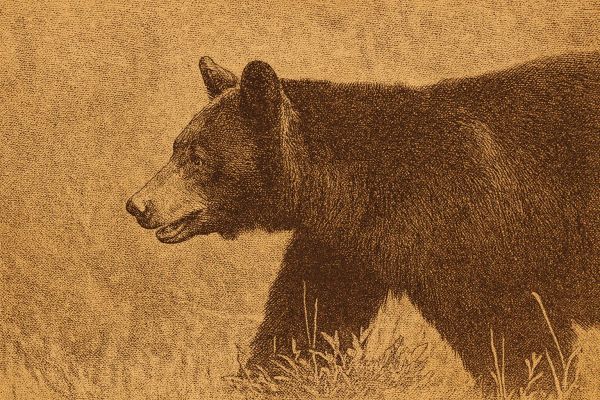
The province has identified the animal as a black bear. Officials also say the bear was euthanized at the scene, with reporting differing slightly on wording: some accounts describe the bear as euthanized, while others say a civilian on site shot and killed it.
The bear’s body was transported to the Western College of Veterinary Medicine in Saskatoon for a necropsy, a post-mortem examination. Earlier reporting said a necropsy would be completed; a Canadian Press update later reported that the necropsy has been completed.
Saskatchewan investigation and RCMP role
Multiple agencies are involved. The Ministry of Community Safety says the Conservation Officer Service and the Wildlife Human Attack Response Team are investigating alongside the RCMP and the Saskatchewan Coroners Service.
CTV News reported Saskatchewan RCMP confirmed Wollaston Lake detachment received a report of a sudden death around 6:30 p.m. on May 8 and said the matter was not under investigation. A later Canadian Press report said the RCMP is also looking into the death, reflecting different descriptions of the RCMP’s role as the response unfolded.
Why fatal bear attacks are rare
Douglas Clark, a University of Saskatchewan professor who specializes in human-bear conflict and previously worked as a national park warden, said fatal bear attacks in Saskatchewan are “extraordinarily uncommon.” He described this as only the fourth recorded fatal bear attack in the province’s history, with the most recent in 2020, when Stephanie Blais, 44, was killed near her family’s cabin north of Buffalo Narrows. Two men were killed in separate incidents near Nipawin Provincial Park in 1983.
Clark also warned spring conditions in the far north can raise risk. With lingering snow and little natural food available, bears emerging from dens may roam farther looking for something to eat.
The province had issued a reminder the same day as the attack that bears were emerging and people should take precautions. Guidance includes keeping distance, backing away calmly, speaking in low tones, avoiding eye contact, and making a wide detour. Clark also recommends carrying bear spray in active bear areas.
Support Independent Canadian News Analysis
The Canada Report is supported by readers like you. If this article helped you understand what’s happening, you can support our work with a one-time tip.
Support The Canada Report