
Based on coverage from The Star, The Star, Toronto Sun, Insauga, and Winnipeg Free Press.
Ontario is expanding what pharmacists can do, betting that more care at the drugstore will mean fewer people stuck waiting for a family doctor appointment or sitting in an emergency department.
Health Minister and Deputy Premier Sylvia Jones announced the changes May 11 in Toronto, saying the goal is faster access to care and less pressure on primary care and hospitals as Ontario deals with a doctor shortage and overcrowded ERs.
Ontario pharmacists add more vaccines July 2026
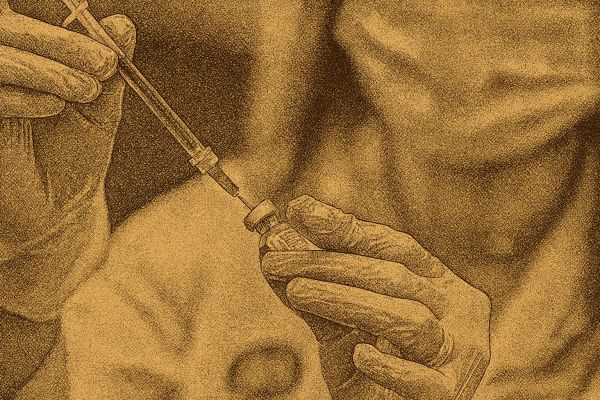
Starting in July, Ontario pharmacists will be allowed to administer additional vaccinations: tetanus, whooping cough (pertussis), diphtheria, respiratory syncytial virus (RSV), shingles, and pneumococcal vaccines.
The government’s message is convenience and speed, especially for people who can’t easily get in to see a doctor. One version of the announcement also frames this as particularly helpful for rural and remote communities across Ontario, where access gaps can be sharper.
Pharmacists to treat nine new ailments
Ontario already allows pharmacists to assess and treat 19 common ailments. The province now plans to add nine more.
Across the reports, examples of the added conditions include head lice, nasal congestion, ringworm, and warts. Another account lists additional examples such as calluses and corns, dandruff, dry eye, and mild headaches. (The coverage isn’t identical on every example, but the direction is the same: more minor conditions handled at pharmacies.)
Health Minister Sylvia Jones said the province intends to add five more ailments in early 2027. One report describes that timeline as bringing the total number of conditions pharmacists can treat to 33.
Ontario government says millions already used pharmacy care
Jones pointed to uptake since earlier expansions, saying Ontarians have logged more than 2.4 million visits for pharmacist-provided care since pharmacists’ scope was first increased in 2023.
Justin Bates, CEO of the Ontario Pharmacists Association, backed the move, saying it makes it easier for patients to access care close to home.
Critics question impact and oversight
NDP Leader Marit Stiles argued the expansion won’t meaningfully fix overcrowding, pointing to reports of patients being treated in hospital hallways and even storage closets.
Liberal MPP Adil Shamji, an emergency room physician, said he supports health professionals working to the full scope of their practice, but raised two practical concerns. First, he said the province should be tracking vaccinations through a central registry. Second, he questioned whether pharmacy settings will reliably handle diagnosis for some conditions. He gave the example of jock itch, noting that in a clinic he would ask questions and might need to do an examination, and he wasn’t sure that would happen in “pharmacy clinics.” He also criticized the idea of pharmacists being paid publicly for work he characterized as pointing people to over-the-counter options.
Scope expansion could reach other health professions
Ontario isn’t stopping with pharmacists. The government has directed regulatory colleges to develop frameworks for expanding scopes of practice for several other regulated professionals, including optometrists, physiotherapists, chiropractors, dental hygienists, denturists, and audiologists and speech-language pathologists.
Examples mentioned include allowing optometrists to dispense some topical medications and manage open-angle glaucoma, and allowing chiropractors and physiotherapists to order diagnostic ultrasounds.
Support Independent Canadian News Analysis
The Canada Report is supported by readers like you. If this article helped you understand what’s happening, you can support our work with a one-time tip.
Support The Canada Report