
Heads up: some of the links in this post are affiliate links. That means if you click and purchase, we may get a commission. It's how we keep this site running without cluttering it with ads.
Late August does this every year: you've got a burger sizzling on the deck, the recycling bin humming like a beehive, and a fresh paper nest starting under the soffit—close enough to hear that dry, papery crunch when the wind hits it. In southern Ontario's sticky 28°C evenings, yellowjackets turn garbage day into a contact sport; out in the BC Lower Mainland, they'll stake out patio fruit and cedar siding after a warm rain. One wrong step, and you're swatting with tongs while trying not to get stung.
That's why the best wasp killer for Canadian yards isn't just "strong"—it needs fast knockdown from a safer stand-off distance, plus options for sealing exposed nests and reducing the steady stream of foragers. If you're also battling ants or mosquitoes, our best pest control picks round up the broader toolbox, and our companion ant killer guide and mosquito repellent guide cover those neighbours specifically. Below, we'll break down which sprays, foams, traps, and decoys make the most sense from Prairie outbuildings to Atlantic cottage decks—so you can treat the problem without climbing too close or turning your BBQ into a panic drill.
| Product | Best For | Why We Love It | Price |
|---|---|---|---|
| Quick nest knockouts | Kills on contact with a strong jet, plus non-conducting safety near wiring. | $9.67 | |
| Stubborn returners | Expanding foam clings to nests, wiping out stragglers other sprays miss. | $23.99 | |
| Careful yard spraying | Foam blast targets nests while clear use tips help protect gardens and landscaping. | $14.99 | |
| BBQ patio protection | Reusable, easy-fill traps help cut wasp traffic around food and outdoor seating. | $21.99 | |
| Chemical-free households | Non-toxic, washable traps reduce wasps safely—great for families and pet-friendly yards. | $19.99 | |
| Deterring new nests | Realistic hanging decoys discourage wasps from moving in around eaves and porches. | $14.99 |
Raid Wasp & Hornet Spray
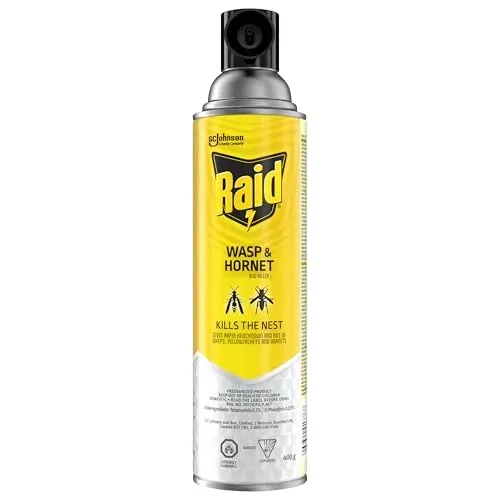
Raid Wasp & Hornet Spray is a solid budget pick when you just need a reliable wasp killer for general home use in Canada. The 400 g continuous aerosol can is simple to handle, and it's designed to kill on contact—handy when you spot paper wasps, yellow jackets, or mud daubers actively working a nest. The standout feature is the long-distance stream that reaches up to 7.5 metres, so you can stay back instead of getting right under the action (often the best thing to kill wasps safely). It's also electrically non-conducting up to 41,000 volts, which adds peace of mind around exterior wiring. For best results, spray early morning or evening with the wind at your back and fully saturate the nest, then wait 24 hours before removal.
Pros
- Sprays up to 7.5 metres for safer distance
- Kills wasps and nest activity on contact
- Electrically non-conducting up to 41,000 volts
Cons
- Strong chemical odour during and after spraying
- Still requires close aim and careful timing
OnGuard Foaming Wasp Spray
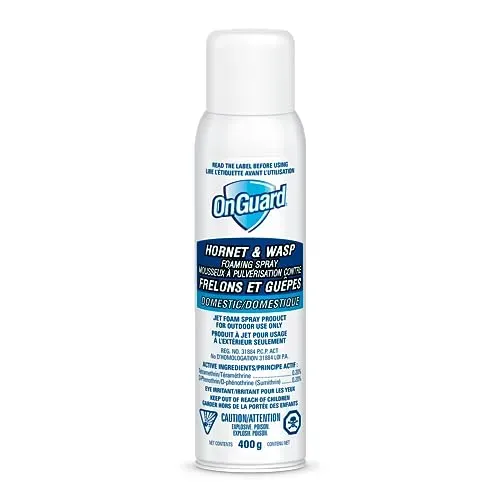
If you want a budget-friendly wasp killer that feels like what the pros use, OnGuard's 400g foaming aerosol is a solid pick for general Canadian home use. Instead of a thin mist, it lays down an expanding foam that clings to exposed nests and keeps working, helping stop returning insects after the first hit. It's formulated with 0.20% tetramethrin and 0.20% d-phenothrin (Sumithrin) for fast knockdown on contact, including yellowjackets and hornets. The foam also makes it easier to see where you've sprayed—handy at dusk when wasps are calmer. It's made in Canada and carries a Health Canada registration (31884), which matters when you're choosing the best thing to kill wasps around the house, garage, or attic. For long-distance wasp spray needs, check the straw/nozzle setup and your comfort with the spray range.
Pros
- Foam clings to nests for thorough coverage
- Kills wasps, hornets, and yellowjackets on contact
- Health Canada registered; made in Canada
Cons
- Long-range spray distance isn't clearly specified
- Strong insecticide; careful indoor ventilation needed
Knock Down Foam Blaster
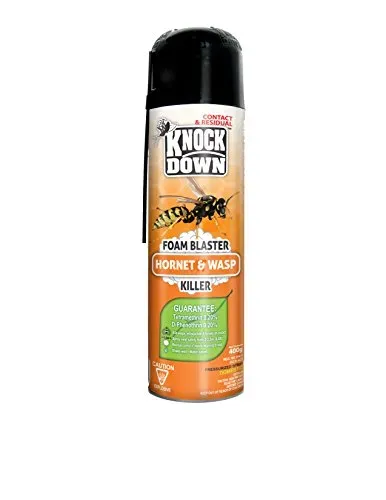
If you want a budget-friendly option for general backyard jobs, Knock Down Hornet & Wasp Foam Blaster Killer is a straightforward pick. Instead of a light mist, it lays down a foamy spray that clings to surfaces, which can help you hit a nest opening and keep contact on the insects longer than a quick blast. That "sticking" action is handy for eaves, soffits, and deck corners where wasps like to build. For Canadian use, the practical part is how you apply it: the label tips are clear—spray only when there's no wind or breeze, avoid spraying vegetation directly, and rinse any desirable foliage that gets contacted. Used carefully, it can be the best thing to kill wasps when you need a simple, no-frills can in the shed.
Pros
- Foam clings to surfaces for better contact
- Affordable price for a basic wasp killer
- Clear, practical use tips on the label
Cons
- Needs calm weather; wind makes it hard to control
- Can affect plants if you overspray
Aspectek Hanging Wasp Traps
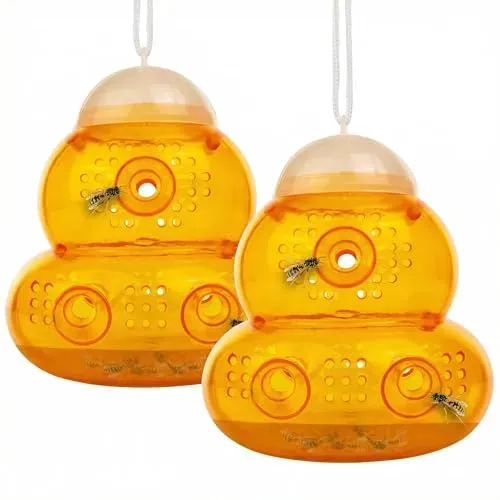
If you'd rather avoid blasting chemicals around the patio, these Aspectek hanging traps are a budget-friendly way to cut down on yellow jackets, hornets, and other nuisance fliers. You get a 2-pack, which is handy for Canadian backyards where you'll want one near the BBQ/deck and another by fruit trees or the fence line. The bright yellow body acts as a visual lure, and you add your own bait mix (instructions included) so you can tailor it to what's active in your area. The screw-top, tight-seal lid is designed to be leak-resistant, so you're less likely to end up with sticky bait dripping on your deck boards. They're reusable—empty, rinse, refill—making them a practical "set and forget" companion to a wasp spray when you need quick knockdown.
Pros
- Reusable design; easy to empty, clean, and refill
- Leak-resistant screw-top helps prevent messy spills
- Two traps cover more of the yard
Cons
- Needs bait mixture and occasional maintenance to stay effective
- Won't instantly eliminate an active nest like spray can
Reusable Natural Wasp Traps
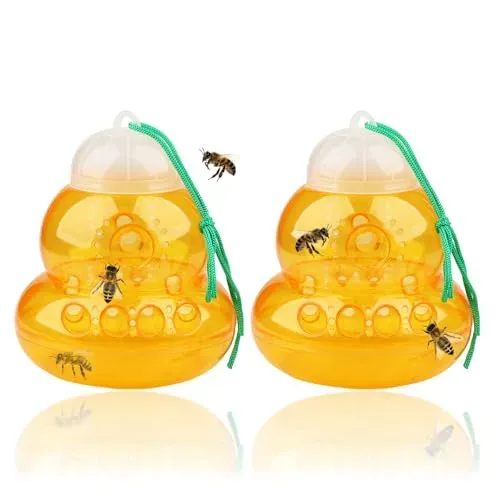
If you're looking for a budget-friendly option that avoids chemicals, this 2-pack hanging wasp trap is a simple, reusable way to cut down on yellow jackets and hornets around the yard. Each trap is made from lightweight ABS plastic and comes with a 45.7 cm nylon string, so you can hang it from a tree branch, fence, or eave. The "no bottom seam" one-piece base is meant to reduce leaking—handy after a windy prairie day or a wet Atlantic week. Multiple entrance tunnels let insects fly in but make it tough to escape, usually ending in drowning once you add bait and a bit of water. It's not a long-distance wasp spray, but it can be the best thing to kill wasps passively near patios and gardens.
Pros
- Non-toxic trapping with no pesticides or fumes
- Reusable and washable for multiple seasons
- No-seam base helps prevent messy leaks
Cons
- Needs regular bait changes to stay effective
- Less immediate than a direct-contact wasp killer
Fake Wasp Nest Decoys
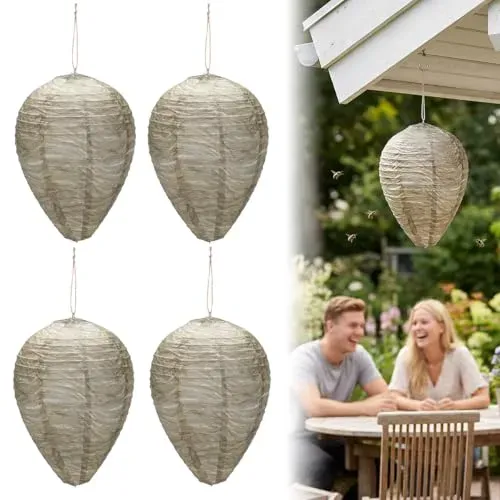
If you're looking for a budget-friendly alternative to chemical wasp killers, this 4-pack of hanging fake nests is a simple deterrent for patios, decks, sheds, and eaves. Each decoy is made from durable paper and shaped to look like a real nest, measuring about 7.9 inches wide and 11 inches tall in a light colour that blends in under soffits. The idea is straightforward: wasps are territorial and often avoid building near an existing colony, so these can reduce scouting activity around your home and garden. They're easy to hang in trees, balconies, orchards, or the yard, and they're a nice fit for general use when you want the best thing to kill wasps without a long-distance wasp spray. Just be sure any real nest is fully removed first.
Pros
- Budget-friendly 4-pack covers multiple outdoor spots
- Easy to hang under eaves, decks, sheds, or trees
- No chemicals or overspray around kids and pets
Cons
- Deters rather than kills; results vary by location
- Paper material may need replacing after harsh weather
Wasp Spray vs Wasp Traps: Which Do You Need?
Wasp spray is the go-to for immediate control: it's often the best thing to kill wasps when you've found an active nest under eaves, in a shed, or along a fence line and you need results now. A good long-distance wasp spray (often 20–27 ft) lets you stay back, which matters when dealing with aggressive yellowjackets in late summer. Sprays also work better in Canada's shoulder seasons, when cool mornings in the Prairies or Atlantic Canada slow wasp activity and make treatment safer. The trade-off is you're using chemicals, and wind (common in Alberta and Saskatchewan) can cause drift, so you'll want calm conditions and proper PPE.
Traps are more preventative and lower-effort. They can reduce local pressure around patios and fruit trees, but they won't solve an established nest quickly—and they may attract more wasps if placed too close to where people gather. Choose spray for active nests and fast knockdown; choose traps for ongoing, lower-risk management and as a complement to sprays.
Budget vs Premium: What's the Difference?
In Canada, budget wasp killers typically run about $8–$12 per can, while premium options are closer to $15–$25. Paying more usually gets you better range, a more consistent stream (less sputter), and faster knockdown—important if you're targeting a nest in a tricky spot like soffits or a garage peak. Premium formulas may also cling better to surfaces, which can help when nests are tucked into cracks, and they're often more reliable in cooler temperatures (think early mornings in B.C.'s Interior or chilly nights in Northern Ontario). Another perk: larger cans or better valve design can mean fewer cans per season, reducing total cost of ownership.
Budget sprays can be sufficient for small, exposed nests and the occasional problem wasp, especially if you can get close safely. What you often sacrifice is distance, control in windy conditions, and "one-and-done" effectiveness—meaning you may need a second application (or a second can). If you're dealing with repeated nests around a cottage, deck, or farm outbuildings, premium tends to be better value.
How to Choose the Best Wasp Spray / Wasp Killer for Canadian Conditions
Shopping for a wasp spray in Canada is less about hype and more about matching the product to your season, region, and where the nest is located. In the Prairies and parts of Ontario and Quebec, late-summer nests can get huge and aggressive; on the B.C. coast you may be dealing with damp eaves and sheds where spray has to cling and keep working. Look for a formula that performs in cooler evening temperatures, a can with enough reach to keep you safely back, and clear directions for outdoor use around homes, cabins, and patios. Also consider whether you need quick knockdown or longer residual control for high-traffic areas.
Key Features to Look For
Spray Range and Accuracy
Distance matters because the safest approach is treating a nest without getting within stinging range. For nests under eaves, soffits, deck joists, or the peak of a garage, choose a can designed to project a tight stream rather than a wide mist. In practical terms, look for a range around 6–8 metres for most suburban jobs; that extra reach can be the difference between staying calm and getting swarmed. A precise straw/nozzle or controlled jet is especially helpful in tight spots like siding gaps or around window trim, where overspray can land on screens and outdoor furniture.
Cold-Weather Performance and Temperature Rating
Many Canadians treat nests in the evening or early morning when wasps are less active—often when temperatures dip. In Atlantic Canada, coastal B.C., and cottage country nights, it can be 10–15°C even in peak summer; in the fall it may be closer to 5–10°C. Some aerosols lose pressure or don't atomise well when cold, reducing range and coverage. Check the label for a minimum operating temperature or storage guidance, and store the can at room temperature before use. If you're dealing with shoulder-season wasps around September in Ontario or Alberta, cold performance becomes a top priority.
Knockdown Speed vs Residual Control
Not all products work the same way: some are built for immediate knockdown, while others leave a residual film that continues working after application. Quick action is ideal for exposed nests you can directly hit (like those hanging under a porch) where you want the activity to stop fast. Residual control can be valuable for re-entry points—cracks around fascia boards, vents, or a shed door frame—where stragglers may return. If you're trying to handle recurring activity at a rural property or lake lot, a bit of residual effect can reduce repeat treatments, but it's still important to follow label directions around people, pets, and high-touch surfaces.
Application Style: Foam, Jet Spray, or Mist
The best format depends on the nest location. A long, directed jet is the most versatile for outdoor nests and helps keep you at a safer distance. Foaming sprays can be excellent for voids—like behind siding, inside a wall cavity, or in a hollow railing—because the foam expands and clings, helping it stay where you aim it instead of drifting away in wind. Mists can cover wider areas but are more likely to blow back, which is a real concern on breezy Prairie evenings or along the coast. If you're frequently treating hard-to-reach spots (eaves, second-storey peaks), prioritise controllability over sheer volume.
Safety, Surfaces, and Home Use Considerations
Wasp sprays are pesticides, so in Canada the label is the rulebook. Look for clear directions on outdoor residential use, protective measures, and restrictions around edible plants. Consider what you're spraying near: painted siding, vinyl, stucco, and stained wood can react differently to solvents, and overspray may leave marks—especially on darker colours. If you're treating around a deck, BBQ area, or kids' play set, plan for ventilation and drying time, and choose an approach that minimises drift. For ground nests, treat after dusk and be ready to retreat indoors quickly, keeping a clear path back to the door.
Frequently Asked Questions
Q: What's the best thing to kill wasps fast when you've found an active nest?
For quickest knockdown, use a dedicated wasp spray made for exposed nests and apply at dusk or dawn when activity is lowest. Stand upwind, wear long sleeves and eye protection, and leave an escape route. Aim for the nest entrance and keep spraying until fully coated, then recheck the next day. A foaming option like OnGuard Hornet & Wasp Foaming Spray helps cling to the nest for better contact.
Q: How far should a long-distance wasp spray reach, and how do I use it safely?
Long-distance reach matters when nests are under eaves, soffits, or branches where you can't safely get close. In general, the farther the jet reaches, the less likely you are to provoke a swarm at close range. Spray from a stable position, don't use ladders if wasps are active, and avoid windy Canadian evenings that blow product back at you. Raid Wasp and Hornet Killer is designed for home use against nests on contact and reaches up to 7.5 metres.
Q: Are outdoor wasp traps worth it compared with sprays for ongoing control?
Traps are best for ongoing pressure reduction around patios, BBQ areas, fruit trees, and garbage zones—especially when you don't have a visible nest to treat. They can lower the number of foragers over days, not instantly "solve" a nest problem. Place traps away from where people sit (so you don't attract wasps to you) and refresh bait as needed. The Aspectek 2-Pack Yellow Wasp Trap is reusable and easy to hang outdoors.
Q: How long do fake wasp nest decoys last in Canadian weather, and when should I replace them?
Decoys can help discourage new nesting in early season, but they're not reliable for eliminating established colonies. In Canadian conditions, UV exposure, heavy rain, and wind can deform fabric-style decoys; replace when they sag, fade badly, or lose their shape (often each season, sooner in harsh coastal or prairie sun and wind). Hang them early in spring before queens choose a site. A 4-pack of waterproof wasp nest decoys is better suited to outdoor exposure.
Q: What common buying mistakes lead to poor results with wasp killers?
The biggest mistakes are treating at midday (high activity), spraying downwind, using too little product, and assuming any "bug spray" will handle nests. Another error is choosing a small can for a large nest, then running out mid-treatment—leaving agitated survivors. Always plan for a second application and keep children and pets indoors. If you prefer foam coverage for exposed nests, pick a purpose-built can like the Knock Down Foam Blaster rather than a general insect aerosol.
Final Thoughts: Making the Right Choice for Canadian Conditions
Finding the right wasp spray for Canadian conditions comes down to matching the product to where the nest is, how close you can safely get, and the time of year you're dealing with it. For most households, a reliable long-range option that works quickly is the safest, most practical choice.
Our #1 pick is Raid Wasp and Hornet Killer for tackling visible nests on eaves, soffits, fences, and sheds—especially during a busy late-summer surge. It's easy to aim, designed for distance, and gives most homeowners the confidence to treat from a safer spot without lingering near the flight path.
If you're dealing with a nest tucked into siding gaps or under rooflines, OnGuard Hornet & Wasp Foaming Spray is a strong alternative because the foam helps cling to surfaces and reach into crevices where spray alone can drift away in a breeze. For faster "hit-and-stop" knockdown when you need decisive action, the Knock Down Hornet & Wasp Foam Blaster is worth considering, particularly if you're facing aggressive wasps around decks or garbage areas.
Before you spray, wait until dusk or early morning, wear long sleeves and eye protection, and plan a clear retreat route—windy Prairie evenings or humid Southern Ontario days can change how product behaves. If the nest is indoors, in a wall void, or you have allergies, skip DIY and call a licensed pest professional.
Choose the product that fits your setup, pick it up from a trusted Canadian retailer, and handle the problem before it grows. With the right approach, you'll keep your home and outdoor spaces calmer, safer, and ready for whatever the season brings.