
Heads up: some of the links in this post are affiliate links. That means if you click and purchase, we may get a commission. It's how we keep this site running without cluttering it with ads.
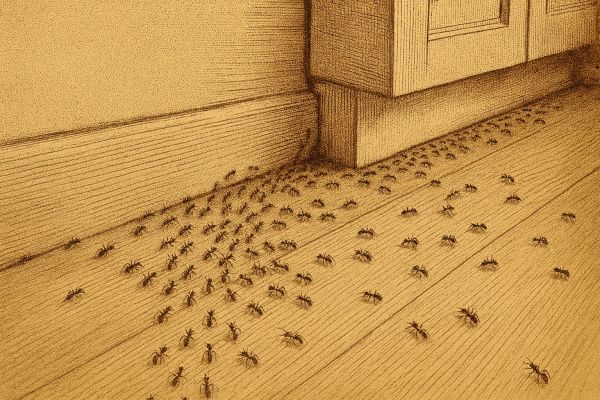
The first warm morning after a Toronto deep-freeze is supposed to feel like a reset. Then you shuffle into the kitchen, still half-asleep, and spot it: a neat little parade of ants streaming from a hairline crack along the baseboard straight to the sugar jar. In Vancouver, damp patio pavers suddenly have fresh mounds pushing up between the joints. In Calgary, a chinook swings the temperature from -10°C to +8°C overnight and ants start popping out along the garage slab like they've been waiting for the cue.
Below are seven ant killers, baits, and traps that actually work in Canadian homes — covering indoor sugar ants, carpenter ants in damp wood, and outdoor mounds along the foundation. Most are under $15 on Amazon.ca, and the strategy section that follows tells you how to use them without scattering the colony or wasting a week. If you also want broader coverage for mosquitoes and wasps once warmer weather hits, our roundup of top pest control picks for Canadian homes is the companion guide.
| Product | Best For | Why We Love It | Price |
|---|---|---|---|
| Indoor sugar ants on kitchen trails | The Amazon's Choice pick with 9,600+ reviews — workers carry the borax bait back to the colony. | $9.79 CAD | |
| Discreet placement in condos & rentals | Low-profile stations stick to vertical and inverted surfaces, blending into baseboards and cabinets. | $11.98 CAD | |
| Foundation lines & patio mounds | Weather-resistant stations let you treat the source outside before ants ever reach the kitchen. | $12.79 CAD | |
| Lawn & garden perimeter | Push-in stakes treat trails along fences, walkways, and garden beds without spraying the yard. | $12.99 CAD | |
| Cracks, baseboards & dry wall voids | Long-lasting dust for spots a liquid bait can't reach — sill plates, pipe penetrations, slab cracks. | $10.99 CAD | |
| Larger homes & multi-room infestations | Eight child-resistant stations let you cover the whole main floor without juggling refills. | $14.48 CAD | |
| Long infestations & bulk value | More bait than the standard pack — useful when you've already cleared one wave and want a refill on hand. | $24.99 CAD |
TERRO Liquid Ant Bait Stations — best overall for indoor sugar ants
If you only buy one product on this list, this is it. The TERRO T300CAN Liquid Ant Bait Stations are the Amazon.ca Choice pick for ant control with more than 9,600 ratings and a 4.3-star average. Each pack contains six pre-filled, ready-to-use stations with a borax-based liquid bait that workers carry back to the colony — which is why bait works where contact sprays don't. Sprays kill the ants you can see; bait kills the queen and brood you can't.
The format is the killer feature for Canadian kitchens. Stations sit flat along baseboards, behind the toaster, under the sink, or near the dishwasher kickplate without leaking. You snip the tab, set them along an active trail, and leave them alone. Reviewers consistently note seeing more ants in the first 24 to 72 hours — that's recruitment, not failure — followed by a sharp drop-off within a week.
Pros: Cheapest per station of the indoor options, sealed and child-resistant, works on the most common Canadian house ants (pavement and odorous house).
Cons: Designed for sweet-feeding ants — if your colony is currently after grease or protein, traffic will be slow until they switch back.
TERRO Multi-Surface Ant Baits — best for condos and discreet placement
The TERRO T334BCAN Multi-Surface Ant Baits use the same active ingredient as the standard liquid stations but in a thinner, lower-profile housing that adheres to vertical and even inverted surfaces. That makes them the better pick for Toronto or Vancouver condo dwellers who don't want a visible plastic disc on the kitchen floor — they tuck under cabinet lips, behind appliance panels, or along the underside of upper cabinets where ants run.
You get four stations per pack, which is right for a one- or two-bedroom unit. The trade-off versus the original stations is the smaller bait reservoir, so heavily active trails may exhaust them faster. Keep a backup pack on hand if you're dealing with a larger colony.
Pros: Adhesive backing for vertical placement, much less visible than standard stations, same proven bait formula.
Cons: Smaller bait volume per station; reviewers report some adhesion issues on textured paint or unprimed drywall.
TERRO Outdoor Liquid Ant Bait — best for treating the source
Killing ants inside is a losing game if a colony 30 cm from your foundation keeps sending out new scouts. The TERRO T1804 Outdoor Liquid Ant Bait stations are designed for exactly that scenario — weather-resistant housings you can place along foundation cracks, patio paver edges, deck posts, and the strip of soil between mulch and siding.
For most Canadian homes, the highest-impact placements are along the south- or west-facing foundation (warmer, drier, where pavement ants love to nest), under the deck near ledger boards (carpenter ant territory if there's any moisture damage), and around utility penetrations like the AC line set or sump discharge. Place a station every 3 to 5 metres along active areas and check them every couple of weeks.
Pros: Treats the colony before ants reach the house, weatherproof, easy to position along uneven ground.
Cons: Slower visible results outdoors than indoors because foragers have many competing food sources.
TERRO Outdoor Ant Bait Stakes — best for lawn and garden perimeters
For lawns, garden beds, and the strip along walkways and fence lines, the TERRO T1813CAN Outdoor Bait Stakes are the cleaner option. You push them into the ground near visible mounds or active trails, and they sit at root level where ants are already foraging.
The 8-stake pack is enough to cover the perimeter of a typical Canadian suburban backyard, with a few extras for hot spots near the compost bin or shed. They're especially useful when you don't want to broadcast any treatment across pollinator-friendly garden beds — ants self-deliver the bait back to the nest, so beneficial insects on flowering plants aren't directly exposed.
Pros: Targeted to ant trails only, doesn't spray pollinator-active plants, weather-resistant.
Cons: Need to be reset or replaced after heavy rain in coastal B.C. or Atlantic Canada.
TERRO Ant Killing Powder — best for cracks and wall voids
Liquid baits don't reach everywhere ants travel. The TERRO T610CAN Ant Killing Powder fills the gap — a long-lasting dust that works in dry spots like baseboard cracks, around pipe penetrations under the kitchen sink, in basement sill plates, and along garage slab gaps. With a 4-star average across more than 1,700 ratings, it's the go-to for spots a station can't sit.
The trick is to dust lightly. More is not better. A heavy layer signals "stay away" to ants and makes a mess to clean up later. Use the puffer applicator to lay a thin line into the crack, then walk away — it stays effective for weeks as long as it stays dry.
Pros: Reaches voids no station can, residual activity for weeks, very low cost per gram.
Cons: Loses effectiveness when wet, so it's an indoor-and-protected-areas-only option; wear a mask during application.
Raid Max Double Control Ant Baits — best for bigger homes and multi-room infestations
If your house is more than 1,500 sq ft or you're seeing trails in multiple rooms simultaneously, the math changes — you need more bait points than a single 4- or 6-pack provides. The Raid Max Double Control Ant Baits ship eight child-resistant stations per pack at a price that's competitive with TERRO once you account for station count.
The "double control" name refers to two active ingredients targeting both adult workers and the brood, which can speed up colony collapse compared to a single-active-ingredient product. With 2,500+ ratings and a 4-star average, it's the most reviewed non-TERRO option on Amazon.ca and a useful alternative if a TERRO trial didn't take with your particular colony.
Pros: Eight stations per pack covers a whole main floor, dual active ingredients, child-resistant housing.
Cons: Slightly higher per-station cost than the TERRO basic 6-pack; some reviewers report slower initial recruitment.
TERRO Liquid Ant Bait Bonus Pack — best for long infestations and bulk value
For homes with a recurring ant problem (think older bungalows in Hamilton or coastal cottages in Nova Scotia where the same colony shows up every May), buying one big pack beats reordering small ones. The TERRO T312CAN Liquid Ant Bait Bonus Pack bundles enough bait to handle the first wave plus have refills ready when activity returns six to eight weeks later — which is common in Canada once outdoor temperatures stabilise.
This is also the right pick for landlords or property managers handling a small portfolio. One bonus pack covers a multi-unit walkthrough without an emergency Amazon order halfway through.
Pros: Best value per dose, useful for repeat-infestation homes, single-product simplicity.
Cons: Higher upfront cost; overkill for a one-time minor trail in a small condo.
Why ants show up in Canadian homes after thaw season
That first real warm spell after months of snow and ice can feel like a reset button — until the ants show up. In much of Canada, the freeze–thaw cycle is the trigger. As the ground warms from 0°C to 10°C and spring meltwater soaks the soil, outdoor nests get flooded or disturbed. Ants do what any creature would do: they move to higher, drier, warmer ground. A heated basement or sun-warmed slab looks like a five-star hotel.
A lot of Canadian homes also have "perfect" ant entry points baked into the way we build for winter. Common routes include:
- Basement rim joists and sill plates (tiny gaps where the house meets the foundation)
- Slab cracks in garages, cold rooms, and older basements
- Utility penetrations (around pipes, AC lines, sump discharge, cable entries)
- Door thresholds and worn weatherstripping, especially at patios and side doors
- Window wells and weeping tile areas where moisture and soil sit right against the foundation
Once they're in, the kitchen is the obvious destination. The biggest indoor magnets tend to be sugar and baking supplies, pet food (especially kibble left overnight), grease and crumbs around the stove and toaster, compost and green bins, and kids' snack zones.
A few scouts on a warm day is normal. These signs suggest a bigger issue: numbers increasing daily even after cleaning, ants in winter (January or February activity often means a nest indoors), winged ants near windows, or sawdust-like piles near baseboards or window trim — possible carpenter ant activity.
The ants you're most likely battling across Canada
Knowing which species you're dealing with isn't trivia — it changes what works. A bait that wipes out one species can be ignored by another.
Pavement ants are the classic city dweller, common in Southern Ontario, Québec, and many urban pockets out west. They love nesting under slabs, front steps, driveways, and patio pavers, pushing up little volcanoes of sand. Indoors, they show up for crumbs and greasy bits, especially in spring. Liquid sweet baits (like the TERRO indoor stations) work well on them.
Carpenter ants are the ones that make Canadians nervous — and for good reason. They don't eat wood like termites, but they excavate damp or softened wood to build galleries. You'll see them across the country where moisture meets wood: older houses with leaks, cottages, and anywhere with wet window frames or a soggy deck ledger. In B.C.'s coastal climate and parts of Atlantic Canada, persistent damp makes conditions especially inviting. Bait helps, but moisture repair is essential.
Odorous house ants are sweet-seekers that can form strong trails. When crushed, some people notice a smell often described as coconut or musty. They can be common in milder regions and in heated buildings where they keep foraging year-round.
Pharaoh ants are a different beast — tiny, indoor-focused, and notorious in apartments, hospitals, and multi-unit buildings. They can form multiple nests and "bud" into new colonies if disturbed by the wrong product. If you're seeing very small ants year-round in a condo tower, this is one to consider, and it's a strong case for a professional rather than DIY.
How to ID them without a microscope
You can get surprisingly far with a phone photo and a few clues:
- Size: carpenter ants are often 6–12 mm; pavement ants and odorous house ants are usually smaller; pharaoh ants are tiny (around 2 mm)
- Colour: carpenter ants are often black or reddish-black; pharaoh ants tend toward yellowish to light brown
- Behaviour: strong, consistent trails to sweets often suggest odorous house ants; sand mounds between pavers point toward pavement ants
- Sawdust/frass and damp wood nearby → carpenter ants
- Year-round activity in a warm building → could be pharaoh ants or an indoor nest
Indoor ant control that actually works in Canadian kitchens
The most effective indoor approach is a sequence: remove the reward, let ants recruit to bait, then lock down entry points once activity drops. If you jump straight to spraying, you often end up with a temporary "win" and a longer war.
Step 1: Confirm the trail and cut off the food source
Start where the ants are most visible, then trace them back. In many homes, the trail runs along a baseboard, behind the fridge, or down into a basement crack. Then degrease around the stove, wipe the underside of counter lips where syrup drips hide, vacuum crumbs from toaster areas, and store sugar, cereal, and pet food in sealed containers.
Step 2: Don't break the trail too soon
This is the part that feels counterintuitive. If you plan to use bait, avoid blasting the trail with strong-smelling cleaners or insect sprays right away. Some ants will split into multiple trails or relocate to harder-to-find routes when disturbed. You want them travelling predictably so they carry bait back to the colony.
Step 3: Deploy bait strategically and be patient
Place bait beside the trail (not directly in the middle of where you'll wipe daily), near suspected entry points like baseboard gaps and under-sink pipe holes, and in quiet corners where pets and kids can't reach. In a typical 2-bedroom condo or small bungalow, that means three to six bait points: one in the kitchen, one near the pantry, one near the main entry, and a couple in the basement if trails are visible there. You'll often see noticeable changes within 24 to 72 hours, but full colony control can take 7 to 14 days.
Step 4: Seal and exclude after activity drops
Once you see fewer ants, start sealing. If you seal too early, you can trap ants inside and force them to explore new exits. Use acrylic-latex caulk along baseboards and trim gaps, weatherstripping at doors, and expanding foam for larger utility gaps. Pay special attention to basement rim joists and around the sump pit lid.
Step 5: Control moisture, especially below grade
Many Canadian infestations are moisture-driven. Basements that hover at 60%+ relative humidity are ant-friendly. Aim for 40–50% with a dehumidifier (especially May to September in Southern Ontario and Atlantic Canada), fixing leaks at hose bibs, under sinks, and around window wells, and improving ventilation in laundry rooms and bathrooms.
How ant bait works and why timing matters
Bait is slow on purpose. The goal isn't to kill the ants you can see — it's to get workers to carry a dose back to the nest, feeding larvae and queens. Done right, it's one of the cleanest ways to solve an infestation without turning your kitchen into a chemical zone.
Ant colonies ramp up foraging after a thaw, during rainy spells, and when indoor food is easy to access. If you put bait out while crumbs and syrup are still available, ants may ignore it. Plan for a two-week window where you keep food sealed and surfaces clean, avoid strong sprays near trails, and let ants feed consistently on bait.
Choose bait based on what they're eating
Ant preferences shift, but you can make a smart first pick. If they're going for sweets — sugar jar, fruit bowl, maple syrup drips — start with a sweet/gel-style bait like the TERRO liquid stations above. If they're clustering near grease or pet food, try a protein/grease-oriented bait or a different formulation. If ants ignore your bait for 48 hours, don't keep adding more. Switch the type or move placement slightly.
Placement rules that actually matter
- Put bait beside the trail, not directly where you'll wipe it away
- Place it near entry points (under-sink plumbing holes, baseboard cracks, behind the fridge)
- Keep it away from heat and moisture (not on a sunny windowsill or damp basement floor)
- Don't place it where you'll use bleach or strong vinegar daily — odours can disrupt trail-following
- Use multiple small placements rather than one big blob
What you should expect
- 24–72 hours: you may see more ants at first. That's usually recruitment.
- 3–7 days: trails thin out; fewer daytime sightings.
- 1–2 weeks: activity should be minimal to none, assuming the colony is accessible.
When baiting isn't enough
Carpenter ants may have satellite nests in walls or damp structural wood — bait can help, but you also need moisture fixes and often targeted treatment. Pharaoh ants are even trickier: wrong products or repellent sprays can cause budding and spread the problem through a building. This is one of the clearest cases for professional help, especially in apartments. For broader pest pressure (mosquitoes, wasps, ticks) once warmer weather hits, the full pest control roundup covers the products that pair well with this guide.
Yard and perimeter prevention for Canadian climates
If ants are nesting right beside your foundation, you're basically sharing a wall with them. Outdoor colonies often surge indoors during spring melt, heavy rain, or sudden heat — exactly the weather whiplash many regions get from April through June.
A simple seasonal yard plan
Early spring (after snowmelt): walk the foundation and look for soil pulled away from the house, cracks, and ant activity near steps. Fix standing water by cleaning eavestroughs, extending downspouts, and re-grading low spots. Check pavers and retaining walls for fresh sand mounds. Move last year's leaf piles away from the foundation.
Summer: keep mulch to about 5–8 cm deep and don't pile it against siding. Water lawns in the morning; constant damp near the foundation is an invitation. Inspect decks and patios — ants often nest where wood meets soil. Store garbage and green bins with tight lids.
Fall: clear leaf litter and dead plants near the house. Store firewood at least 6–9 m from the home and raised off the ground. Seal gaps before winter so you're not dealing with surprise indoor activity during a January chinook in Alberta.
Landscaping tactics that work
Keep soil and mulch back from siding and the foundation line — leave a visible inspection strip. Trim vegetation touching the house; branches and vines act like bridges. Manage aphids on shrubs and garden plants — aphids produce honeydew, and ants will "farm" them. A strong spray of water or insecticidal soap can reduce the food source. Repair paver joints with polymeric sand where appropriate and fix settling spots that invite nesting.
Regional notes that matter
- Coastal B.C.: moisture is the big driver — focus on drainage, ventilation, and keeping wood dry.
- Prairies (Calgary, Regina, Winnipeg): temperature swings can trigger sudden indoor movement; seal thresholds and garage slab gaps.
- Atlantic Canada: humidity and older housing stock mean moisture control and wood inspections pay off.
- Northern communities: shorter seasons, but when warmth hits, ants can surge fast — early inspection right after melt is key.
Natural ant repellents — what helps and what disappoints
"Natural" can absolutely play a role — especially for trail disruption and day-to-day prevention. But most natural options repel or confuse ants rather than eliminate the colony. If you want the nest gone, you usually need baiting or targeted treatment, plus sealing and moisture control.
Soap-and-water wipe-downs can remove the trail chemicals on baseboards and counters. Simple, cheap, and safe — just do it after you've placed bait away from the wipe zone, so you don't disrupt feeding.
Vinegar solutions (1:1 white vinegar and water) help erase trails on hard surfaces. Two cautions: vinegar can dull some natural stone, and the smell can reduce ant traffic to nearby bait if you overdo it.
Diatomaceous earth (DE) works as a dry barrier in cracks and voids. Apply a light dusting in baseboard gaps, under appliances (where it stays dry), and around pipe penetrations. Pros: low toxicity when used correctly. Cons: messy, ineffective when wet, and a respiratory irritant — wear a mask and keep it away from kids and pets during application.
Essential oils like peppermint and tea tree can repel ants short-term, especially on entry points. They're not a colony solution and they evaporate quickly. Cats in particular are sensitive to certain oils — keep concentrations low and ventilate well.
The best combo approach
Use soap-and-water to clean surfaces and remove trails in high-use areas. Place bait along the trail path but out of your daily wipe zone. Once activity drops, seal entry points and address moisture. Natural methods shine as support tools — just don't let "natural" become "never-ending." If you're still seeing daily trails after two weeks of consistent effort, switch tactics.
How to choose the right ant killer for your situation
Choosing the right product depends on where ants are nesting (indoors, along the foundation, under pavers, or in lawns), what's attracting them (food, moisture, pet bowls, compost, aphids on plants), and the season. In much of the country, ant activity spikes in spring as soils warm above about 10–15°C, and again in mid-summer during hot, dry stretches.
Match the bait to the ant
Pavement ants often nest under slabs and respond well to slow-acting liquid baits placed along trails. Odorous house ants can split into multiple colonies if disturbed, so avoid aggressive repellent sprays directly on trails and focus on baiting and sanitation. Carpenter ants are a different problem: they don't eat wood, but they excavate damp or decaying lumber, so fixing leaks and removing wet wood is as important as any product.
Indoor vs outdoor strategy
For indoor control, choose enclosed bait stations if you have kids or pets, and place them where ants already travel — along baseboards, under sinks, behind the fridge, or near entry points — rather than in the middle of open floors. Outdoors, focus on likely nesting zones: under patio stones, along driveway edges, in rock borders, and around deck posts. Granular baits and dusts can lose effectiveness if they wash away, so consider products labelled for damp conditions or use sheltered placements.
Non-repellent vs repellent — and when each helps
Repellent sprays can stop ants from crossing a line temporarily, but they may push colonies to find new routes, especially with odorous house ants. For longer-term results, non-repellent residues and baits tend to work better because ants don't detect them right away and can carry the active ingredient back to the colony. If you need immediate relief at an entry crack, a targeted repellent barrier can be useful — just pair it with baiting away from the spray zone.
Frequently Asked Questions
Q: What is the best ant killer in Canada?
For most Canadian homes dealing with indoor sugar ants, the TERRO Liquid Ant Bait Stations are the consensus best pick — they're Amazon.ca's Choice for ant control with more than 9,600 ratings, the borax bait reaches the colony rather than just killing visible workers, and stations cost under $10. For outdoor mounds along the foundation, a weather-resistant outdoor station like the TERRO T1804 covers what indoor bait can't reach. If carpenter ants are involved, no bait alone is enough — moisture repair and a professional inspection should come first.
Q: What's better — ant bait or spraying?
Bait is usually the better first choice indoors because it targets the colony, not just the ants you see. Sprays kill on contact, but they often scatter workers and may make bait less attractive if you spray along trails. A good approach in a Calgary condo or a Toronto semi is: clean, place bait along travel routes, and avoid repellent sprays near the bait for a week or two. Outdoors, spot-treating a visible mound can help, but long-term success comes from reducing nesting sites and sealing entry points at the foundation.
Q: How long does ant bait take to work?
With slow-acting baits like TERRO and Raid Max, you'll often see fewer ants in 3 to 7 days, but full control can take 2 to 4 weeks depending on colony size and whether there are multiple nests. Don't remove bait too early — continued feeding is what collapses the colony. A common mistake is mistaking the early recruitment surge (more ants at the bait in the first 24 to 72 hours) for failure. That's actually the bait working as intended — workers are recruiting nestmates to a food source they'll all carry back home.
Q: Are ant control products safe around kids and pets?
Choose products registered for use in Canada and follow the label exactly. Enclosed bait stations like the TERRO and Raid options in this guide are generally safer than loose gels or broad sprays because the active ingredient is contained. Place stations behind appliances, under sinks, or in tamper-resistant boxes where pets and children can't access them. Avoid applying powders in areas where they can become airborne, and don't spray food-prep surfaces. If you have a crawling infant or a curious dog, focus on sealing entry points and using contained baits rather than perimeter spraying inside the home.
Q: What works best in B.C., the Prairies, Ontario, and Atlantic Canada?
Climate changes the playbook. In coastal B.C., prioritise moisture control: fix leaks, improve crawlspace ventilation, and replace damp wood to reduce carpenter ant pressure. On the Prairies, ants often nest in dry soil around foundations — keep cracks sealed and reduce bare soil strips next to the house. In Ontario and Québec, pavement ants commonly exploit gaps around doors and slabs; caulking and indoor liquid baits along baseboards work well. In Atlantic Canada, wet springs can drive ants indoors, so focus on drainage, downspout extensions, and keeping firewood and debris away from the foundation.
Final Thoughts
Getting rid of ants in Canada usually comes down to two things: cutting off what draws them in, and tackling the colony — not just the trail you can see. Start indoors with sealed food storage, clean surfaces, and a few well-placed bait stations along active trails. Skip the urge to spray the line and let workers carry bait back to the nest for 7 to 14 days. Outside, make your yard less inviting: keep mulch and soil from touching siding, store firewood off the ground and away from foundations, and pay attention to drainage in wet spring conditions common in places like Southern Ontario or the Lower Mainland.
For a single-product starting point, the TERRO Liquid Ant Bait Stations are the most-reviewed and best-priced option on Amazon.ca and handle the vast majority of pavement ant and odorous house ant infestations in Canadian homes. Add an outdoor station or stake pack if mounds are visible along the foundation, and reach for the powder for cracks and voids that liquid bait can't fill. If activity keeps returning after two weeks, or you suspect carpenter ants nesting in walls or wood, bring in a licensed professional. Stay consistent for 10 to 14 days, and you'll turn your home from a highway into a dead end.