
Heads up: some of the links in this post are affiliate links. That means if you click and purchase, we may get a commission. It’s how we keep this site running without cluttering it with ads.
At 7:42 p.m. on a Tuesday, the lights snap off across your street. Maybe it's an ice storm coating Winnipeg power lines, a July thunderstorm taking out transformers in southern Ontario, or 100 km/h winds dropping trees onto coastal BC's grid. Hydro crews are working, but the alert on your phone says it plainly: "Estimated restoration time: 12–24 hours." Sometimes that quietly becomes 48 or 72.
A proper emergency kit is the difference between an inconvenience and something dangerous. Below are seven picks — lanterns, food, and backup power — that cover the essentials for keeping a Canadian home safe and comfortable until the power comes back on.
Quick Overview: Our Top Picks
| Product | Best For | Why We Love It | Price |
|---|---|---|---|
| Off-grid cabin blackouts | Triple power options and phone charging keep you lit and connected off-grid. | $30.99 CAD | |
| Month-long outage preparedness | High-calorie, nutrient-dense meals with 25-year shelf life for serious planners. | $299.99 CAD | |
| Comfort food during crises | Tasty, hot meals in minutes with no cleanup, easing outage stress. | $189.99 CAD | |
| Compact car emergency kits | Dense, portioned calorie blocks store easily and survive Canadian trunk temperatures. | $19.33 CAD | |
| Grab-and-go blackout bags | Single brick of 3-day calories simplifies packing, storage, and quick evacuations. | $17.93 CAD | |
| Heavy phone and tablet users | Huge capacity and built-in cables keep multiple devices alive through multi-day outages. | $65.79 CAD | |
| Home office power protection | Bridges brief outages and protects electronics, keeping modems and PCs safely running. | $114.90 CAD |
Mesqool CL1000 Solar Hand-Crank Lantern
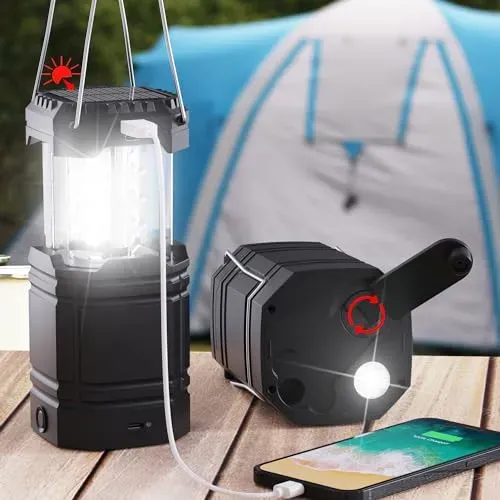
This Mesqool lantern is a smart add-on for a home kit built around winter storms and rural outages, and at 4.4 stars from more than 3,600 reviews it is the most proven pick in this guide. At just 7.9 x 7.9 x 12.5 cm and 300 g, it’s compact enough to tuck into a blackout kit, 72-hour emergency kit, or the kit you keep in the trunk. The 3000mAh rechargeable battery can be topped up three ways—USB, solar panel on top, or hand crank—so you’re not stuck when the grid and your power banks are both drained. It doubles as an emergency power bank with USB/Type‑C output for a quick phone charge. Three folding LED panels throw 360° light for over 35 hours on a full charge, handy for extended power outage situations. With IPX4 splash resistance, it’s a solid pick for wet, slushy, or snowy Canadian conditions.
Pros
- Three charging options: USB, solar, and hand crank backup
- Compact, lightweight design fits easily in emergency preparedness kits
- Over 35 hours of 360° light on a full charge
- Can recharge phones via USB and Type‑C output
- IPX4 water resistance for rainy or snowy conditions
Cons
- Solar and hand crank recharging are relatively slow in real use
- No built-in battery level indicator to show remaining charge
72HRS Emergency Food Supply Kit (200 Servings)
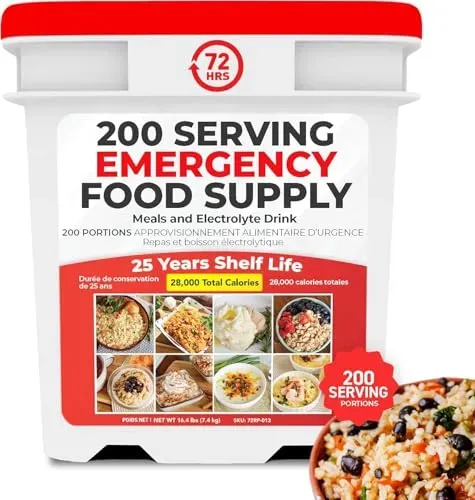
If you want your emergency kit setup to keep you fuelled during an extended blackout, this 72HRS Emergency Food Supply Kit is a serious upgrade. Designed as a complete 72-hour emergency kit for one person, it delivers roughly 2,000 calories per day across 200 total servings, packaged in oxygen-free, long-term storage bags with an advertised 25-year shelf life. That makes it ideal for a power outage survival kit in colder Canadian climates where grocery access can disappear fast during storms. The contents are dry meals that just need water and heat—perfect alongside a camp stove in a power outage kit or blackout kit. The stackable bucket format is easy to tuck into a closet or basement and light enough to move to the car or cabin. For anyone building out a premium home kit, it is a dependable food backbone — though at $299.99 it is comfortably the most expensive item here.
Pros
- High-calorie, 72-hour food supply in a single bucket
- Up to 25-year shelf life with oxygen-free packaging
- Compact, stackable design suits small Canadian homes and condos
Cons
- Requires access to clean water and some way to heat
Mountain House 72-Hour Emergency Food Supply
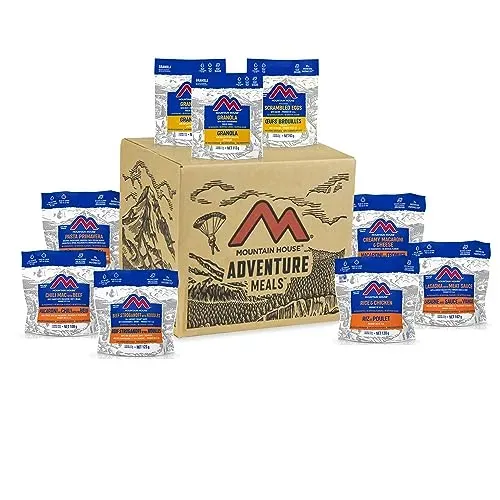
If you’re building a serious emergency kit your family can rely on, food is often the weak link. This Mountain House 72-hour emergency food supply fills that gap with 9 freeze-dried meals designed to keep you fed through a winter storm, extended power outage, or evacuation. As a premium choice for a power outage kit, it focuses purely on calories, protein, and morale-boosting comfort food: chili mac with beef, lasagna, rice and chicken, pasta primavera, mac and cheese, plus granola with milk and blueberries and scrambled eggs with bacon. Just add hot water—no stove needed if you have a kettle on a gas stove, camp stove, or emergency power source. Pouches are lightweight, compact, and come with an impressive 30-year shelf life, making this a set-and-forget staple and a solid base for any 72-hour kit.
Pros
- True 72-hour emergency meal plan with breakfast and entrees
- Just add hot water; no pots, pans, or cleanup
- 30-year shelf life with taste guarantee
- Good variety of familiar, comforting meal options
Cons
- Premium price compared with basic emergency food options
- Requires access to hot water for best taste and texture
Datrex 3600-Calorie Food Ration Bars (18 Bars)
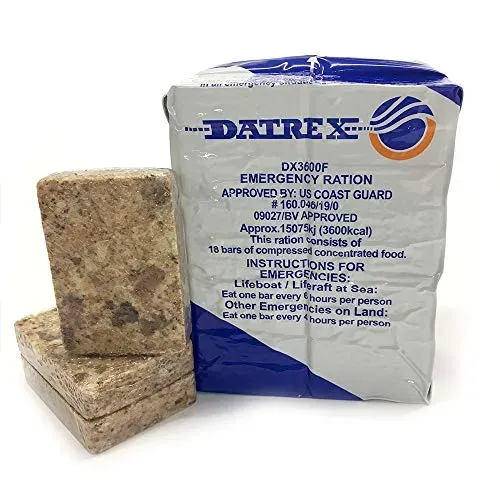
For your emergency kit, these Datrex Emergency Survival Food Ration Bars are a smart way to cover the food side of things without blowing your budget. Each pack holds 18 compact bars at 200 calories each, for a total of 3600 calories—a solid foundation for one person's 72-hour food supply when paired with other emergency items. The bars are tabletized and individually sub-packaged, so you can easily ration them in a blackout kit or keep a few in your car, go-bag, or power outage survival kit. They’re NON-GMO, nut-free, and made with all-natural ingredients, which is handy if you’re sharing emergency supplies with people who have allergies. Datrex rations are USCG approved, non-thirst provoking, and have a 5-year shelf life, making them ideal to stash in a power outage essentials bin or survival kit.
Pros
- Very affordable calories for a power outage kit
- Compact, tabletized bars are easy to ration and share
- Five-year shelf life with minimal storage fuss
- Nut-free and NON-GMO for broader dietary compatibility
Cons
- Basic flavour and texture; more “survival food” than snack
S.O.S. Rations 3600-Calorie Food Bar (72-Hour)
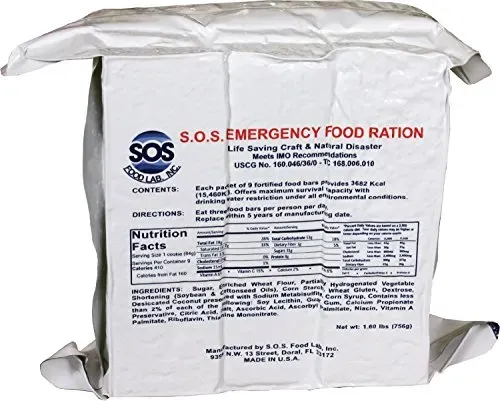
This S.O.S. Rations 3600 Calorie Food Bar is an easy, affordable addition to any emergency kit. Designed as a compact 3-day / 72-hour emergency kit food source, it packs 3,600 calories into a single 1.60 lb (756 g) brick, pre-scored into individual portions. It’s formulated to be non-thirst provoking, which matters when your water supply is limited during a winter power outage. These bars are commonly used in marine and survival kits and are rated to handle a wide temperature range, making them suitable for vehicles, a basement blackout kit, or a grab-and-go power outage kit. With a 5-year shelf life, you can toss one into your emergency supplies bin and not worry about constant rotation. For the price, it’s a solid backbone for a power outage survival kit or emergency power outage kit when you need reliable calories.
Pros
- Very compact, high-calorie food source for 72-hour coverage
- Five-year shelf life reduces need for frequent rotation
- Non-thirst provoking formula helps conserve limited water supplies
Cons
- Bland, dense texture compared with regular snack foods
- Single-flavour brick; not ideal for picky eaters
SAIKATI 40,000mAh Power Bank with Built-In Cables
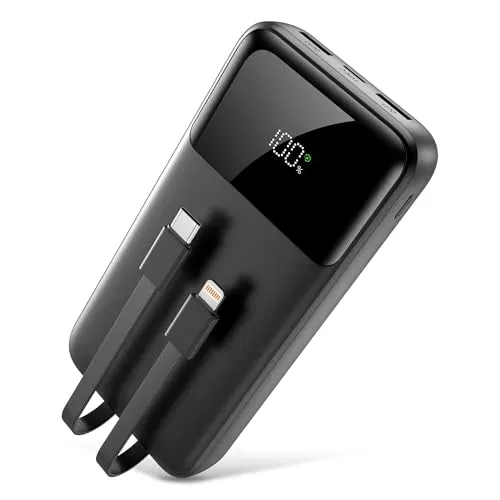
This SAIKATI 40,000mAh power bank is a practical add-on to a home kit, though be aware the price has climbed sharply over the past few months. It holds enough juice to recharge most smartphones several times, which is exactly what you want in a power outage survival kit when you’re relying on your phone for updates, light, and contact. With 22.5W fast charging and support for PD and QC, it’ll top up modern phones and small devices much faster than an old 10W brick. The built-in USB-C and Lightning cables mean fewer loose cords to manage in a blackout kit, and you can run up to five devices at once through the extra USB-A and Type-C ports. The LCD display makes it easy to ration power in a 72-hour emergency kit.
Pros
- Massive 40,000mAh capacity for extended power outage coverage
- Built-in USB-C and Lightning cables reduce clutter in emergency bags
- Fast charging up to 22.5W with PD and QC support
- Clear LCD percentage display helps you manage remaining power
- Can charge up to five devices simultaneously in an outage
Cons
- Likely heavier and bulkier than smaller-capacity power banks
APC Back-UPS BE600M1 (600VA)
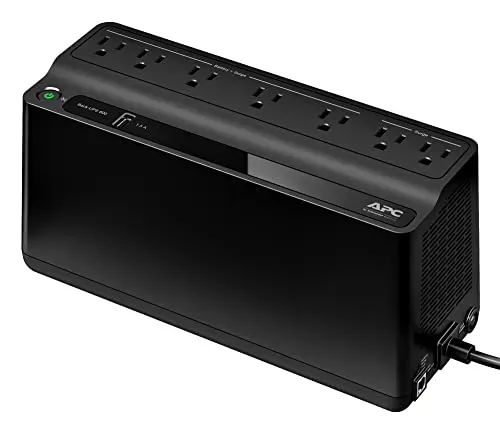
The APC BE600M1 isn’t your typical flashlight-and-batteries power outage kit – it’s a compact uninterruptible power supply that keeps your essentials running when the lights go out. With 600VA / 330W of backup power, this is ideal for keeping a modem/router, laptop, or small home office setup alive through short blackouts or brownouts, which is a big deal during Canadian winter storms. You get seven outlets in total: five battery backup + surge, and two surge-only, plus a handy 1.5A USB port for charging a phone or small device. The low-profile design and right‑angle plug make it easy to tuck behind a desk or entertainment centre, and it’s wall‑mountable if you’re tight on floor space. Paired with your broader emergency preparedness kit or 72-hour emergency kit, this UPS is a smart way to add “always on” power for communication and work essentials in your emergency supplies kit.
Pros
- 600VA / 330W is perfect for modem, router, and laptop
- Five battery-backed outlets plus two surge-only for flexibility
- Built-in USB port for keeping a phone charged during outages
- Compact, wall-mountable design suits tight Canadian condo spaces
Cons
- Not powerful enough for space heaters or larger appliances
- Replacement battery adds to long-term ownership cost
Pre-Built Emergency Kits vs DIY Setups: Which Do You Need?
When you’re planning for a power outage in Canada, you can either buy a pre-built emergency kit or piece together your own DIY power outage kit. A pre-built emergency preparedness kit gives you a curated set of blackout essentials in one shot: flashlights, basic first aid, water purification, some food rations and often a hand-crank radio. It’s ideal if you’re short on time, not sure what to buy, or need something quickly for a new home or cottage. The trade-off is you might get generic gear (weak flashlights, basic blankets, minimal food) and pay a bit more than sourcing items yourself.
A DIY survival kit lets you choose higher-quality components: better headlamps, lithium AA/AAA batteries that handle -30°C in the Prairies, extra power banks for phones, and foods your family will actually eat. It can be cheaper if you watch sales at Canadian Tire and Costco, but it takes planning to cover all categories (water, heat, light, communication, sanitation). For most households, a pre-assembled 72-hour emergency kit is the easiest starting point. Those with medical equipment, backup systems, or specific power needs may need to customize their kit with additional items.
Budget vs Premium: What's the Difference?
Budget emergency kits in Canada typically run around $80–$180 for a basic 72-hour emergency power outage kit for two people. You’ll get entry-level flashlights, alkaline batteries, simple mylar blankets, and compact food bars with shorter shelf lives. These can be perfectly adequate for short winter blackouts, where temperatures are milder and outages are usually brief. The downside is limited durability, less comfort, and gear that may struggle in deep cold or heavy use.
Premium emergency supplies in the $250–$500+ range add higher-output LED lanterns, better-quality headlamps, crank or solar radios, larger water containers, upgraded first-aid, and often longer-lasting freeze-dried meals. You also see better storage (organized backpacks or bins), longer shelf life, and stronger zippers, plastics and seals that stand up to more severe weather. For homes with frequent outages, areas prone to natural disasters, or locations with longer power restoration times, a premium emergency kit provides better comfort, reliability, and preparedness.
How to Build the Best Emergency Kit for Canadian Conditions
When building an emergency kit in Canada, you need more than a flashlight and candles. Power outages from earthquakes, ice storms, wildfires, flooding, and infrastructure failures can last days, especially in rural and remote areas where restoration takes longer. A solid emergency preparedness kit covers at least 72 hours without power, clean water, or store access. Choose supplies based on your location—rural homes need more self-sufficiency than urban apartments—and consider your region's specific risks rather than relying on generic emergency kits.
Key Features to Look For
Cold-Weather Readiness and Shelf Life
Many generic power outage survival kits are designed for mild climates, not -20°C nights in Winnipeg or ice storms in southern Ontario. Check that food rations and water pouches in your 72-hour emergency kit can handle freezing temperatures without bursting or spoiling. Chemical hand warmers, emergency blankets, and winter-rated sleeping bags are especially important if your home loses heat. When the heat goes with the power, layered warmth matters as much as calories — our guide to the best heated blankets in Canada covers low-wattage options that pair well with a UPS or portable power station. Look for products that list storage temperature ranges (ideally down to at least -20°C, lower for northern regions) and have a shelf life of 5+ years to avoid constant replacement. If you live in Northern Quebec, the Territories, or the Prairies, cold-weather specific emergency supplies should be non-negotiable.
Power and Lighting Options
In a prolonged blackout, reliable light and backup power are true power outage essentials. Prioritise an emergency power outage kit that includes multiple light sources: LED lanterns, headlamps, and compact flashlights with long runtimes. Hand-crank or solar lanterns are useful when batteries run low, but they should still perform in cold, low-sun conditions common across much of Canada in winter. For charging phones and small devices, look for power banks rated at least 10,000–20,000 mAh. If the power outage kit includes a crank radio or weather radio, ensure it covers Environment Canada alerts and has both crank and USB charging so you’re not stuck if one option fails.
Water, Food, and Nutrition for 72 Hours
Every emergency kit should cover at least three days of water and calories per person. In practice that usually means a mix of water pouches or purification tablets, plus calorie-dense rations that don’t require cooking. Look for clearly labelled servings and total calories; a proper 72-hour emergency kit should provide roughly 2,000 calories per adult per day if possible, or at least enough to maintain basic energy. If you have kids, older adults, or special diets, choose an emergency preparedness kit you can easily customise with familiar foods.
Safety, First Aid, and Regional Risks
A good blackout kit is more than food and flashlights. Make sure the first aid components are comprehensive enough for minor injuries, especially if roads might be icy or blocked during a storm. Look for basic medications (you can add your own prescriptions), bandages, gauze, tape, antiseptic wipes, scissors, tweezers, and disposable gloves. Add region-specific items: N95 masks and eye protection for wildfire zones (BC Interior, northern Alberta), earthquake supplies like sturdy shoes and work gloves for coastal BC, and waterproof document storage for flood-prone areas (Manitoba, New Brunswick river valleys). Your power outage kit should also include a paper list of emergency contacts, local utility numbers, and an instruction sheet so every family member knows how to use the gear.
Portability, Storage, and Household Fit
Finally, think about where you’ll keep your emergency power outage kit and how easy it is to grab in a hurry. For condo or apartment dwellers in Toronto, Vancouver, or Montreal, a compact, well-organised backpack or duffel is easier to store in a closet and carry down the stairs. Homeowners in suburban or rural areas may prefer a larger bin they can store in a basement or garage, plus a smaller grab-and-go bag. Look for sturdy, water-resistant bags with clearly labelled compartments so you’re not digging for batteries in the dark. An emergency kit you can truly rely on should be easy to move, easy to find, and clearly sized for the number of people and pets in your household. If you’re thinking about household preparedness, it’s worth extending the same logic to your vehicle — our car emergency kit checklist for Canadian drivers covers what belongs in the trunk year-round.
Frequently Asked Questions
Q: What should a Canadian power outage emergency kit actually include?
A solid emergency kit Canada-wide covers three categories for at least 72 hours: lighting, food, and power. For lighting, a multi-source solar hand-crank lantern works in winter when batteries fail fast. For food, pair a long-shelf-life kit with a few high-calorie ration bars for go-bags. For power, a high-capacity power bank handles phones and small devices, while a UPS keeps a modem and router running through brief outages. This setup works equally well in a Toronto condo, a Prairie farmhouse, or a coastal BC home.
Q: How long do emergency food supplies last, and when should I replace them?
Shelf life varies by format. The 72HRS Emergency Food Supply Kit is rated for up to 25 years in cool, dry storage (under 22°C), making it a “buy and forget” backbone for home supplies. Datrex and S.O.S. Rations bars typically last 5 years and are better suited for rotation in vehicles and go-bags. Mountain House pouches often clear 30 years. Mark expiry dates on your kit lid, check annually, and use anything within 6–12 months of expiry on camping trips or weekend storms to avoid waste.
Q: How long will a 40,000 mAh power bank and a UPS actually last during a blackout?
Runtime depends on the load. A 40,000 mAh power bank typically delivers 6–8 full smartphone charges or 3–4 tablet charges — enough for a family of four to manage 2–3 days of conservative phone use. The 600VA APC UPS is built for short-duration backup: roughly 20–60 minutes for a modem, router, and small device, depending on load. It’s perfect for riding out brief blackouts without dropping internet, but it’s not a multi-hour solution. Replace power bank cells and UPS batteries every 3–5 years, sooner if capacity drops noticeably.
Q: Is it worth spending more on premium emergency food instead of just ration bars?
For most households, yes — but the answer is “use both.” Ration bars are excellent calories-per-dollar and store easily in cars and go-bags, but they’re bland and basic. During a stressful multi-day blackout, hot meals like Mountain House chili mac or lasagna noticeably boost morale, especially for kids and seniors. The balanced approach: keep a full-meal kit as your primary home food source, layer in hot pouches for comfort, and stash ration bars in vehicles and go-bags as compact backup. The extra cost pays off in nutrition, variety, and the small psychological wins that matter when you’ve been in the dark for two days.
Q: How should I size my power backup for a Canadian home setup?
Start by listing what you actually need running. If the goal is keeping the modem, router, and maybe a laptop online for 20–45 minutes, the 600VA APC UPS handles that for most households — combined modem and router draw is usually well under 300W. For phones and tablets, plan on 1–2 full charges per person per day. A 40,000 mAh power bank covers a small family across three days at conservative use. If you work from home and rely heavily on connectivity, a second power bank is more flexible than upsizing the UPS. In rural areas with frequent multi-day outages, consider stepping up to a portable power station instead.
Final Thoughts: Making the Right Choice for Canadian Conditions
Choosing the right emergency kit for a Canadian power outage comes down to balancing reliability with how much disruption you can absorb. Whether the cause is an ice storm, wildfire smoke, an earthquake on the coast, or a transformer failure two streets over, a well-planned kit turns a potential crisis into something manageable.
For most households, the Mesqool solar hand-crank lantern is the standout pick — dependable lighting is the first thing you’ll miss when the power goes out, and the triple charging options mean it works whether you have sun, batteries, or just your own hands. For keeping phones and small devices alive, the 40,000 mAh power bank is the easiest add to any kit. For food, the 72HRS Emergency Food Supply Kit is the calorie-dense, ready-to-eat backbone, with Mountain House pouches for hot meals when morale needs a lift.
Before you finalize anything, walk through a 72-hour outage scenario: how will you see, stay warm, eat, and communicate? Start with lighting and food, then layer in power, heat, and communication tools based on your region. A small amount of planning now means the next blackout becomes an evening, not an emergency.