
Based on coverage from CBC, The Globe and Mail, The Globe and Mail, The Toronto Star, and CP24.
Two Ontario residents are isolating at home in Grey-Bruce after being exposed to hantavirus during travel linked to a cruise ship outbreak that has already been tied to multiple deaths. Ontario’s chief medical officer of health, Dr. Kieran Moore, says they’re feeling fine, showing no symptoms, and the risk to the public in Ontario is “very little to no.”
The situation has stirred up some pandemic-era nerves because it involves contact tracing and isolation, but Moore says this is not COVID-19 and officials are treating it as a low-risk event.
Grey-Bruce couple isolating after exposure
Moore says the two Ontarians are from the same household and are isolating in their rural community within the Grey Bruce Public Health Unit area. They’ve had no symptoms since leaving the cruise ship and are checking in daily with public health officials.
They returned to Ontario on April 25, according to Moore’s interview with CTV News Toronto. He also told The Canadian Press the monitoring window is being calculated conservatively from their travel home, because their exposure wasn’t limited to the ship.
45-day monitoring tied to incubation period
The couple is being monitored for 45 days, which Moore describes as the longest potential incubation period for the virus. He said the province is taking a cautious approach because the couple may have had exposure in two places.
Moore says they disembarked on St. Helena in late April, then flew to Johannesburg, South Africa, and an infected person was on that flight. In his account to The Canadian Press, Ontario is counting the 45 days from that flight, describing it as a way to reduce any risk of transmission.
If symptoms appear, Moore says the couple has clear instructions on who to call, and the health system would co-ordinate testing and care while keeping partners informed.
MV Hondius outbreak and Canadian passengers
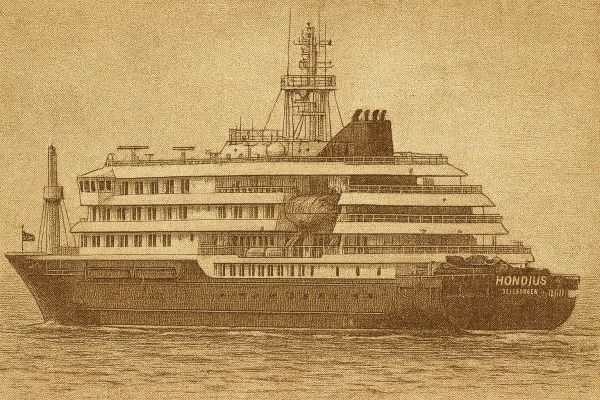
The cruise ship at the centre of the alerts is the MV Hondius. Reports say the ship has had eight cases connected to an outbreak of the Andes virus, a rodent-borne hantavirus strain that can, in limited circumstances, spread from human to human. The outbreak has also been linked to three deaths.
Moore says four other Canadians are still on board, but none of those remaining passengers are from Ontario.
Consular officials are travelling to the Canary Islands to meet the ship when it docks this weekend in Granadilla, Tenerife. The ship is carrying more than 140 passengers and crew, all described in the reporting as asymptomatic.
Why Ontario says public risk is very low
Moore’s message to Ontarians is steady: the general public faces very low risk. Hantavirus is rare and typically spreads from animals to humans, though the Andes virus strain is known for limited human-to-human transmission.
He also points to global experience and information-sharing, including work out of Argentina, where officials have dealt with this strain before and have shared samples and genomic information with the wider public health community. Moore says there is no vaccine or established treatment, though there are experimental treatments that may help.
Contact tracing returns, but not COVID-style
Moore acknowledges that hearing terms like “contact tracing” again can be anxiety-provoking for people who lived through COVID-19 restrictions. He says Ontario has plans and expertise to do monitoring, testing, and follow-up without treating this as a pandemic-level threat.
He also says public health leaders across Canada held a national teleconference to co-ordinate between federal, provincial, and territorial partners, reflecting a push for consistent communication and a unified response as the international situation develops.
Support Independent Canadian News Analysis
The Canada Report is supported by readers like you. If this article helped you understand what’s happening, you can support our work with a one-time tip.
Support The Canada Report