

Heads up: some of the links in this post are affiliate links. That means if you click and purchase, we may get a commission. It's how we keep this site running without cluttering it with ads.
After the first real cold snap—when Toronto dips to -5°C overnight—condo kitchens suddenly get "new roommates." A few peppery droppings under the sink, a faint ammonia whiff in the back of the pantry, and you're standing there in socks at 6 a.m., trying to figure out how something the size of a loonie got in. Meanwhile in Halifax, it's the basement: scratching behind the insulation as Atlantic damp turns to a hard freeze, and the mice look for warmth like they pay rent.
Canada's regions make this worse in different ways: Metro Vancouver's rain-soaked crawl spaces stay inviting, while Prairie homes dealing with -30°C cold spells (and the odd -40°C windchill week) can see a sudden indoor rush through dryer vents and garage corners. Indoor mouse activity climbs with the first real snowfall, which means the time to set traps is before it, not after. This guide breaks the picks down by scenario—fast kill, hands-off disposal, enclosed no-see designs, and humane catch-and-release—so you can act now and seal up before it snowballs. We've also left glue boards off the list entirely, and explain why further down. If you're fighting other indoor invaders too, our pest control roundup covers the broader toolbox.
| Product | Best For | Why We Love It | Price |
|---|---|---|---|
| Best overall | Twelve traps works out to under a dollar each, which is what lets you set the six or eight you actually need. | $11.75 | |
| Hands-off disposal | A magnetic lid means you tip the mouse into the bin without seeing or touching it. | $42.99 | |
| Catch-and-release households | Ventilated chamber holds the mouse alive so you can walk it well away from the house. | $13.99 | |
| Enclosed, no-see design | The strike bar sits inside the housing, so there's nothing exposed for a paw or a finger to find. | $37.99 |
Victor M150 Metal Pedal Wood Snap Trap, 12-Pack
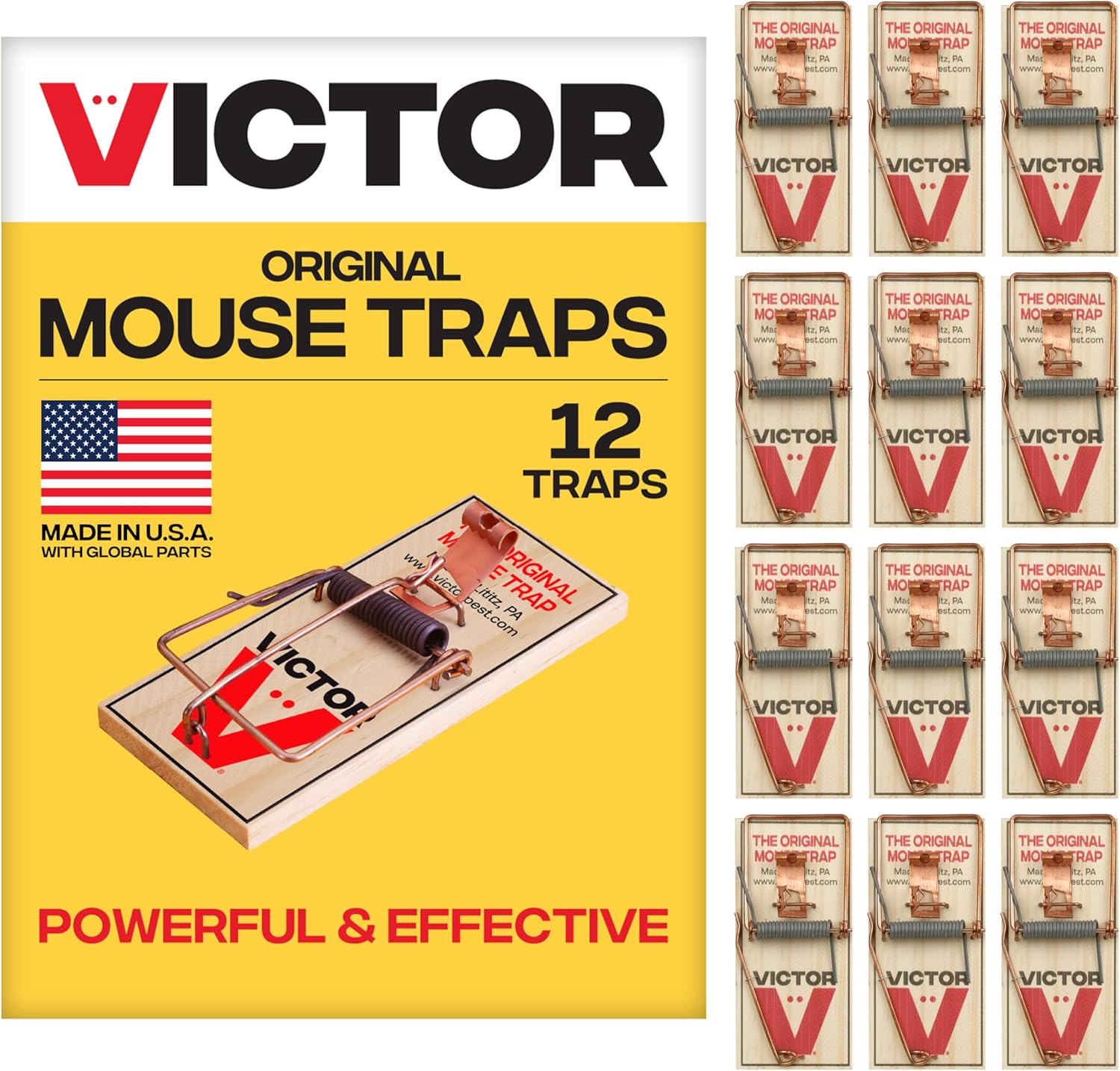
This is our top pick, and the case for it is mostly arithmetic. The single biggest mistake people make is setting one or two traps; mice run tight along walls and you want six or eight down at once, spaced a couple of metres apart. At $11.75 for twelve, this pack is the only option here that makes that affordable — under a dollar a trap.
It's the original wooden Victor design with a metal pedal, and Victor's own line has sold over a billion units. There's no battery, no adhesive and nothing to fail at -20°C, which is why it's still the most dependable choice for an unheated garage, a shed, or a cottage you visit every couple of weeks. It carries a 4.2-star average from more than 3,800 Amazon.ca ratings and is currently flagged Amazon's Choice. Bait with a pea-sized smear of peanut butter — a big glob lets a mouse feed without tripping the pedal.
Pros
- Under a dollar per trap, so you can set enough of them
- No batteries or adhesive to fail in the cold
- Reusable, or disposable if you'd rather not reset it
Cons
- Exposed strike bar needs careful placement around pets and kids
- The metal pedal takes a light touch to set the first few times
OWLTRA Electric Mouse Trap
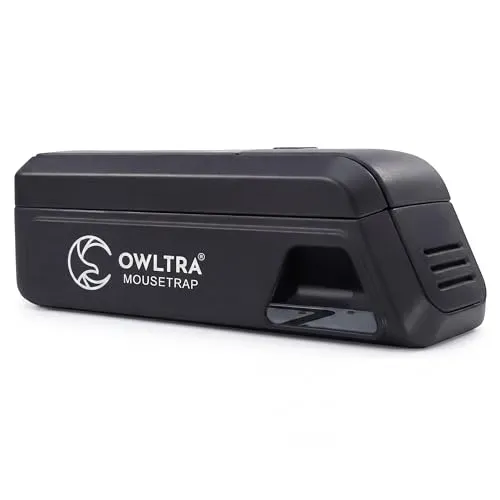
If you want a tidy, no-drama way to deal with mice indoors, the OWLTRA electric trap is a solid premium pick. It's a compact black unit (8 x 3 x 3 inches) designed for mice and other small rodents, using a 6000–9000V Quick-Zap system for a fast, humane kill. For Canadian homes where mice show up in basements, pantries, garages, and condos, the big win is how hands-off it feels: a lidded chamber with magnetic latches for easy dumping, plus a labelled bait bowl so you're not fumbling near a snap bar. Dual infrared sensors (front and rear) reduce accidental triggers, which helps around curious kids and small pets. It runs on 4 AA batteries and can deliver up to 60 discharges per set.
Pros
- Quick, humane elimination with strong electric zap
- Dual sensors help prevent false triggers
- Magnetic lid makes disposal cleaner and easier
Cons
- Indoor-only; not suitable for outdoor sheds or wet areas
- Needs 4 AA batteries (not ideal for heavy infestations)
Avando Reusable Humane Live Trap
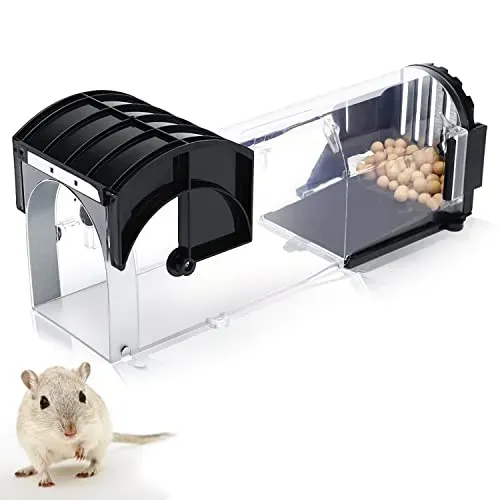
If you want a budget-friendly, no-kill option that's safer around kids and pets, this reusable live trap is a solid pick. It's made from ABS plastic and uses a simple bait compartment plus a touch-sensitive lever, so setting it doesn't feel fiddly. The design includes air holes to keep a captured mouse ventilated, which is the whole point of going humane. It's sized for typical house mice rather than larger rodents like rats. For Canadian homes, it can be used indoors or in a garage/shed—just don't leave it out in freezing temperatures for long periods, since any live-catch trap needs frequent checks. Plan to release captured mice well away from your home (at least 100 metres, ideally further) so they don't simply walk back in.
Pros
- Humane live-catch design with ventilation holes
- Child- and pet-friendly versus snap traps or poison
- Reusable ABS body cleans up easily after use
Cons
- Requires frequent monitoring to keep captured mice safe
- Not ideal for rats or larger rodents
Victor M140SSR Quick-Kill Mouse Trap, 6-Pack
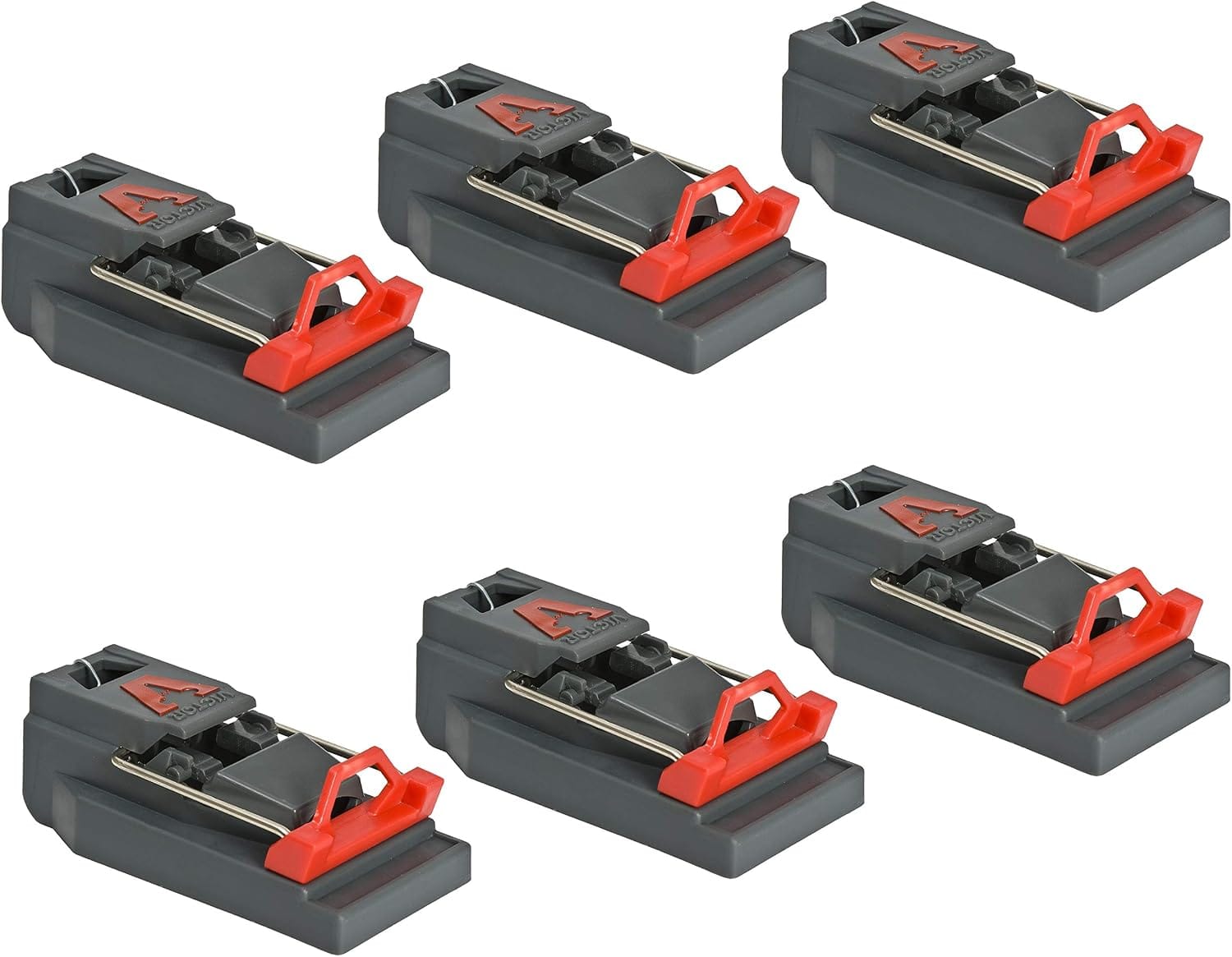
If the thing stopping you from setting traps is the prospect of seeing what's in them, this is the answer. The M140SSR encloses the whole mechanism in a plastic housing — you set it with one click, and when it fires there's nothing on display and nothing to touch. That also matters in a household with a cat or a toddler, because there's no exposed strike bar for a paw or a finger to reach.
Victor designs these for runway trapping, meaning you place them flat against a wall with the entry end facing the direction mice travel. At $37.99 for six it's the priciest snap option here, but it holds a 4.4-star average across 826 Amazon.ca ratings — the strongest rating of anything in this guide — and it's rated for indoor or outdoor use, unlike the electric trap.
Pros
- Fully enclosed, so you never see or touch the mouse
- Safer around pets and small children than an open snap trap
- Works indoors or outdoors, with no batteries
Cons
- Roughly six times the per-trap cost of the wooden Victors
- Needs correct orientation along a wall to work well
Snap, Electric or Live-Catch: Which Do You Need?
Snap traps are the default for good reason: fast, cheap, reusable, and unaffected by cold, which matters in an unheated Calgary garage or a Muskoka cottage you check every second weekend. The trade-off is placement. They need to sit tight against a wall with the trigger end toward the traffic, and you need to check them daily. If pets or small kids are in the picture, use the enclosed version rather than an open wooden one.
Electric traps cost more per unit but win on disposal — you tip the mouse into the bin without seeing it, which is the difference between a trap that gets reset and one that sits in a drawer. They're indoor-only and they drain batteries faster in a cold basement. Live-catch traps avoid killing entirely, but they're the highest-maintenance option: a mouse left in one for a day dies of stress and dehydration, which defeats the purpose, so only choose this if you'll genuinely check it every few hours and release well away from the house.
Why We Don't Recommend Glue Boards
Glue boards are sold in every Canadian hardware store, they're legal in most of the country, and we've deliberately left them off this list.
The reason is that they don't kill. A mouse stuck to an adhesive board stays alive — often for a day or more — and dies of stress, dehydration or injury while trying to pull free. The Canadian Veterinary Medical Association's position is that glue traps do not meet the scientific criteria for humaneness, and the BC SPCA has publicly called for them to be banned. England and Wales banned public use outright in 2022.
There's a practical case against them too. Glue boards are single-use, so the cost per mouse is higher than a reusable snap trap. The adhesive loses its grip in dusty, damp or cold spots, which rules out exactly the garages and crawl spaces where Canadians most often need traps. They routinely catch non-target animals — songbirds, bats and snakes turn up in wildlife rehab intakes every year. And a mouse that escapes a board becomes trap-shy, making the rest of your work harder.
Every job a glue board does, a snap trap does faster and cheaper. If you specifically need to work out where mice are travelling before committing to placement, a light dusting of flour along a baseboard will show you the tracks overnight for nothing.
Budget vs Premium: What's the Difference?
Budget mouse traps in Canada are typically $2–$5 per trap for basic wood snaps or multi-packs of simple plastic models. They're often "good enough" for a couple of mice in a condo or apartment, especially if you can place several at once and reset them yourself. The downsides show up in durability and ease: cheaper traps can misfire, have weaker springs, and are harder to set safely with cold hands in a Saskatchewan garage or a drafty cottage.
Premium options usually run $6–$15 per trap, or $25–$60 for multi-catch or enclosed designs. Spending more generally buys stronger hardware, easier one-touch setting, better hygiene (no-touch disposal), and enclosed housings that reduce pet/child risk. For recurring problems in rural areas, farm outbuildings, or Vancouver Island crawlspaces where moisture and debris are constant, premium traps often last longer and waste fewer baits—lowering total cost over a season. Warranties aren't always dramatic, but better brands tend to have more consistent quality and fewer "duds."
How to Choose the Best Mouse Traps for Canadian Conditions
Choosing a mouse trap in Canada is less about one "perfect" design and more about matching the trap to your home, your region, and your comfort level. Winter cold in the Prairies, damp basements in Atlantic Canada, and older housing stock in Southern Ontario all affect where mice travel and how traps perform. Think about whether you want a quick-kill option or a live-catch approach, how easy it is to set (especially if you're squeamish), and how you'll clean and reset it. Also consider pets, kids, and where you'll place traps—along baseboards, behind appliances, or in garages and sheds.
Key Features to Look For
Trap Style and Kill/Capture Method
Start by picking the style that fits your priorities: snap traps are affordable and effective for fast control; enclosed "no-see" snap traps add a layer of safety and reduce mess; electric traps deliver a quick kill and are popular for finished basements; glue boards are generally a last resort due to welfare concerns and mess; live-catch traps avoid killing but require frequent checks and humane release. In colder regions like Alberta, Saskatchewan, and Northern Ontario, mice often surge indoors when temps drop to -10°C to -30°C, so you may want something that can be set in multiples and reset quickly during peak activity.
Weather and Moisture Resistance (Garage, Shed, Cabin Use)
Canadian homes often need traps beyond the kitchen: think unheated garages in Calgary, sheds in the Okanagan, or seasonal cabins in Muskoka. Look for plastic or corrosion-resistant metal parts that won't warp, rust, or seize up in damp environments. If you're trapping in a basement in Halifax or St. John's where humidity can stay high, moisture-resistant materials help traps keep their tension and function over time. For unheated areas that hover around 0°C and dip below freezing, avoid flimsy designs with weak springs or adhesives that can fail when cold makes materials brittle.
Ease of Setting, Handling, and Cleaning
Ease of use matters more than most people expect—especially if you're placing several traps along baseboards or behind appliances. Look for designs with a one-touch or lever set mechanism that keeps your fingers away from the strike bar, and consider enclosed traps if you'd rather not see the mouse. Cleaning is also key: reusable traps should have smooth surfaces and minimal crevices so you can disinfect quickly after a catch. In busy households (or rentals), a trap you can empty and reset in under a minute makes it more likely you'll stay consistent, which is what actually ends an infestation.
Safety Around Pets, Kids, and Wildlife
If you have curious kids, cats, or a small dog, safety features are non-negotiable. Enclosed bait stations and covered snap traps reduce the chance of paws or fingers getting injured. For apartments and townhomes in Vancouver or Toronto, where traps may sit in shared storage lockers or near entryways, an enclosed design also prevents accidental contact. If you're placing traps outdoors or in a carport, avoid open bait that could attract birds or other wildlife. Choose traps that can be secured (some have mounting holes or tie points) so they don't get dragged away after activation.
Bait Compatibility and Placement Flexibility
The "best" trap is the one mice actually approach, and that comes down to bait and placement. Look for a bait cup or textured trigger that holds both soft baits (peanut butter) and solid baits (seeds, chocolate, or kibble). In colder months, when indoor food sources are limited, high-scent baits can work well, but they need to stay put—especially in a warm utility room where a furnace can dry out soft bait. Placement flexibility matters too: traps that sit flat, fit tight to walls, and can be oriented with the trigger end along a baseboard are easier to position in narrow Canadian kitchens and older, tighter basements.
Frequently Asked Questions
What's the best mouse trap for value if I want low ongoing costs?
Prioritize reusable traps where the only reset cost is your time. The Victor M150 wood snap trap is the clearest example: $11.75 buys twelve traps, they reset indefinitely, and the only consumable is a smear of peanut butter. Multi-packs matter more than people expect, because covering several runways at once is what actually ends an infestation. Single-use options like glue boards cost more over a season, since every catch means throwing the trap away.
How long do different trap types last, and when should I replace them?
Snap traps can last for many catches if the mechanism stays clean and the plastic doesn't crack. Replace one when the bar weakens, the trigger gets unreliable, or it won't set safely. Electric traps generally last longer if kept dry and wiped out, but should be replaced if the kill chamber shows corrosion or inconsistent performance. Any trap that holds odour, won't clean properly, or becomes warped is due for replacement.
Which trap is safest for homes with kids and pets?
A fully enclosed design is usually safest because it limits access to the kill mechanism. The Victor M140SSR hides the strike bar inside a plastic housing, and the OWLTRA electric trap uses a pet-safe trigger with the action contained inside the unit. Either is a better choice than an open wooden snap trap if a cat or a toddler shares the space. Place traps behind appliances where possible, and avoid leaving bait residue where pets can lick or paw at it.
What trap works best in cold Canadian garages, sheds, or cottages?
Cold affects batteries and adhesives, so pick gear that doesn't rely on either. Electric traps drain batteries faster in an unheated garage, and glue boards lose their tack in cold or dusty spaces. A simple mechanical snap trap is the most dependable cold-weather option — no battery, no adhesive, and easy to reset with gloves on. Store them dry, and bring them indoors between visits if your cottage sits empty.
Why doesn't this guide recommend glue boards?
Glue boards do not kill. A mouse stuck to an adhesive board stays alive, often for a day or more, and dies of stress, dehydration or injury while trying to pull free. The Canadian Veterinary Medical Association's position is that glue traps do not meet the scientific criteria for humaneness, and the BC SPCA has publicly called for a ban. England and Wales banned public use in 2022. There is a practical case against them too: they are single-use, the adhesive fails in cold, damp or dusty spots, and they routinely catch non-target animals including songbirds and bats.
What are the most common mistakes people make when buying and placing mouse traps?
The biggest one is buying a single trap and setting it in the middle of a room. Mice travel tight to walls, so set several 2–3 metres apart along baseboards, behind appliances and near droppings. The second is over-baiting: a pea-sized smear is enough, because a big glob lets a mouse feed without triggering the pedal. And traps alone won't finish the job — stuff steel wool into gaps around pipes, dryer vents and utility penetrations, or you'll keep catching new arrivals all winter.
Final Thoughts: Making the Right Choice for Canadian Conditions
Finding the right mouse trap for Canadian conditions comes down to matching the tool to your space, your tolerance for handling, and how quickly you need results. For most households, a dependable, easy-to-use trap will solve the problem before it turns into a full-blown infestation—especially during a Prairie cold snap or a damp West Coast fall when rodents push indoors.
Our top pick is the Victor M150 wood snap trap 12-pack at $11.75, because it's the only option here cheap enough to let you set the six or eight traps the job actually needs. No batteries, no adhesive, nothing that fails at -25°C.
If disposal is what puts you off, the OWLTRA Electric Mouse Trap at $42.99 lets you tip the mouse into the bin without looking at it, and suits finished basements and condos. Around pets or small kids, the enclosed Victor M140SSR Quick-Kill 6-pack at $37.99 gives you a snap trap with nothing exposed. And for catch-and-release households the Avando Humane Live Trap at $13.99 is the fit — provided you'll check it every few hours and release at least 100 metres away.
Next steps: identify entry points (start with gaps under doors and around dryer vents and pipe penetrations), remove food sources, and set traps perpendicular to the wall with bait (peanut butter works well). Pick one approach today, place traps tonight, and reassess in 48 hours—then restock or upgrade if activity continues. Choose your trap, set a plan, and you'll be back to a quieter, mouse-free home heading into the next season.