
Heads up: some of the links in this post are affiliate links. That means if you click and purchase, we may get a commission. It’s how we keep this site running without cluttering it with ads.
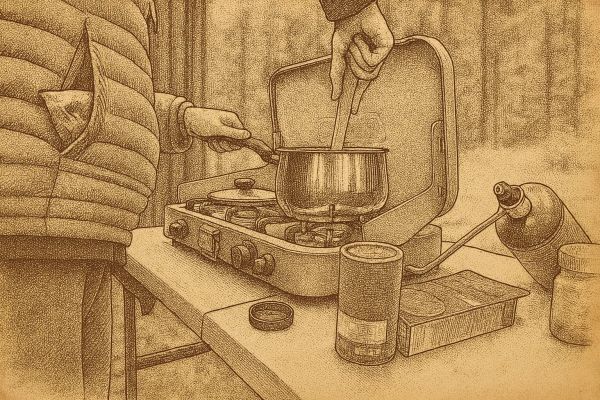
At 11:47 p.m. on a windswept Ontario Crown land pull-off in October, the lake air cuts straight through your gloves and your water bottle is already crusting with ice. You’ve got maybe 10 minutes to get ramen and coffee going before the night sinks past 0°C—and this is where “high BTUs” on a box stops mattering. In Canada, a stove has to light fast, hold a simmer for bannock, and keep boiling when the wind’s trying to steal your flame.
Conditions swing hard across the country: damp, salty gusts on the Atlantic coast, sideways Prairie wind that can double your boil time, and shoulder-season mornings in Banff that flirt with -10°C (while true winter trips can hit -30°C and beyond). Fuel availability matters too—propane is easy to find in small towns, but backpacking canisters aren’t always. If your camp cooking leans more “smash burgers” than “dehydrated meals,” our portable grill picks for camping pair nicely with the stove options below—then you can get straight to the comparison table.
Quick Overview: Our Top Picks
| Product | Best For | Why We Love It | Price |
|---|---|---|---|
| Minimalist car camping | Screws onto 1 lb cylinders for quick, steady heat with wind protection. | $29.99 | |
| Extreme-cold cookouts (-20°C) | Big 20,000 BTUs and two burners let you cook full meals fast. | $102.98 | |
| Emergency home backup cooking | CSA-certified safety and instant ignition make reliable, no-fuss heat anywhere. | $33.99 | |
| Ultralight backpackers | Featherweight titanium burner boils water fast, saving pack space and fuel. | $23.74 | |
| Fuel-free backcountry cooking | Burns twigs you find on-site, with a stable base for pots. | $27.99 | |
| Hot tent winter camping | Chimney and damper control deliver efficient heat, plus a window to watch flames. | $127.99 | |
| Breakfast-heavy group trips | Griddle plus burner handles pancakes to pasta, with easy cleanup and built-in ignition. | $184.99 |
Cylinder Top Propane Stove
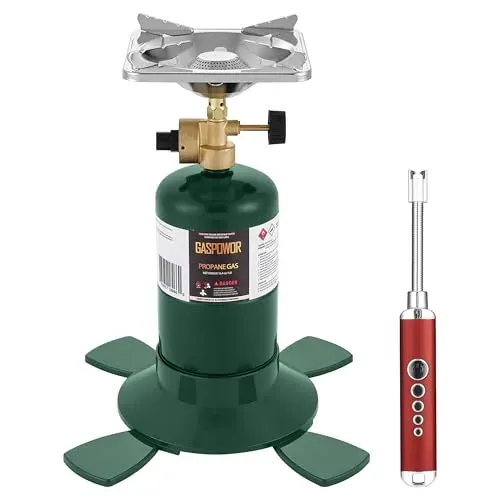
If you want a simple, low-cost camping stove for weekend trips, this cylinder-top single burner is about as straightforward as it gets. It threads onto a standard 1 lb (16 oz) propane cylinder (fuel not included) and puts out up to 10,000 BTU—enough for boiling water fast or frying up breakfast at the campsite. The pressure regulator is solid brass, which usually means a more reliable seal and steadier flame when the weather turns cool and breezy. A built-in windscreen helps keep the flame focused, and the foldable base adds some stability on picnic tables and uneven ground. Nice touch: it comes with a rechargeable USB lighter, so you’re not hunting for matches in the rain.
Pros
- Strong 10,000 BTU heat for quick boils
- Solid brass regulator helps with steady flame control
- USB rechargeable lighter included in the box
Cons
- Propane cylinder not included
- Less stable than a wide, tabletop two-burner stove
Coleman Classic 2-Burner
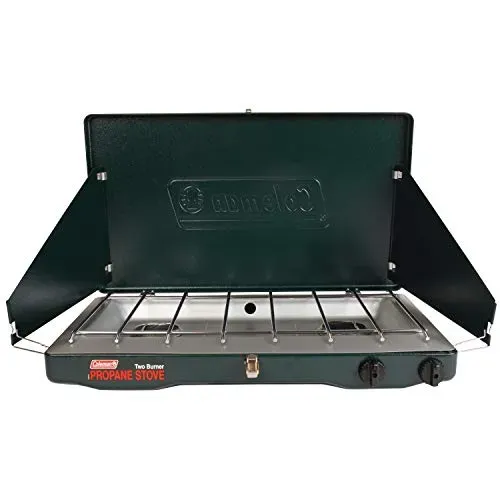
If you want a no-nonsense camping stove that can handle shoulder-season chill, the Coleman Classic 2-Burner is a dependable pick. It puts out up to 20,000 total BTUs across two adjustable burners, so you can keep a pot simmering while you crank a pan for bacon. The cooking surface fits a 12-inch and 10-inch pan side by side, and the built-in wind-blocking panels help keep flames steady at exposed lakeside sites. At 4.1 x 21.9 x 13.7 inches, it’s compact enough for car camping, but still feels stable on a picnic table. Coleman’s pressure regulator helps maintain consistent performance as temperatures drop, which is a big deal on cold Canadian mornings. Expect up to about an hour on high from a 16 oz propane cylinder (sold separately).
Pros
- 20,000 BTUs total with two adjustable burners
- Wind-blocking panels help in breezy campsites
- Fits 12-inch and 10-inch pans together
Cons
- Propane cylinder sold separately
- About one hour runtime on high
MAXSUN Portable Butane Stove
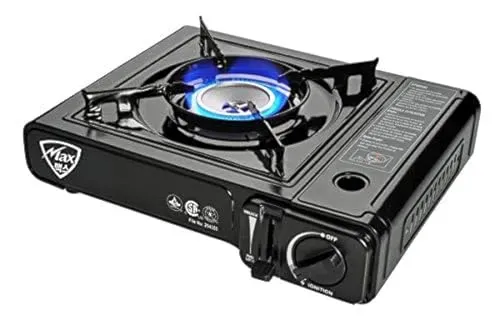
If you want a simple, wallet-friendly camping stove that still feels safe and predictable, the MAXSUN MS-2500 is a solid pick. It’s CSA certified for outdoor use in Canada, which is reassuring when you’re cooking on a picnic table at the campsite or keeping a backup for power outages. The 8,000 BTU burner has enough punch to boil water quickly and handle basic frying without feeling wildly uneven. Startup is easy thanks to the piezo ignition—no matches to fumble with in wind—and the safety lock and shut-off valve add peace of mind. I also like the wider heat-shield bottom plate; it helps reduce heat transfer to the table during longer cooks. It runs on standard 8 oz butane cans (not included) and packs into the included carrying case.
Pros
- CSA certified for safer, compliant outdoor use
- Piezo ignition starts fast without matches
- Includes carrying case for easy transport
Cons
- Butane canisters aren’t included
- Less effective for very cold-weather cooking
BRS Ultralight Titanium Stove
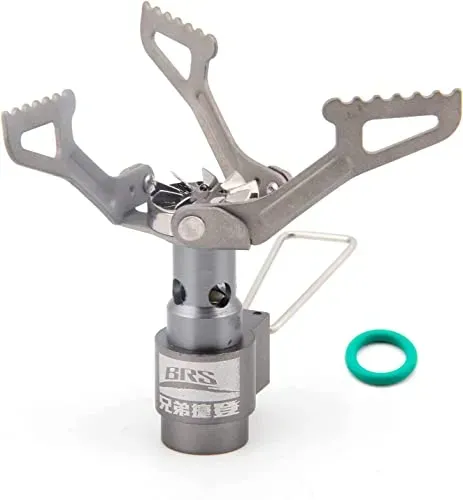
If you want a no-frills, ultra-packable camping stove for weekend trips and lightweight camping, the BRS-3000T is hard to ignore at this price. The titanium burner body is ridiculously light (about 25–26 g) and folds down small enough to disappear in a pot—BRS even includes a bright green pouch that’s easy to spot in the dirt or snow. Output is rated at 2700W, and in calm conditions it can bring 1L to a boil in roughly 2 minutes 58 seconds. The flame stays fairly even for such a tiny head, and the valve gives smooth, usable adjustment for simmering. Setup is simple: flip the pot supports out and thread it onto a standard canister.
Pros
- Incredibly light and compact for backpacking
- Fast boil times for quick coffee and meals
- Bright pouch is easy to find in camp
Cons
- Small supports can feel less stable with larger pots
- Performance drops noticeably in wind without a screen
Ohuhu Portable Wood Stove
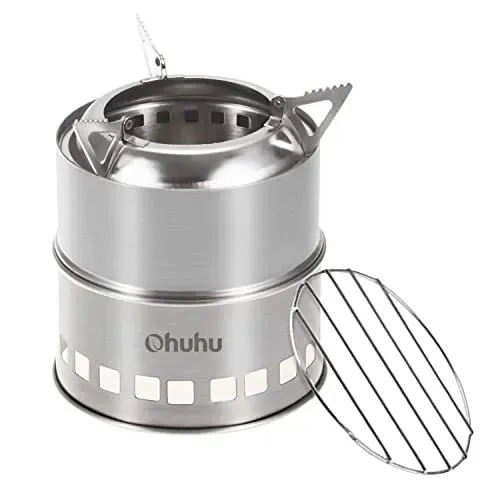
If you want a cheap, no-fuss way to cook at camp without packing fuel canisters, this Ohuhu wood-burning stove is a solid budget pick. It’s made from stainless steel, so it handles high heat without feeling flimsy, and it folds down into a compact shape that slips into the included mesh carry bag. The 3‑arm base support helps keep pots steadier on uneven ground (think gravel pads, mossy sites, or windy lakeshores), and the grill grid lets you set a small pot or pan over the flame. Instead of relying on propane, you feed it with what you find around site—dry twigs, pinecones, and small sticks—handy for Canadian shoulder-season trips when you’d rather not haul extra gear.
Pros
- Stainless steel build feels sturdy for the price
- Runs on twigs and small wood—no canisters needed
- Folds down small and includes a carry bag
Cons
- Heat output depends on dry fuel and frequent feeding
- Not ideal where wood fires are restricted
AVOFOREST Portable Tent Stove
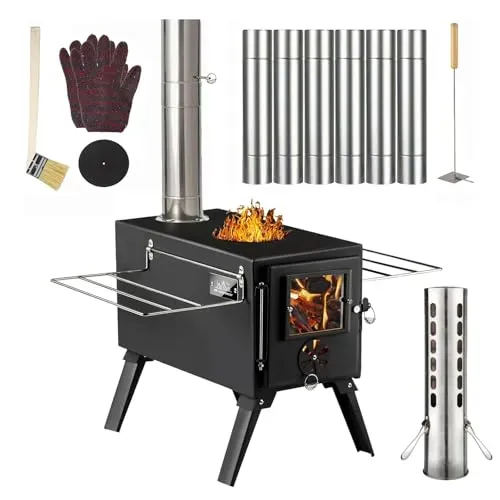
If you want a wood-burning camping stove that can also heat a shelter, the AVOFOREST Portable Tent Stove is a solid, budget-friendly pick for Canadian shoulder seasons and winter trips like ice fishing. The firebox is carbon steel for durability, while the chimney is stainless steel for easier cleanup and corrosion resistance. Its standout is the detachable chimney: seven 12-inch sections let you build the height you need, and one pipe includes a damper to help control burn rate. There’s also a glass viewing window (with a controllable air setting) so you can keep an eye on the flame without opening the door and dumping heat. Folding legs make it easier to pack, and it’s designed to ride in the car as a single kit.
Pros
- Seven-piece chimney packs down for easier transport
- Damper helps control heat output and wood use
- Glass window lets you monitor the fire
Cons
- Requires a thorough outdoor burn-in before first use
- Heavier than compact canister-style stoves
Hike Crew Stove Griddle
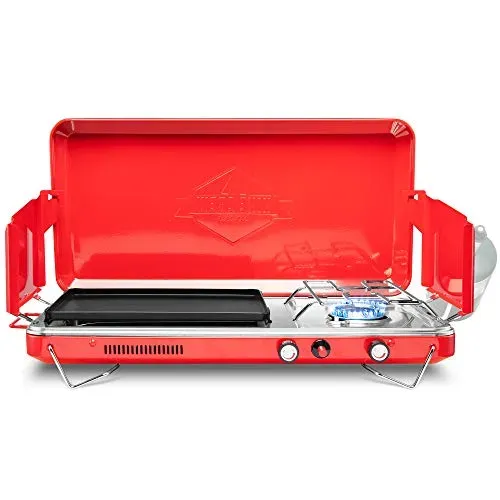
If you want one premium setup that covers most camp meals, the Hike Crew 2-in-1 brings a 10,000 BTU single-burner cooktop plus a 3,000 BTU ceramic griddle in one rugged unit. The powder-coated steel body feels built for Canadian weekends at the lake, and the stainless drip tray plus removable grate make cleanup much less of a chore. It folds down like a slim 24” x 13” x 4” briefcase, weighs about 12 lb, and has a proper carrying handle, so it’s realistic to toss in the trunk. The lid cleverly converts into a 3-sided wind shield with clips, which helps keep your flame steady on breezy picnic tables and gravel pads. You also get a built-in piezo igniter and included regulator.
Pros
- Two cooking surfaces: burner and ceramic griddle
- Wind panels help maintain flame in gusty conditions
- Folds compact with handle for easy transport
Cons
- Single burner limits multi-pot cooking speed
- Not ultralight for backpacking trips
Camping stove vs campfire cooking: Which Do You Need?
A camping stove is the reliable, low-fuss option when you actually need to eat on schedule—especially in Canada, where wind, rain, and sudden temperature swings can turn “we’ll just make a fire” into a cold snack. Stoves boil water fast for coffee, dehydrated meals, and oatmeal, and they’re often allowed where fire bans restrict open flames (common in B.C. and Alberta during smoky summers). They also make sense above treeline or on rocky Shield campsites where firewood is scarce or soaking wet. The trade-off is fuel: canisters or white gas add cost and weight, and in deep cold (think -10°C and below), some canister stoves struggle unless you use a winter blend or a liquid-fuel setup.
Campfire cooking is cheaper upfront and feels more “classic,” but it’s slower, sootier, and depends on local rules and conditions. If you’re car camping in Ontario or Québec with dry wood and no bans, a fire works well for grilling and hanging out—but bring a stove as backup for wet West Coast weather or shoulder-season trips.
Budget vs premium: What's the difference?
In Canada, budget camping stoves typically land around $30–$80, while premium models run $120–$250+ (and more for high-end liquid-fuel expedition stoves). Spending more usually buys better cold- and wind-performance, sturdier pot supports, finer simmer control, and faster boil times—features you’ll notice on exposed lakes in the Prairies, blustery Atlantic beaches, or chilly spring trips in the Rockies. Premium stoves also tend to have more reliable valves/igniters, better materials, and easier access to parts, which matters if you camp often or depend on one stove for years.
Budget options are often sufficient for occasional summer car camping or short weekend trips where you can tuck the stove behind a cooler and you’re mostly boiling water. The sacrifices: more fiddly flame control, less stability with big pots, and more frustration in wind. Consider total cost of ownership too—cheaper stoves can burn fuel less efficiently, and replacing a broken igniter or regulator mid-season can erase the initial savings. Premium is worth it if you camp in shoulder seasons, cook real meals, or want one “buy once” setup.
How to Choose the Best Camping Stoves for Canadian Conditions
Shopping for a stove for camping in Canada is less about picking the biggest burner and more about matching the build to your trips. Think about where you’ll go (windswept Prairie lakes, damp West Coast beaches, high-elevation Rockies, or buggy Ontario crown land), what you’ll cook (just coffee and dehydrated meals, or full breakfasts), and the season. Shoulder-season mornings can hover around 0°C, and winter trips can push well below -10°C, which affects fuel performance and ignition reliability. Also consider transport: backpackers need compact efficiency, while car campers can prioritize stability, simmer control, and wind protection.
Key Features to Look For
Fuel Type and Cold-Weather Performance
Your fuel choice will shape reliability, cost, and ease of use across Canada. Canister stoves are simple and clean, but standard isobutane blends can struggle as temperatures dip toward 0°C and below, especially on frosty mornings in Algonquin or along the Icefields Parkway. Look for cold-friendly blends (often with propane mixed in) and consider a stove that can run a canister inverted if you camp in colder months. Liquid fuel models (white gas) tend to be more dependable for winter camping at -10°C to -20°C, making them a solid pick for the Rockies or northern trips. Propane is great for car camping and shoulder seasons, and it’s widely available.
Wind Resistance and Burner Design
Wind is a constant companion at many Canadian sites—think exposed shorelines in Nova Scotia, open Prairie campgrounds, or ridgelines in the Rockies. A stove that boils quickly in calm conditions can become frustrating if the flame blows around and heat spills past the pot. Look for recessed burners, integrated wind protection, and pot supports that keep cookware centred over the flame. Wider burners can distribute heat more evenly (helpful for real cooking), while tightly focused burners may be efficient for boiling but can scorch pans. If you’re buying a two-burner camp stove for picnic-table cooking, sturdy wind baffles and a low, stable profile can make a bigger difference than raw BTU claims.
Simmer Control and Real-World Cooking Ability
Many stoves claim high output, but Canadian camping meals often require finesse: oatmeal without burning, bannock or pancakes on a griddle, or a pot of chilli that doesn’t weld itself to the bottom. Good simmer control means a valve that adjusts smoothly and holds a low flame without sputtering—especially important in cooler air around 5°C to 10°C when pressure drops slightly. If you like cooking for a group, consider two burners with independent controls so you can boil pasta on one side and keep sauce warm on the other. For backpacking, a regulated valve (rather than a basic on/off feel) helps maintain consistent heat as the canister empties.
Weight, Packability, and Setup for Your Trip Style
How you travel changes what “best” looks like. For backcountry routes in Banff, Jasper, or the La Cloche Silhouette Trail, grams matter: compact burners, nesting pot systems, and minimalist supports are ideal. Check packed dimensions and whether the stove fits inside your cook pot with a fuel canister. For canoe camping in places like Quetico or La Vérendrye, stability becomes a priority—wider pot supports and a lower centre of gravity help on uneven rocks and shore lunch spots. Car camping across B.C. provincial parks or Ontario conservation areas lets you choose a larger, more comfortable setup with built-in ignition, better wind protection, and space for bigger cookware.
Durability, Materials, and Maintenance in Wet or Dusty Conditions
Canadian weather swings fast, and gear gets wet—think drizzle on Vancouver Island, sudden thunderstorms in Muskoka, or gritty dust at prairie campsites. Look for sturdy materials like stainless steel and anodized aluminium, solid hinges and latches on suitcase-style stoves, and pot supports that don’t flex. For backpacking stoves, metal valves and robust threads reduce the chance of cross-threading in the field. Consider how easy it is to clean spilled food, and whether parts like jets, O-rings, or pumps (for liquid fuel) are serviceable. A stove that’s easy to maintain is a safer long-term investment, especially if you camp often and rely on it for hot meals and warm drinks.
Canadians exploring this topic may also find our Best Portable Air Conditioners in Canada: Sizing & Installation Guide helpful.
Frequently Asked Questions
Q: What’s the best camping stove choice for Canadian weather—wind, cold, and shoulder-season camping?
In much of Canada, wind and colder temps can reduce stove performance and increase fuel use. Prioritize stable pot support, good wind protection, and a reliable ignition you can operate with gloves. For propane setups, integrated wind panels and sturdy legs help a lot—features found on the Hike Crew 2-in-1 Gas Camping Stove and Griddle. Also plan extra fuel for spring/fall trips, and always cook in a well-ventilated area, never inside a closed tent.
Q: How do I compare total running costs (fuel + efficiency) between stove types for camping?
Running cost is mostly fuel price and how quickly you burn through it. Propane is widely available across Canada and is easy to manage, but bulkier; small canister-style setups can be convenient yet pricier per meal. If you already buy propane for other gear, a two-burner like the Coleman Gas Camping Stove | Classic Propane Stove can be cost-effective for families. For longer trips, track meals cooked per cylinder/canister to estimate true cost.
Q: What compatibility checks should I do before buying a camping stove (fuel, cookware, connectors)?
Before you buy, confirm the stove’s fuel type matches what you can reliably source where you camp (especially in smaller Canadian towns). Check the connector/regulator requirements and whether the stove includes them. Also verify your cookware fits: wide pots need stable supports; larger pans need a burner with enough clearance and a strong base. If you’re considering a cylinder-top unit like the Propane Cylinder Top Stove with Adjustable Burner, ensure it matches your propane cylinder type and size.
Q: How do I clean and store a camping stove to prevent rust, clogging, and ignition issues?
After each trip, wipe down surfaces, remove food spills, and let everything dry fully before packing—moisture plus road salt can be hard on gear in Canada. Clear burner ports gently (no aggressive poking) and keep the fuel connection clean and capped. For butane stoves, store the unit dry and keep the carrying case clean so grit doesn’t jam controls. With the MAXSUN MS-2500 Portable Butane Gas Stove, always remove the canister before storage and transport.
Q: What are the most common mistakes Canadians make when buying a camping stove?
The biggest mistake is buying for “maximum BTUs” instead of your actual use—solo backpacking, car camping, or basecamp cooking all need different priorities. Another is underestimating pack weight and size, then leaving the stove behind. Ultralight hikers often benefit from simple, tiny burners like the BRS Stove BRS 3000T, but it’s not ideal for big pots or group meals. Also avoid assuming fuel will be available everywhere; plan your resupply realistically.
Final Thoughts: Making the Right Choice for Canadian Conditions
Choosing a camping stove for Canadian conditions really comes down to reliability, fuel availability, and how you like to cook when the weather turns. If it can light quickly and hold a steady flame, you’ll eat better and stress less—whether you’re in a windy Alberta campground or dealing with damp mornings on the West Coast.
For most campers, the Coleman Gas Camping Stove | Classic Prop is the #1 pick because it strikes the best balance of consistent heat, straightforward controls, and easy-to-find propane. It’s an excellent choice for family car-camping trips where you want enough space and stability to simmer chilli, boil pasta, and make coffee back-to-back without fuss. When you’re cooking at a picnic table and packing for a full weekend, it’s the dependable workhorse.
If you want something compact and simple for quick meals, the MAXSUN MS-2500 Portable Butane Gas Stove is a strong option—great for short overnights, day trips, or keeping in the vehicle for shoulder-season emergencies (just keep butane from getting too cold). For minimalists who like a fast, no-frills setup, a Propane Cylinder Top Stove with Adjustab gives you direct heat and portability, ideal for boiling water or reheating meals when space is tight.
Before you buy, match the stove to your trips: confirm which fuel you can easily restock, practise lighting and adjusting it at home, and pack a windscreen plus a lighter as a backup. Then pick the model that fits your cooking style and start planning your first menu—grab your stove, stock the right fuel, and get outside this week.
With the right setup, you’ll be ready to cook confidently through Canada’s changing seasons and make every campsite meal a little better than the last.