
Based on coverage from insauga, The Peterborough Examiner, and National Newswatch.
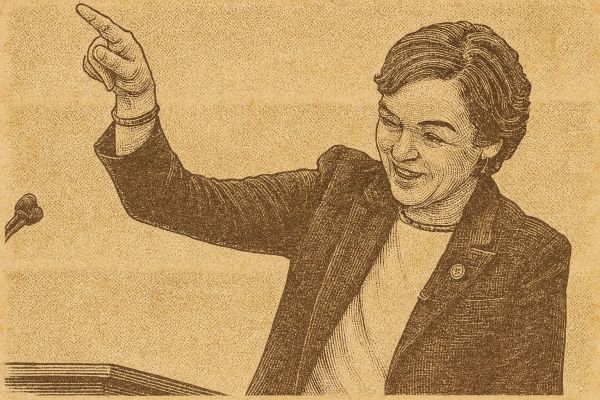
Christine Fréchette’s first week as Quebec premier has sparked a familiar conversation in Canadian politics: when parties are in trouble, women often get handed the wheel.
Former Ontario premier Kathleen Wynne, former Quebec premier Pauline Marois, former B.C. premier Christy Clark and New Brunswick Premier Susan Holt told The Canadian Press they see Fréchette facing a classic “glass cliff,” where a woman is elevated to leadership when the odds of failure are already high. Still, none of them are counting her out.
Christine Fréchette sworn in as Quebec premier
Fréchette is Quebec’s 33rd premier and only the province’s second woman to hold the job, after Pauline Marois (2012 to 2014). She takes over with less than six months before Quebec’s October general election.
The scale of the challenge is stark. Poll aggregator Qc125 projects Fréchette’s party, the Coalition Avenir Québec, could be reduced to zero seats if an election were held on current numbers.
That grim backdrop is exactly why the “glass cliff” idea is getting airtime again: a big, risky reset, and the new leader is a woman.
Former Canadian female premiers warn of “glass cliff”
Wynne put it bluntly: people still carry a narrow mental picture of what a premier looks like. She recalled meeting a businessman who shook hands with a male staffer beside her and addressed him as “premier,” not her. “A five-foot-four-woman is not who people think of as a leader,” she said.
Clark argued that when a party is “really low in the polls,” voters look for an obvious change, and a woman leader can represent that change simply because it remains unusual. At the same time, she said politics and press galleries can still operate like “boy’s clubs” that judge women more harshly, adding: “We still live in a sexist society.”
Holt, who led New Brunswick’s Liberals to a majority in 2024 and became the province’s first female premier, said she sees the pattern repeating. “The bar is higher and often women are put into those kind of unwinnable situations,” she said, while calling Fréchette “extremely determined and smart.”
Canada’s record on women premiers
Canada’s numbers show progress, but also how rare these moments still are. Of more than 340 Canadian prime ministers and premiers since Confederation, 17 have been women, according to The Canadian Press.
The former premiers also pointed out something that gets lost in the “set up to fail” narrative: several women took over struggling parties and still won elections.
Wynne, Clark and Marois faced tough starts
Clark became B.C. Liberal leader in 2011 after Gordon Campbell’s approval rating fell to nine per cent and the party was 22 points behind in the polls. She went on to win a surprise majority in the 2013 election. She later won a second term, the only female premier to do so, though her party was reduced to a minority in May 2017. She lost a confidence vote and resigned in June 2017.
Wynne took over in Ontario in 2013 after Dalton McGuinty resigned, with the Liberals unpopular following multiple scandals. She remembers seeing a newspaper comic depicting her driving a beat-up car the day after she was sworn in. She won a majority in 2014, then lost the next election to Doug Ford’s Progressive Conservatives.
Marois became Parti Québécois leader after the party lost official Opposition status in 2007. She rebuilt and won a minority government in 2012, defeating the Liberals. That election night also turned tragic when a gunman entered the Montreal venue where she was speaking, killing a lighting technician and injuring another person. Marois later called an election in 2014 and lost.
Marois also described the grind of sexist expectations. After a morning walk, she held a news conference and journalists told her she “looked tired.” She challenged them to join her at 6 a.m. the next day for a walk up Mount Royal, and she said many “stayed on the campaign bus.”
What may decide Fréchette’s outcome
Kate Graham, a political science professor at Huron University College, said it is too soon to say whether Fréchette is destined for the glass cliff. Graham, who hosts the podcast series “No Second Chance” about women in senior political roles, said Fréchette invites comparisons to both Kim Campbell and Wynne.
Campbell became Canada’s first and only female prime minister after winning the federal Progressive Conservative leadership in 1993, following Brian Mulroney’s retirement. She served 132 days before the party suffered what is widely considered the worst defeat for a federal governing party.
Graham said Fréchette’s path could depend on whether she can convince voters something has genuinely changed inside the party, not just the name at the top.
Marois, for her part, said she felt “deep pride” seeing Fréchette become premier, calling it “a win for all women.” She also pointed to real change inside Quebec politics: when she first entered the legislature in 1981, about 24 per cent of elected officials were women. Today, she said, it is 46 per cent.
Support Independent Canadian News Analysis
The Canada Report is supported by readers like you. If this article helped you understand what’s happening, you can support our work with a one-time tip.
Support The Canada Report