

Heads up: some of the links in this post are affiliate links. That means if you click and purchase, we may get a commission. It's how we keep this site running without cluttering it with ads.
By 7 a.m., a Canadian mudroom can smell like a small swamp: rain-soaked work boots by the door, trail shoes dripping onto the mat and yesterday’s gloves still clammy inside. Leaving that gear to air-dry can mean damp footwear again the next morning, while direct heat from a radiator or space heater can be hard on leather, adhesives and insulated liners. Even dependable pairs from our best winter boots for Canada guide need proper drying after a wet commute, dog walk or day on the slopes.
The best boot dryer is not automatically the biggest rack in the garage. For most homes, we recommend the original Super Mitt Boot Dryer: it costs $14.99, holds a 4.6-star rating from 1,200 reviews and offers uncomplicated drying without claiming valuable mudroom space. This curated guide weighs current specs, prices and user feedback, from basic dryers starting at $14.99 to multi-pair rack systems near $146. The comparison table below shows how the leading options stack up for boots, gloves, shoes and ski gear.
Quick Overview: Our Top Picks
| Product | Best For | Why We Love It | Price |
|---|---|---|---|
| Tight budgets | No power needed: set it over a heat register to dry up to five pairs of mitts or boots. | $14.99 CAD | |
| Fast drying on trips | Reaches 65°C with forced air and packs small, making it practical for trips and wet footwear. | $49.99 CAD | |
| Families and mudrooms | Silent radiant heat for four items at once, at 7.5 watts per boot. | $145.61 CAD | |
| Compact storage | Retractable hoses and a compact 500-gram design help simplify storage between drying sessions. | $54.99 CAD | |
| Travel and seasonal use | Folding design, three timer modes, and broad footwear compatibility suit travel and winter drying. | $32.99 CAD | |
| Quiet everyday drying | Fanless 36-watt convection dries boots silently overnight, backed by a two-year warranty. | $60.99 CAD | |
| Drying multiple items | Four pipes, timer controls, UV light, and odour absorption support versatile footwear and gear care. | $40.88 CAD |
FUAUFAS Super Mitt Dryer
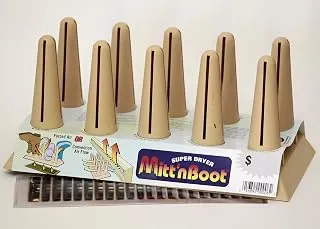
At $14.99, this is the lowest-priced option in this guide for drying damp footwear and mitts. The FUAUFAS Super Mitt Dryer is our top pick because it sticks to the basic job Canadians need after wet commutes, workdays and outdoor errands: helping boots and mitts dry rather than sitting damp overnight. It has no motor or plug: set it over a forced-air register or beside baseboard heat, and the cone’s slots channel warm air through up to five pairs of mitts, gloves or boots. Larger boots may need a second cone. Its 4.6-star rating from 1,200 customer ratings adds reassuring buyer support at this price. Because it borrows your home’s heat, it suits the forced-air furnaces and baseboard heaters common in Canadian homes; if you have neither, pick an electric model instead.
Pros
- Lowest-priced option in this guide
- No power needed; holds at least five pairs
- Strong 4.6-star rating from 1,200 customers
Cons
- Needs a forced-air register or baseboard heater
- Tall boots may need more than one cone
Snowpea Portable Boot Dryer
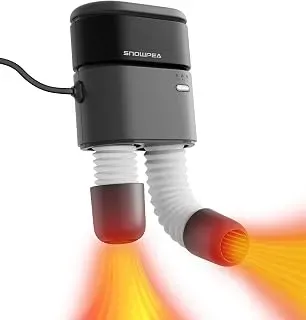
For travellers, cottage weekends or households that need wet footwear ready again without dedicating floor space to a rack, the Snowpea portable dryer is a compact, heat-assisted option. It uses forced air reaching 65°C, with extendable hoses up to 30 cm that can reach into taller footwear. That makes it a practical fit for ski boots, hockey skates, sneakers, cleats and boxing gloves—not just everyday work boots. A 3-, 6- or 9-hour timer shuts the unit off automatically, which is useful when gear needs drying while you get on with the day. At about $50, it costs more than a basic passive dryer but takes far less room than a ski-boot drying rack. Its 4.5-star average from 1,200 ratings suggests broad buyer confidence, though it is intended for one drying setup at a time.
Pros
- 65°C forced air suits damp footwear and gloves
- Extendable hoses reach into taller ski boots
- 3-, 6- and 9-hour automatic shut-off timer
Cons
- Dries only one setup at a time
- Costs more than simple non-heated boot dryers
DryGuy Dry Rack
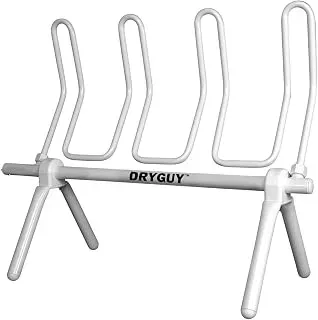
At about $146, the DryGuy Dry Rack is a premium, dedicated setup for households that dry gear regularly and are willing to spend more for a longer-term solution. It is supplied for shoes, boots and gloves, making it a practical fit for rain-soaked work footwear, damp everyday shoes and ski-day gear that should not sit wet overnight. The retailer listing gives it a 4.5-star average from 252 customer ratings, which is reassuring for a higher-priced niche appliance. This is not the value pick for occasional drying; the original Super Mitt costs far less. It dries up to four items at once with silent radiant heat, mounts on a wall, the floor or freestanding, and draws just 7.5 watts per boot, so running it nightly costs very little on any provincial electricity rate.
Pros
- Dedicated format for shoes, boots and gloves
- 4.5-star average from 252 customer ratings
- Silent, with no moving parts to wear out
Cons
- Much pricier than simple portable boot dryers
- No timer listed; plan to unplug it yourself
SOTHING Retractable Hose Dryer
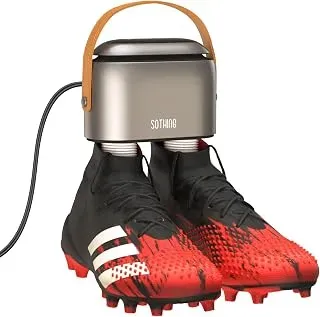
Rather than taking up permanent floor or wall space, this compact dryer is aimed at Canadians who want more control than a basic plug-in unit but still need an easy-to-store option. The SOTHING Ultra uses retractable hoses, making it a more storage-minded choice than a rack-style model. It weighs 500 g, and the 95W drying system offers three heat levels from 45°C to 65°C, an LED touch panel and a one- to nine-hour timer, useful for damp work boots, sneakers, soccer cleats and gloves. At $54.99, it is a mid-range pick with a 4.4-star rating from 636 customers. It shares a model series with the Snowpea above, so think of it as the same core design with adjustable heat for $5 more.
Pros
- Retractable hoses make storage simpler between drying sessions
- Three heat levels and one- to nine-hour timer
- Compact 500 g design suits smaller homes
Cons
- Costs notably more than basic single-purpose boot dryers
- Not designed for drying several pairs at once
Scienbeauty Folding Boot Dryer
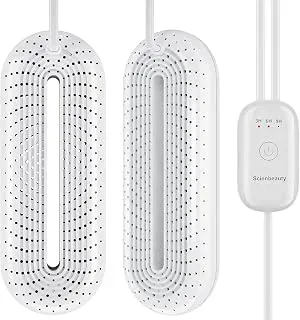
Folding storage is the main reason to consider this Scienbeauty folding boot dryer for a smaller home, condo or travel bag. It has three timer modes, letting users set a drying cycle rather than leaving damp footwear unattended for hours. The design is intended for shoes, boots, gloves, socks and ski boots, so it is more flexible than a basic boot-only dryer for year-round Canadian use. At about $33, it costs more than the simple Super Mitt top pick, but adds portability and timer control for people who regularly move gear between home, the cottage and winter trips. Its 4.2-star rating from 1,900 customers suggests a well-established customer favourite, though the retailer provides few technical details beyond its folding design and timer modes.
Pros
- Folding design takes up less storage space
- Three timer modes add useful shutoff control
- Works with footwear, gloves, socks and ski boots
Cons
- Costs more than the basic $14.99 Super Mitt
- Listing provides limited technical performance information
JobSite Silent Boot Dryer
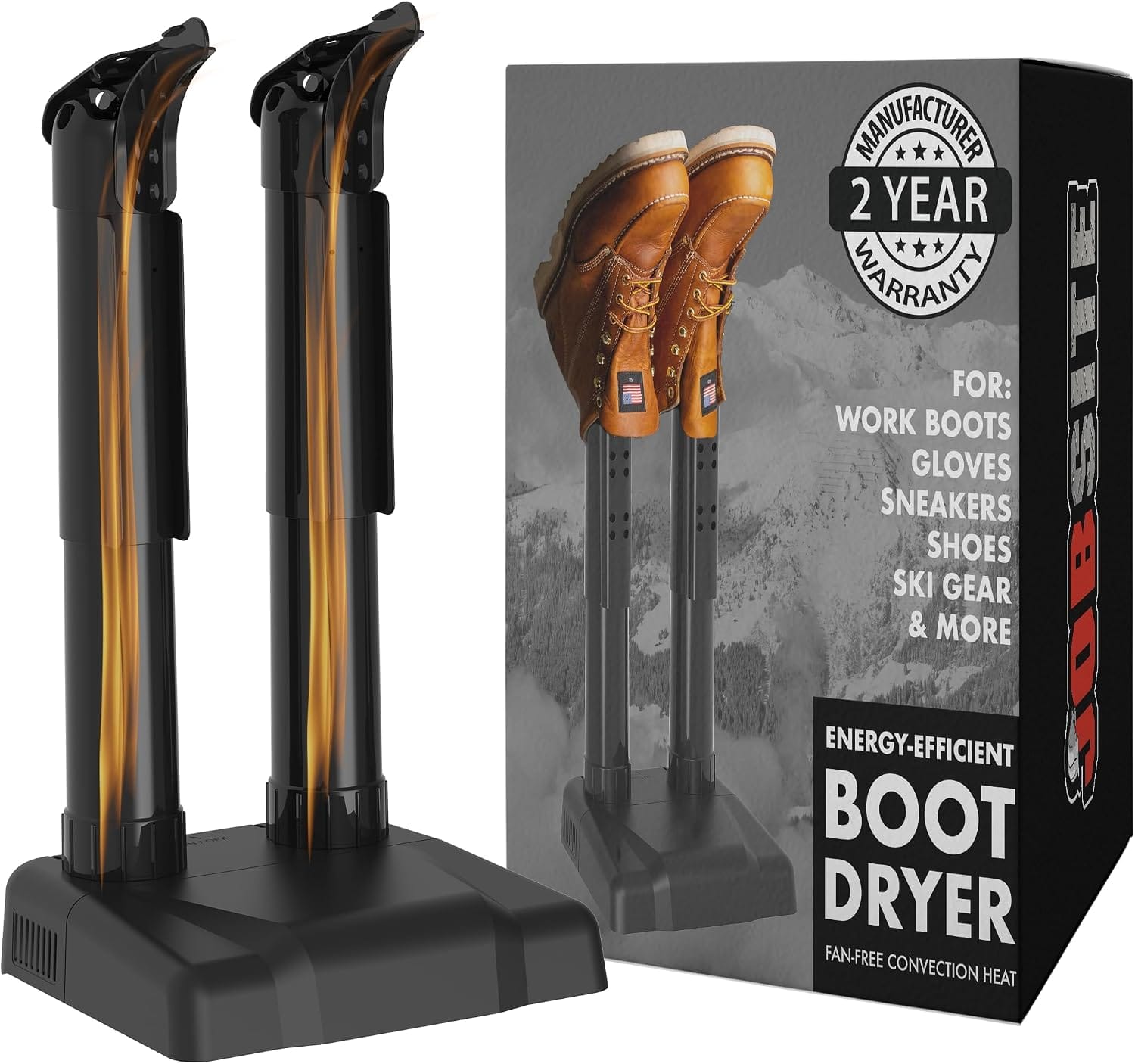
For homes where silent, overnight drying matters more than speed, the JobSite boot dryer is the proven choice. It has no fan or motor: a 36-watt convection heater sends warm air rising naturally into each boot, with 20 cm extenders for taller pairs. JobSite lists about 30 minutes to warm a pair, 8 hours for damp boots and 12 for soaked ones, which fits an overnight routine after a slushy commute or outdoor shift. It is also rated for ski and snowboard boot liners, winter gloves and socks. At $60.99, it costs more than the timer-equipped portables and has no timer of its own, but it draws less power than most light bulbs and comes with a two-year warranty. Its 4.3-star average from more than 10,000 ratings is the largest review base in this guide.
Pros
- Completely silent, with no fan or moving parts
- 36 W draw costs very little to run nightly
- Two-year warranty and 10,000-plus ratings
Cons
- No timer
- Slow: damp boots take about eight hours
YsChois Multi-Purpose Boot Dryer
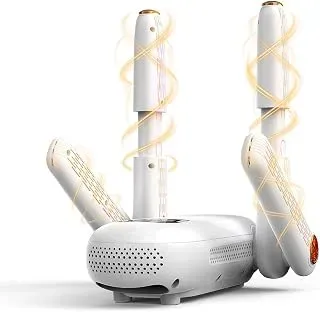
At about $41, this option costs more than a basic single-pair dryer but adds four drying pipes, timer controls, UV light sanitization and odour absorption for households dealing with more than damp work boots. The YsChois boot dryer is designed for shoes, ski boots, gloves, socks and hats, making it a practical pick when wet gear tends to accumulate by the door. Boost Mode is intended for faster drying when needed, while the timer offers more control than leaving a warmer running unattended. At under a kilogram shipped, it takes up far less storage space than a full rack-style ski boot dryer. Its 4-star rating from 242 customer reviews suggests a reasonably established, feature-focused mid-range choice.
Pros
- Four pipes support drying footwear and smaller gear together
- Timer, UV light and odour absorption add useful flexibility
- Compact enough for a closet shelf
Cons
- Costs noticeably more than simple budget boot dryers
- Four-star rating is solid, but not category-leading
Boot Dryers vs Air-Drying: Which Is Better for Wet Boots?
Air-drying costs nothing to run and takes no storage space, so it remains a sensible choice for lightly damp shoes left in a warm, ventilated spot. The drawback is time: insulated work boots, ski boots and gloves can stay damp overnight, trapping odour and making the next wear unpleasant. Drying near a radiator or with a hair dryer may speed things up, but concentrated heat can be hard on adhesives, liners and leather.
A boot dryer gives moisture a more deliberate route out of footwear. Simple non-electric designs such as the original Super Mitt Boot Dryer are particularly appealing for everyday damp boots: at $14.99, it is the strongest value pick in this guide. Electric models can make more sense for consistently soaked work gear or ski footwear, particularly when a timer helps avoid unnecessary run time. In Canada, electricity costs vary by province, but a timer-equipped dryer is still the more controlled option than leaving a heater running nearby. Choose air-drying for occasional moisture and patience; choose a dryer when reliable next-day footwear matters.
What Does Spending More on a Boot Dryer Actually Buy You?
The entry point is refreshingly low. The original Super Mitt Boot Dryer costs $14.99 and is genuinely enough for shoppers who need a compact, uncomplicated solution for one pair at a time. Its strong review record matters more than a long feature list for ordinary wet boots and shoes. About $33 brings a folding model with three timer modes and listed compatibility with gloves, socks and ski boots.
Moving into the $41 to $55 range generally buys more active drying features, such as four pipes, retractable hoses, boost modes or forced air. The $60.99 JobSite takes the opposite approach: no fan and no timer, just silent, low-wattage convection heat. These are worth considering for households drying several kinds of gear, or for damp work boots that need faster attention. At the high end, the DryGuy Dry Rack reaches $145.61. Its case rests on capacity and a dedicated rack-style setup, not simple value. More parts and electronics can mean more convenience, but also more to fail; check the stated warranty before paying extra. For most homes, the cheapest well-reviewed option is the better total-cost choice unless multi-item drying is a regular need.
Airflow, Capacity and the Details That Keep Gear Dry
Drying Method and Heat Level
Gentle airflow is generally the safer approach for footwear with glued soles, insulated linings and synthetic materials. Forced-air designs can speed up the process, but check the stated heat level rather than assuming every electric dryer works the same way. Snowpea’s travel-oriented dryer specifies 65°C forced air, which may appeal to people who want a warmer, more active drying method for shoes after a wet commute or outdoor shift. For delicate gear, avoid treating a dryer like a high-heat space heater. Drying is usually more reliable when air can circulate through the toe box and around the liner instead of concentrating heat in one spot.
What You Need to Dry: Boots, Gloves or Ski Gear
Start with the largest item you expect to dry. Tall work boots and insulated winter pairs, like those in our ice-traction boots guide, need more reach than running shoes, while gloves and ski boots benefit from supports that direct air into narrower openings. Battery-heated gear, such as heated gloves, should be dried to the maker’s instructions instead, with the battery removed. The SOTHING Ultra has retractable hoses, a useful format for reaching farther into work boots. A folding dryer listed for shoes, gloves, socks and ski boots is worth considering for households that rotate through several types of gear. The YsChois model uses four pipes, which can better suit multiple smaller items. For ski days in the Rockies, Quebec or northern Ontario, capacity matters more than decorative extras.
Timers and Overnight Peace of Mind
A timer lets you run a dryer for a planned period instead of leaving it operating indefinitely. This is especially useful in busy homes, where boots may be loaded after school, a dog walk or a late work shift. The Scienbeauty folding dryer includes three timer modes, while the YsChois four-pipe unit includes a timer as well. The JobSite dryer skips the timer entirely, but at 36 watts its overnight running cost is small. Timed operation is not a substitute for following the manufacturer’s instructions, but it is a practical convenience.
Storage Footprint Versus Household Capacity
Small dryers are easier to tuck into an entryway closet, condo storage locker or mudroom cabinet. That is a major advantage for one-person households and anyone drying only one pair at a time. At the low end, the Super Mitt’s $14.99 price makes it the sensible first purchase when simple footwear drying is the goal. Portable models range upward: the Snowpea unit is $49.99 and the retractable-hose SOTHING Ultra is $54.99. A larger rack-style option such as DryGuy’s Dry Rack costs $145.61, a considerable jump, but potentially sensible for families drying several pieces of gear regularly.
Odour Features and Extras Worth Paying For
Drying thoroughly is the first defence against odour, so do not pay extra for sanitizing claims if the dryer’s capacity or shape will not suit your gear. Still, added functions can be useful for frequently worn footwear. The YsChois dryer lists UV light sanitization and odour absorption alongside its boost mode and four-pipe layout; it costs $40.88. These features may appeal to workers with daily boots or families managing gloves and hats, but they are not essential for every buyer. A basic, properly sized dryer is often the better value than a feature-heavy model that takes up too much room. Good winter boot socks help too, since they pull sweat away before it soaks into the liner.
Frequently Asked Questions
What is the best-value boot dryer for everyday Canadian use?
For simple day-to-day drying, the original Super Mitt Boot Dryer is our top value pick. At $14.99, it sits at the budget entry point yet carries a 4.6-star rating from 1,200 reviews. It suits shoppers who want low-fuss drying for damp work boots, shoes or mitts rather than a large station with extra controls. In Canadian households dealing with wet gear year-round, its small footprint also makes it easier to keep near an entryway.
Should I buy a portable dryer or a rack-style model?
Choose a portable dryer if you normally dry one pair at a time and need a unit that can fit in a closet, vehicle or luggage. A rack makes more sense for a busy household, ski group or mudroom where several items need drying together. The DryGuy Dry Rack offers that four-item format, but it costs about $146 and takes more floor or wall space. Buy the extra capacity only if it will see regular use.
Can one boot dryer handle work boots, ski boots and gloves?
Not automatically. Check the width and height of the drying ports, tube reach and whether the design supports inverted footwear before buying. Tall work boots and ski boots need enough clearance, while gloves benefit from dedicated branches or pipes. The YsChois dryer uses four pipes and is designed for ski boots, shoes, gloves, socks and hats, making it practical for mixed gear. For ordinary shoes, a simple two-port unit is usually enough.
Are timers and controlled heat worth paying for?
Timers are worth paying for when drying happens overnight, during a workday or in a shared entryway. They limit run time and reduce the chance that footwear is left warming longer than needed. Select gentle, controlled heat rather than setting boots directly on a radiator or space heater, which can stress adhesives and liners. The Snowpea is a forced-air option with a 3-, 6- or 9-hour auto shut-off, while the silent JobSite relies on low 36-watt convection heat instead.
How do I maintain and store a boot dryer so it lasts?
Dryers last longer when you let muddy footwear drip or air out briefly first, rather than packing wet grit against the ports. Wipe the exterior and openings with a dry or lightly damp cloth only after unplugging, and keep cords untangled. Store a portable model in a dry cupboard between uses; do not wrap its cord tightly around a warm unit. Replace it if the fan stops, heat becomes erratic, the housing cracks, or you smell a persistent electrical odour.
Which Boot Dryer Is the Best Fit for Your Wet Footwear and Gear?
The question that should decide your purchase is simple: are you drying one or two pairs at a time, or trying to manage a household’s worth of wet gear? For uncomplicated daily drying, Super Mitt Dryer is the clear top pick. At $14.99, it offers the strongest value for Canadians who want a compact, low-fuss way to deal with damp work boots, everyday shoes, gloves or ski footwear before odours settle in. It is the sensible choice for a mudroom, condo entryway or ski bag where storage space matters.
Spend more only when the extra format genuinely solves a problem. The Snowpea Portable Boot Dryer, priced at $49.99 and rated 4.5 stars, is worth considering for people who travel, move between work sites or want forced-air drying with a listed 65°C temperature. For families with several damp items after a rainy commute, outdoor shift or ski day, the rack-style DryGuy Dry Rack is the four-item option at $145.61, also with a 4.5-star rating.
Before ordering, check your tallest boot shaft and think honestly about where the dryer will live when it is not in use. A timer and gentle heat can be useful, but they are not worth paying for if a compact basic model suits your routine. Choose the Super Mitt Dryer for dependable everyday value, then give wet gear a proper drying spot instead of leaving it damp overnight.