


Heads up: some of the links in this post are affiliate links. That means if you click and purchase, we may get a commission. It's how we keep this site running without cluttering it with ads.
At -25°C on a Winnipeg bus platform, the weak point is often not your parka—it’s the moment numb fingers cannot manage a zipper, transit card or phone. Add wet snow in Vancouver, where damp insulation loses its fight quickly, and “warm enough” becomes a tougher standard: rechargeable heat, wind and moisture protection, dependable grip and a fit that does not restrict circulation. Dog owners planning another evening walk may also appreciate our Canadian dog walking glove guide, but commuters, skiers and outdoor workers need battery performance that lasts beyond a quick errand.
Based on specifications, prices and third-party buyer feedback, this guide sorts heated gloves, mittens and liners that typically run about $100 to $200, alongside far cheaper non-heated options. Our top pick is the $118 heated ski gloves, which carry the most buyer feedback here — 4.4 stars from 449 reviews — at a mid-range price. The listing is thin on published specs, so shoppers who want a full spec sheet should look at the $199.99 Waestcia pair instead. Mittens retain more shared warmth; gloves and liners make more sense when tools, poles or touchscreens demand dexterity.
Quick Overview: Our Top Picks
| Product | Best For | Why We Love It | Price |
|---|---|---|---|
| Winter cycling | 7.4V batteries, touchscreen fingertips, and waterproof construction support cold-weather cycling and skiing. | $99.99 CAD | |
| Layering under gloves | Rechargeable liners add hand warmth beneath outer gloves, with charging cable and instructions included. | $109.99 CAD | |
| Mild riding (not heated) | Leather touchscreen coverage for mild-weather riding at the lowest price in this guide. | $28.87 CAD | |
| Skiing and hiking | Rechargeable 7.4V batteries provide advertised heating for outdoor activities, though specifications are otherwise limited. | $118.00 CAD | |
| Extended outdoor work | Includes two battery packs, charger, and carrying bag for longer heated use outdoors. | $199.99 CAD | |
| Snow sports (not heated) | Insulated, waterproof, windproof, and snowproof construction suits varied winter sports at a lower price. | $39.99 CAD | |
| Adjustable daily warmth | Bluetooth controls, three heat levels, touchscreen support, and thin liners offer flexible winter warmth. | $159.99 CAD |
GUMOCH Heated Cycling Gloves
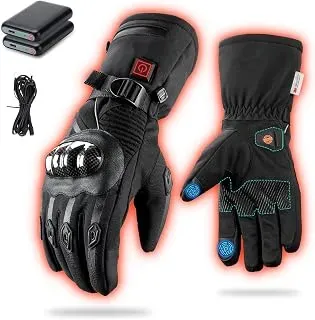
A 7.4V battery system gives the GUMOCH heated cycling gloves their clearest advantage: active warmth for exposed rides rather than insulation alone. Each pair includes two 3000mAh rechargeable batteries, a charging cable and DC harness wire, along with touchscreen fingertips, waterproof construction, windproof coverage and a non-slip grip. That feature mix is well suited to winter cycling, while the listed skiing compatibility adds flexibility for recreational use. Three heat levels (roughly 140°F, 122°F and 113°F) let you dial the warmth down on milder days, a carbon-fibre shell covers the knuckles, and a 12V car-charger cord means a long ride does not have to run off the batteries alone. At about $100, they sit at the lower end of heated-glove pricing and include a 12-month warranty. The 4.1-star average from 228 ratings is respectable rather than exceptional, making these the best value here for riders who want battery heat and phone access. The weather-focused design is particularly relevant for damp coastal commutes and windy Prairie routes.
Pros
- 7.4V system with two included 3000mAh batteries
- Touchscreen fingertips reduce glove removal for phone use
- Waterproof, windproof, non-slip design suits cycling
Cons
- 4.1-star rating trails stronger-reviewed heated glove choices
- Runtime per charge is not stated
- Lightweight cotton build offers less insulation than a dedicated ski glove
WEIVIOQ Heated Glove Liners
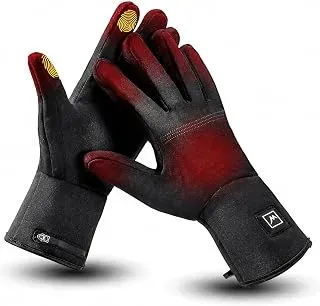
Layering beneath existing outer gloves makes the most sense for commuters, riders and skiers who already own a weatherproof shell but need extra battery warmth. The thin WEIVIOQ glove liners are meant to sit under another pair rather than replace a proper winter glove, making them a practical budget choice for damp coastal cold and changing activity levels. They run on 7.4V 2,200 mAh rechargeable batteries with three heat settings and a listed runtime of up to six hours, and include a charging cable and user manual. The manufacturer lists skiing, snowboarding, hiking, cycling and riding among their intended uses, along with warmth support for cold-sensitive hands. At $109.99, they cost less than many full heated gloves, and their 4.6-star average from 64 ratings is encouraging. The 90-day manufacturer warranty is modest.
Pros
- Thin liner design works with existing outer gloves
- Three heat settings with up to six hours of listed runtime
- Strong 4.6-star rating from 64 customers
Cons
- Requires roomy outer gloves for comfortable layering
- 90-day manufacturer warranty is relatively short
Harssidanzar Leather Motorcycle Gloves
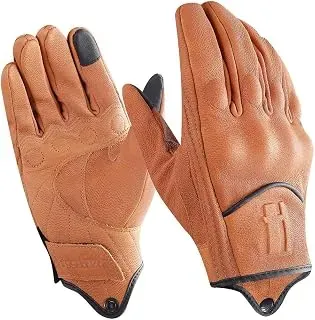
For about $29, Harssidanzar GM028A gloves offer a low-cost leather, touchscreen-compatible option for mild-weather riding. Their 4.4-star rating from 679 customer reviews suggests broad appeal as a basic adult cycling or motorcycle glove, while the included packing bag is a useful extra for storage. For Canadian winter use, set expectations carefully: the retailer information does not advertise battery heat, insulation, waterproof construction, temperature protection or heated-liner capability. That makes these more suitable for short rides in mild conditions than damp coastal cold, Prairie wind or sustained sub-zero commutes. They can make sense for someone who wants conventional leather coverage and phone access, but they will not address the core warmth problem that rechargeable heated gloves are designed to solve.
Pros
- Affordable alternative to rechargeable heated glove options
- Touchscreen compatibility for phone use while riding
- Strong 4.4-star rating from 679 customer reviews
Cons
- No advertised heating, insulation or battery system
- Not specified as waterproof for wet winter conditions
Heated Ski Gloves (7.4V)
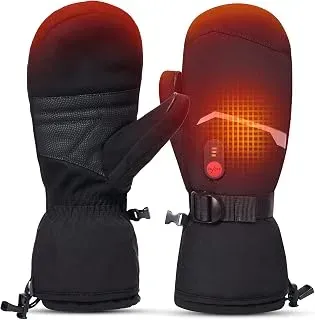
Unlike the non-heated winter gloves in this guide, these heated ski gloves put rechargeable 7.4V battery warmth at the centre. That makes them our top pick for adults who need extra help keeping hands warm while skiing or hiking through Canadian winter weather. At $118, they sit in the sensible middle of the heated-glove market: far above basic insulated gloves, but below many $200 heated models. Their 4.4-star rating from 449 customer reviews gives them more buyer feedback than anything else in this guide, which is the main reason they lead it. Be clear-eyed about the trade-off, though: the listing is unbranded and publishes nothing on materials, waterproofing, battery runtime, heat settings or temperature range. If a documented spec sheet matters more to you than review volume, the Waestcia pair below is the better-evidenced choice. For damp coastal outings, Prairie wind or sustained sub-zero trips, plan to confirm those practical details before relying on them for long days outdoors.
Pros
- Rechargeable 7.4V battery heating for outdoor activities
- 4.4-star customer rating from 449 reviews
- Designed around skiing and hiking use
Cons
- No listed runtime, heat settings, or temperature range
- Weatherproofing, materials, and fit details are not specified
Waestcia Heated Winter Gloves
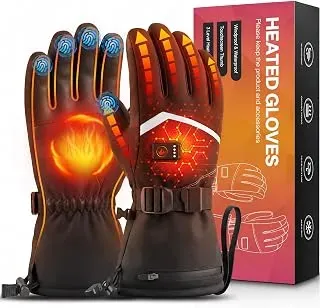
Two included 7.4V 3,000 mAh battery packs — 6,000 mAh combined, rated for up to eight hours of heat — make the Waestcia HT-1 gloves a practical pick for extended outdoor work, hunting, camping and snow clearing. The package also includes a charger and carrying bag, so there is less to buy separately before heading into a cold Prairie wind or a long sub-zero shift. Waestcia markets them as waterproof heated ski gloves with touchscreen capability, useful when checking a phone without exposing bare fingers. Three heat levels and a four-stage battery indicator make it easier to ration power across a long day. At about $200, they sit at the upper end of the heated-glove price range, but the complete battery kit helps justify the cost for frequent users. They hold a 4.4-star rating from 315 customer reviews and include a one-year manufacturer warranty.
Pros
- Two 7.4V 3,000 mAh battery packs, up to eight hours of heat
- Charger and carrying bag included
- Waterproof and touchscreen features suit outdoor work
Cons
- Price sits at the high end of this guide
- Bulkier than a thin liner worn under an existing shell
Caudblor Thermal Snow Gloves
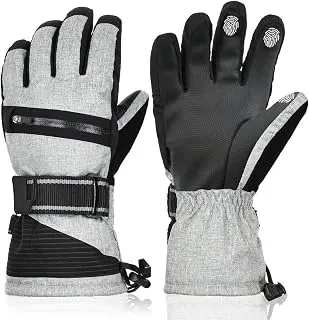
For shoppers who need practical weather protection for occasional snow sports rather than rechargeable heat, the Caudblor snow gloves are a budget-friendly choice. They use 3M Thinsulate insulation and a waterproof, windproof and snowproof build aimed at skiing, snowboarding, skating and snowmobile racing. That combination makes sense for damp coastal snow or windy Prairie outings where wet hands can quickly become cold hands. At $39.99, they cost far less than most heated options, though they do not replace battery-powered warmth for long periods in sustained Central or Northern Canadian cold. The listing rates them 4.3 stars from 602 customers and includes touchscreen-compatible fingers, a rubber grip palm and a small waterproof pocket for a lift pass or a key.
Pros
- Waterproof, windproof and snowproof protection for snow sports
- 3M Thinsulate insulation at an accessible price
- Suitable for skiing, snowboarding and snowmobile riding
Cons
- No rechargeable heating for sustained sub-zero exposure
- No temperature rating listed
SAVIOR HEAT Heated Liners
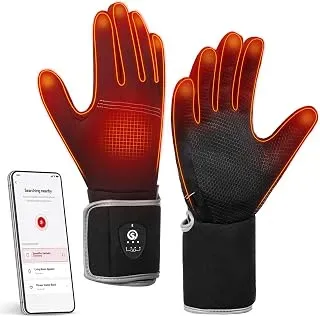
At about $160, these SAVIOR HEAT liners cost more than basic non-heated gloves, but they add adjustable battery warmth and the flexibility to layer beneath a separate outer glove. That suits commuters moving between transit and the outdoors, plus skiers, hikers and cyclists who want warmth without committing to a bulky heated shell. Bluetooth controls and three heat levels (roughly 104°F to 140°F) let you fine-tune the warmth, with graphene heating elements across the fingers and back of the hand and a listed runtime of 2.5 to six hours depending on the setting. Touchscreen support is useful for maps and messages. The package includes batteries, a charging cable, storage pouch and user manual, backed by a one-year manufacturer warranty. With a 4.1-star average from 212 ratings, these are a sensible all-round choice for damp coastal cold or active Prairie days. For sustained sub-zero conditions, pair the thin liners with a protective outer glove.
Pros
- Bluetooth controls simplify heat-level adjustments
- Thin liner design supports flexible layering
- Touchscreen support helps with outdoor phone use
Cons
- Weatherproofing is not specified in the listing
- Costs more than many non-heated winter gloves
Heated Gloves vs Heated Glove Liners: Which Is Better for Canadian Winters?
Heated gloves are the simpler choice for most Canadian commuters, skiers and outdoor workers: the heating system, insulation and outer weather barrier are all in one piece. The $118 heated ski gloves are our top pick, based on their 4.4-star rating from 449 reviews and broad-use design. A full glove is usually the better bet for damp coastal cold, Prairie wind and long periods below zero, where a waterproof, wind-blocking shell matters as much as battery heat.
Heated glove liners cost more than basic gloves but offer flexibility. WEIVIOQ’s heated liners run $109.99 and can sit beneath roomier ski, work or shell gloves, letting you choose the outer layer for the day. That setup suits people who already own quality waterproof gloves or need different shells for work and recreation. The downside is fit: a tight outer glove can restrict circulation and reduce warmth. Liners also leave weather protection to the shell. Rechargeable batteries add modest charging costs, but carrying a spare battery matters more than electricity cost during a full winter day outdoors.
What Does Spending More on Heated Gloves Actually Buy You?
The price gap is substantial. Non-heated protection starts with Caudblor's thermal snow gloves at $39.99, while the leather Harssidanzar GM028A costs $28.87. Both are sensible for short commutes, driving and milder winter days, but insulation alone has limits in sustained Central or Northern Canadian cold. For people with cold-sensitive hands, heated gloves are a practical upgrade rather than a luxury.
Near $100, the GUMOCH heated cycling gloves cost $99.99 and add heat, touchscreen access, wind protection and a non-slip design. Spending closer to $118 for the ski-focused top pick brings a more versatile ski-and-hiking fit, plus the strongest review volume in this guide. At $159.99, SAVIOR HEAT Bluetooth Heated Glove Liners add app-connected heat control and a thin layering format; at $199.99, the rechargeable heated ski gloves are positioned for demanding outdoor work and activities. Higher prices can mean more features or specialized construction, not automatically warmer hands. Check warranty terms, replacement-battery availability and review patterns before paying extra, since battery replacement and wear on the outer shell shape the real long-term cost.
Choosing Heated Gloves That Make Sense for a Canadian Winter
Rechargeable warmth can make a real difference on a wind-exposed Prairie commute, a wet coastal walk or a long sub-zero day in Central and Northern Canada. Still, heat is only one part of the purchase. Look for a glove that suits the job: insulated outer gloves for skiing, snow clearing and outdoor work; thinner liners when you need to layer beneath an existing shell. Our top pick is the $118 heated ski gloves. With a 4.4-star rating from 449 reviews, they offer the strongest balance of price, broad winter use and rechargeable heat.
Battery Power, Weather Defence and the Fit Details That Matter
Battery System and Adjustable Warmth
For heated gloves in Canadian winter, start with the battery setup rather than assuming every model provides the same level of warmth. The leading options here use rechargeable battery power, and several specify a 7.4V system, including the GUMOCH cycling gloves and the top-rated ski-and-hiking pick. The GUMOCH model includes two 7.4V 3,000 mAh batteries and three heat levels, while the Waestcia pair uses the same voltage and lists up to eight hours of runtime. SAVIOR HEAT’s Bluetooth glove liners list three heat levels, which can be helpful when moving between a chilly vehicle, a ski lift and active walking. Higher settings may be useful in severe cold, while lower settings can suit milder damp conditions.
Waterproofing, Wind Protection and Insulation
Battery heat cannot fully compensate for wet gloves or wind cutting through the outer material. In coastal British Columbia and Atlantic Canada, waterproofing matters because damp cold can quickly make hands miserable. The GUMOCH gloves are described as waterproof and windproof, while the Waestcia heated ski gloves are also listed as waterproof. For a non-powered alternative, Caudblor’s thermal snow gloves are waterproof, windproof and snowproof, at $39.99. Those may suit shorter outings or shoppers who already have warm hands, but they will not provide active heat during long waits, low-output work or sustained deep cold.
Gloves, Mittens or Thin Liners
Choose the format around your outerwear and activity. Full heated gloves are the straightforward choice for winter commuting, snowmobiling, skiing and outdoor work because they combine heat with a protective outer layer. The $199.99 Waestcia pair is aimed at demanding uses including work, hunting, camping, snowboarding and hiking. Heated liners are more flexible: WEIVIOQ’s rechargeable liners cost $109.99 and can be worn under roomier mitts or gloves, while SAVIOR HEAT’s thin Bluetooth liners cost $159.99. Liners make sense for people who already own a waterproof shell glove, but check that the outer glove is large enough to avoid compressing the liner and restricting circulation.
Grip, Dexterity and Touchscreen Practicality
Warm hands are less useful if you cannot operate a zipper, hold ski poles or answer a phone. Cyclists and motorcyclists should prioritize a secure palm and a close, non-bulky fit. The GUMOCH model lists a non-slip design and touchscreen capability, making it worth considering for riding or navigation stops. The Waestcia gloves also include touchscreen use. For riders who do not need battery heat, Harssidanzar’s GM028A leather gloves cost $28.87, though leather touchscreen gloves are not a replacement for insulated heated gloves in harsh winter exposure. Try to leave enough room to flex your fingers while avoiding excess material at the fingertips.
Price, Reviews and Where to Shop
Heated options in this group run from $99.99 for the GUMOCH gloves to $199.99 for the Waestcia pair, while conventional winter gloves cost much less. That makes reviews, warranty information and battery replacement availability worth checking before purchase. The $118 heated ski gloves stand out as the sensible middle ground, particularly for shoppers wanting one pair for skiing and hiking. Search Canadian retailers, major online marketplaces and outdoor stores, then compare the exact battery package included. Shoppers looking for heated gloves at Costco or Milwaukee heated gloves should confirm current Canadian availability and intended use, since selection can change and work-focused lines may prioritize different features than ski gloves.
Canadians exploring this topic may also find our Best Heated Blankets in Canada (2026): Top-Rated Electric Picks for Winter helpful.
Frequently Asked Questions
Where can I buy heated gloves in Canada?
Start with Canadian retailers and major online marketplaces that clearly state Canadian pricing, return terms and warranty support. Check that replacement batteries or chargers are available before ordering; that matters more than a small upfront discount. Read recent Canadian buyer reviews for notes on delivery, sizing and performance in real winter weather. Costco heated gloves can be worth checking seasonally, but stock and models can change quickly.
What are the best heated gloves for Canadian winter conditions?
For a broad mix of commuting, skiing and hiking, the $118 heated ski gloves are the strongest all-round choice, with a 4.4-star rating from 449 reviews. Prioritize waterproofing for damp coastal cold, wind resistance on the Prairies, and enough battery capacity plus insulation for sustained sub-zero conditions in Central and Northern Canada.
Should I choose heated gloves or heated glove liners?
Choose full heated gloves when weather protection, insulation and grip are priorities for outdoor work, snow sports or long commutes. Choose liners if you already own a waterproof shell glove and want flexible layering for changing temperatures. WEIVIOQ’s heated liners make sense under a roomy outer glove, but a tight shell can restrict circulation and reduce warmth. Confirm liner thickness before buying.
How should heated gloves fit for work, driving and touchscreen use?
Heated gloves should fit snugly at the fingers and palm without compressing them; cramped fingers lose circulation and can feel colder. Leave enough room for a thin base layer only if the manufacturer allows it. For driving, tools or ski poles, look for a grippy palm and flexible finger construction. Touchscreen panels are handy for transit and calls, but do not choose a pair solely for that feature if waterproofing or dexterity is weak.
How much do heated gloves cost, and are they worth the money?
In Canada, rechargeable heated gloves commonly run about $100 to $200, while non-heated insulated winter gloves cost far less. The added cost is worthwhile for people with long outdoor exposure, poor circulation, winter work or activities where stopping to warm up is impractical. For occasional short walks, good insulation and a waterproof shell may offer better value. Compare battery count, heat settings, warranty and review quality—not just the advertised runtime.
The Best Heated Gloves for Your Canadian Winter Routine
Our top pick is the $118 heated ski gloves, a sensible choice for Canadians who need one rechargeable pair for ski days, winter hikes and regular cold-weather travel. At $118, it lands in the useful middle ground between cheaper basic options and $200 heated gloves, while its 4.4-star rating from 449 reviews suggests broad buyer confidence. It is the strongest all-purpose balance of battery-powered warmth, practical outdoor coverage and value for sustained sub-zero days.
For commuters on bikes, snowmobiles or motorcycles, the GUMOCH heated cycling gloves merit a close look. They cost $99.99 and add touchscreen, waterproof, windproof and non-slip features that suit exposed Prairie winds and wet coastal commutes. Need more layering flexibility? The WEIVIOQ heated glove liners, priced at $109.99 with a 4.6-star rating, are the smarter pick under roomier waterproof shells or work gloves. For milder days or a low-cost backup, the non-heated Harssidanzar GM028A leather gloves cost $28.87 and prioritize basic touchscreen motorcycle use rather than battery warmth.
Before ordering, measure your hand and check the seller’s sizing chart—tight gloves can restrict circulation, while oversized pairs compromise grip and touchscreen accuracy. Pick the glove style that matches your coldest, most common outing, then order early enough to confirm the fit before winter settles in — it tends to arrive ahead of schedule, as it did when Simcoe County got its first snowfall with school buses still running their regular routes.