
| Sourced from 7 independent sources · 1 point in dispute |
indexbox.io, washingtonstatestandard.com, lakelandconnect.net, thedailyscrumnews.com, ca.headtopics.com, ckom.com, and money.ca
Sources agree on most key facts but differ on 1 point.
11 key facts · 9 corroborated · 1 disputed
Where sources differ
How much equity Indigenous nations would receive under the Pacific Link project
ckom.com: Indigenous nations along the route would receive an equity option of up to 10 per cent.
indexbox.io: Indigenous communities would receive an ownership offer of no less than 10%.
thedailyscrumnews.com: The project would set aside a minimum ten percent equity stake for Indigenous nations.
money.ca: Indigenous communities are set to receive at least a 10% stake.
This summary is compiled from the independent sources listed above.
Ottawa has put the proposed Pacific Link oil pipeline on a faster federal track, designating the project of national interest under the Building Canada Act.
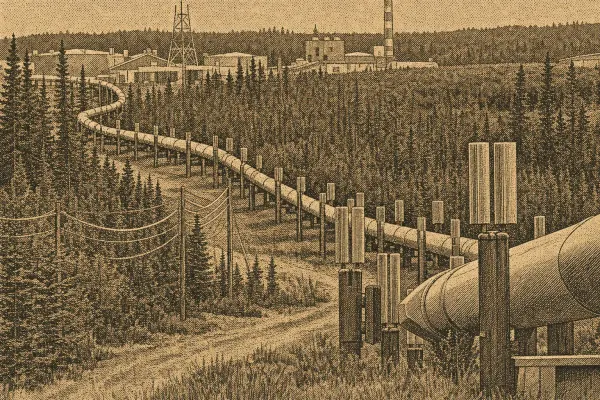
The proposal, also known as the West Coast Oil Pipeline, would move about one million barrels of crude oil a day from Alberta to a tanker export terminal on Canada’s Pacific coast in southern British Columbia. Its route would largely follow the existing Trans Mountain corridor through southern B.C.
A single federal review
Pacific Link is set to go through one streamlined federal review, overseen by the Major Projects Office and co-ordinated with the Canada Energy Regulator. The office is aiming to finalize the project’s conditions by Sept. 1, 2027, after which construction could begin.
That timeline follows Ottawa’s broader push to accelerate major energy infrastructure, including the west coast oil pipeline effort outlined in The Canada Report’s coverage of the project’s national-interest designation. The review process now moves the proposal toward the early-2030s start date expected for first oil.
First oil is expected in the early 2030s, with one projection putting the timing between 2032 and 2034.
The project remains a proposal, but its national-interest designation has become a major political marker for Ottawa and Alberta. Trans Mountain Corporation and Pembina Pipeline Corporation are key proponents, with Trans Mountain expected to develop, construct and operate the pipeline.
Premier Danielle Smith called the designation “an important step toward strengthening our economy, enhancing energy security and connecting Canadian energy to growing global markets.”
Jobs and export ambitions
Ottawa projects Pacific Link could create up to about 140,000 jobs at peak construction, add more than $20 billion annually to GDP and generate about $100 billion in government revenue by 2060.
The project’s ownership plan would see the federal and Alberta governments share ownership equally, while Indigenous communities along the route would receive an equity stake of at least 10 per cent.
For Alberta communities, the announcement has been framed as a potential opening for investment and employment. Lac La Biche County Mayor Paul Reutov said major energy investment means “jobs, stronger infrastructure, new investment and continued growth across our region.”
“Council will continue working hard to make sure Lac La Biche County has a voice in these conversations and that our community is positioned to benefit from the opportunities ahead,” Reutov said.
According to IndexBox, more than 90 per cent of Canada’s crude exports currently go to the United States, while the existing 890,000-barrel-per-day Trans Mountain pipeline is already at full capacity. Pacific Link would create another route to the Pacific coast for Alberta crude.
Ownership and participation
The proposed equity structure puts Indigenous participation at the centre of the project’s framework, with communities along the route set to receive at least a 10 per cent stake.
Smith said the project presents an opportunity for “meaningful participation, ownership and shared success.”
That ownership model is paired with substantial public involvement: Ottawa and Alberta would each hold a 50 per cent ownership share. Pembina and Trans Mountain are involved as the project moves toward its federal review, with Trans Mountain expected to take the lead on building and operating the line.
Concerns south of the border
The faster review has also triggered concern in Washington state, where officials have focused on the potential effects of additional oil shipments through shared coastal waters.
The Washington State Standard reported that Gov. Bob Ferguson and other state officials say the project raises oil-spill risks to the Salish Sea and that the region lacks sufficient response capacity without additional commitments.
“If a project of this scale is going to proceed, it needs to come with a corresponding commitment to also increase our region’s capacity to prevent and respond to a catastrophic spill,” Ferguson said in a joint statement with Casey Sixkiller, director of the state Department of Ecology.
The questions surrounding Pacific Link now move into the federal review process. Supporters see a new export outlet and a large economic project; Washington officials are calling for stronger protections for shared marine waters before it proceeds.
Reader-funded. No ads. No paywall.
The Canada Report is independent, reader-funded Canadian news — no advertisers, nothing behind a paywall, kept free for everyone. If you value it, you can help keep it that way.
Support The Canada Report →Source 1 | Source 2 | Source 3 | Source 4 | Source 5 | Source 6 | Source 7
Sign up for The Canada Report
Your modern digest of Canadian news. Friendly, clear, and in your inbox.
No spam. Unsubscribe anytime.