
| Sourced from 4 independent sources (5 reports) · no points in dispute |
CTV News, Driving.ca, Barrie 360, and Global News
Most key facts are confirmed by more than one independent source; a few details come from a single outlet.
10 key facts · 9 corroborated · none disputed
Why some reports were counted once
Global News and Head Topics — the same Canadian Press report, counted once.
When several outlets publish the identical article — most often because they all ran the same wire story from an agency like The Canadian Press — we count it as one source, not several. That keeps our source count a measure of independent reporting, not how widely a single story was syndicated.
This summary is compiled from the independent sources listed above.
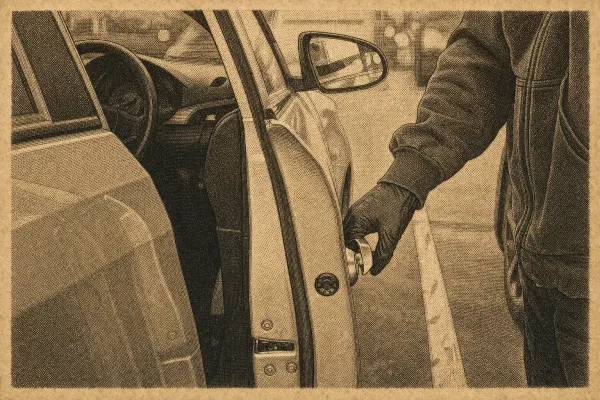
Canada’s auto theft surge is easing, but the country is still seeing tens of thousands of vehicles disappear from driveways, streets and parking lots.
Équité Association reported that 20,759 vehicles were stolen across Canada from January to June 2026, down from 23,093 during the same period in 2025. The decline, the organization said, suggests auto theft is moving back toward pre-2021 levels, before thefts rose sharply during the pandemic.
The national numbers are improving
The first-half drop marks a continued national decline compared with 2025, according to Équité Association’s latest auto theft trend report.
For drivers, the headline is encouraging. For investigators and insurers, the warning is just as clear: the theft economy has not disappeared.
Bryan Gast, Équité Association’s national vice-president of intelligence and investigations, said pandemic-related vehicle shortages helped drive the earlier surge in auto theft. Organized crime, he said, continues to profit from stolen high-end vehicles.
“Stakeholders have to continue doing what we’re doing because if we take our foot off the gas, criminals will see this is a very high reward, low-risk,” Gast said.
That tension sits at the centre of the latest report. The overall numbers are moving in the right direction, but Équité is arguing that lasting progress will depend on tougher prevention measures built into vehicles before they ever reach consumers.
Alberta posts the sharpest drop
The largest provincial decline came in Alberta, where reported auto thefts fell 15.1 per cent from the first half of 2025.
Atlantic Canada recorded the smallest regional decrease. Reported thefts there fell from 910 in the first half of 2025 to 873 in the first half of 2026.
Ontario also saw fewer reported thefts, according to CTV News, which reported that 8,796 vehicles were stolen in the province during the first half of 2026, down from 9,601 in the first half of 2025.
Together, the regional figures point to a broad national slowdown, even as the scale of theft remains significant. More than 20,000 reported thefts in six months still leaves many Canadians facing a risk that has become familiar in recent years.
Why the surge happened
Équité Association has linked the earlier spike to pandemic-era vehicle shortages, which Gast said created demand that organized crime was able to exploit.
The report says the latest trend suggests Canada is moving toward the period before 2021, when thefts began rising sharply. But Gast’s comments make clear that the incentives behind organized auto theft have not gone away, particularly for high-end vehicles.
The issue has also pushed governments and the insurance sector into a more active response. The federal government’s 2024 national action plan against organized auto theft includes tougher criminal penalties, more shipping-container inspections and improved intelligence-sharing.
Équité has credited collaboration among insurers, law enforcement and governments as part of the broader response, while arguing that enforcement alone is not enough.
Push for anti-theft technology
Équité Association is calling for stronger anti-theft requirements and government-mandated anti-theft technology in new vehicles.
“The decrease in auto theft showcases the successful collaboration of the insurance industry with law enforcement and all levels of government,” Gast said in a statement. “However, long-term progress hinges on modernizing Transport Canada’s Motor Vehicle Safety Regulations.”
He added: “It is now time for manufacturers to step up.”
Public opinion appears to be moving in a similar direction. An Angus Reid survey commissioned by Équité Association found nearly 80 per cent of Canadians believe their vehicles are or could be vulnerable to theft. The same survey found 60 per cent support government-mandated anti-theft technology in new vehicles.
That helps explain why the latest figures may land as both relief and reminder. Auto thefts are down across Canada, and the country appears to be moving away from the sharp pandemic-era surge. But with organized crime still profiting from stolen high-end vehicles, Équité’s message is that the decline is something to protect, not something to take for granted.
Reader-funded. No ads. No paywall.
The Canada Report is independent, reader-funded Canadian news — no advertisers, nothing behind a paywall, kept free for everyone. If you value it, you can help keep it that way.
Support The Canada Report →