
| Sourced from 4 independent sources (5 reports) · 1 point in dispute |
Saskatoon Today, Head Topics, Swift Current Online, and CTV News
Sources agree on most key facts but differ on 1 point.
11 key facts · 11 corroborated · 1 disputed
Where sources differ
Court level of the proceedings
Sask Today: The decision was released by Provincial Court Judge Miguel Martinez.
Head Topics: The verdict was announced in Saskatoon provincial court and the trial was held in Rosetown provincial court.
Swift Current Online: The convictions followed a Court of King's Bench trial, with sentencing scheduled in Court of King's Bench in Saskatoon.
Why some reports were counted once
Head Topics and CBC — the same report, published near-identically, counted once.
When several outlets publish the identical article — often because they ran the same wire-service story — we count it as one source, not several, so the count reflects independent reporting rather than how widely one story was republished.
Allegations described here are not proven in court unless stated.
Two Saskatchewan men have been found guilty of human trafficking after a Bangladeshi woman was exploited while working in rural restaurants across the province.
Sohel Haider and Mohammed Masum were convicted of human trafficking, and Masum was also found guilty of three counts of sexual assault against the woman. Both men were taken into custody after the verdict to await sentencing.
A job became a trap
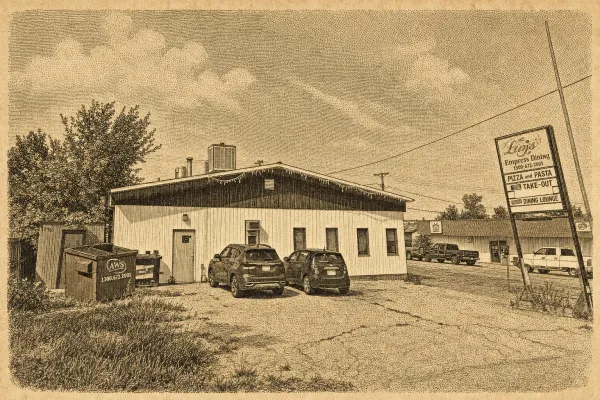
The woman arrived in Canada from Bangladesh in August 2022, first staying in Toronto before coming to Saskatchewan after Haider recruited her to work at his Empire Diner in Gull Lake.
From there, her path moved through small Saskatchewan communities. After working in Gull Lake, she was sent to Masum’s restaurant in Tisdale and later moved to Elrose under a closed work permit.
The case turned on how the men used control over her movement, employment and immigration status to keep her compliant. That included threats involving her work permit or authorities.
“Both of the accused exploited vulnerability for their respective material benefit,” Judge Miguel Martinez said, according to the source reporting. He said the men used their authority “to control and direct her movements” and played on her fear of having to leave Canada.
Long shifts, little pay
The woman worked approximately 12-hour shifts, six days a week, under arrangements that amounted to unpaid or cheap labour.
The exploitation extended beyond the workplace. Masum withheld the woman’s passport and used it to coerce her sexually. He was found guilty of three counts of sexual assault.
Her housing was also part of the abuse described in court. She was kept in unsafe and squalid conditions, including an unfinished concrete basement in Elrose.
“S.K.’s living quarters can best be described as squalid,” Judge Martinez said in one account of the decision.
MLAs helped her reach safety
The case also involved two Saskatchewan MLAs, Doug Steele and Hugh Nerlien, who helped connect the woman with support after concerns were raised about her safety.
Nerlien testified that the situation was worrying because the woman had been moved and her whereabouts were not always clear.
“She had been moved a couple of times, so we didn’t know where she was or if she was safe for potentially days,” Nerlien said.
Steele had raised concerns that “something was not quite right” in the employer-employee relationship, according to Nerlien’s testimony. Together with a social worker or settlement worker, the MLAs helped connect the woman with support and arrange her removal to safety.
Judge rejected the denials
Haider and Masum denied that the woman worked in their restaurants. Masum also denied the sexual assaults.
The judge accepted the woman’s evidence and rejected their accounts.
“I do not have any reasonable doubt about the guilt of either,” Judge Martinez said.
He found the woman “credible and reliable,” while rejecting the evidence of both accused. The verdict means both men will remain in custody while they await sentencing.
The case lays out a stark pattern of exploitation in ordinary workplaces: restaurant shifts, work permits, housing, transportation and immigration fears all used as tools of control over a woman trying to build a life in Canada.
Reader-funded. No ads. No paywall.
The Canada Report is independent, reader-funded Canadian news — no advertisers, nothing behind a paywall, kept free for everyone. If you value it, you can help keep it that way.
Support The Canada Report →