

| Sourced from 3 independent sources · no points in dispute |
Head Topics, CBC, and Newswire
Every key fact in this report is confirmed by more than one independent source.
9 key facts · 9 corroborated · none disputed
This summary is compiled from the independent sources listed above.
Canada is moving ahead with a new $267 million medical countermeasures laboratory in Winnipeg, a project meant to strengthen the country’s readiness for future public health emergencies.
The federal government has awarded Architecture49 Inc. a roughly $10 million architectural and engineering design contract for the facility, which will be built next to the existing National Microbiology Laboratory and is expected to be completed in 2033.
A Winnipeg lab for future threats
Terry Duguid, MP for Winnipeg South, framed the project as part of a faster national response to emerging health risks.
“As we know, public health threats do not respect borders. They move quickly. Our response needs to move even faster,” Duguid told reporters.
“This is a big deal for our city, for our province, a big deal for life sciences in Canada. And this facility is going to help protect the nation, and help protect the world.”
The new laboratory will expand Canada’s pre-clinical capacity to develop medical countermeasures, including vaccines and therapeutics, for future health threats. It will include Level 2 and Level 3 containment labs, and will be owned and operated by the federal government.
Closing a research gap
Officials and researchers described the facility as a way to strengthen the steps that come before products can move further through testing and development.
Dr. Keith Fowke described a bottleneck facing researchers who develop new ideas but need high-quality material for testing.
“Throughout Canada in different universities people are working very hard to get vaccines, to make vaccines and to create them and to come up with brand new ideas but they run into a roadblock,” Fowke said. “And that roadblock is when they want to test it in an animal...they need high quality products to use to go into that testing and there just isn't much capacity in Canada.”
Fowke said the project could help researchers move promising products closer to the point where they can be tested more fully.
“I think this is a fantastic opportunity for industry and academia across Canada to be able to develop products and get them to a point where they can be tested at the highest level,” he said.
Built beside existing expertise
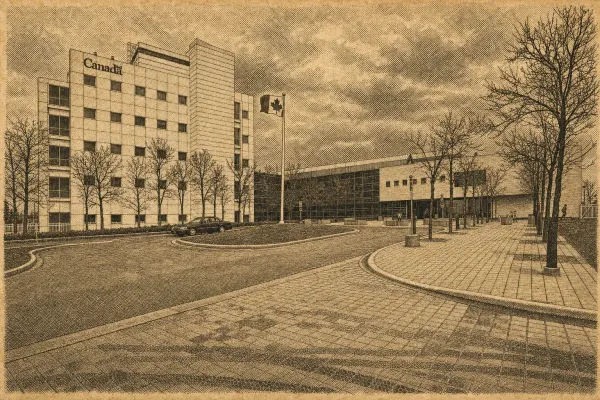
The decision to place the facility next to the National Microbiology Laboratory is central to the project’s design. The new lab is expected to build on the federal scientific presence already established in Winnipeg.
“Winnipeg's reputation as a global centre for infectious disease research has been built in large part because of the work done here,” Duguid said.
That proximity is also part of the government’s broader pitch: a federally owned and operated facility that can support pre-clinical work before the next major public health emergency arrives.
The project is not immediate. With completion expected in 2033, the Winnipeg lab represents a long-term investment in scientific infrastructure rather than a short-term response to any single health threat.
Jobs, economy and life sciences
Officials said the project is expected to support jobs, Winnipeg’s economy and Canada’s life-sciences sector.
In a federal statement, Duguid said the project would create opportunities as it moves ahead and support a skilled workforce once operational.
“By supporting this major project, the Government of Canada is strengthening Canada's capacity in health research and science, while supporting skilled jobs here at home,” Duguid said. “As the project moves through design and construction, it will create opportunities across the economy. Once operational, the new facility will support a growing, highly skilled workforce in Winnipeg.”
Joël Lightbound, Minister of Government Transformation, Public Works and Procurement and Quebec Lieutenant, also tied the investment to domestic preparedness.
“When we invest in world-class scientific infrastructure like the medical countermeasures laboratory facility in Winnipeg, we are strengthening Canada's ability to protect Canadians and respond quickly to future health threats,” Lightbound said.
For Winnipeg, the project adds another major piece to a city already closely associated with infectious disease research. For Canada, federal officials are presenting it as a bet on being better prepared before the next emergency begins.
Reader-funded. No ads. No paywall.
The Canada Report is independent, reader-funded Canadian news — no advertisers, nothing behind a paywall, kept free for everyone. If you value it, you can help keep it that way.
Support The Canada Report →