
Based on coverage from CBC, CBC, and The Globe and Mail.
Quebec and Newfoundland and Labrador are back at the negotiating table over Churchill Falls power, after Newfoundland’s Progressive Conservative government said the current framework deal is not good enough and needs “material improvements” before it can be signed.
The flashpoint is a 2024 memorandum of understanding (MOU) between Hydro-Québec and Newfoundland and Labrador Hydro, championed at the time by former premiers François Legault and Andrew Furey. It was supposed to be turned into final agreements by April 2026, but a Newfoundland-commissioned review released Tuesday says the MOU has “several fundamental issues” and, as written, is “not in the public interest.”
Newfoundland committee flags Churchill Falls power concerns
The three-person independent panel, led by former Emera CEO Chris Huskilson, argues Newfoundland and Labrador would not get enough electricity under the proposed arrangement, which could crimp growth in energy-hungry sectors like mining and limit long-term economic development.
The panel also raised worries about Newfoundland and Labrador Hydro’s lack of transmission capacity to reach export markets, and the inherent difficulty of running joint ventures when partners have “divergent interests.”
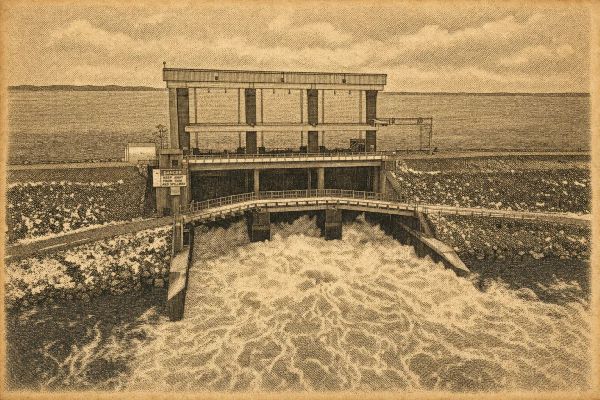
The MOU centres on the 5,428-megawatt Churchill Falls generating station and future development on the Churchill River. The current reality Newfoundland has long resented is a 1969 contract under which Hydro-Québec receives most of the electricity at very low prices. The draft deal would boost Newfoundland’s revenues, but the panel suggests that trade-off could come at the expense of having enough power at home.
Tony Wakeham seeks renegotiation and referendum
Premier Tony Wakeham, who took office after his party formed government last fall, set up the review committee in December and paused negotiations while it worked. He has also promised any eventual deal will go to a public referendum.
On Tuesday, Wakeham announced a new three-member negotiating team and said his government wants to use the MOU as a base, not toss it out. Still, his message was blunt: major fixes are required before Newfoundland would sign.
Reports differ slightly on Ottawa’s role in Wakeham’s thinking. Quebec’s Parti Québécois energy critic Pascal Paradis says Wakeham is calling for federal intervention, while Wakeham has spoken about possible federal help, including on grid connections and transmission. Either way, Newfoundland’s priorities are clear in the coverage: more electricity carved out for the province, better pricing and financing terms (especially for the Gull Island project), and more ability to move power through Quebec to reach markets.
Quebec government says “win-win” still possible
Quebec’s new Premier Christine Fréchette (who took over April 12 after Legault resigned) says she spoke with Wakeham Monday and that both sides agree on the need for a “win-win” agreement soon. She says she’ll meet him in the near future.
At a Tuesday news conference in Saint-Michel-des-Saints, Que., Quebec Energy Minister Bernard Drainville said Quebec remains committed to reaching a deal quickly, and described the 2024 agreement in principle as a “win-win.” He also acknowledged the political clock: with Quebec’s election set for Oct. 5, it’s unclear whether a revised agreement can be reached before voters head to the polls.
Hydro-Québec draws a line on key terms
Hydro-Québec, for its part, welcomed Newfoundland’s appointment of a negotiating team and the intent to resume discussions. But it also delivered a clear warning: any final agreement must be balanced, benefit Hydro-Québec customers, and “no agreement will be reached on terms less favourable than those initially agreed upon.”
That statement matters because the MOU’s value to Quebec is tied to price and volume. One report cites Hydro-Québec documents saying Quebec would get access to 7,200 megawatts in total at an average cost of about 6 cents per kilowatt hour for current and future Labrador power. Another report describes a potential future where development along the river could yield more than 9,000 megawatts, with Hydro-Québec entitled to roughly 80 per cent.
Federal government offered to help, parties disagree
Prime Minister Mark Carney, appearing with Drainville, said he supports Quebec’s approach and that he and federal Energy Minister Tim Hodgson have spoken with both premiers. Carney said if Ottawa can help, it will, while emphasizing the talks are mainly between the two provinces and Hydro-Québec.
Quebec’s opposition parties are split in tone but largely aligned on one point: they’re wary of federal involvement. Paradis urged Fréchette to keep Ottawa out, arguing Quebec taxpayers funded the original Churchill Falls facility. Quebec Liberal energy critic Greg Kelley said federal help isn’t needed at this stage, and Québec Solidaire leader Ruba Ghazal said Quebecers need results and transparency, arguing the CAQ underestimated the risks.
For Canadians watching from outside the two provinces, the bigger takeaway is how quickly a “historic” energy détente can get tangled again when governments change, elections loom, and the hard questions hit: who gets how much power, at what price, and with what control over transmission and future projects.
Support Independent Canadian News Analysis
The Canada Report is supported by readers like you. If this article helped you understand what’s happening, you can support our work with a one-time tip.
Support The Canada Report