

Heads up: some of the links in this post are affiliate links. That means if you click and purchase, we may get a commission. It’s how we keep this site running without cluttering it with ads.
The best part of a GO train commute is the part that *isn’t* on the train: that 1–3 km “last kilometre” where Toronto’s cracked sidewalks rattle your wrists, a bike lane vanishes at the worst intersection, and a surprise squall turns the pavement slick in seconds. Do it in Vancouver and you add wet leaves plus hill climbs that make a 350W motor feel like it’s towing a canoe; do it on the Prairies and a -30°C cold snap can quietly shave a big chunk off your real range. If you’re already shopping smarter for condo-friendly gear (we are too—see our best apartment workout equipment picks), the same “Canadian reality” mindset applies to scooters.
This guide skips the hype and picks models that make sense here: honest 30–40 km class range, hill power that doesn’t stall on Halifax grades, UL 2272-certified battery safety, and fold-and-carry practicality for condos, elevators, and transit. We’ll also call out what to compare—braking on wet asphalt, tire type for potholes, water-resistance claims, and who actually supports the warranty in Canada—so you can choose the right ride before the comparison table.
Quick Overview: Our Top Picks
| Product | Best For | Why We Love It | Price |
|---|---|---|---|
| New riders learning safely | UL-certified safety and push-to-start make every ride smooth, confident, and controlled. | $299.95 | |
| Rough-road city commutes | Dual rear shocks and long range keep your daily commute comfortable. | $559.99 | |
| Puncture-proof commuters | Honeycomb solid tires and cruise control deliver low-maintenance, effortless cruising. | $259.99 | |
| Grocery and pet runs | Removable basket plus comfy seat makes errands easier than driving in town. | $667.00 | |
| Longer seated rides | Wide deck, dual suspension, and big wheels keep you comfy for miles. | $637.49 | |
| Heavier riders and hills | Strong 650W power and long range handle inclines and bigger loads easily. | $944.50 | |
| First scooter ages 4–7 | Gentle assisted start, safe thumb throttle, and bright lights boost confidence. | $112.49 |
Gyrocopters Flash Electric Scooter
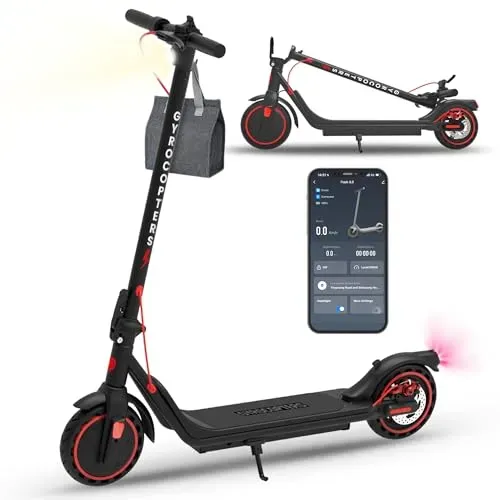
If you’re shopping for a practical electric scooter that won’t feel sketchy on a Canadian commute, the Gyrocopters Flash 6.0 is a solid premium-leaning pick at this price. It pairs a 350W brushless motor (500W peak) with a top speed of 30 km/h and up to 30 km of range, which is plenty for errands, campus rides, or linking up with transit. The 8.5-inch burst-proof tires take the edge off cracks and rough patches, and the push-to-start setup helps prevent that lurchy takeoff new riders hate. It’s also UL 2272 approved for added battery safety, and at 13 kg (28.6 lbs) it folds and carries easily. The Tuya app adds remote lock, headlight control, cruise control, and ride tracking.
Pros
- UL 2272 certification adds real peace of mind
- Four speed modes suit beginners through commuters
- Lightweight fold-up frame is easy on transit
Cons
- 8.5-inch tires can feel harsh on very rough roads
- App features depend on stable Bluetooth connection
Hiboy S2 Pro Scooter
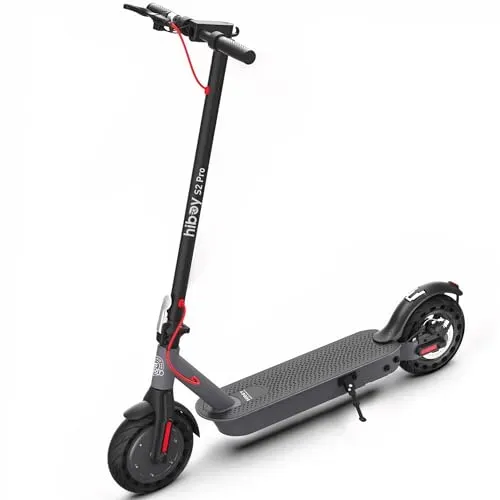
If you want a premium commuter electric scooter that can realistically handle Canadian sidewalks, patchy pavement, and the occasional rough bike lane, the Hiboy S2 Pro is a solid pick. Its 500W brushless hub motor pushes up to 30 km/h, and the 36V 11.6Ah battery is rated for up to 40 km in ideal conditions (expect less in cold weather and headwinds). The 10-inch solid tires mean no flats on gravel-strewn spring streets, and dual rear shocks take the edge off curb cuts and speed bumps. For urban safety, you get an ultra-bright headlight (up to about 15 m) plus a dual braking setup with a disc brake and EABS regen. It also folds quickly for trunks and tight condo storage, and the app lets you lock it and tune acceleration.
Pros
- Punchy 500W motor hits 30 km/h
- Solid 10-inch tires: no punctures to fix
- Dual braking with EABS feels controlled in traffic
Cons
- Solid tires ride harsher than air-filled options
- Real-world range drops noticeably in colder Canadian temps
Qlaway Commuter Electric Scooter
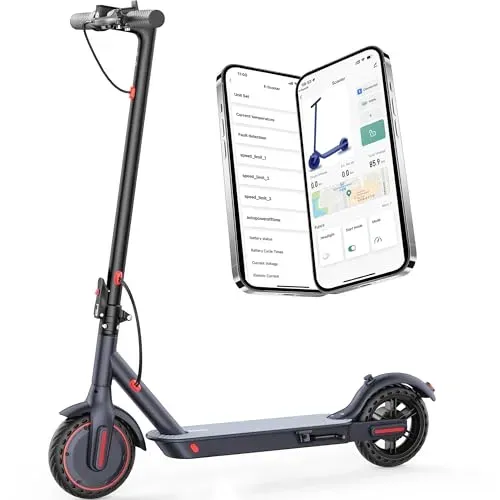
If you want a budget-friendly e scooter that still feels like a “grown-up” commuter, the Qlaway 8.5" model is a solid Premium Choice. It runs a 350W brushless motor (700W peak) for up to 30 km/h, with enough punch to handle moderate hills (rated for 20% grades) and a hefty 265 lb capacity. The 187.2Wh battery is modest but practical for general use—expect up to about 25–35 km depending on rider weight, wind, and cold Canadian mornings. I also like the simple cruise control: hold a steady speed for 8 seconds and it locks in, which makes longer bike-lane stretches more relaxing. The 8.5" honeycomb solid tires won’t puncture, but you’ll feel more vibration on rough pavement.
Pros
- Cruise control reduces wrist fatigue on longer rides
- Solid honeycomb tires eliminate flats and maintenance
- Strong capacity and decent hill ability for the price
Cons
- Solid tires ride harsher on cracked streets
- Small battery can drop faster in cold weather
Gyroor Seated Cargo Scooter
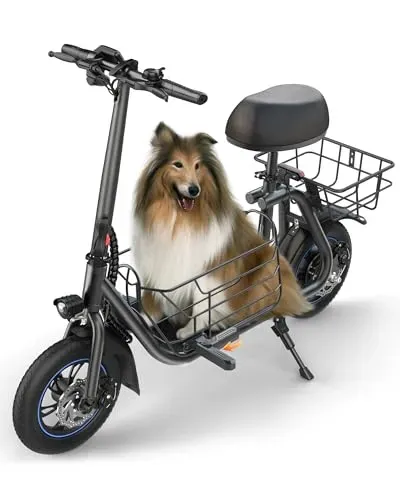
If you want an electric scooter that feels closer to a small bike than a stand-up commuter, the Gyroor C1S is a comfy, practical pick. It pairs a 550W motor with a stated top speed of up to 30 km/h and up to 32 km of range—handy for errands or neighbourhood cruising. The big 12-inch vacuum tires and shock-absorbing setup take the sting out of cracked pavement and rough paths you’ll see in Canadian cities. The adjustable, breathable seat fits riders roughly 5'1" to 6'1", and the heavy-duty metal frame is rated to 265 lb. What makes it special is the cargo: a removable centre basket plus rear rack, and a wide deck that can even accommodate a small pet for quick trips.
Pros
- Comfortable seated ride with large 12-inch tires
- Removable basket and rear rack for real cargo hauling
- UL2272 certified with dual disc brakes and bright lights
Cons
- Bulkier than typical foldable e scooters
- Range and speed can drop in cold weather
Gotrax Flex Ultra Scooter
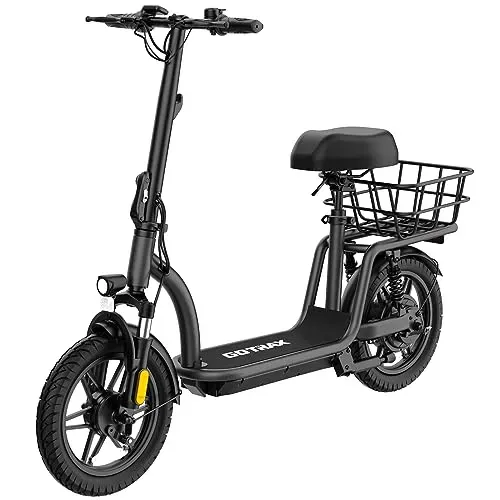
If you like the convenience of an electric scooter but want a more relaxed, bike-like ride, the Gotrax Flex Ultra is a comfy “sit-down” option for Canadian errands and commuting. It pairs a 500W rear-wheel motor with big 14-inch pneumatic tires and dual suspension, which helps smooth out cracked city pavement and rough paths better than tiny-wheel models like a typical Xiaomi e scooter or Hiboy S2 Pro. The extra-wide anti-slip deck and height-adjustable seat make it easy to get dialled in, and the rear basket (rated up to 18 kg) is genuinely handy for groceries. You’ll see speed and battery on the display, and the dual drum brakes with headlight and tail-light add confidence for dusk rides. Expect range to drop in colder temps, as with any e scooters.
Pros
- Comfortable seat plus dual suspension for longer rides
- 14-inch air tires handle rougher pavement well
- Rear basket is great for quick grocery runs
Cons
- Heavier and bulkier than stand-up commuter scooters
- Real-world range drops noticeably in cold weather
Gyroor C1 Plus Scooter
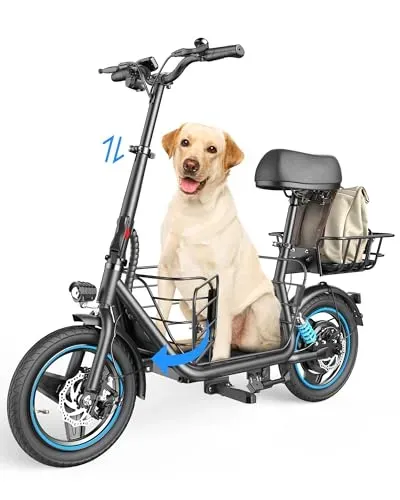
If you like the idea of an electric scooter that feels a bit closer to a compact bike, the Gyroor C1 Plus is a premium, comfort-first pick. It pairs a 650W brushless motor with a UL2272-certified 48V 13.5Ah battery for up to 48 km of range and about 30 km/h top speed—plenty for everyday errands and commuting. The high-strength iron frame is rated for 300 lb, and the 14-inch pneumatic tires plus dual shocks do a solid job smoothing out cracked Canadian pavement. The front basket (18"×12"×10") is genuinely useful for groceries or a small pet, and the seat uses 3" memory foam. It’s adjustable for riders roughly 5'1"–6'5", with an easy-to-read LCD and disc brakes with E-ABS.
Pros
- Comfortable seated ride with suspension and 14-inch air tires
- Removable basket is handy for groceries or small pets
- UL2272-certified battery and full lighting for safer commuting
Cons
- Heavy at about 62 lb for carrying upstairs
- 18.6 mph top speed may feel modest for the price
Gotrax Scout Pro Kids Scooter
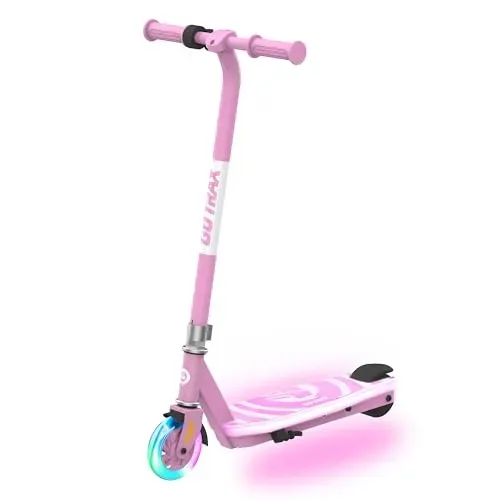
The Gotrax Scout Pro is a lightweight, kid-focused electric scooter for ages 4–7 that’s built to feel less intimidating than a full-size ride. It’s a two-in-one setup: kids can use it as a regular kick scooter, then “wake up” the 80W motor once they’ve pushed past about 5 km/h. Speed tops out around 9.6–9.7 km/h, and the 28.08Wh UL-certified battery is rated for up to 4.8 km—perfect for neighbourhood loops and park paths. The aircraft-grade metal frame and V0 fire-retardant deck feel reassuring, while the 5-inch luminous front wheel and deck lights add visibility for those early-evening Canadian walks. Just keep it as a fair-weather option—small wheels and batteries don’t love slush, gravel, or cold snaps.
Pros
- Two modes: kick scooter or assisted electric ride
- Gentle acceleration with simple thumb throttle
- Light-up wheel and deck lights improve visibility
Cons
- Short range and low speed limit older kids quickly
- Small wheels struggle on rough sidewalks and gravel
Electric Scooter vs E-Bike: Which Do You Need?
An electric scooter makes the most sense when your commute is short-to-medium, you need something you can carry, and storage is tight. Most e scooters (including popular picks like the Segway e scooter line, the Xiaomi e scooter, NIU KQi3 Pro, Hiboy S2 Pro, iScooter i9, and Apollo scooters) are easier to bring into a condo, office, or on transit than an e bike. They’re also typically cheaper to charge—pennies per trip in most Canadian provinces—and quick to top up in an apartment. The trade-off is comfort and stability: small wheels and narrow decks don’t love potholes, heaved sidewalks, or gravel paths, especially after freeze-thaw cycles in Southern Ontario or the Maritimes.
An e bike (or e bike scooter-style moped, like some Talaria models) is better for longer distances, hills, and rougher roads, and it’s more comfortable in colder weather when you’re layered up. You’ll pay more upfront, need secure parking, and repairs can cost more, but if you’re riding 10–25 km each way in Calgary wind or Vancouver rain, the bigger wheels and stronger frames can be worth it.
Budget vs Premium: What's the Difference?
In Canada, budget electric scooter options often land around ~$400–$800 CAD (think entry-level commuter models like the iScooter i9 or some Hiboy S2 Pro deals), while premium choices are commonly ~$1,500–$3,500+ (Apollo scooters, higher-end Segway scooter models, and performance-focused units like the Ausom L2 Max or Kurkin G2, depending on spec and retailer). Spending more usually buys you better ride quality (suspension, larger tires), stronger hill climbing, higher real-world range, and sturdier parts that tolerate rough city pavement and spring potholes.
Premium models also tend to have better water resistance, safer braking, brighter lighting, and more responsive support—important if you’re commuting in Vancouver drizzle or dealing with gritty winter road salt in Montréal (even if you’re not riding mid-winter, salt residue lingers). Budget e scooters can be totally sufficient for flat, fair-weather rides under ~8–10 km with gentle speeds, but expect more maintenance (tires, fasteners, battery fade) and shorter lifespan. If you’re riding daily or carrying a heavier load, the total cost of ownership often favours a mid-to-premium scooter with a solid warranty and readily available parts.
How to Choose the Best E Scooters for Canadian Conditions
Shopping for an e scooter in Canada is less about chasing top speed and more about matching real-world conditions: rough pavement after a freeze–thaw cycle, surprise rain on the West Coast, and cold snaps that can shrink range overnight. Think about where you’ll ride (downtown Toronto bike lanes, Vancouver seawall paths, Calgary suburbs, or Montréal’s older streets), how far you commute, and whether you’ll carry it onto transit or up condo stairs. It also helps to consider brand support and parts availability—popular picks like Segway, Xiaomi, NIU, Apollo, and newer names such as Ausom, iScooter, Hiboy, and the Kirkin/Kurkin models can differ a lot on service and durability.
Key Features to Look For
Cold-Weather Range and Battery Management
Canadian winters are hard on lithium batteries, and even in shoulder seasons your range can drop noticeably below 10°C. If you’ll ride in early spring or late fall in places like Ottawa or Edmonton, assume 20–40% less range at 0°C compared to warm-weather claims, and be cautious below -10°C (many manufacturers recommend avoiding charging when cells are that cold). Look for a larger battery (higher Wh), smart battery management, and realistic range estimates. Models like the NIU KQi3 Pro tend to quote conservative numbers, while long-range options such as the Ausom L2 Max can be appealing for commuters—just plan to store and charge indoors.
Weather Resistance and Road-Grime Protection
From Vancouver drizzle to slushy intersections in Winnipeg, water and grit are unavoidable. An IP rating matters: aim for at least IPX5 for the frame and controls if you’ll ride in light rain, and be extra wary of deep puddles regardless of rating. Pay attention to deck sealing, charge-port covers, and how exposed the wiring is near the front wheel where spray is heaviest. Fenders should be sturdy and long enough to reduce road spray on your clothes—especially important if you commute in office wear. If you’re looking at a Segway scooter, a Xiaomi e scooter, or an Apollo model, compare their official water-resistance claims and warranty language around wet use.
Suspension, Tires, and Stability on Rough Pavement
Canadian roads can be punishing after winter: cracked asphalt, patched potholes, and uneven expansion joints. For comfort and control, prioritize larger pneumatic tires (10-inch is a common sweet spot) over solid tires, which can feel harsh and slippery on cold, smooth concrete. Suspension is a big plus if you’re regularly on older surfaces like parts of Montréal, Halifax, or downtown Victoria—especially for heavier riders. If you’re comparing budget-friendly choices like the Hiboy S2 Pro or iScooter i9, check whether they use solid or honeycomb tires and factor that into ride quality. Also consider handlebar width and deck size; a stable stance reduces fatigue on longer commutes.
Braking System and Visibility for Short Winter Days
Stopping power becomes more important when roads are damp, dusty, or covered in fine grit. A combination of electronic braking plus a mechanical brake (disc or drum) is ideal; drum brakes are lower-maintenance for wet conditions, while discs can offer stronger bite but need occasional adjustment. Look for predictable lever feel, not just strong braking on paper. Visibility is equally crucial when it’s dark by 4:30 p.m. in many provinces: choose a scooter with a bright headlight, a solid rear light that stays on (not only when braking), and side reflectors. Apollo Scooters often emphasize lighting and commute-friendly design; confirm lumen output and mounting stability.
Portability, Service Support, and Local Regulations
Many Canadians combine an e scooter with transit, or live in condos where you’ll carry it to a storage locker. Weight, folding mechanism quality, and a latch that doesn’t rattle matter more than you might expect. If you’re also considering a bike or e bike for year-round use, be honest about your storage and security—scooters are easier to bring indoors, while an e bike scooter style ride can feel more stable but often adds bulk. Finally, check provincial and municipal rules: Ontario and B.C. have pilot-style frameworks and city-specific bylaws; Québec and Alberta can differ by municipality. Buying from established brands (Segway, Apollo, NIU) can mean better parts access in Canada than niche models like a Talaria-style off-road option or newer entries such as Kirkin e scooter or Kurkin G2, where support may depend on the retailer.
Canadians who pair their scooter with car commutes may also find our Best Dash Cam in Canada: 7 Picks From $50 to $200 (2026) helpful.
Frequently Asked Questions
Q: What are the real costs of owning an electric scooter in Canada beyond the sticker price?
Budget for electricity (usually pennies per charge), plus wear items: tires, brake pads, and an occasional tube if you run pneumatic tires. In Canadian cities, salt and grit can increase maintenance costs in shoulder seasons. If you want strong value, focus on battery size, motor power, and tire type—e.g., the Hiboy S2 Pro typically trades a higher upfront price for more power and range than many entry models.
Q: How do I protect an e scooter battery and electronics in Canadian weather?
Avoid riding through deep puddles or slush, and never hose the scooter down—wipe with a damp cloth instead. In winter, store it indoors at room temperature and charge it after it warms up (cold charging can damage lithium cells). If you commute in unpredictable conditions, prioritize models with solid build and certified safety—e.g., the Gyrocopters Flash 6.0 is UL 2272 approved, which helps for peace of mind.
Q: Should I choose a seated electric scooter instead of a standing one for comfort and errands?
If you have longer, slower commutes, mobility concerns, or you’ll carry groceries, a seated scooter can be more practical than a standing e scooter. Look for a stable frame, larger pneumatic tires, and a basket. The Gotrax Flex Ultra is designed for commuting comfort with an adjustable seat and carry basket, while still folding for storage. Standing scooters are usually lighter and easier to carry upstairs.
Q: What size and weight limits should I check so an e scooter fits my body and my commute?
Confirm rider weight capacity, deck size, handlebar height, and whether it folds small enough for your hallway, condo elevator, or transit. Range also drops with heavier riders, hills, and headwinds—common in many Canadian cities. If you’re near the upper end of typical limits, choose a model explicitly rated higher; for example, the Qlaway 8.5" E Scooter lists a 265 lb capacity, which can suit bigger riders better than many entry options.
Q: What maintenance mistakes shorten an electric scooter’s lifespan?
The biggest mistakes are storing it in freezing garages, ignoring fastener checks, and letting the battery sit at 0% for weeks. Clean off grit after wet rides, keep bolts tight, and inspect tires/brakes regularly (especially after curb hits). Don’t overinflate pneumatic tires, and don’t leave it plugged in unattended overnight unless the manual allows it. For kids’ models like the Gotrax Scout PRO, supervise charging and avoid wet riding entirely.
Final Thoughts: Making the Right Choice for Canadian Conditions
Finding the right e-scooter for Canadian conditions comes down to matching your ride to your commute, your roads, and your weather. The best choice is the one that feels safe and practical from your first kilometre to your last.
For most riders, the Gyrocopters Flash 6.0 is the top pick because it strikes the most dependable balance of power, everyday comfort, and confidence-inspiring build quality. It’s a particularly smart option for a city commute in places like the GTA or Vancouver, where you want steady performance on bike lanes, mixed pavement, and the occasional rough patch without feeling under-equipped.
If your priority is a proven, commuter-friendly ride that’s easy to live with, the Hiboy S2 Pro is a strong alternative—especially for riders who want solid acceleration for stop-and-go traffic and a straightforward setup for daily errands. For shoppers who want a lighter, simpler scooter for shorter trips and casual rides, the Qlaway 8.5-inch commuter scooter can make sense, particularly if you’re sticking to flatter routes and want something that won’t overwhelm your budget.
Before you buy, double-check your provincial and municipal rules (speed limits, helmet requirements, where scooters are allowed), then choose based on real-world range, rider weight, and your typical surface conditions—especially if you’ll face spring potholes or wet fall pavement. Pick your model, add a good helmet and lights, and do a quick brake-and-tire check weekly.
Ready to ride? Choose the scooter that fits your route today and you’ll be set up for a smoother, more independent commute all season long.