

Heads up: some of the links in this post are affiliate links. That means if you click and purchase, we may get a commission. It’s how we keep this site running without cluttering it with ads.
Rush hour on the Gardiner: it's bumper-to-bumper, the sky is hazy, and every passing SUV throws road spray across your windshield. One sudden brake-check and—thump—you're pulled into a "he said, she said" that can drag on for weeks. Out in the BC mountains, it's glare off wet pavement and shadowy canyon light; on the Prairies, extreme temperatures punish cheap electronics and fog lenses at the worst moment. A dash cam that starts fast, sees clearly in low light, and captures plates through spray can turn a stressful crash into a clean, time-stamped story.
This guide covers the best dash cams in Canada for 2026—dual cameras for highway evidence, 3-channel setups for rideshare drivers, budget models under $50, LTE-connected cams for theft alerts, and big mirror screens for trucks and SUVs. Table's next—compare fast and buy once.
Quick Overview: Our Top Picks
| Product | Best For | Why We Love It | Price |
|---|---|---|---|
| Accident evidence on highways | Sharp 4K front and protected crash clips make insurance claims much easier. | $59.84 | |
| Rideshare and taxi drivers | Records front, cabin, and rear so every interaction and incident is covered. | $69.99 | |
| App-first commuters | Quick Wi‑Fi downloads and crisp 2K video make sharing clips painless. | $49.96 | |
| Remote vehicle monitoring | Live-view, alerts, and GPS tracking help protect your car anywhere in Canada. | $143.99 | |
| Blind-spot reduction in trucks | Huge mirror display improves rear visibility while capturing clear 4K footage. | $179.99 | |
| Hands-free operation in traffic | Voice control and stable 5.8GHz Wi‑Fi keep your eyes on the road. | $199.99 | |
| Night driving in winter | STARVIS 2 and bright optics capture clear plates even on dark, snowy roads. | $169.99 |
4K Dual Dash Cam
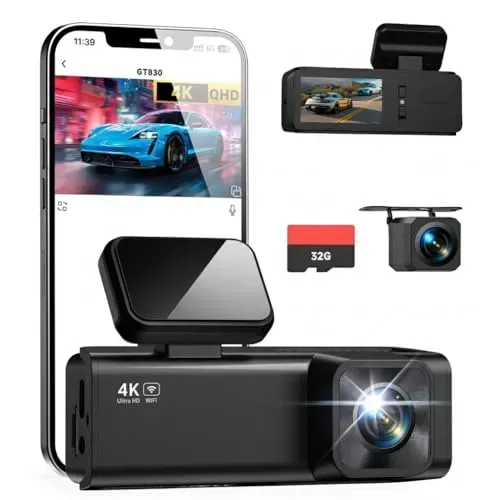
If you want a simple, good-value setup that covers both ends of the car, this dual-channel dash cam records 4K up front and 1080p out back, with WDR to keep plates and streetlights from washing out the image at night. It’s a compact, “hide-behind-the-mirror” style unit that starts recording as soon as you power it from the included car charger—handy for Canadian commuters who just want it to work every time. Loop recording keeps the camera rolling, while the built-in G-sensor locks crash clips so they don’t get overwritten. A 32GB microSD card is included, so you can install it and drive right away. For 24/7 parking coverage, you’ll need an optional Type‑C hardwire kit.
Pros
- Sharp 4K front footage plus 1080p rear coverage
- Includes 32GB card for immediate use
- G-sensor locks incident clips automatically
Cons
- 24-hour parking mode requires extra hardwire kit
- No user reviews yet to judge long-term reliability
3-Channel Triple Dash Cam
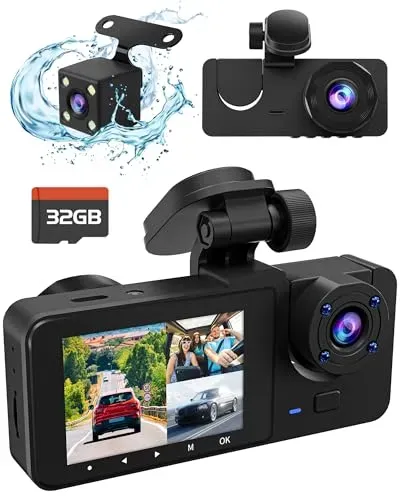
If you want solid coverage without paying premium-brand money, this 3-channel model is a practical pick. You get UHD 4K up front for sharp plate and sign detail, plus a 1080p rear camera and an interior lens for rideshare or break-in evidence—handy for city parking. The wide views (170° front, 150° rear, 120° cabin) do a good job reducing blind spots, and the small 2-inch IPS screen makes it easy to confirm angles before you hit the road. For dark commutes and early mornings, the IR lights, WDR, and f/2.0 lens help keep footage usable in low light. It includes a 32GB card and loop recording, and the G-sensor locks clips during an impact. For 24-hour parking coverage, you’ll need a separate hardwire kit.
Pros
- True three-camera coverage: front, rear, and interior
- 4K front video captures clearer plates and road signs
- Includes 32GB card and reliable loop recording
Cons
- 24-hour parking mode requires a separate hardwire kit
- Small 2-inch screen feels cramped for playback
WiFi 2K Mini Dash Cam
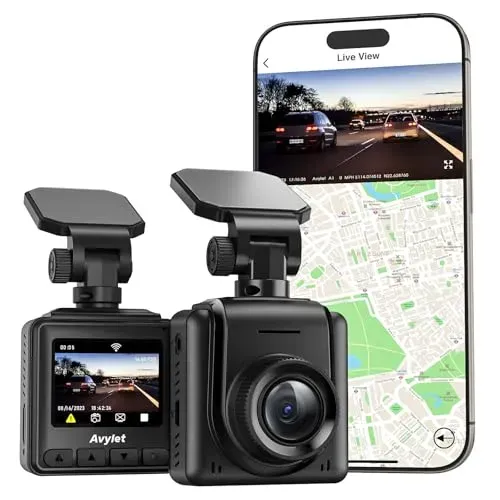
If you’re shopping for a best budget dash cam in Canada, this tiny 2K model covers the basics without feeling cheap. You get 1440p (2560×1440) recording with a 170° wide-angle lens, plus a handy 1.5" IPS screen for quick checks at a stoplight. The F1.6 aperture and WDR help at night—useful on dark winter commutes and dim suburban streets. Wi‑Fi lets you pull clips to your phone through the Avylet app (no subscription) and even update firmware over the air. It’s a solid “set it and forget it” pick for general use, with loop recording and a G-sensor for incident clips. Just know GPS and proper 24/7 parking mode need add-ons.
Pros
- Sharp 2K video with wide 170° road coverage
- Wi‑Fi app access with no subscription fees
- Good low-light results thanks to WDR and F1.6
Cons
- External GPS module sold separately
- Parking mode needs a hardwire kit (also sold separately)
LAMTTO 4G LTE Dash Cam
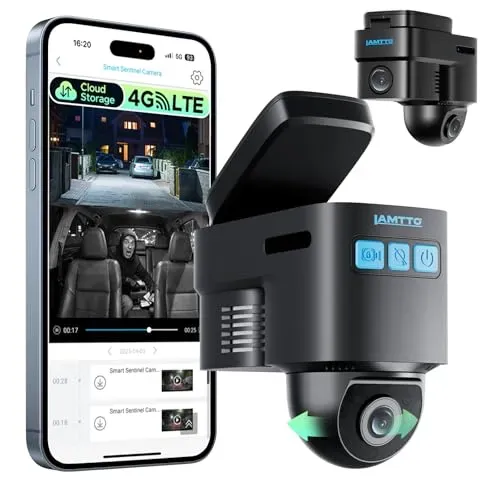
If you want a dash cam that behaves more like a security system, the LAMTTO 4G LTE model is built for that. It records the front view plus an inside-facing camera, and the big draw is cellular remote access through the uboxPro app—so you can live-view, get alerts, and check real-time GPS tracking even when your car is parked downtown or sitting at the cottage without WiFi. Year-round, the always-on "Sentry Mode" style monitoring is handy in busy lots, using radar detection plus a G-sensor to flag bumps and suspicious movement. Event clips can auto-upload to the cloud (30-day trial), which is great if the camera gets stolen. With an OBD-II power supply, it can run 24/7 for parking surveillance.
Pros
- 4G live view and alerts without relying on WiFi
- Cloud event backup helps if the cam is stolen
- Radar + G-sensor parking monitoring for unattended vehicles
Cons
- Remote features require an ongoing cellular subscription
- Needs OBD-II power for true 24/7 parking coverage
WOLFBOX Mirror Dash Cam
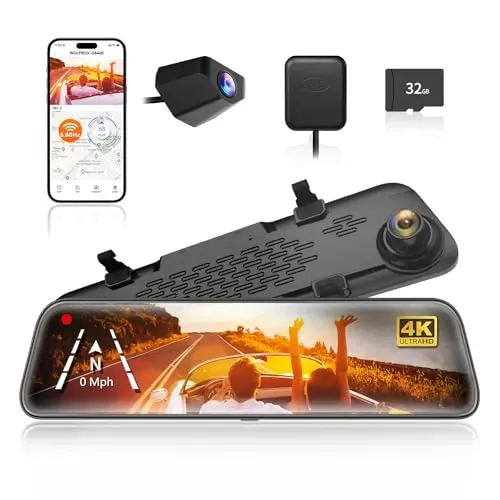
If you want a premium mirror-style dash cam that feels like a real upgrade, the WOLFBOX G840S is a strong pick. The front camera records in sharp 4K (2160p) with a 1080p rear, and the big 12-inch mirror display gives you about 1.5× the viewing area of a standard mirror—handy on Canadian highways when you’re checking lanes in slush spray. The wide 170° front and 140° rear lenses help cut down blind spots, and the split-screen view lets you keep both angles up at once. Night driving is where it shines: the low-reflectivity LCD plus WDR/HDR keeps headlights and dark roads balanced. You also get a 32GB card and an external GPS antenna; 24-hour parking mode needs a hardwire kit.
Pros
- Large 12-inch mirror screen reduces blind spots
- Sharp 4K front video with usable 1080p rear
- Wi‑Fi app and GPS data for easy clip sharing
Cons
- Parking monitoring requires an additional hardwire kit
- Mirror-style size may not suit smaller windshields
WOLFBOX Voice Control Mirror Cam
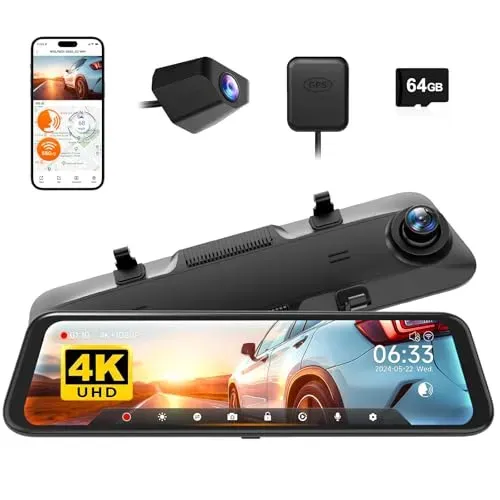
If you want a premium dash cam that feels like a tech upgrade, the WOLFBOX G850 swaps your factory mirror for a big 12-inch touch screen with true 4K up front and a 1080p rear camera. That extra screen size makes it easier to judge distance in traffic and spot plates when the weather turns messy. The WDR and “super night vision” help keep footage usable through harsh glare off snow, dark rural highways, and rainy nights. I also like the 5.8GHz WiFi for quicker, more reliable video transfers to your phone, and the voice controls for switching views without reaching. It includes a 64GB card and GPS, but the parking monitor needs a separate hardwire kit.
Pros
- Large 12-inch display makes rear view genuinely easier
- Real 4K front video captures fine details well
- Fast 5.8GHz WiFi for smoother phone downloads
Cons
- Parking mode requires an extra hardwire kit purchase
- Mirror-style install may not suit every vehicle
REDTIGER STARVIS 4K Dash Cam
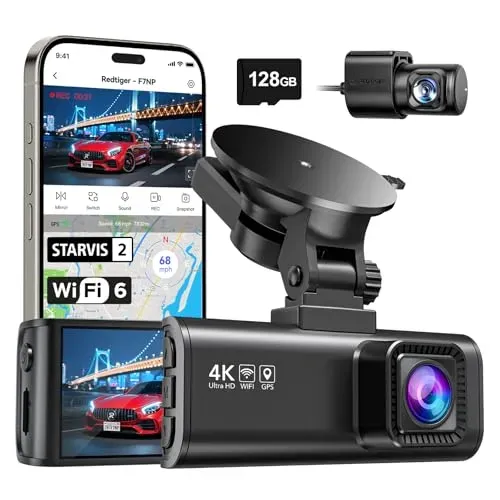
If you want a premium, set-it-and-forget-it setup for Canadian driving, the REDTIGER F7NP is a strong contender. You get true dual recording: crisp 4K up front and 1080p out back, with wide 170°/140° coverage that’s great for multi-lane highways and busy urban intersections. The STARVIS 2 sensor, F1.5 aperture, and HDR/WDR combo are the big deal here—night footage stays readable instead of turning into headlight glare, which matters during early sunsets and late-night highway drives. I also like the included 128GB card (nice value at $169.99) and the built-in GPS for speed and route proof. 5.8GHz Wi‑Fi makes transferring clips to your phone much quicker than older 2.4GHz cams, and the 3.18” IPS screen is handy for framing. For 24/7 parking coverage, you’ll need an extra hardwire kit.
Pros
- Excellent 4K front + 1080p rear video quality
- Strong night footage with STARVIS 2 and HDR/WDR
- Includes 128GB card and built-in GPS
Cons
- 24-hour parking mode requires a separate hardwire kit
- No reviews yet, so long-term reliability is unknown
Dedicated Dash Cam vs Using Your Phone: Which Do You Need?
A dedicated dash cam is usually the better fit for most Canadian drivers because it’s built to live in your vehicle year-round. It hardwires cleanly, starts recording automatically, and can handle long commutes and rough roads without overheating as quickly as a phone might. If you’re trying to pick the best dash cam for peace of mind, look for reliable looping recording, a capacitor (better than a battery in hot/cold swings), and optional parking mode—useful in places like the GTA, Vancouver, or Montréal where door dings and hit-and-runs happen in lots. A phone is the common alternative: it can be “free” if you already own it, and the video can look great in daylight. But it’s less practical for daily use (mounting, charging, storage, glare), and leaving a phone in a car during Prairie cold snaps or humid Southern Ontario summers is hard on the device. Choose a phone setup for occasional road trips or as a temporary solution; choose a dash cam for set-it-and-forget-it reliability.
Budget vs Premium: What's the Difference?
In Canada, budget dash cams typically land around $70–$150, while premium models run about $200–$450+ (especially for the best front and rear dash cam bundles). Paying more usually gets you clearer licence plates at night, better dynamic range for low sun and glare, and stronger heat management for extreme cabin temps. Premium units also tend to offer more reliable Wi‑Fi apps, faster video offload, buffered parking mode (records a few seconds before impact), and better warranty support—important if your cam fails after a few freeze-thaw cycles. Budget options can still be a smart buy if you mostly drive in daylight, park in a garage, and just want basic incident coverage; they’re often the best budget dash cam choice for a second vehicle—the WiFi 2K Mini Dash Cam at under $50 is a good example. The sacrifices are usually weaker night footage, fewer parking features, and more “fiddly” apps or mounts. Total cost of ownership matters: a cheaper cam that needs replacing after one harsh season can cost more than a midrange model that lasts several years.
How to Choose the Best Dash Cams for Canadian Conditions
Canada asks a lot of a dash cam: deep cold snaps in the Prairies, humid summers in Southern Ontario, salty winter roads in Atlantic Canada, and long dark commutes in B.C. rain. The right model isn’t just about sharp video—it’s about staying reliable when your windshield freezes overnight and your cabin heats up in July. Start by deciding whether you want a simple front-only camera or a front-and-rear setup for insurance-friendly coverage in busy cities like Toronto, Montréal, or Vancouver. Then focus on heat tolerance, parking protection, night performance, and a mounting setup that won’t constantly fall off.
Key Features to Look For
Heat and Cold Tolerance (and the Right Power Setup)
Extreme temperatures are where many dash cams fail—and choosing the right dash cam for cold weather is one of the most important decisions for Canadian drivers. Look for models rated to at least -20°C for winter starts, and ideally down to -30°C if you regularly see Prairie cold snaps or northern travel. On the other end, a parked car in the sun can push cabin temps well above 50°C in places like the Okanagan or Southern Ontario—so a high heat rating (around 60°C or higher) matters. For battery type, favour supercapacitors over lithium batteries; capacitors handle heat better and are generally more reliable over time. If you want parking recording in winter, consider a hardwire kit with low-voltage cutoff so you don’t drain your battery during a cold night.
Video Clarity Where It Counts: Night Driving and Glare
Resolution numbers don’t tell the full story—Canadian conditions often mean low light, wet roads, and harsh glare off bright surfaces. Prioritize a dash cam with strong night performance: a quality sensor, a wide enough aperture (lower f-number is better), and effective HDR/WDR to balance bright headlights with dark surroundings. This is especially helpful on unlit highways in Alberta or cottage roads in Muskoka—the REDTIGER F7NP with its STARVIS 2 sensor is a strong example of this done well. A polarizing filter (CPL) can also reduce dashboard reflections and improve contrast on bright days. For a rear camera, look for a model that holds detail at night so plates and lane markings remain readable in rain or slush.
Best Dual Dash Cam Setup: Front-and-Rear Coverage
If you commute in dense traffic or deal with frequent rear-end incidents, the best front and rear dash cam setup is a proper two-channel system. A proper front-and-rear system records what happened behind you during sudden stops, merges, and parking-lot bumps—common in urban centres and in poor weather when stopping distances grow. If you’re prepping your vehicle for colder months, our best winter tires guide covers traction picks that pair well with a good dash cam setup. Check that the rear camera is a real video channel (not just a low-resolution add-on) and that the kit includes a long enough cable for SUVs and hatchbacks, which are popular across Canada. Also consider the rear mounting style: an adhesive mount on the rear glass is usually more stable than suction cups in temperature swings.
Parking Mode, Incident Detection, and Reliable Operation
Parking mode can be a game changer for hit-and-runs at condo garages in Calgary or curbside parking in Halifax. Look for buffered parking recording (it saves a few seconds before the impact), plus motion and impact detection you can fine-tune to reduce false triggers. The LAMTTO 4G LTE Dash Cam takes this further with cellular alerts and live-view monitoring even when you’re away from the vehicle. If you park outdoors, consider how the camera handles frost, darkness, and streetlight flicker. A hardwire kit is typically the most dependable way to run parking mode; aim for an adjustable low-voltage cutoff (often 11.8V–12.4V options) so you can protect your car battery during cold weather. Clear status indicators and audible alerts are also helpful when wearing gloves and moving quickly. If frost and ice buildup are a constant battle, a windshield snow cover can help keep your lens and glass clear overnight.
Storage, Reliability, and Ongoing Costs
Dash cams are only useful if they actually save the footage. Choose a model that supports larger microSD cards (128GB or 256GB) and uses loop recording with clear file protection for collision clips. In Canada’s temperature swings, memory cards can wear out faster, so it’s smart to buy a high-endurance microSD designed for constant writing. Some cameras also offer Wi‑Fi or app downloads, which is handy when you need to share a clip quickly after a fender-bender—the REDTIGER F7NP includes a 128GB card out of the box, saving you that extra purchase. If you’re watching your spending, plan for these extras—card, hardwire kit, and filter—so your affordable pick stays dependable long-term rather than becoming a frustration.
Canadians exploring this topic may also find our Best Winter Wiper Blades Canada: Must-Have Picks for Ice helpful.
Frequently Asked Questions
Q: What should I prioritize to get the best dash cam footage in Canada (day, night, and plates)?
Look for higher resolution, strong night performance (WDR/Starvis), and a wide-enough field of view without extreme distortion. In Canada’s long dark evenings, night vision matters as much as 4K. Also prioritize a reliable G-sensor and clear windshield mounting to reduce glare from low sun. If you want top-tier low-light clarity, the REDTIGER F7NP with STARVIS 2 is built for night driving and plate readability.
Q: What’s the best front and rear dash cam setup for daily driving versus parking incidents?
For everyday coverage, a dual-channel system is usually enough: front for the road and rear for tailgaters and rear-end collisions. If you routinely park on busy streets or in condos, prioritize 24-hour parking mode and reliable event locking. The 4K Dual Dash Cam offers front/rear coverage plus parking features and loop recording, making it a practical all-around choice for typical Canadian commutes.
Q: What’s the best budget dash cam choice without sacrificing basic safety features?
On a tight budget, focus on essentials: dependable loop recording, a G-sensor for automatic incident saving, and usable night video—not just high advertised resolution. Avoid paying extra for features you won’t use (like large screens) if it compromises reliability. The WiFi 2K Mini Dash Cam is a good value-oriented option: compact, app-friendly for downloading clips, and includes core protections like parking monitoring and a G-sensor.
Q: Will a dash cam handle Canadian winters and summer heat, and when should I replace it?
Extreme cold can stress batteries and adhesives, while summer heat can warp mounts and degrade image sensors over time. Prefer cams designed to tolerate long parking sessions and temperature swings, and check footage quality seasonally. Replace your unit if it starts corrupting files, randomly reboots, won’t hold date/time, or night footage becomes noticeably noisier. For drivers who want added security features for outdoor parking, the LAMTTO 4G LTE Dash Cam supports remote live view and anti-theft monitoring.
Q: What common installation and usage mistakes cause dash cams to miss important footage?
The biggest mistakes are placing the camera too low (blocking view), aiming it too high (missing bumpers/plates), and using a cheap microSD that fails in cold weather. Also, people forget to format the card regularly and don’t test parking mode after installation. Route cables so airbags aren’t obstructed, and angle the lens to capture the horizon plus the hood edge. If you want an easier alignment process, the WOLFBOX G840S Mirror Dash Cam can simplify positioning with its large 12-inch mirror display.
Q: Are dash cams legal in Canada?
Yes, dash cams are legal in every province and territory. The main rule is that the camera must not obstruct your view of the road—mount it behind or near the rearview mirror, not in the centre of the windshield. In some provinces like Alberta and Ontario, windshield-mounted devices need to be positioned outside the driver’s direct line of sight. Recording audio inside the vehicle may raise privacy considerations in certain situations, but for personal dashcam use while driving, there are no federal restrictions.
Q: What are the most trusted dash cam brands available in Canada?
The brands Canadian drivers recommend most often include Viofo, Garmin, REDTIGER, WOLFBOX, Thinkware, and BlackVue. Viofo and Thinkware are popular in enthusiast communities for reliable cold-weather performance, while Garmin is a common choice at retailers like Best Buy. REDTIGER and WOLFBOX offer strong value on Amazon.ca with 4K options under $200. For connected features like cloud backup and LTE, BlackVue and LAMTTO are worth considering.
Final Thoughts: Making the Right Choice for Canadian Conditions
Finding the right dash cam for Canadian roads comes down to reliable footage, easy access to clips, and confidence in harsh conditions—especially when you’re dealing with sun glare, road spray, or stop-and-go traffic in places like the GTA.
For most drivers, the 3-Channel Triple Dash Cam is the strongest all-around pick. That three-camera coverage is ideal if you park on the street or spend time in busy lots, because it captures what’s happening ahead, behind, and inside the vehicle for clearer context in a collision or vandalism claim. The 4K front detail also helps when you need to make out plates and signage quickly.
If you want a simpler, high-detail setup focused on what’s ahead, the 4K Dual Dash Cam is a solid alternative for commuters who mainly need clean forward footage for daily highway driving. Prefer checking clips from your phone without pulling the card? The WiFi 2K Mini Dash Cam leans into convenience, making it easier to review and share incident footage on the spot. And for night driving on dark Canadian highways, the REDTIGER F7NP with its STARVIS 2 sensor delivers some of the best low-light footage in this price range.
Before you buy, confirm you’re getting the channel count you actually need, pick a high-endurance microSD card, and test placement so the lens isn't blocked by wipers or road grime. Then set loop recording and lock/incident recording so critical clips don’t get overwritten.
Choose the model that matches how and where you drive, and get it installed this week—you’ll thank yourself at the first close call. You'll be better prepared for whatever Canadian roads throw your way—rain, snow, construction, or rush hour.