

Heads up: some of the links in this post are affiliate links. That means if you click and purchase, we may get a commission. It's how we keep this site running without cluttering it with ads.
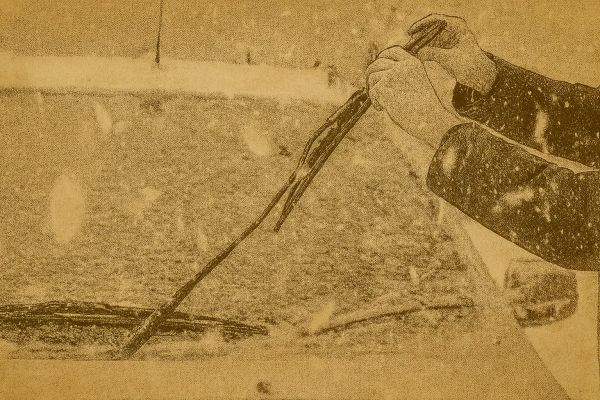
The moment your wipers freeze mid-commute, you learn a fast lesson: "all-season" doesn't mean Canadian-winter-proof. One minute you're moving through Toronto slush, the next you hit that gritty highway spray of salt, sand and half-melted snow, and your blades turn into two stiff popsicle sticks that just smear everything into a grey film.
Canada makes wiper blades work overtime. Southern Ontario delivers freeze-thaw whiplash, the Prairies hit -30°C to -40°C with wind that turns an exposed wiper frame into an ice sculpture, BC mountain passes pack wet snow into the joints, and Atlantic freezing rain bonds to rubber overnight. Below are six blades that hold up in those conditions, with current Amazon.ca prices, plus how to get the sizing right the first time. If you're already fighting morning ice, a windshield snow cover is the cheapest thing you can pair with them.
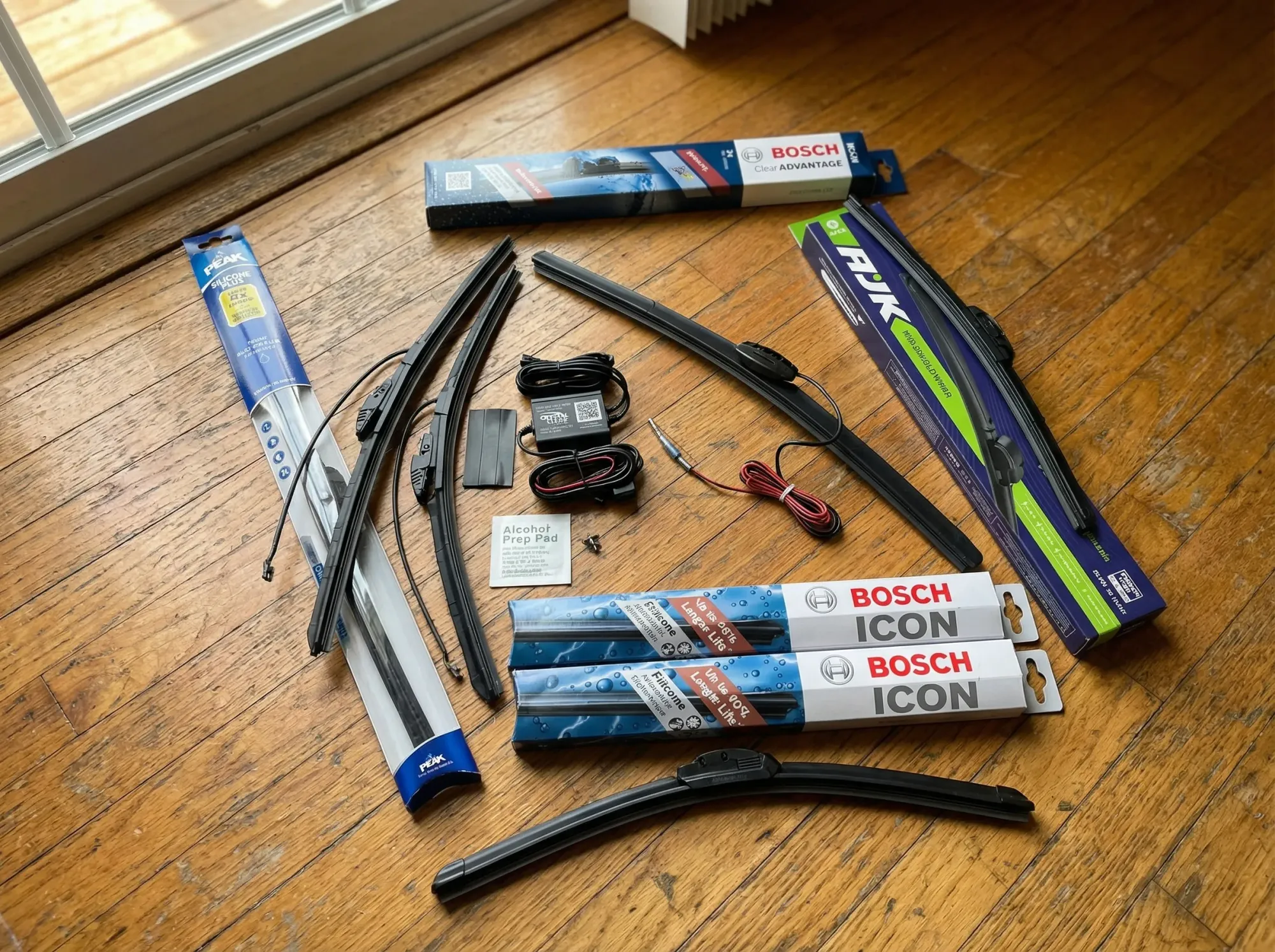
Quick Overview: Our Top Picks
| Product | Best For | Why We Love It | Price |
|---|---|---|---|
| Best overall | Comes as a matched driver and passenger pair, so both sides wear at the same rate instead of one going streaky first. | $64.00 | |
| Heavy snow and packed ice | An armoured shell seals off the hinges and springs, which is where snow packs in and freezes solid overnight. | $36.49 | |
| Freeze-thaw and slush | A riveted all-metal frame handles wet snow and salt spray without the flex that makes cheap plastic frames skip. | $35.57 | |
| Windy prairie highways | The spoiler adds downforce at speed, so the blade stays planted instead of lifting in a crosswind. | $28.19 | |
| Tightest budgets | A dedicated winter beam blade at a price most drivers will replace without wincing each season. | $22.06 | |
| Freezing rain, if you'll spend it | Sensors in each blade switch the heat on near 5°C on their own, so there's no switch to remember at 6am. | $258.00 |
Bosch ICON 26A22A Beam Wiper Blades — Driver and Passenger Side, Set of 2
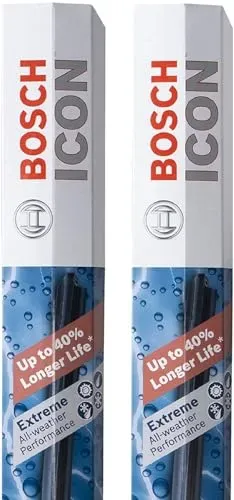
This is our top pick for most Canadian drivers, and the reason is boring in a good way: it's a matched 26-inch driver and 22-inch passenger set, so both sides go on new at the same time and wear at the same rate. Replacing one blade and leaving the other is how you end up with a clean arc on one side and a smeared one right in your line of sight.
Bosch's FX dual rubber is rated to resist cracking in deep cold, and the beam design has no exposed hinges for snow to pack into. The asymmetric spoiler holds the blade down at highway speed, which matters in blowing snow on the Trans-Canada. At $64.00 it's not cheap for a pair, but it carries a 4.4-star average across more than 28,000 Amazon.ca ratings, which is the deepest track record of anything in this guide.
One catch worth checking before you order: this set fits 9x3mm and 9x4mm hook arms only. It will not fit pinch tab, side lock or top lock arms.
Pros
- Matched pair means even wear across both blades
- Beam design with no hinges to freeze
- Rated for deep cold, roughly -30°C to -40°C
Cons
- Hook arms only, so check your arm type first
- The 26"/22" combination won't suit every vehicle
TRICO Ice 26" Winter Wiper Blade

If your problem is snow packing into the blade rather than rubber going stiff, this is the design built for it. The TRICO Ice wraps the frame in an armoured shell so the hinges and springs never see slush — which is exactly the failure that leaves a blade frozen into one rigid shape by morning. The heavy-gauge wiping element is built to resist tearing at sub-zero temperatures.
At $36.49 it sits in the middle of this guide's price range, and it's a genuinely popular Canadian winter blade with a 4.0-star average from nearly 7,000 ratings. TRICO lists it as fitting a long roster of common vehicles, including 2007–2022 Honda CR-V, 2013–2022 Toyota RAV4, 2008–2023 Nissan Rogue and 2011–2021 Ford Explorer. It's a side lock mount, so confirm your arm type.
Pros
- Armoured shell keeps snow out of the blade structure
- One-piece flexible design conforms to most windshields
- Backed by a 12-month manufacturer warranty
Cons
- Side lock mount, not universal
- Covered blades can be noisier on dry glass in shoulder season
Michelin RainForce All Weather Performance Wiper Blade, 26"
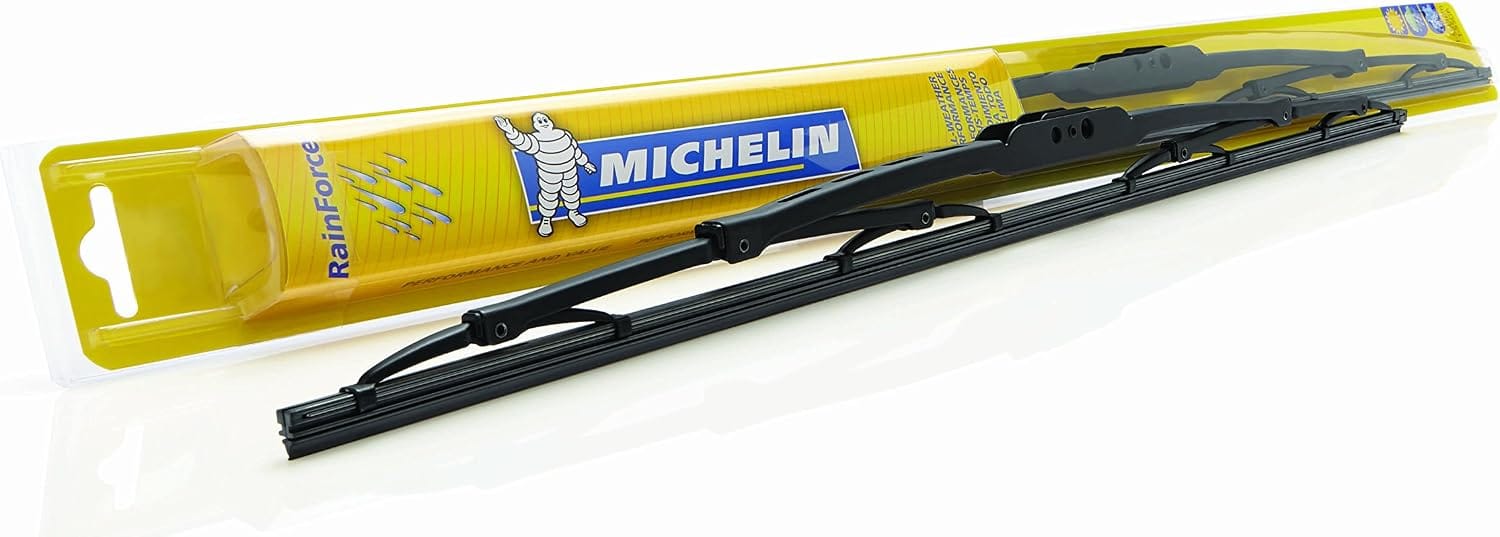
For the coastal and freeze-thaw regions — Lower Mainland BC, Vancouver Island, much of Atlantic Canada — the enemy isn't -35°C, it's constant wet slush at around 0°C. The RainForce is built for that: an all-metal riveted frame with a vented aero design, and compression-moulded natural rubber with a graphite coating for quieter wiping on a wet windshield.
It's a traditional framed blade rather than a beam, which some drivers prefer for how it handles heavy standing water. At $35.57 with a 4.2-star average across nearly 8,000 ratings, it's one of the better-reviewed conventional blades on Amazon.ca. The EZ-LOK connector makes the swap quick, and it's listed as a universal fit for pinch tab arms.
Pros
- All-metal riveted frame resists flex and salt corrosion
- Strong review record for wet, slushy conditions
- Quick pre-installed connector
Cons
- Framed design has more exposed joints than a beam blade
- Less suited to dry Prairie powder than a sealed winter blade
Bosch Clear Advantage Beam Wiper Blade, 26" (Pack of 1)
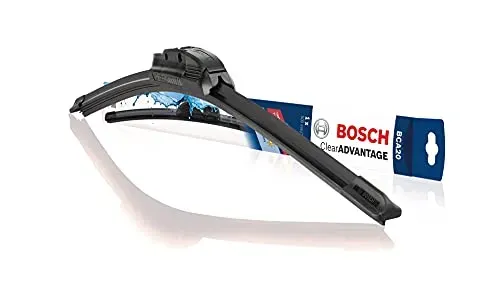
If the ICON set is more than you want to spend, or your vehicle needs two different lengths bought separately, the Clear Advantage is the sensible step down. A precision-tensioned steel spring keeps even pressure across the full 26 inches, and the graphite-treated rubber edge cuts the chatter you get on cold, dry glass.
The aerodynamic spoiler is the reason it lands in this guide for windy prairie highways — it adds downforce so the blade doesn't lift when a crosswind catches it at 110 km/h. At $28.19 with a 4.1-star average from over 16,000 ratings, it's the best-value beam blade here. It's a pinch tab mount and sold as a single blade, so you'll need two for the front windshield.
Pros
- Even pressure across the full blade length
- Spoiler reduces lift at highway speed
- Pre-mounted multi-adapter simplifies installation
Cons
- Sold singly, so budget for two
- Not a sealed winter blade for heavy ice build-up
PEAK Snow Beast Winter Windshield Wiper Blade, 22"
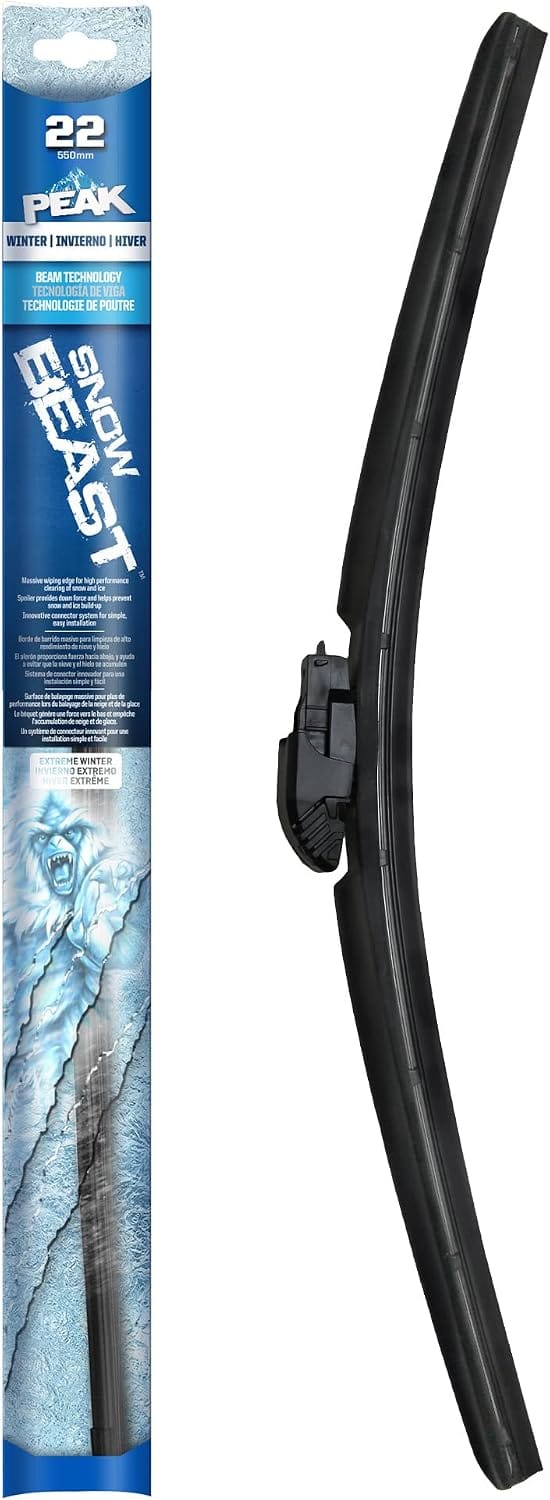
At $22.06, this is the cheapest way into a purpose-built winter blade rather than an all-season one. PEAK uses a beam construction with a single spoiler shaped to resist snow and ice building up on the blade itself, and an extra-large graphite-coated wiping element for clearing heavier snow loads.
Its 3.8-star average across 335 ratings is more modest than the Bosch and Michelin options, which is worth weighing. But if you're the kind of driver who swaps blades every season anyway — which is reasonable in a salt-heavy region — buying inexpensive and replacing often is a legitimate strategy. It's available from 13 to 28 inches, so most vehicles can be covered. This listing is the 22-inch.
Pros
- Purpose-built winter blade at an entry-level price
- Wide connector compatibility, including pinch tab and push button
- Full size range from 13" to 28"
Cons
- Lower review average than the premium picks
- Shorter expected life than a Bosch or Michelin blade
Crystal Clear Automatic Heated Windshield-Wipers System, 22" + 22"
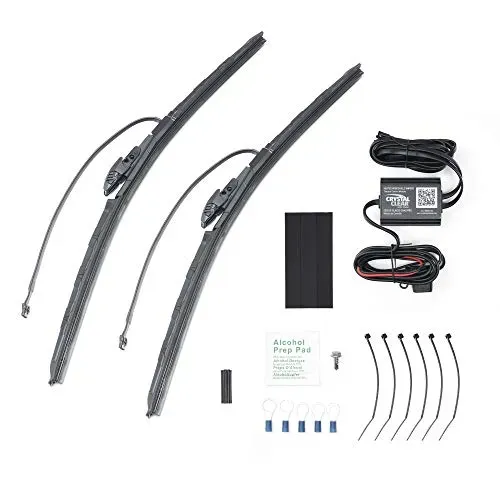
This is the freezing-rain answer, and we'll be upfront about the price: $258.00 is roughly four times what a good pair of conventional blades costs. It buys you two 22-inch heated blades, a control module and 3M mounting hardware. Each blade has its own temperature sensor and switches the heat on automatically around 5°C, so there's no extra switch to remember on a dark February morning.
Where this earns its money is the Ottawa Valley, the GTA and Atlantic coastal storms — places where ice forms on the blade mid-drive rather than just overnight. It's not for everyone: the 3.8-star average from 161 ratings is decent rather than outstanding, it's a fixed 22" + 22" pair that many vehicles can't use, and it draws power from the vehicle. If your winters are mostly dry snow, a beam blade at a quarter the price does the job.
Pros
- Fully automatic — sensors in each blade, no manual switch
- LED indicator confirms the system has power
- Complete kit with mounting hardware and control module
Cons
- Very expensive next to conventional winter blades
- Fixed 22" + 22" pair limits which vehicles it fits
Winter Wiper Blades vs All-Season Wiper Blades: Which Do You Need?
Winter blades are built for the messy reality of Canadian winters: slush, freezing rain, road salt, and snow packing around the frame. Most true winter blades use a covered frame or a beam-style design to reduce ice buildup, so they're less likely to chatter or freeze to the windshield at -20°C to -35°C. The trade-off is that they can be noisier on dry glass and may wear faster if you run them year-round.
All-season blades are the simpler, cheaper alternative. They work well in milder regions where you see more rain than deep snow, and they're often quieter in shoulder seasons. But in Calgary, Edmonton, Montreal or Halifax during wet snow and freeze-thaw cycles, all-season frames can clog with ice and skip at the worst moment. If you drive highways early mornings, park outside, or deal with heavy slush, dedicated winter blades are worth it. If you garage-park and mostly commute in city traffic, all-season is often good enough.
The practical answer for most people: swap to winter blades when the first real snowfall arrives, not after the first ice storm has already shredded the rubber.
Budget vs Premium: What's the Difference?
In Canada, budget winter blades typically run about $20 to $30 per blade, while premium options usually land between $30 and $65, with heated systems pushing well past that. Paying more generally gets you rubber compounds that stay flexible in extreme cold, stronger spring tension for consistent contact, and coatings that reduce squeal and streaking once salt film builds up. Premium blades also tend to fit more cleanly with modern wiper arm adapters.
Budget blades can be perfectly fine if you replace them more often, drive mainly in milder coastal climates, or just want a cheap set to get through one winter. The downside is shorter life, more chatter during freeze-thaw, and occasional poor wiping at the edges — especially on the larger windshields common to trucks and SUVs. For the Prairies, northern regions and Quebec winters with lots of highway driving, premium options often cost less over time because you're not swapping mid-season after the first ice storm.
How to Choose the Best Winter Wiper Blades for Canadian Conditions
Choosing well isn't about picking a popular brand — it's about matching the blade to the weather you actually drive through. Wet snow in Vancouver, freezing rain in the GTA, blowing powder on the Prairies and salt spray in Atlantic Canada all stress blades differently. Look for designs that resist ice build-up, stay flexible in extreme cold, and hold even pressure across the glass. Then confirm the right blade sizes for your vehicle, because a great blade in the wrong length won't clear properly.
Key Features to Look For
Winter Blade Style (Beam vs Winter Frame vs Hybrid)
The "winter" label covers different constructions, and the difference matters here. Beam designs have fewer exposed joints, so they're less likely to pack with snow and freeze during a slush run or a -25°C morning in Winnipeg. Traditional winter frame blades add a rubber boot or armoured shell over the linkage — effective against snow and ice, though the cover can tear and trap grime over time. Hybrids split the difference with a frame under an aerodynamic cover. If you're reading reviews, watch for ice-up complaints; those usually point to too many exposed moving parts for your region.
Cold-Weather Rubber Compound
Rubber that's fine at 0°C can turn stiff and streaky once temperatures drop. For Northern Ontario, the Prairies and much of Quebec, look for blades marketed with a winter-grade compound — often silicone or a premium synthetic blend designed to stay pliable around -30°C and below. The goal is consistent contact so you don't get one uncleared arc sitting right in your line of sight. Premium options also tend to resist cracking from road salt and UV.
Ice and Snow Shedding
Ice build-up is the enemy of clear visibility. The blades built for serious commuting focus on stopping snow from accumulating inside the blade structure in the first place. If you drive through lake-effect snow in Southern Ontario or heavy maritime snow in Halifax, prioritize a sealed design or an effective protective cover. A well-designed spoiler helps too, keeping the blade pressed down at highway speed and shedding snow as it sweeps.
Fitment and Connectors
Getting the fit right is non-negotiable, and it's where most orders go wrong. Check your owner's manual or a retailer fitment tool for the lengths your vehicle needs — driver, passenger, and rear for hatchbacks and SUVs. Many newer vehicles use push-button or pinch-tab connectors, and cheap adapters can sit crooked or pop loose, causing chatter. For a full-size pickup, look for sturdy connectors and longer lengths that hold even pressure across a flatter windshield. And don't forget the rear wiper on an SUV; salt fog obscures the back window fast on slushy school runs.
Related: Best Winter Tires for Canada: Stay Safe and Confident This Winter
Frequently Asked Questions
What are the best winter wiper blades for snow and ice?
You're really choosing between strong passive clearing and active de-icing. For packed snow and slush, a sealed or beam design like the TRICO Ice or the Bosch ICON resists ice build-up better than an exposed frame, because there are fewer hinges to freeze. For freezing rain and mid-drive icing — common in Southern Ontario and Atlantic Canada — a heated option like the Crystal Clear system melts ice along the wiping edge. For most drivers in most of the country, the Bosch ICON set is the right starting point.
How do I know the right wiper blade sizes for my vehicle?
Start with the driver and passenger lengths in your owner's manual or a fitment tool — 26" driver with 22" passenger is a common combination. Then match the connector type, which is where most orders go wrong. The Bosch ICON 26A22A is a paired set for hook arms, while the Bosch Clear Advantage is a single 26" blade on a pinch tab mount. If you're between sizes, don't size up — an overly long blade can hit trim, lift at speed, or chatter in a cold snap.
What works best for BC vs Prairies vs Ontario vs Atlantic climates?
Coastal BC sees more wet snow and rain, so a framed blade like the Michelin RainForce or a beam like the Clear Advantage keeps steady contact through heavy spray. The Prairies bring -30°C mornings and dry powder, which favours a sealed beam blade that won't pack with ice — the Bosch ICON suits that. Southern Ontario and Atlantic Canada get freezing rain and fast temperature swings, where heated blades earn their price. In Quebec and Northern Ontario, where roads are heavily salted, prioritize even pressure and easy weekly cleaning.
How long do winter wiper blades last in Canada?
Most drivers get about one season, or roughly 6 to 12 months of regular use. In heavy salt regions like Southern Ontario, the Montreal area and Atlantic highways, abrasive spray wears the edge faster — closer to 6 months for a daily commuter. In colder Prairie regions, rubber stiffens and cracks if blades are left frozen to the glass, which shortens life too. Beam blades tend to hold even pressure longer, which delays the onset of streaking.
When should I replace my winter wiper blades?
Replace as soon as you see streaking that doesn't clear after cleaning the glass, chatter that gets worse below -10°C, or any visible tear or bent structure. A common mid-season trigger in Canada is a major freezing rain event — if the blade edge gets nicked while you're scraping ice, performance can drop overnight. Uneven clearing on the driver's side at highway speed is another sign. Most drivers fit fresh blades in late October or November and reassess after January. Replace in pairs; one new blade beside a worn one creates inconsistent clearing in slush.
How do I stop winter wipers from streaking in extreme cold?
Once a week, or after any storm, lift the blades and wipe the rubber edge with a microfiber cloth dampened with washer fluid. That removes the salt film and road oil that cause smearing. Clear packed snow from around the blade before driving, and never force a blade that's frozen to the glass — run the defroster for a few minutes to release it instead. Keep your washer fluid rated to -35°C or -40°C, and avoid pouring hot water on a cold windshield; thermal shock can crack glass and refreezes into rough patches that tear blade edges.
Final Thoughts: Making the Right Choice for Canadian Conditions
For most Canadian drivers, the Bosch ICON 26A22A set at $64.00 is the pick we'd point you to first. Buying a matched pair solves the most common winter wiper complaint — one clean side and one smeared side — and the beam design has nothing for snow to pack into. Check that your vehicle uses hook arms before ordering.
If snow packing is your specific problem, the TRICO Ice at $36.49 is the sealed-shell option built for it. On a tighter budget, the PEAK Snow Beast at $22.06 gets you a real winter blade for the price of a tank of washer fluid and a coffee. And if you're in freezing-rain country and tired of scraping, the Crystal Clear heated system is the only pick here that actively melts ice — at a price to match.
Whichever you choose, confirm your exact blade sizes and connector type before ordering, fit them before the first hard freeze rather than after it, and top up your winter washer fluid at the same time. Prices listed are from Amazon.ca and current as of August 2026; they move, so check before you buy.