
| Sourced from 2 independent sources (4 reports) · no points in dispute |
The Globe and Mail and Canada Infrastructure Bank
Every key fact in this report is confirmed by more than one independent source.
8 key facts · 8 corroborated · none disputed
Why some reports were counted once
The Globe and Mail, Head Topics, and National Observer — the same Canadian Press report, counted once.
When several outlets publish the identical article — most often because they all ran the same wire story from an agency like The Canadian Press — we count it as one source, not several. That keeps our source count a measure of independent reporting, not how widely a single story was syndicated.
This summary is compiled from the independent sources listed above.
Nunavut’s Hope Bay operations are set to receive wind power through an Inuit-led project backed by a new $20-million Canada Infrastructure Bank loan, a financing move aimed at cutting diesel use at one of Canada’s northernmost mine projects.
The Hope Bay Wind Project involves the Kitikmeot Inuit Association and Tugliq Energy, and will supply power to Agnico Eagle Mines Ltd.’s Hope Bay operations in Nunavut’s Kitikmeot Region.
A loan for Arctic wind
The Canada Infrastructure Bank has closed the $20-million project loan for the Hope Bay Wind Project, adding federal infrastructure financing to a development centred on renewable power for mining operations in Nunavut.
This initiative aligns with Agnico Eagle's broader strategy, as highlighted in our coverage of Canada's Arctic Region, which details the C$2.4B gold mine development by the company.
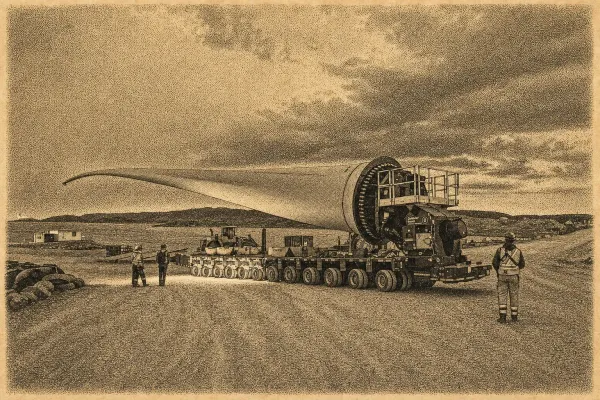
The project includes a 4.2-megawatt wind turbine and a four-megawatt battery energy storage system. Together, they are expected to help power Agnico Eagle’s Hope Bay operations, where the company recently made a positive investment decision to proceed with the mine project.
The bank described the project as an example of “Inuit-led development of clean energy infrastructure,” saying it would “create new career opportunities in the Kitikmeot Region and reduce reliance on diesel in the Arctic.”
Diesel and emissions reductions
The core promise of the project is straightforward: less diesel burned to generate power at Hope Bay.
The project is expected to reduce diesel use by up to three million litres annually and lower emissions by about 13,000 tonnes per year. Those figures place the wind turbine and battery system at the centre of the project’s environmental case, while also linking it directly to the power needs of the mine.
Natural Resources Canada has also contributed $25 million to the project through the Smart Renewables and Electrification Pathways program.
Inuit benefits and local jobs
Beyond the power system itself, the project is being framed around Inuit participation and local economic returns.
It is expected to create 15 jobs during peak construction and provide long-term economic benefits to Inuit and local communities through profit-sharing or revenues.
Gregor Robertson, the Minister of Housing and Infrastructure and Minister responsible for Pacific Economic Development Canada, said the investment shows “how we can build clean energy infrastructure while creating lasting economic opportunities in the North.”
“This Inuit-led project will reduce reliance on diesel, support local jobs and businesses, and ensure the benefits of clean energy investment stay in the Kitikmeot Region for generations to come,” Robertson said.
A project statement included in the announcement described Hope Bay as tied to “responsible stewardship of our Nuna and the Arctic,” and said the partnership is intended not only to move energy use from diesel to wind, but also to support new skills and investment in the Kitikmeot Region.
Another Nunavut infrastructure project
The Canada Infrastructure Bank says the Hope Bay loan is its second project in Nunavut. Its first was a $6.7-million loan for a wind project in Sanikiluaq.
For the bank, the Hope Bay financing extends its work in northern clean-energy infrastructure while pairing that investment with a mining project that Agnico Eagle has decided to advance.
For the Kitikmeot Region, the project now carries several expectations at once: renewable power for Hope Bay operations, lower diesel use, reduced emissions, construction jobs and longer-term revenues for Inuit and local communities.
Reader-funded. No ads. No paywall.
The Canada Report is independent, reader-funded Canadian news — no advertisers, nothing behind a paywall, kept free for everyone. If you value it, you can help keep it that way.
Support The Canada Report →