
Sourced from 3 independent sources (4 reports) · no points in disputeHow we sourced thisArchyworldys, CTV News, and Haligonia
Most key facts are confirmed by more than one independent source; a few details come from a single outlet.
9 key facts · 7 corroborated · none disputed
Why some reports were counted once
Haligonia and Government of Nova Scotia News — the same report, published near-identically, counted once.
When several outlets publish the identical article — often because they ran the same wire-service story — we count it as one source, not several, so the count reflects independent reporting rather than how widely one story was republished.
This summary is compiled from the independent sources listed above.
The Maritimes are not getting one power grid overnight. But New Brunswick, Nova Scotia and Prince Edward Island have now agreed to start planning as if their electricity future is more regional than provincial.
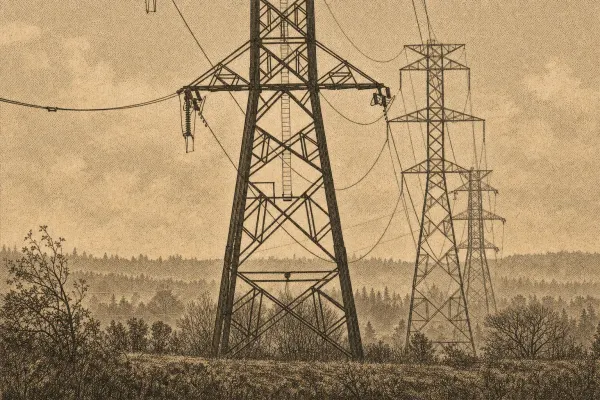
The three provinces have signed a memorandum of understanding aimed at increasing co-operation on electricity planning and grid operations, with affordability, better planning and investment, system efficiency, resilience and reliability named as shared goals for Maritime electricity systems.
A regional power planning push
Maritime electricity systems are already interconnected, but they still operate as distinct provincially regulated systems. The new agreement begins a review and planning process rather than immediately creating a single unified Maritime power grid.
New Brunswick Premier Susan Holt described the first step in practical terms during an interview with CTV Your Morning.
“Now we are going to look at all of our generation assets in the Maritimes together,” Holt said. “All of the interties, the transmission connections, all of the demand forecasts, and as we plan more assets... we need to make sure we are able to deliver that.”
That is the core of the first phase: integrating future planning for generation assets, transmission connections and demand forecasts across the three provinces.
The provinces will also develop a regional electricity transmission road map by next spring, setting out how a more co-ordinated system could work across provincial lines.
Not one grid, at least not yet
The MOU’s significance lies partly in what it does not do. It does not immediately merge the three provincial electricity systems into a single Maritime grid.
Instead, the provinces will study whether a Maritime Independent Electricity System Operator could co-ordinate regional power delivery. The idea is to examine whether a dedicated regional body could help manage electricity flows and planning across systems that are physically connected but still governed separately.
Michelle Robichaud, president of the Atlantica Centre for Energy, called the agreement “one of the most consequential announcements in the last decade for energy and electricity.”
“Certainly, Atlantic Canada is really well connected, but we’ve been planning in silos, and we’ve been planning in separate systems for a long time,” Robichaud told CTV. “I think it’s a way for us to see is there greater benefits and greater value for planning as one region, while at the same time, maintaining or ensuring that we respect provincial ownership and decision making.”
She described a potential Maritimes power operator as something like an air traffic controller for electricity, helping identify gaps in the system as demand changes.
Premiers frame it around reliability
The three premiers framed the agreement as a way to prepare for growing power needs while keeping costs and reliability in view.
Nova Scotia Premier Tim Houston said his province would be interested in new approaches “if this review shows that regional collaboration will generate cost savings and value for Nova Scotians and improve reliability across all three provinces.”
Holt said New Brunswick is “well positioned to help build a cleaner, more reliable and more resilient electricity system,” while Prince Edward Island Premier Rob Lantz said the agreement is about “improving reliability, supporting economic growth and helping ensure Islanders have the secure energy system they deserve.”
Robichaud said the best outcome may be one most residents barely notice.
“I think if we’re successful in this, the average citizen won’t know the difference,” she told CTV. “But what they will notice is that their energy bills might not go up, or the reliability aspect, so that we don’t have to issue announcements that say we’re preparing for a blackout or a brownout during winter season.”
Ottawa and undersea cables
The joint provincial release published by Haligonia says Natural Resources Canada is also a partner in the regional co-operation initiative.
Archyworldys reported that Ottawa announced $5.9 million for planning and technical work on two new undersea power cables connecting New Brunswick and Prince Edward Island. According to that report, construction of two 200-megawatt, 138-kilovolt cables is targeted for 2028.
For now, the Maritime agreement is still a planning exercise. But it marks a formal shift from three provinces managing interconnected systems separately toward a process that will test how much more they can do together.
Reader-funded. No ads. No paywall.
The Canada Report is independent, reader-funded Canadian news — no advertisers, nothing behind a paywall, kept free for everyone. If you value it, you can help keep it that way.
Support The Canada Report →