
Based on coverage from CBC, Castanet, and Yahoo News.
An international tribunal has issued an interim ruling that Canada’s current policies amount to an ongoing genocide against Indigenous Peoples, after a week of emotional hearings in Montreal focused on residential schools, missing children, and unmarked graves.
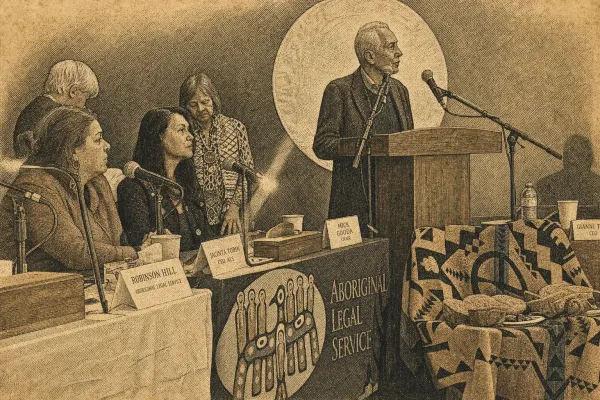
The finding came Friday from seven judges on the Permanent Peoples’ Tribunal, a human-rights “court of opinion” that investigates alleged crimes against humanity. The hearings were held at the daphne art centre in Montreal and were requested by the Native Women’s Shelter of Montreal in 2024.
Permanent Peoples’ Tribunal ruling in Montreal
The tribunal’s interim statement says Canada “bears legal, moral and political responsibility” for actions and omissions tied to a “systemic” effort to destroy Indigenous Peoples. Māori barrister Valmaine Toki read part of the ruling, describing intergenerational trauma that affects “successive generations of children, families, and communities.”
Another judge, Seánna Howard, an Indigenous Peoples Law and Policy professor at Arizona State University, said the panel saw a continuing pattern: “disdain for Indigenous lives,” denial of Indigenous sovereignty, and other rights violations. Howard argued that this pattern points to a “continuing genocide” and suggests Canadian authorities have used a strategy aimed at avoiding accountability under international law.
Reporting from the hearings described survivors in the room holding onto each other and wiping away tears as the decision was read.
Residential schools evidence and survivor testimony
The tribunal began hearing evidence Monday, centred on Canada’s responsibility for the residential school system and the harms connected to it. Witnesses described forced family separation, cultural destruction, and lasting trauma across generations. They also recounted physical and sexual abuse by school staff and clergy, and the ways children coped, including psychological dissociation.
The interim ruling is tied to that testimony, including how shame, stigma, and guilt have kept many survivors silent, according to the tribunal’s statement.
What “genocide” means under UN law
A key part of the week was testimony from expert witness Fannie Lafontaine, a human rights lawyer and professor who wrote *A Legal Analysis of Genocide*, a supplementary report to the National Inquiry on Missing and Murdered Indigenous Women and Girls.
Lafontaine told the tribunal the word “genocide” is often understood through the lens of mass killings over a short period, such as Rwanda in 1994 or Bosnia, but that’s not the full legal definition.
Under the United Nations Genocide Convention, genocide includes acts committed with intent to destroy, in whole or in part, a national, ethnical, racial, or religious group. The convention lists several acts, including killing members of the group, causing serious bodily or mental harm, forcibly transferring children to another group, imposing measures intended to prevent births, and creating conditions meant to bring about physical destruction.
Claims about forced sterilization and TRC obligations
The panel’s preliminary conclusion also points to other Canadian policies it characterizes as crimes against humanity with genocidal intent, including forced sterilization of Indigenous women, alongside the residential school system.
The tribunal also says Canada has failed to meet responsibilities laid out by the Truth and Reconciliation Commission in 2015, adding a present-day dimension to what many Canadians think of as strictly historical wrongdoing.
Federal government response and next steps
Crown-Indigenous Relations and Northern Affairs Canada said the federal government would not participate in the proceedings. CBC News also reported it contacted the federal government for comment on the interim ruling but did not immediately hear back.
The tribunal’s full decision is expected on Sept. 30, which falls on the National Day for Truth and Reconciliation.
For survivors and families, the ruling is already being treated as a major marker. Christa Big Canoe, an Anishinaabe lawyer and the tribunal’s lead prosecutor, called it a “hopeful preliminary decision” and urged Canadians to challenge residential school denialism, including arguments that unmarked grave excavations are needed to validate survivor testimony.
A national 24-hour Indian Residential School Crisis Line is available at 1-866-925-4419 for survivors and those affected.
Support Independent Canadian News Analysis
The Canada Report is supported by readers like you. If this article helped you understand what’s happening, you can support our work with a one-time tip.
Support The Canada Report