
| Sourced from 3 independent sources · no points in dispute |
Global News, Briefs, and VOCM
Most key facts are confirmed by more than one independent source; a few details come from a single outlet.
9 key facts · 5 corroborated · none disputed
This summary is compiled from the independent sources listed above.
Quebec and Newfoundland and Labrador are scheduled to announce a new energy agreement Monday involving Churchill River power in Labrador, setting up a major reset in a hydro relationship that has carried political weight for years.
The new agreement is intended to replace the existing Churchill Falls agreement, which runs until 2041. For Newfoundland and Labrador, the talks have been about more than electricity. Briefs has reported that the province has long considered the old Churchill River contract unfair because it allowed Quebec to buy power at very low prices.
A deal years before expiry
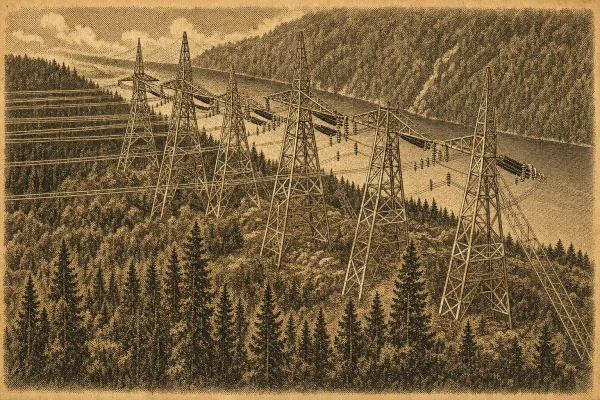
At the centre of the announcement is the Churchill Falls operation, jointly owned by Hydro-Québec and Newfoundland and Labrador’s provincial power company.
The scale is significant. Global News reported that the existing Churchill Falls plant has a capacity of 5,428 megawatts and supplies about 15 per cent of Hydro-Québec’s electricity. That makes Monday’s expected agreement important not only for Labrador, but for Quebec’s power planning as well.
The existing contract still has years left to run, but both provinces have been working toward a replacement. The new arrangement is meant to settle what comes next before the current agreement expires in 2041.
Wakeham reopened the framework
An earlier framework to end the old contract was reopened after Tony Wakeham became premier, with Newfoundland and Labrador seeking a better deal.
In the source reporting, Wakeham described the province’s goal as “more power, more value.” That phrase now frames the political test for Monday’s announcement: whether the new agreement can convince Newfoundland and Labrador that it has improved its position, while still giving Quebec the electricity certainty it is seeking.
The reopening of the framework signalled that the earlier understanding was not the final word. It also brought both sides back to the core question that has defined the Churchill River file: how the power should be shared, and who benefits from its value.
How the power may be split
Briefs reported that the new framework allocates 10 gigawatts of power to Quebec and 2.35 to 3 gigawatts to Newfoundland and Labrador.
If confirmed in the final announcement, those numbers would define the practical shape of the new arrangement. Quebec would receive the larger share, while Newfoundland and Labrador would secure a significant allocation for its own future needs.
Briefs also reported that the framework includes expanding Churchill Falls generating capacity and developing a new run-of-river hydro plant at Gull Island. That would move the agreement beyond simply replacing the old Churchill Falls contract and into a broader plan for Churchill River development.
Demand is driving urgency
The negotiations are unfolding against a simple backdrop: both provinces need more power.
Quebec is seeking additional electricity to meet growing demand. Newfoundland and Labrador also needs power for future demand tied to major mining projects.
That shared pressure gives the agreement a different character from the old dispute. Quebec is looking for long-term supply. Newfoundland and Labrador is looking for a stronger position from resources in Labrador, while also preparing for its own electricity needs.
The result is a deal that could shape how both provinces plan industrial growth, energy supply and public expectations around hydro power.
Monday’s announcement matters
Monday’s announcement will be watched closely because it touches several sensitive issues at once: the future of Churchill Falls, the fairness concerns long raised in Newfoundland and Labrador, Quebec’s demand for dependable electricity, and the development of additional Churchill River power.
The agreement is not just about replacing a contract that runs until 2041. It is about whether two provinces with shared ownership of a major hydro operation can move from a long-running grievance to a new working arrangement.
For Quebec, the prize is added power at a time of growing demand. For Newfoundland and Labrador, the question is whether the new terms deliver the better deal Wakeham sought when he sent the framework back for another round of negotiation.
Reader-funded. No ads. No paywall.
The Canada Report is independent, reader-funded Canadian news — no advertisers, nothing behind a paywall, kept free for everyone. If you value it, you can help keep it that way.
Support The Canada Report →