

Heads up: some of the links in this post are affiliate links. That means if you click and purchase, we may get a commission. It’s how we keep this site running without cluttering it with ads.
At Point Pelee at 6:12 a.m., the wind off Lake Erie can bite at -2°C even in May—and that’s when the “800‑metre speck” problem hits. A warbler flicks through backlit branches, a raptor circles way out over the marsh, and your daypack is already stuffed with a thermos, extra layer, and snacks. Gear that looks amazing on a spec sheet can be a pain in cold hands, foggy air, and real hiking pace. Birding groups like Birds Canada track migration across exactly these conditions, and the right binocular is what turns a distant smudge into a confirmed ID.
This Canada-first guide stays practical: what’s actually comfortable to carry, fast to focus, and clear enough for migration days—without overspending. We cover budget-to-premium options from $22.70 to $182.28 CAD, and for most casual birders the best overall value is the Hontry 10x25 Compact—a tiny, pack-friendly binocular with a 4.5‑star average across 22,500 reviews that fits the way Canadians really bird (walks, lakeshores, and travel).
Quick Overview: Our Top Picks
| Product | Best For | Why We Love It | Price |
|---|---|---|---|
| Kids and first-time birders | Pocketable and lightweight, so you’ll actually bring them on every walk. | $22.70 CAD | |
| Phone digiscoping on hikes | Includes phone adapter and tripod for steadier shots of distant birds. | $49.99 CAD | |
| Shorebird spotting by the lake | Big reach helps pick out far-off birds across water without breaking the bank. | $37.99 CAD | |
| One binocular for mixed distances | Zoom power adapts fast—scan wide, then dial in tight for identification. | $159.99 CAD | |
| Backyard birding at dusk | Large objective pulls in more light, keeping views clearer in dim evenings. | $99.99 CAD | |
| Tripod-based wildlife scanning | Massive light-gathering plus included tripod makes long, steady viewing sessions easy. | $182.28 CAD | |
| Rainy coastal birding days | Rugged, grippy build stays comfortable and reliable when the weather turns wet. | $35.19 CAD |
Hontry Compact Binoculars
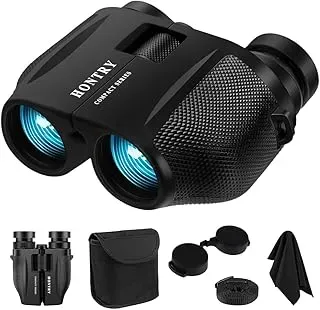
If you want a pair of birding binoculars you’ll actually bring along on a spring migration walk or a quick lakeshore hike, these Hontry 10x25 compacts nail the basics for Canada without costing much. They’re genuinely small (12.8 x 12.7 x 6.8 cm) and light at 272.16 g, so they slip into a jacket pocket or daypack and don’t feel like a brick by kilometre five. The 10x magnification gives you helpful reach for open parks and shorelines, while the 25 mm objective keeps things compact for travel. You also get Fully Multi-Coated optics and a Porro prism design, plus a slip-resistant body that’s easier to hold with cold hands. With 15 mm eye relief and water resistance, they’re a practical, high-rated pick for general outdoor use.
Pros
- Excellent value with a strong 4.5★ rating
- Compact and lightweight at 272.16 g
- 10x magnification suits parks and shoreline birding
Cons
- 25 mm objective limits brightness at dawn and dusk
- Water resistant, not fully waterproof for heavy weather
Usogood HD Binoculars
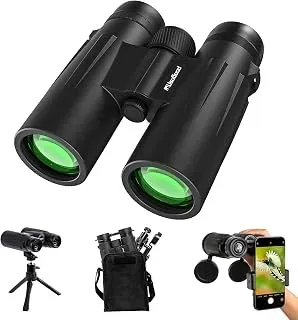
If you want a budget-friendly step up from tiny compacts for Canadian birding, these Usogood 12x50 binoculars bring useful reach for shoreline scanning, prairie hawks, and distant waterfowl during spring and fall migration. The 12x magnification helps pull detail in, while the 50 mm objective and 4.2 mm exit pupil aim to keep views brighter when light gets flat at dawn or in the shoulder seasons. They use a roof prism design with fully multi-coated optics, plus a centre focus knob that’s easy to adjust with cold hands. You also get a tripod mount, which is genuinely handy at 12x for steadier looks from a lakeside lookout or back deck. With a 4.5★ average from 7,000 reviews at $49.99 CAD, they’re a solid value pick for general use.
Pros
- 12x50 reach for long-distance bird spotting
- Tripod mount helps steady higher magnification
- Fully multi-coated optics for clearer, brighter views
Cons
- 12x can feel shaky handheld on long sessions
- Larger than compact options for small daypacks
FLYANT Long-Range Binoculars
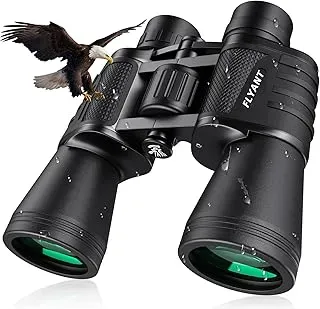
If you like scanning far shorelines, open prairie edges, or high treetops during spring migration, these FLYANT 20x50 binoculars give you lots of reach for the money. The 20x magnification is handy for long-distance viewing, and the 50 mm objective lenses help when light drops at dusk on the lake or during cloudy shoulder-season walks. They’re built around a Porro prism design with anti-reflective coating, and the compact, portable body is listed as shock resistant—useful when they’re bouncing around in a daypack. At 889 g (20.5 x 20.1 x 8.1 cm), they’re not tiny, but you do get a tripod mount and a generous 26 mm eye relief, which is nice for comfort on longer watches. Rated 4.3★ from 4,800 reviews at $37.99 CAD, they’re a solid budget all-rounder.
Pros
- 20x50 reach for scanning long distances
- Tripod mount helps steady high magnification
- Long 26 mm eye relief suits many glasses wearers
Cons
- 889 g feels heavy compared with compact 10x25 models
- 20x can be hard to hold steady handheld
10-30x50 Zoom Binoculars
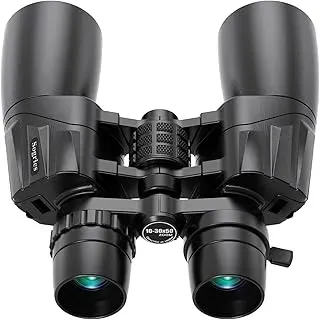
If you want one pair that can pull double duty for birding, travel, and the occasional sports outing, these 10–30x50 zoom binoculars are a premium-leaning pick with a lot of reach. The 50 mm objective lenses help when you’re scanning wide-open Canadian shorelines or prairie edges, and the Porro prism design with BAK4 and FMC lenses aims for a bright, clear view. At 19.81 x 19.56 cm and 960 g, they’re noticeably heavier than compact options, but that weight can feel steadier when you’re zoomed in. There’s also a tripod mount, which is handy for longer migration watches when your arms get tired. Eye relief is a generous 22 mm, which is a nice touch for glasses wearers.
Pros
- 10–30x zoom for long-distance viewing flexibility
- Tripod mount helps steady high magnification
- 22 mm eye relief suits many glasses wearers
Cons
- 960 g feels heavy for long hikes
- Zoomed-in views are harder to keep steady handheld
18x70 Large-Aperture Binoculars
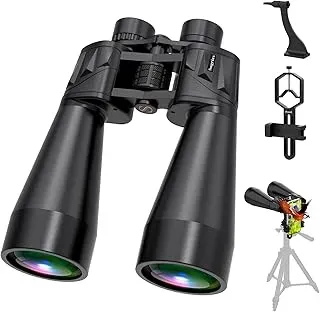
If you’re birding big, open spaces—prairie sloughs, coastal points during migration, or scanning a distant treeline—these 18x70 binoculars are built for reach. The 18x magnification and large 70 mm objective lenses suit long-distance viewing, and the roof prism with BAK-4 glass helps keep the image looking cleaner than bargain optics. They’re also a practical crossover pick for hiking, travel, and even star gazing, with a tripod mount when hand shake starts to show at 18x. Keep in mind they’re substantial: the parcel size is 34.29 x 29.59 x 15.29 cm and listed at 2.12 kg, so this is more “bring it on purpose” than “toss in a daypack.” Eye relief is 18 for a bit more comfort on longer looks.
Pros
- 18x70 power is great for long-distance viewing
- Tripod mount helps steady high magnification
- BAK-4 roof prism for clearer, brighter image
Cons
- Heavy and bulky compared with compact birding binoculars
- 18x magnification shows hand shake without support
20x80 Astronomy Binoculars
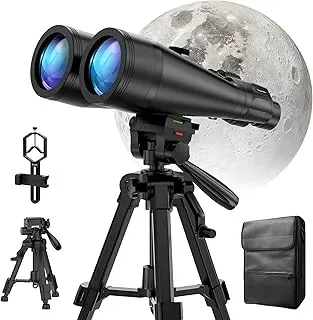
If you want a premium, high-power option for wide-open Canadian viewing—think prairie raptors, distant shorebirds, or moon watching at the cottage—these 20x80 binoculars bring serious reach. You’re getting 20x maximum magnification with a big 80 mm objective lens and BaK-4 prisms, plus a 4 mm exit pupil that helps keep the image usable when light starts dropping during dawn migration or late-evening lakeside scans. They’re also listed as waterproof, which is reassuring in misty shoulder-season weather. Just be realistic about portability: the parcel dimensions are 55.5 x 36.6 x 19.5 cm and the package weight is 4.63 kg, and it’s designed around a tripod mount. The included tripod, adapter, and carrying case make it a “set up and scan” kit more than a toss-in-the-daypack pair.
Pros
- 20x80 power is great for long-distance viewing
- Includes tripod, adapter, and carrying case
- BaK-4 prisms; strong 4.5★ buyer rating
Cons
- Bulky and heavy compared with hike-friendly binoculars
- Tripod-style use isn’t as quick for fast birds
RONHAN Waterproof Binoculars
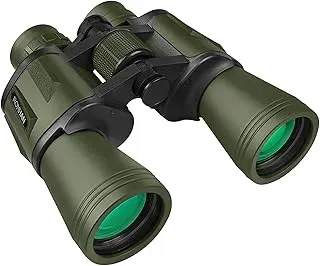
If you’re trying to spot distant birds across a prairie slough or out over a windy shoreline, these RONHAN 20x50 binoculars lean hard into reach: 20x magnification with 50 mm objectives and a Bak-4 prism. They’re built for general outdoor use (bird watching, hiking, travel) and include practical touches like a centre focus knob, long 26 mm eye relief, and a slip-resistant grip for cold, dry hands in shoulder season. At 800 g and roughly 19.05 x 17.98 cm, they’re more “daypack binoculars” than pocket pair, but you do get a tripod mount for steadier views at high power. For $35.19 CAD with a 4.2★ average from 8,200 reviews, it’s a solid budget option when you want magnification without a premium price.
Pros
- 20x magnification helps with long-distance viewing
- Bak-4 prism for clearer, brighter-looking images
- Tripod mount helps steady high-power views
Cons
- 800 g feels heavy for long hikes
- 20x can be shaky handheld without support
Compact birding binoculars vs full-size binoculars: Which do you need?
If you’re shopping for the best binoculars for bird watching in Canada, the first real decision isn’t brand—it’s size. Compact 10x25 binoculars (like our #1 pick, the Hontry) are the “always-with-you” option: light enough for daypacks on lakeside hikes, easy to grab during spring migration walks, and less annoying to carry when you’re layering up in 0°C to 10°C shoulder-season weather. The trade-off is brightness. In dawn/dusk conditions—think Great Lakes shorelines, coastal B.C. forests, or cloudy prairie mornings—small objectives can look dimmer and show less detail on distant waterfowl.
Full-size options (often 10x42 or 12x50) are the common alternative for Canadian birders who spend lots of time scanning wide-open spaces. They’re brighter, steadier in the hands, and more forgiving for long-distance viewing, but they’re heavier and bulkier, which matters on longer hikes or when you’re travelling. For most beginners and casual enthusiasts, a compact pair is the best value; go full-size if low light and long sessions are your norm.
Budget vs premium: What's the difference?
In this guide’s price range ($22.70 to $182.28 CAD), budget binoculars can absolutely be “good enough” for casual bird watching—especially if you want something you won’t stress about tossing in a bag. The Hontry 10x25 is a great example of best overall value: small, simple, and inexpensive, which makes it easy to actually bring along on hikes, cottage weekends, and quick urban birding walks. The compromises are typical: dimmer low-light performance, less edge-to-edge sharpness, and more variation in build quality and focus smoothness. In cold Canadian winters, cheaper focus wheels and eyecups can also feel stiff or fiddly with gloves.
Spend more (roughly $120–$182 CAD) and you usually gain brighter images at dawn and dusk, better coatings for contrast, sturdier hinges, and more consistent quality control—useful if you bird regularly in wet coastal weather or temperature swings from -15°C mornings to mild afternoons. Premium options can also offer better warranties and durability, which lowers total cost of ownership if you’re hard on gear. If you’re mostly fair-weather birding a few times a month, budget is fine; if you’re out every migration season and want less frustration, midrange/premium pays off.
How to Choose the Best Birding Binoculars for Canadian Conditions
Birding in Canada asks more of binoculars than a quick backyard look. You might be scanning spring warblers in Ontario woodlots at dawn, watching shorebirds on a windy Atlantic beach, or picking out raptors over Prairie grasslands where the “bird” is a speck in big sky. The trick is balancing magnification, brightness, and portability so they actually get carried on hikes and migration outings. For most beginners and casual birders, a compact 10x25 style (like our top value pick) is easy to pack and use, while larger 42–50 mm models add low-light comfort but cost and weight. Think real conditions first: cold hands, changing light, and long viewing distances.
Key Features to Look For
Magnification & Objective Size (10x25 vs 10x42 vs 12x50+)
Magnification is what most shoppers fixate on, but size and steadiness matter just as much. A 10x25 is a practical Canadian “take it everywhere” option: bright enough for midday hikes and lakeshore walks, light in a daypack, and quick to raise when a chickadee pops out of cover. Move to 10x42 or 10x50 if you bird at dawn/dusk during spring and fall migration, or in shaded coastal forests in B.C.—the larger objective typically looks easier on the eyes. Higher power like 12x50 or 20x50 can help on wide-open shorelines or prairie wetlands, but it’s harder to hold steady, narrows your field of view, and often benefits from bracing on a railing or using a tripod.
Low-Light Performance for Dawn, Dusk, and Shoulder Seasons
Canadian birding often happens in tricky light: early-morning migration walks, overcast lake days, and late-afternoon shorebird watching when colours matter for identification. Bigger objectives (42–50 mm) can deliver a brighter image, but coatings and optical quality also make a noticeable difference at any size. Look for “fully multi-coated” lenses if it’s listed, and favour binoculars that reviewers say stay clear in grey weather. Compact models can still work well for daytime birding and travel, but expect them to feel dimmer at dusk—especially in November and March when light fades early. If winter birding is your thing (think urban ravines or open water in the Maritimes), favour brightness and contrast over chasing extreme zoom numbers.
Weather Resistance & Cold-Hands Usability
Canada’s mix of drizzle, lake spray, and sudden temperature swings is tough on optics. For coastal B.C., the Great Lakes, and Atlantic shorelines, water resistance is a big deal; “waterproof” and “fogproof” claims (often tied to nitrogen purging) are worth paying for if you bird in wet weather. Cold also changes how binoculars feel: focus wheels can stiffen around -10°C to -20°C, and tiny controls are harder with gloves. Look for a focus wheel with enough texture and size to grip, plus a build that doesn’t feel slippery when damp. If you mainly bird in fair weather, a budget compact can still be great value—just plan to keep it in a pouch and avoid soaking rain.
Field of View, Focus Speed, and Close Focus for Woodland Birds
When you’re tracking fast-moving birds—warblers in Alberta poplar bluffs or mixed flocks in Quebec forests—a wider field of view makes it easier to find and follow them. Many shoppers only compare magnification, but a slightly wider view can feel “faster” and less frustrating for beginners. Focus behaviour matters too: a smooth wheel that goes from near to far without endless spinning is ideal when a bird jumps from a nearby branch to the treeline. Close focus is a bonus on summer hikes for butterflies, dragonflies, and feeder birds; if you like multi-use nature viewing, look for a close focus distance that’s a few metres rather than something that only sharpens far away.
Portability, Fit, and Comfort for Hikes and Travel
The best binoculars are the ones you actually bring. For casual birders doing lakeside loops in Muskoka, city paths in Vancouver, or a weekend trip to Point Pelee, compact binoculars are easy to toss in a jacket pocket or small sling bag. Pay attention to weight, grip shape, and whether the eyecups feel comfortable if you wear glasses. A decent neck strap or a small harness can make even mid-size models feel lighter on longer walks. If you want one pair that also works for sporting events, theatre, or travel, compact 10x25 designs tend to be the most convenient—and that practicality is a big reason they’re such strong value for Canadian day-to-day use.
Canadians exploring this topic may also find our Best Hiking Boots in Canada: 7 Picks From $59 (2026) helpful.
Frequently Asked Questions
Q: What are the best binoculars for bird watching in Canada if I’m on a budget?
For most Canadian beginners, prioritise a lightweight 10x25 or 8x32-style size that’s easy to carry on migration walks and lake hikes. The Hontry 10x25 is a strong value pick because it’s inexpensive yet widely reviewed, and the compact format won’t feel like dead weight in a daypack. Spend more only if you regularly bird at dawn/dusk or want steadier long-distance viewing.
Q: Is 10x or 12x magnification better for Canada’s long-distance birding?
10x is usually the sweet spot for Canadian parks, shorelines, and mixed habitats: it brings distant birds closer without making hand shake too frustrating. 12x can help on wide-open prairie lakes or coastal flats, but it’s harder to hold steady for long scans and can feel tiring in cold, stiff hands. If you’re routinely glassing far distances, a 12x50 like the Usogood 12x50 can make sense—ideally with tripod support.
Q: What binocular size is easiest to carry for hikes and migration outings?
If you’re walking a lot—spring warbler trails, summer lakeshores, or urban winter birding—compact binoculars are the least annoying to actually bring. A 10x25 format slips into jacket pockets and small packs, which often matters more than a small bump in brightness. The Hontry 10x25 fits this “always with you” role well. Larger 50mm binoculars can be brighter, but many people leave them behind on longer hikes.
Q: Do I need high-power (20x+) binoculars for birding in Canada?
Most people don’t. High power is tempting for distant raptors or shoreline ducks, but 20x magnifies shake so much that it’s frustrating without a tripod and good technique. It also narrows your field of view, making birds harder to find. If your birding is mostly long-range scanning from a fixed spot, a 20x50 model can work—just plan to brace it or mount it, especially in windy, cold conditions.
Q: How do I clean and store binoculars properly in Canadian weather?
Keep them dry and grit-free first: blow off sand/salt dust, then use a soft brush and microfiber cloth; avoid wiping dry grit across the lenses. In shoulder seasons, let cold binoculars warm up in their case before opening to reduce condensation. Store in a cool, dry place (not a damp car trunk) and keep caps on. If they get wet, air-dry fully before packing away to prevent haze and mould.
Final Thoughts: Making the Right Choice for Canadian Conditions
Choosing birding binoculars for Canada isn’t about chasing the biggest numbers on the box—it’s about getting a clear, steady view that’s easy to carry from spring migration walks to winter shoreline scans.
For most Canadians, the Hontry Binoculars for Adults and Kids (10x25 Compact) are the best overall value because they’re genuinely practical: light enough for daypacks, quick to raise and focus, and affordable enough that you won’t stress about bringing them on every hike. They’re a great fit for a specific use case like spotting warblers along an Ontario trail in May or keeping in your jacket pocket for impromptu lakefront birding.
If you want more reach and brighter viewing for wide-open spaces, the Usogood 12x50 High Definition Binoculars are a strong step up—better for dawn/dusk looks across a marsh or prairie edge, but bulkier to pack. For maximum zoom from a fixed spot (think raptors at a lookout or distant waterfowl), the FLYANT 20x50 Long-Range Binoculars can pull far-away birds closer, though they’re harder to hold steady without bracing or a tripod.
Before you buy, decide where you bird most: trail-and-travel days usually favour compact 10x25, while open-country viewing and low light benefit from larger 50mm models. Prioritise comfort (strap, grip), easy focusing with cold hands, and a return policy if the fit isn’t right.
Pick the model that matches your outings, place your order, and get them outside on your next walk—you’ll be ready for the next wave of migration and every season after it.