
Heads up: some of the links in this post are affiliate links. That means if you click and purchase, we may get a commission. It's how we keep this site running without cluttering it with ads.
The short answer: for most Canadian homes, yes — but not for the reasons the ads suggest, and not for everyone. If you live anywhere that's seen wildfire smoke roll in over the past few summers, deal with seasonal allergies or pet dander, or live in a condo near a busy road, a decent HEPA air purifier earns its keep. If you have a forced-air furnace with a good filter you actually replace on schedule, or you're hoping a purifier will fix humidity, mould, or that musty basement smell — save your money. We'll explain both sides.
Here's the honest framing this question deserves: an air purifier is a single-room appliance that does one job — pulling particles out of the air — extremely well, and does almost nothing else. Whether that job is worth $90 to $200 CAD depends entirely on what's in your air.
Quick Verdict
Worth it if you:
- Live in a wildfire-smoke region (BC Interior, Prairies, northern Ontario — increasingly, everywhere)
- Have seasonal allergies, asthma, or pet dander in the house
- Live in a condo or apartment near traffic, or can't control hallway smells
- Heat with a woodstove or have a smoker in the household
Skip it if you:
- Have central HVAC and simply need a better furnace filter (MERV 11–13)
- Expect it to fix humidity, mould, or off-gassing renovation smells on its own
- Want whole-home coverage from one small unit — physics says no
Real cost of ownership: $90–$210 CAD upfront, roughly $50–$90/year in replacement filters, and $1–$5/month in hydro.
What an Air Purifier Actually Does (and Doesn't)
A portable air purifier is a fan pushing room air through a HEPA filter, which captures 99.97% of particles down to 0.3 microns — pollen, dust, pet dander, and crucially, the fine PM2.5 particles in wildfire smoke. Most units add an activated carbon layer that takes the edge off odours and smoke smell.
What it doesn't do: it won't remove humidity (that's a dehumidifier), it won't kill mould growing in your walls (that's remediation), and the carbon layer helps with odours but won't neutralize serious VOC problems from a fresh reno. A purifier treats symptoms in the air, not causes in the house.
When It's Genuinely Worth It in Canada
Wildfire smoke season. This is the case that's changed the math for Canadian households. After several record-breaking fire seasons, smoke advisories now reach cities that never used to think about air quality — Toronto, Ottawa, and Montréal included, not just Kelowna and Calgary. Even Atlantic Canada has felt it: a single Nova Scotia fire burned 8,500 hectares before it was declared out. Health Canada specifically recommends portable HEPA air cleaners as one of the most effective ways to lower indoor smoke exposure when the AQHI climbs. On a smoke day with windows shut, a properly sized purifier is the difference between indoor air that's merely stale and air that's actually clean.
Allergies and pets. Ragweed season in Ontario and Québec, birch and alder on the coast, plus year-round cat and dog dander — this is the workload HEPA filters were built for. Running a purifier in the bedroom overnight is where users report the most noticeable difference, because you spend eight unbroken hours in that one room.
Condos and apartments. You can't control the building's air. Cooking smells from the unit next door, hallway smoke, dust from the parkade, traffic pollution off a downtown arterial — a purifier is one of the few air-quality levers a renter or condo owner actually has.
Woodstove homes. If you heat with wood anywhere in rural Canada, you're living with fine particulate all winter. A purifier in the main living space meaningfully cuts what you breathe.
When It's Not Worth the Money
You have forced-air heating and a cheap furnace filter. Before spending $200 on a purifier, spend $25 upgrading your furnace filter to MERV 11–13 and run the fan. Your furnace moves far more air than any portable unit. A purifier still wins for single-room jobs (bedrooms, smoke days), but if your goal is "generally cleaner air in the whole house," the furnace filter is the better first dollar.
You're solving the wrong problem. Musty basement? That's moisture. Condensation on windows? Humidity. Mould spots? Remediation. An air purifier will run faithfully in the corner while fixing none of it.
You expect one unit to clean the whole house. Coverage ratings assume a closed room. A purifier rated for 1,000 sq ft cleans one open area of that size — it does not clean air through walls and around corners. Whole-home purification means either multiple units or HVAC-level filtration.
The Real Cost of Ownership (in Canadian Dollars)
The sticker price is the smallest number that matters. Here's the honest math on a mid-range unit:
- Upfront: $90–$210 CAD for a well-reviewed HEPA unit sized for a bedroom to large living room
- Filters: replacements run $30–$60 and last 4–12 months depending on the model and how smoky your summer was — budget $50–$90/year
- Hydro: a small bedroom unit draws about 7 watts (under $1/month running 24/7 at typical Canadian rates); a large-room unit at 42–45 watts costs roughly $3–$5/month
So a realistic three-year cost is $250–$450 CAD. That's the number to weigh — not the sticker.
How We Reached This Verdict
The Canada Report doesn't personally test products, and we won't pretend otherwise. This verdict is based on filtration standards (true-HEPA capture rates and AHAM-verified CADR airflow ratings), Health Canada's guidance on wildfire smoke and indoor air, Canadian pricing and filter availability on Amazon.ca, and the aggregate ratings of tens of thousands of Canadian buyers. Where we recommend specific units below, they're chosen on verified specs, price-per-performance, and sustained buyer ratings — not sponsorships.
If You've Decided Yes: Three Sensible Picks
Best for a bedroom or desk: Levoit Core Mini-P (~$90)
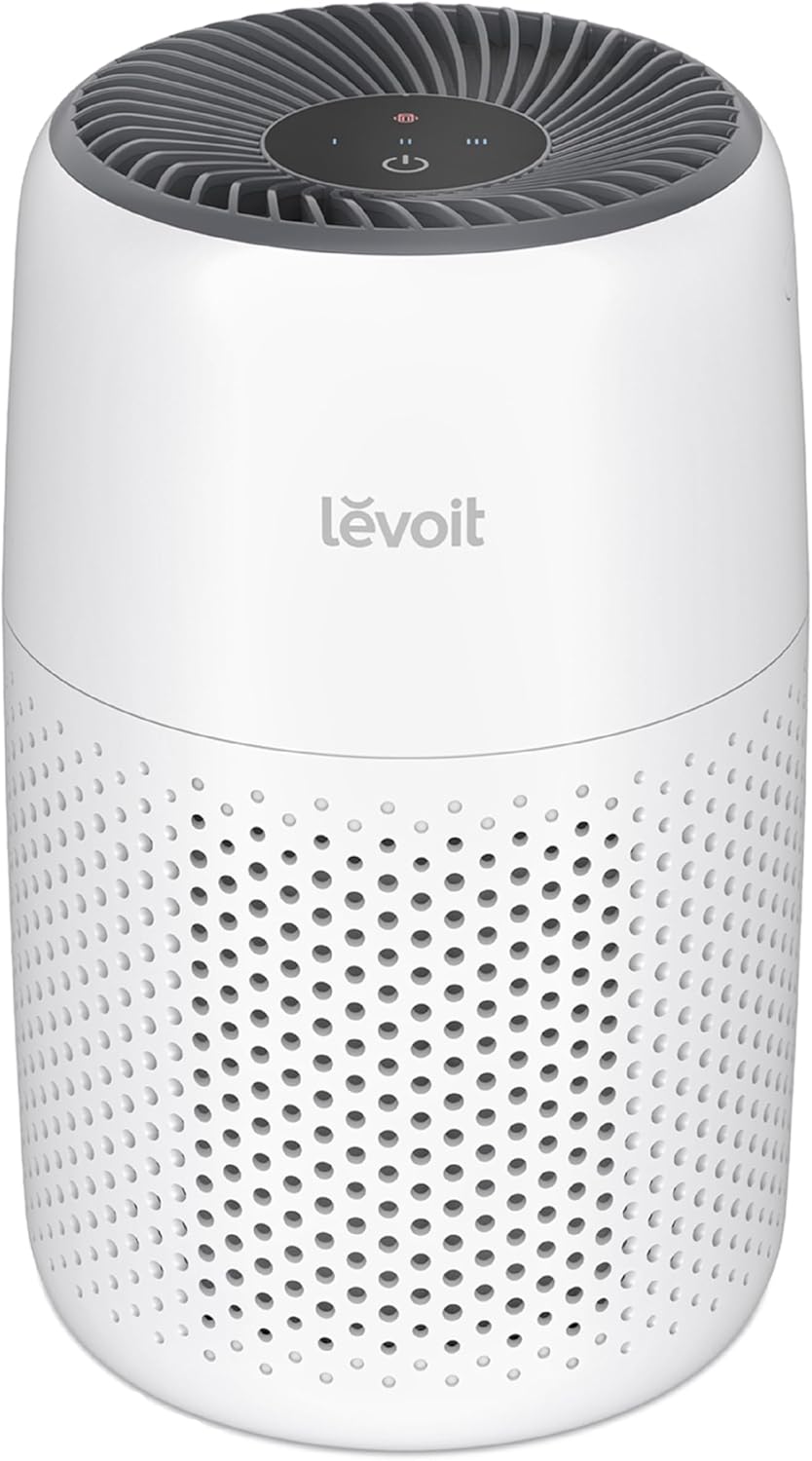
Small, 25 dB quiet, sips 7 watts, and covers up to 255 sq ft. The Levoit Core Mini-P holds an Amazon's Choice badge with a 4.5-star rating across 38,000+ reviews, and it's currently the top-selling air purifier on Amazon.ca. The right answer if you mainly want clean air where you sleep.
Best all-rounder: Levoit Core 300-P (~$170)
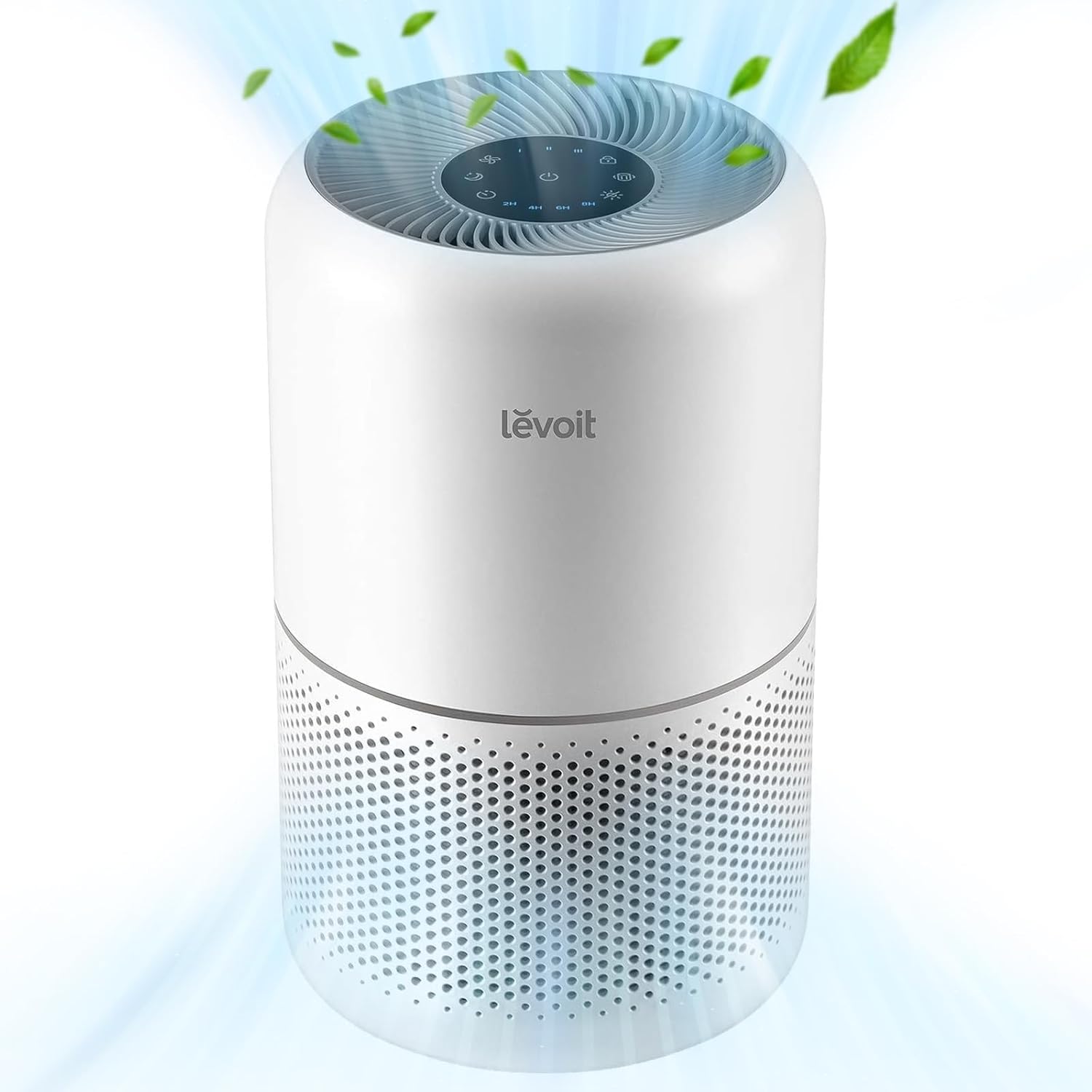
AHAM-verified with a CADR of 143 CFM for smoke, and the Levoit Core 300-P accepts a dedicated Smoke Remover filter designed for wildfire ash — a genuinely useful option in a Canadian summer. It cleans a 222 sq ft room nearly five times an hour, and at 4.6 stars across 107,000+ reviews it's the #2 best-selling air purifier on Amazon.ca. This is the one to buy if you're buying one.
Best for hands-off smoke season: Levoit Vital 100S-P (~$206)
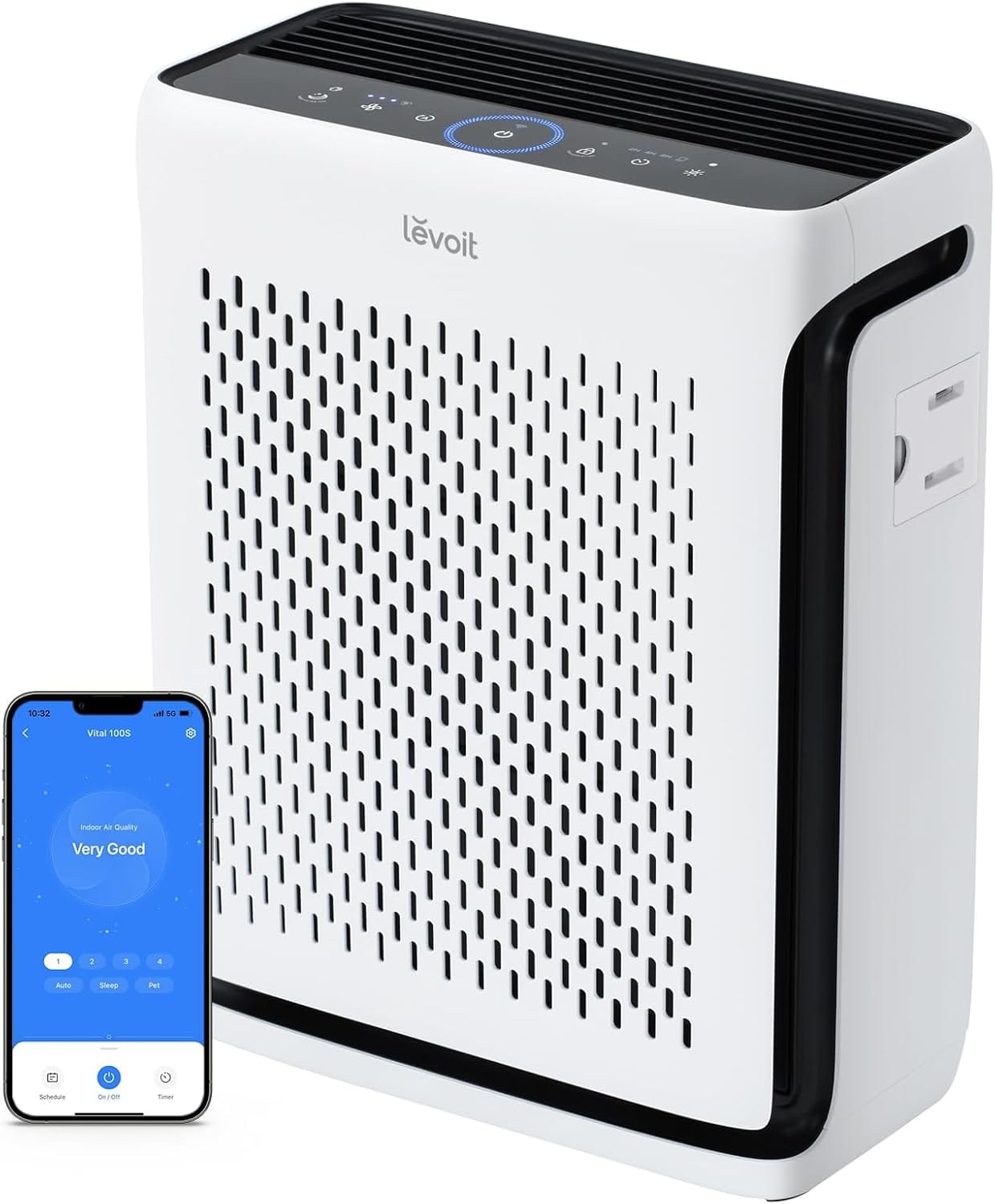
A PM2.5 sensor drives an auto mode that ramps up when smoke rolls in, the pre-filter is washable (fewer replacements over a long fire season), and the Levoit Vital 100S-P is rated 4.6 stars across just over 17,000 reviews. Built for exactly the bad-air days Canadian summers now deliver.
All three picks are one brand, which reflects where the verified ratings and certifications landed rather than any arrangement. If you want a wider field across brands — including picks aimed specifically at pet dander and allergy season — our full guide to the best air purifiers for allergies and pet dander in Canada sets them against each other on specs and price.
Frequently Asked Questions
Is an air purifier worth it for dust?
Partly. A HEPA purifier captures the fine dust floating in the air, and allergy sufferers often notice the difference — but most visible dust on surfaces is heavier particles that settle before any purifier can grab them. If your goal is dusting less often, a purifier will help modestly, not dramatically. If your goal is breathing less airborne dust (especially in a bedroom), it does that job well. For settled dust, the boring answers still win: vacuuming with a HEPA vacuum, washing bedding, and a better furnace filter.
Do air purifiers actually help with wildfire smoke?
Yes — this is their strongest Canadian use case. Wildfire smoke is dominated by PM2.5 particles, squarely in the range true-HEPA filters capture, and Health Canada recommends portable HEPA air cleaners for exactly this. The catch is sizing and behaviour: the unit needs a CADR appropriate for the room, windows need to stay closed, and it should run continuously during advisories. A carbon filter layer also reduces the campfire smell, though no portable unit eliminates it entirely on the worst days.
Is a HEPA air purifier worth it compared to an ionizer?
Stick with true HEPA. Ionizers charge particles so they stick to surfaces rather than physically trapping them, and some produce trace ozone — a lung irritant, which is the opposite of the goal. HEPA filtration is mechanical, measurable, and the standard both Health Canada and AHAM certification are built around. If a unit advertises an ionizer function alongside a HEPA filter, that's fine — just make sure the ionizer can be switched off.
Is a Dyson air purifier worth it?
You're mostly paying for the fan, the design, and the app. Dyson's purifiers filter perfectly well, but on pure filtration-per-dollar they're hard to justify against units at a third of the price with comparable or better CADR ratings. If you want a premium bladeless fan that also purifies — and the heater versions do double duty in a Canadian winter — a Dyson can be a fair two-in-one buy. If you just want clean air, your money goes further elsewhere.
Is a whole-home air purifier worth it?
If you have forced-air HVAC, upgrading filtration at the furnace (a MERV 13 filter, or an installed media cleaner) is the true whole-home solution and usually the better value. Portable purifiers exist because most of us need spot coverage — a bedroom, a nursery, the main living space — or don't have ducted systems at all, which describes a lot of Canadian homes with baseboard or radiator heat. For those homes, one or two well-placed portable units are the practical answer.
The Bottom Line
An air purifier is worth it for the Canadian realities of the last few summers: smoke, allergies, pets, and apartments where you don't control the air. It's a room-by-room appliance with modest running costs and a genuinely useful job. It's not worth it as a whole-home fix, a mould cure, or an upgrade over a furnace filter you haven't changed since 2024. Know which problem you have, and this is one of the easier yes/no calls in home gear.