
Sourced from 3 news outlets · most facts from statements · no points in dispute. How we sourced this
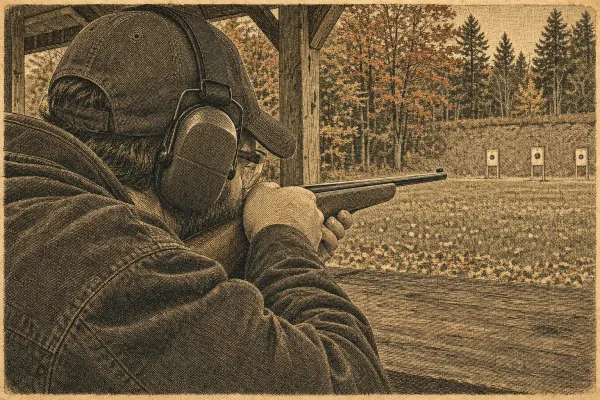
For some Canadian gun owners, firearms bought legally and used for years became prohibited overnight. On Monday at 9:30 a.m. ET, the Supreme Court of Canada is scheduled to begin hearing appeals over the federal firearms ban, with arguments continuing Tuesday.
Key facts
- The Supreme Court of Canada is scheduled to hear the firearms-ban appeals on Monday starting at 9:30 a.m. ET and continue on Tuesday.
- On May 1, 2020, federal rules made about 1,500 firearm makes, models and variants—including the AR-15 and Ruger Mini-14—prohibited for use, sale and importation.
- For affected owners, the change to the prohibited category generally meant losing the ability to use or sell the firearms and facing the prospect of criminal liability.
- The appeals ask whether the federal cabinet (Governor in Council) had authority to prohibit firearms by regulation under Criminal Code section 117.15, which bars prohibition if, in cabinet’s opinion, the firearm is reasonable for hunting or sport shooting in Canada.
Read the original document: scc-csc.ca, linked by niagaraindependent.ca.
The dispute stems from federal rules enacted May 1, 2020, that prohibited the use, sale and importation of about 1,500 firearm makes, models and variants, including the AR-15 and Ruger Mini-14. For affected owners, the new classification generally meant they could no longer use or sell the firearms and faced the prospect of criminal liability.
Supreme Court hearing on four appeals
The Supreme Court case combines four appeals, including one brought by the Canadian Coalition for Firearm Rights and others brought by appellants Christine Generoux, Michael John Doherty and Jennifer Eichenberg.
The challengers have already lost twice. A Federal Court judge dismissed a request to strike down the ban in October 2023, and the Federal Court of Appeal rejected the appeals in April 2025.
In a submission to the court, a group of appellants said the regulations brought “profound disruption” to law-abiding Canadians who had complied with firearms rules.
Challenge to cabinet authority
At the centre of the case is section 117.15 of the Criminal Code. It allows the federal cabinet, formally the Governor in Council, to prohibit firearms by regulation, but says it cannot do so if, in cabinet’s opinion, a firearm is reasonable for hunting or sport shooting in Canada.
The challengers argue cabinet exceeded the authority Parliament gave it.
The federal government takes the opposite view. It argues the Governor in Council reasonably considered public safety and concluded the firearms were not reasonable for hunting or sport shooting in Canada, pointing to concerns including lethality and their use in mass shootings.
Challenge to firearms variants rules
The appeals also raise a practical question for owners: how can they reliably determine whether a firearm is prohibited?
Challengers say the regulations are too vague, particularly in their treatment of “variants” of listed firearms. Their argument is that owners cannot be expected to navigate a prohibition with potential criminal consequences if the boundaries of that prohibition are unclear.
Amnesty period and buyback program
An amnesty period remains in place for owners to dispose of or permanently deactivate prohibited firearms. It has been extended until 90 days after the Supreme Court releases its decision.
As of mid-2026, the federal government had paid businesses $96 million for about 74,000 guns through its buyback program.
What we don't know yet
- The Supreme Court has not yet decided whether the 2020 federal firearms ban is lawful and within the cabinet’s delegated authority.
- It is not yet decided whether the Governor in Council complied with the Criminal Code provision preventing it from outlawing firearms it deems “reasonable for use in Canada for hunting or sporting purposes.”
- It is not yet decided whether the regulations—particularly how “variant” firearms are covered—give owners a clear way to know which firearms are prohibited.
How outlets covered it
- The Niagara Independent — “Licensed gun owners take challenge to Ottawa’s 2020 firearms ban to Supreme Court”, Nov. 9, 2026. Led with legally purchased rifles becoming prohibited. Quoted Canadian Coalition for Firearm Rights; Ottawa. Not in the other reports here: the Supreme Court's treatment of recreational firearm possession as a regulated privilege; the British Columbia Civil Liberties Association as an intervener.
- The Canadian Press (carried by Brandon Sun) — “Legal battle over federal firearms ban heads to Supreme Court of Canada”, Nov. 9, 2026. By Jim Bronskill. Led with Supreme Court arguments over the validity of the federal firearms ban. Quoted Court of Appeal Chief Justice Yves de Montigny; federal lawyers; a group of appellants that includes the Canadian Coalition for Firearm Rights. Not in the other reports here: the Oct. 30 amnesty deadline before the extension.
- The Globe and Mail (The Woodbridge Company) — “Gun users battle Ottawa’s firearms ban at Supreme Court”, Nov. 9, 2026. By David Ebner. Quoted former prime minister Justin Trudeau; appellant Christine Generoux; Canadian Coalition for Firearms Rights; Ontario. Not in the other reports here: federal payments to businesses for 74,000 guns.
Reader-funded. No ads. No paywall.
The Canada Report is independent, reader-funded Canadian news — no advertisers, nothing behind a paywall, kept free for everyone. If you value it, you can help keep it that way.
Support The Canada Report →How we sourced this story
| Most key facts come from statements by Parliament, Canadian Coalition for Firearm Rights and Federal Court, as reported by 3 news outlets. Outlets repeating the same statements do not confirm them independently. |
11 key facts · 2 independently corroborated · 7 from statements or releases · none disputed
Allegations described here are not proven in court unless stated.
How we put this together: we compare reporting from the outlets above, draft with the help of AI tools, and an editor checks every story before it's published. Our methodology.