

Based on coverage from AOL, Global News, The Globe and Mail, Toronto Star, and CP24.
Toronto police have identified a man whose body was pulled from Lake Ontario more than 30 years ago, finally putting a name to “Toronto John Doe” and giving his family answers they have lived without since the early 1990s.
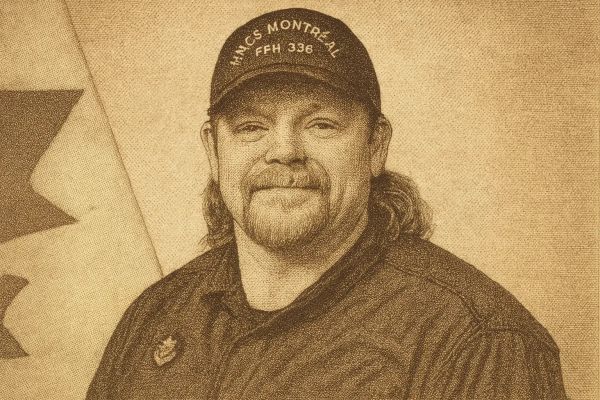
The Toronto Police Service (TPS) announced Tuesday, April 14 that the remains belong to a man known publicly only as Kevin. Police say he was originally from Saskatchewan. Kevin’s last name was not released, with TPS saying his family asked for privacy.
Toronto Harbour 1992 case identified
Police were called to Toronto’s Inner Harbour area on July 27, 1992 after reports of a body floating in the water. At the time, investigators determined the death was not suspicious and there were no obvious signs of violent injury, according to TPS.
Even so, the man’s identity remained unknown for decades, despite attempts to identify him using more traditional investigative work and DNA comparison.
Othram, a Texas-based forensic DNA lab that assisted on the case, said the man was believed to have died weeks or months before he was found. The lab also described what he was wearing: long brown hair, running shoes, a metal chain necklace, plus two pairs of jeans, two T-shirts, and two leather jackets.
Investigative genetic genealogy solved it
The breakthrough came after the case was selected for investigative genetic genealogy, often shortened to IGG. TPS says the case was chosen for IGG in 2025.
Police obtained a DNA profile and uploaded it to publicly accessible databases on Jan. 8, 2026. TPS says investigators got a strong lead in less than five days suggesting the unknown man could be Kevin, originally from Saskatchewan.
From there, investigators located people believed to be relatives in Western Canada. A close relative provided a DNA sample, which was sent to Ontario’s Centre of Forensic Sciences for comparison. Police say testing confirmed the match on March 9.
Kevin’s family has been notified, and TPS says they were also given details of where he was buried.
Why Kevin was never reported missing
One detail stands out: police say Kevin was not reported missing.
TPS’ explanation is human and pretty common in older cases. Police said “those who loved him had long feared what had happened to him” because they hadn’t heard from him in years, even if no formal missing-person report was filed at the time.
The sources don’t offer more information about why he wasn’t reported missing, or how he ended up in Toronto.
Project 31 reaches 10 identifications
This is the 10th identification since TPS launched Project 31 in 2022, a humanitarian initiative focused on 31 long-term unidentified deceased people where usable DNA material is available.
TPS has said none of the identifications made so far are believed to involve foul play. At the same time, the service has said five of the 31 total cases are considered suspicious deaths.
TPS spokesperson Viktor Sarudi told The Globe and Mail the service expects more announcements in the weeks and months ahead. That leaves 21 people still unidentified under the project.
Funding, partners, and privacy concerns
Several organizations were involved in Kevin’s identification, including TPS, Othram, the Ontario Forensic Pathology Service, and the Centre of Forensic Sciences.
The Globe and Mail also reported that the work was supported by a $2.5-million grant from Ontario’s Ministry of the Solicitor-General aimed at IGG projects, including homicide, sexual assault, and unidentified human remains cases.
IGG has helped solve cold cases in Canada and beyond, but it also comes with privacy questions because it can involve comparisons against public-facing DNA databases. Kevin’s case shows the upside of that technology for families looking for answers, while the wider debate over guardrails is still playing out.
Support Independent Canadian News Analysis
The Canada Report is supported by readers like you. If this article helped you understand what’s happening, you can support our work with a one-time tip.
Support The Canada Report