
Based on coverage from CBC, CBC, Global News, The Globe and Mail, and Toronto Sun.
Two Royal Canadian Navy members have been charged by the Canadian Forces Military Police in connection with the death of Petty Officer 2nd Class Gregory Applin, who died after a rigid-hull inflatable boat (RHIB) capsized in the Halifax area in January 2025.
Applin was 38, had served 19 years in the navy, and was from Shoal Cove West, Newfoundland and Labrador. His family has asked for privacy as they grieve, according to the Canadian Forces.
Halifax harbour RHIB death sparks charges
Military police say Applin died after the inflatable boat he was in overturned on Jan. 24, 2025, after striking an unlit buoy in Halifax harbour, specifically in Bedford Basin near Halifax.
Reports agree Applin and another navy member were thrown into the water during the incident. Both were later taken to hospital, but Applin could not be resuscitated. The other crew member was released from hospital later.
Who was charged and what offences
The Canadian Forces Military Police announced the charges Wednesday, saying the investigation is complete.
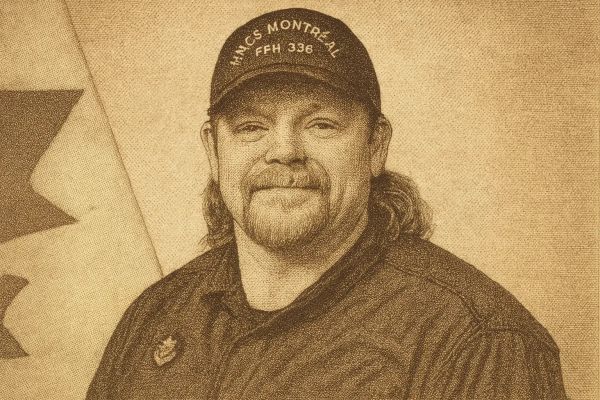
Master Sailor David Terry, who was serving in HMCS Montréal at the time of the alleged offences, is charged with: - One count of criminal negligence causing bodily harm - One count of negligent performance of military duties
Sailor 1st Class Alexandre Garrison, who was with the Naval Fleet School (Atlantic) at the time, is charged with: - One count of dangerous operation of a conveyance causing death - One count of negligent performance of military duties
Multiple reports specify these are laid under the National Defence Act. The Canadian Forces also stressed the accused are presumed innocent.
What happened during HMCS Montréal sea trials
Several accounts add more context about the night Applin died. HMCS Montréal had been conducting sea trials in Bedford Basin as part of preparations for future missions. The trial work included mooring to buoys in the basin.
A RHIB more than seven metres long (also described as 24 feet) was being used to shuttle personnel. After dropping off crew at the Mill Cove jetty, the RHIB headed back toward the naval dockyard when it struck a mooring buoy near the anchored HMCS Montréal and capsized.
One report places the time Applin and another crew member went into the water at 9:25 p.m. Atlantic. Another account, quoting Commodore Jacob French shortly after the incident, said the boat overturned around 10 p.m. Both versions describe relatively manageable sea conditions, with waves under a metre. One report also says the air temperature was around -7 C, with wind chill near -10.
Rescue response and 911 call details
Accounts also line up on how rescuers were alerted: after the two sailors were in the water, the surviving crew member could not reach the boat’s radio and called 911 by cellphone.
A nearby vessel responded, and the Joint Rescue Coordination Centre was involved in deploying a rescue boat, according to reporting that quoted military briefings. The two were pulled from the water roughly half an hour later, around 9:55 p.m. Atlantic in one report, then treated by paramedics and taken to hospital.
Military justice process and navy reaction
Brigadier-General Vanessa Hanrahan, the Canadian Forces Provost Marshal, said the military police investigation has wrapped up. If the charges proceed to prosecution, the case will be tried in the military justice system.
Navy commander Vice-Admiral Angus Topshee and Chief Petty Officer 1st Class Pascal Harel called the charges “difficult news” in a joint statement. They said navy work can carry fatal consequences when mistakes happen, and that accountability matters, while also emphasizing an independent, fair, and impartial process for the accused.
They also pointed to a broader reality: incidents like this usually don’t come down to one single cause or error.
Support Independent Canadian News Analysis
The Canada Report is supported by readers like you. If this article helped you understand what’s happening, you can support our work with a one-time tip.
Support The Canada Report