
Based on coverage from Hindustan Times, The Indian Express, Mint, Times Now, and The Economic Times.
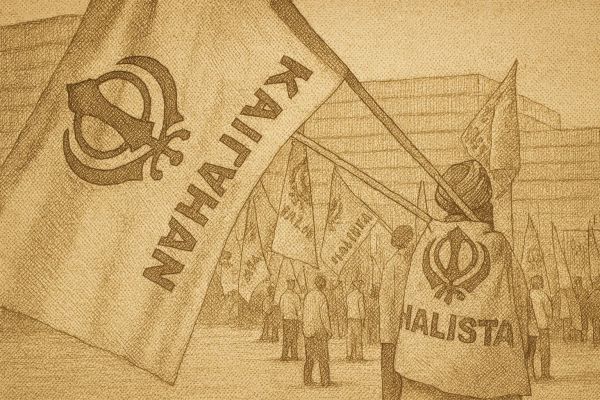
CSIS is warning that a “small group” of Canada-based Khalistani extremists still poses a national security threat, even though the agency says there were no CBKE-related attacks in Canada in 2025. The message is meant to draw a bright line between lawful political activism and people using Canada as a base to support violence, largely aimed abroad.
The assessment appears in CSIS’s 2025 public report, tabled in Parliament and released Friday.
CSIS report names Canada-based Khalistani extremists
CSIS says “ongoing involvement in violent extremist activities” by Canada-based Khalistani extremists, or CBKEs, continues to threaten Canada and Canadian interests. The report alleges some CBKEs are connected to Canadian citizens who use Canadian institutions to promote a violent agenda and to raise money from “unsuspecting community members,” with funds allegedly diverted toward violent activities.
At the same time, CSIS stresses that support for Khalistan through peaceful and lawful means is not extremism. The report explicitly says some Canadians participate in legitimate campaigning for the Khalistan separatist movement, and that “non-violent advocacy” is lawful political activity in Canada.
One report also describes this as the first time CSIS has publicly used the specific term “Canada-based Khalistani extremist (CBKE)” in this context.
Air India Flight 182 anniversary shapes context
CSIS anchors part of its warning to a painful Canadian milestone: 2025 marked the 40th anniversary of the Air India Flight 182 bombing. The agency calls it the deadliest terrorist attack in Canadian history, killing 329 people, “most of them Canadians,” and notes the suspects were tied to pro-Khalistan extremist groups.
That history matters for how Ottawa talks about today’s threats. CSIS is essentially saying: there may not have been a CBKE-linked attack last year, but Canada has seen the worst-case scenario before.
Politically motivated violent extremism category explained
CSIS places CBKEs under “politically motivated violent extremism” (PMVE), which it defines as encouraging violence to establish new political systems, or new structures or norms within existing systems.
The agency also says Canada’s national terrorism threat level remained at “medium” through 2025, citing a realistic possibility of extremist violence, according to remarks attributed to CSIS Director Dan Rogers.
Foreign interference concerns include India
Beyond violent extremism, CSIS again lists foreign interference and espionage as top-tier threats. The report names China, India, Russia, Iran, and Pakistan as the main perpetrators in 2025. It also adds that other states and affiliated actors were involved, without naming them.
On India specifically, CSIS says India acts to counter perceived threats to its domestic stability, including Khalistan separatism. The report also alleges India has “historically cultivated covert relationships” with Canadian politicians, journalists, and members of the Indo-Canadian community to advance its interests, including what CSIS describes as transnational repression tactics such as surveillance and coercion aimed at suppressing criticism of the Indian government in Canada.
India, for its part, has consistently rejected Canadian allegations. Several of the source reports note the tone of Canada’s public claims has softened since Justin Trudeau left office and Mark Carney became prime minister, even as CSIS’s written threat assessment still names India.
Canadian officials downplay current India links
Some recent public comments from Canadian officials don’t line up neatly with CSIS’s broader warnings.
Ahead of Carney’s trip to India earlier this year, a senior Canadian official said, in a background briefing, that authorities no longer suspected India of interfering in Canada’s democratic processes or being involved in targeted violence in Canada. In a late-February technical briefing, an unnamed official said they would not be making the trip if they believed those activities were continuing.
In March, BC Premier David Eby said his government had “no information” tying India to violence linked to the extortion crisis in British Columbia. That same month, RCMP Commissioner Mike Duheme told CTV News that in current transnational repression files, the RCMP is not seeing connections “right now” to any foreign entity, based on the criminal information and investigations they have.
Put together, CSIS is signalling persistent concern about a small set of extremist actors and ongoing foreign interference risks, while other officials are publicly emphasizing a lack of current investigative links, at least in the specific files they’re talking about.
Support Independent Canadian News Analysis
The Canada Report is supported by readers like you. If this article helped you understand what’s happening, you can support our work with a one-time tip.
Support The Canada Report