
Based on coverage from CBC, Global News, The Globe and Mail, Insauga, and Winnipeg Free Press.
A huge new marine conservation reserve is taking shape off British Columbia’s Central Coast, after an agreement signed Friday by six First Nations alongside the B.C. and federal governments. The protected area is called Mia-yaltwa Ha'lidzogm hoon, a blended name drawn from the partner Nations’ languages that means “Realm of the Salmon, Home of the Salmon.”
The plan is to protect a big slice of the Great Bear Sea, while still keeping space for fishing and tourism, and giving Indigenous governments a central role in how the area is run.
B.C. Central Coast marine reserve deal
The agreement was signed in Klemtu by the Wuikinuxv, Nuxalk, Kitasoo Xai'xais, Heiltsuk, Gitxaała and Gitga'at Nations, along with Canada and British Columbia. Parks Canada will operate the national marine conservation area reserve with its Indigenous and federal partners, according to officials.
This becomes the sixth national marine conservation area reserve in Canada, and the second in B.C. after Gwaii Haanas National Park Reserve (about 1,500 square kilometres of land).
There is one clear mismatch in the reporting on size: The Canadian Press and other officials describe the reserve as roughly 6,700 square kilometres, while Global News reports 67 square kilometres. Multiple sources also describe it as larger than Prince Edward Island, which aligns with the 6,700 square kilometre figure.
Great Bear Sea salmon and biodiversity protections
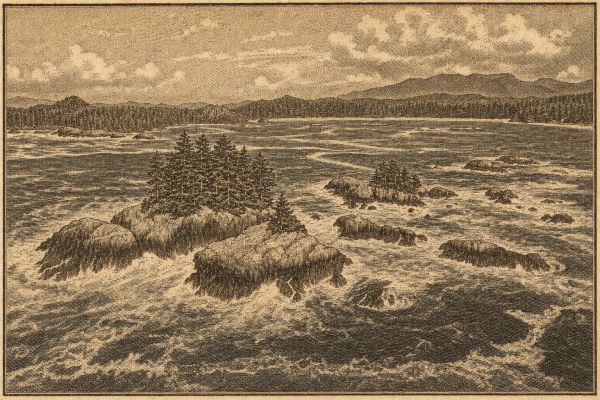
The reserve sits within the Great Bear Sea, a massive and biologically rich marine ecosystem covering more than half of B.C.’s coastline. The area includes habitat such as deep coastal fjords, kelp beds and rocky reefs, along with species Canadians tend to associate with the coast’s identity and economy: salmon, killer whales and migrating humpbacks. The region also includes glass sponge reefs.
University of Victoria environmental studies professor Natalie Ban said the agreement is “great news” for marine life, pointing to how much diversity is packed into the area, from juvenile salmon habitat in estuaries to offshore ecosystems.
Indigenous Protected and Conserved Area governance
The six Nations have also declared the same footprint an Indigenous Protected and Conserved Area, a designation meant to reflect Indigenous governance and stewardship responsibilities.
Statements from leaders framed the reserve as the result of long-term work. Heiltsuk Chief Councillor Marilyn Slett called it a product of decades of Indigenous leadership and collaboration. Wuikinuxv Chief Marlou Shaw pointed to declines in oolichan and salmon stocks and described stewardship as a responsibility that supports community survival and culture.
A staff lawyer with West Coast Environmental Law, Michael Bissonnette, told The Globe and Mail the approach marks a shift away from conservation models that historically displaced Indigenous peoples.
Fishing rules, bottom trawling ban, and enforcement
Ottawa’s message is that this is not meant to be a full shutdown of ocean use. Federal officials say all fisheries can continue except bottom trawling, and the federal Environment Minister, Julie Dabrusin, said commercial and recreational fishing would remain allowed. B.C. Minister Randene Neill said there was very little groundfish and shrimp trawling in the area to begin with.
Fisheries and Oceans Canada will continue to manage and enforce regulations. Next up is a collective management board and a zoning plan that spells out what activities can happen where, with an intent to allow fishing and tourism to continue.
Politics: tanker ban, pipelines, and 2030 targets
The conservation announcement also lands in the middle of Canada’s ongoing energy and coastal protection debate. The area overlaps with the existing federal oil tanker ban on B.C.’s north coast, a moratorium the provincial government and the same coastal First Nations say should stay in place. Conservative MP Ellis Ross (Skeena Bulkley Valley) argued the federal government is sending mixed messages on energy development.
At the same time, the reserve is being pitched as part of Ottawa’s broader conservation push. Dabrusin said it supports the federal goal of conserving 30 per cent of Canada’s marine and coastal waters by 2030. The Globe and Mail reported marine protection is at 15.5 per cent, below an interim 25 per cent target that has already passed.
The reserve still has a long runway before it is fully locked in. Final boundaries are not confirmed yet, and full legal establishment under the Canada National Marine Conservation Areas Act is expected to take several years, with the government noting the reserve’s status can shift depending on the outcome of Indigenous land claims.
Support Independent Canadian News Analysis
The Canada Report is supported by readers like you. If this article helped you understand what’s happening, you can support our work with a one-time tip.
Support The Canada Report