
| Sourced from 5 independent sources (6 reports) · no points in dispute |
europesays.com (1), UA News, Benefits and Pensions Monitor, europesays.com (2), and Global News
Most key facts are confirmed by more than one independent source; a few details come from a single outlet.
12 key facts · 11 corroborated · none disputed
Why some reports were counted once
europesays.com (2) and CTV News — the same Canadian Press report, counted once.
When several outlets publish the identical article — most often because they all ran the same wire story from an agency like The Canadian Press — we count it as one source, not several. That keeps our source count a measure of independent reporting, not how widely a single story was syndicated.
This summary is compiled from the independent sources listed above.
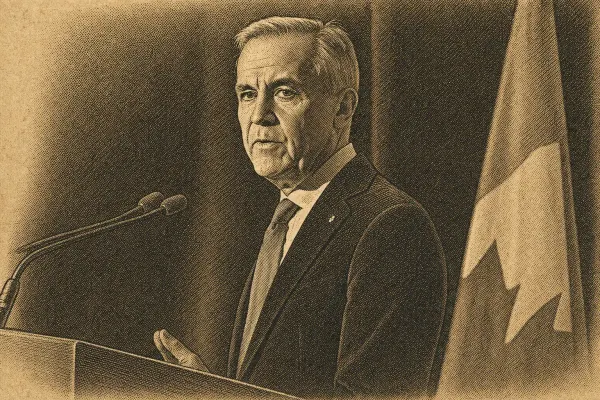
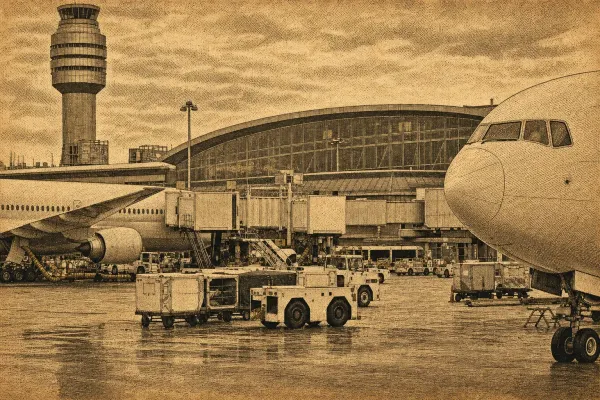
Prime Minister Mark Carney has put Canada’s four largest airports at the centre of Ottawa’s investment agenda, announcing that the federal government will seek private investors to operate them through long-term concessions.
The targeted airports are in Toronto, Montreal, Calgary and Vancouver. Ottawa says it would retain ownership of the underlying airport land and assets, even as private investors are brought into operations.
Long-term concessions, not land sales
Carney framed the plan as a way to bring outside capital into some of the country’s most important transportation assets without transferring ownership of the land and infrastructure.
“Following best practice in other countries, the government of Canada will retain ownership of the underlying land and assets, but we will unlock their true value by bringing in new capital and expertise to their operations and their growth,” Carney said.
The airports currently operate under a not-for-profit model, with local airport authorities managing federally owned land through long-term leases. Ottawa had previously signalled that it was exploring ways to attract more airport investment or consider alternative ownership models.
Carney’s announcement moves that discussion into a clearer phase: the federal government is now seeking private investment to operate the four largest airports, while keeping the underlying assets in public hands.
Carney pitches capital and expertise
The Prime Minister said the plan would bring “new capital and expertise” into airport operations and development. He also said capital raised from the airport plan would be reinvested in Canadian infrastructure.
Speaking to the broader investment push, Carney said the goal was “to catalyze $1 trillion of investment in Canada over the next five years.” The Canada Investment Summit was aimed at attracting that $1 trillion over five years for major Canadian projects.
Airports, however, were not included among the more than 160 projects in the summit’s deal book, making the airport concession proposal a notable addition to Ottawa’s investment message.
Carney also tied the idea to Canadian institutional experience abroad, saying: “Canadian pension funds already successfully invest and manage airports around the world. It’s time to bring that same expertise back home to directly benefit Canadians.”
According to europesays.com, Carney’s broader investment pitch also included immediate expensing for most new capital investment and a faster project-review standard of “one project, one review, one year.”
Labour warns travellers could pay
Labour organizations have opposed airport privatization, warning that it could raise costs for travellers.
Unifor national president Lana Payne warned that further sell-offs would make conditions worse for airport workers.
“Outsourcing and contract flipping already drive down wages, benefits and working conditions, further public sell-offs can only make this crisis worse for airport workers,” Payne said.
She added: “We have seen over and over again how the sell-off of public infrastructure leaves us more vulnerable economically. If there was ever a time to hold the line and build more public infrastructure, it is now.”
That labour response highlights the central political tension in Carney’s proposal. The government is presenting long-term concessions as a way to unlock value while retaining ownership. Unions are treating the plan as privatization, with travellers potentially facing higher costs.
A test of Ottawa’s model
The airport plan now sits inside a larger federal effort to pull private capital into Canadian infrastructure and major projects. For Carney, the pitch is that long-term concessions can bring money and operational expertise into airports while keeping land and assets federally owned.
For critics in the labour movement, the concern is simpler: once private investors are involved in operating essential infrastructure, passengers may end up paying more.
That debate is likely to shape how Canadians hear the word “concession” in the months ahead. Ottawa is not proposing to sell the land beneath the airports. But it is proposing a major shift in how the country’s largest airports are operated.
Reader-funded. No ads. No paywall.
The Canada Report is independent, reader-funded Canadian news — no advertisers, nothing behind a paywall, kept free for everyone. If you value it, you can help keep it that way.
Support The Canada Report →Source 1 | Source 2 | Source 3 | Source 4 | Source 5 | Source 6