
Heads up: some of the links in this post are affiliate links. That means if you click and purchase, we may get a commission. It's how we keep this site running without cluttering it with ads.
Canadian ski gloves need to handle more than a few dry laps. A day can start below -20°C on the Prairies, turn damp near the Great Lakes, or involve chairlift wind, packed snow and repeated trips into a jacket pocket. The right pair depends on how cold you run, how often you ski, and whether your priority is finger control or maximum warmth.
These are curated recommendations based on listed materials and features, current pricing, and third-party buyer ratings and feedback. A mitten, a work-style leather glove and a battery-heated model solve different problems, so there is no single right choice for every skier. The picks below focus on practical Canadian needs: sealing out snow, retaining warmth when conditions deteriorate, and remaining manageable for poles, buckles and lift passes.
Quick Overview: Our Top Picks
| Product | Best For | Why We Love It | Price |
|---|---|---|---|
| Everyday winter wear | Waterproof insulation offers dependable warmth for routine winter chores and outdoor activities. | $38.30 | |
| Heavy daily use | Durable pigskin leather balances affordability, flexibility, breathability, and practical wet-weather resilience. | $53.57 | |
| Feature-focused skiers | Waterproof construction, touchscreen fingertips, adjustable cuffs, and a lift-pass pocket add useful convenience. | $37.07 | |
| Basic snow protection | Mitten shape lets fingers share heat, and 4,700+ buyer ratings back it for casual resort days. | $33.99 | |
| Budget-minded warmth | 3M Thinsulate, touchscreen fingertips, reinforced palms, and adjustable cuffs offer strong value for winter activities. | $24.98 | |
| Spending more for warmth | Genuine deerskin, substantial Thinsulate insulation, reinforced fingertips, and adjustable wrists support demanding cold-weather use. | $67.28 | |
| Coldest winter conditions | Rechargeable heating combines weatherproof construction and layered insulation for extra warmth during prolonged outdoor activities. | $89.99 |
Carhartt Waterproof Insulated Gloves
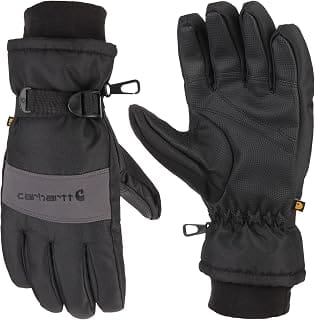
The Carhartt Men’s W.P. Waterproof Insulated Glove is the practical pick for someone who wants one pair for skiing, shovelling and ordinary winter chores. Its waterproof insert, sweat-wicking technology, reinforced shell and grippy palm target the basics well. Soft fleece cuffs and adjustable wrist straps are useful for keeping snow and slush out, while the clip helps keep a pair together between outings. Buyer feedback is strong on warmth in very cold weather and on protection in wet, windy conditions. The reservation is fit: several buyers report that it runs small, so careful sizing matters. It also has a work-glove orientation rather than touchscreen features or a specialized ski pocket. Choose it for dependable, no-fuss winter utility that can also handle resort days.
Check Carhartt Waterproof Insulated Gloves on Amazon for current availability.
Pros
- Waterproof insert, insulation and sweat-wicking lining address cold, damp conditions
- Reinforced shell and grippy palm suit skiing and winter chores
- Adjustable fleece cuff helps limit snow entry
Cons
- Buyers frequently mention a smaller-than-expected fit
- No listed touchscreen capability or ski-specific storage pocket
Kinco Leather Ski Gloves
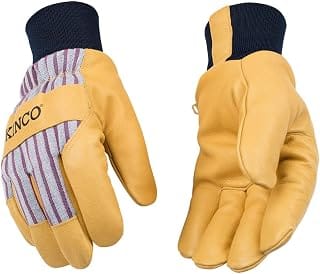
Kinco’s 1927KW is for the skier who values a hard-wearing leather palm and a simpler, traditional design. The premium grain pigskin palm is naturally breathable and is designed to remain soft and flexible after getting wet, while the striped cotton-blend canvas back keeps the construction lighter than a fully leather glove. Heatkeep polyester insulation provides the warmth layer. It is particularly appealing for people who ski, work outdoors or carry equipment through winter, rather than those who need phone-friendly features. Buyers often praise durability and warmth in snow, and one reviewer notes improved water protection after applying a snow treatment. That point reveals the trade-off: leather benefits from maintenance. Another review suggests warmth may be less sufficient beyond about -10°C for some people. Measure palm circumference against Kinco’s chart before ordering.
Check Kinco Leather Ski Gloves on Amazon for current availability.
Pros
- Durable, pliable pigskin palm with breathable canvas back
- Heatkeep insulation adds warmth without abandoning a work-ready design
- Clear palm-circumference sizing guidance from the manufacturer
Cons
- Leather requires care and may benefit from added water-repellent treatment
- Some buyer feedback suggests limited warmth for certain users in deeper cold
HIKENTURE Waterproof Ski Gloves
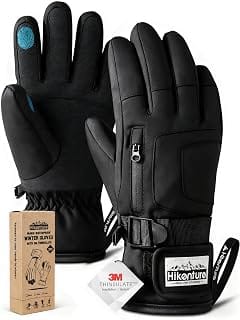
The Hikenture ski gloves suit skiers who want useful resort-day details rather than a bare-bones winter glove. A high-density water-repellent shell and internal breathable TPU membrane form the listed double-layer weather protection. The long cuff, adjustable wrist and cuff opening should help seal out snow, while a zipped back-of-hand pocket can hold a lift pass, key or heat pack. Touchscreen points on the thumb and forefinger add a welcome convenience when checking a phone. The listed 3M Thinsulate insulation makes this a strong all-round candidate for average Canadian ski weather. The honest limit comes from buyer feedback: one reviewer reports wind getting through in temperatures below -15°C. The small pocket is also practical only for flat, compact items. Pick this model for wet-snow protection, adjustable coverage and phone access in moderate to cold conditions.
Check HIKENTURE Waterproof Ski Gloves on Amazon for current availability.
Pros
- Listed waterproof membrane plus water-repellent outer shell
- Long adjustable cuff and wrist closure help keep snow out
- Touchscreen fingertips and zipped utility pocket add ski-day convenience
Cons
- One buyer reports reduced wind protection below -15°C
- Pocket capacity is limited to small, flat essentials
Tough Outdoors Ski Mittens
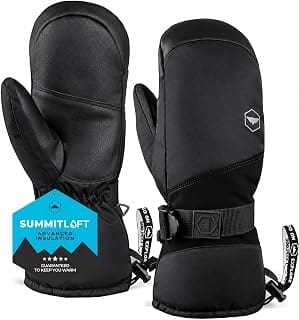
The Tough Outdoors winter ski mittens are the choice for skiers who put finger warmth ahead of quick phone use and detailed adjustments. By keeping fingers together, mittens can be a sensible format for cold chairlift rides and people whose hands cool down quickly. Buyer feedback regularly describes them as warm and comfortable for skiing, and the product has a substantial volume of ratings. That said, the available listed product detail is sparse, so there is less information here about insulation type, cuff construction or a dedicated waterproof membrane than with several other selections. Reviews also contain two useful cautions: some buyers find the sizing a little small, and others say fingertips and thumbs can still become cold in very low temperatures. They are a straightforward option for casual resort skiing, not a promise of all-day protection in severe cold.
Check Tough Outdoors Ski Mittens on Amazon for current availability.
Pros
- Mitten shape helps prioritize shared finger warmth
- Buyers often describe the mittens as warm and comfortable for skiing
- Popular option with a large number of ratings
Cons
- Limited listed detail on materials and weatherproofing construction
- Some buyers report small sizing and cold extremities in very low temperatures
TRENDOUX Thinsulate Ski Gloves
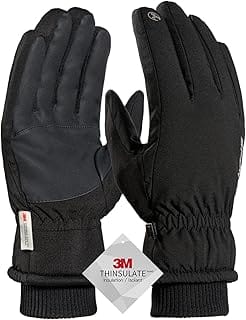
TRENDOUX is the budget-minded glove for skiers who still want modern conveniences. It combines listed 3M Thinsulate insulation with a moisture-wicking, fast-drying lining, a coated back, reinforced polyurethane leather palm and a dry-max waterproof insert. The wrist strap and elastic knitted cuff address wind and snow at the opening, while touchscreen fingertips and an anti-loss buckle make it easier to manage routine ski-day tasks. Buyers commonly mention good warmth in sub-zero weather and appreciate being able to use a phone without removing the gloves. The compromise is that the product is described as water-resistant in its title, despite listing waterproof components, so it is wise not to treat it as equivalent to a clearly specified membrane glove for sustained wet exposure. One buyer also found the cuff longer than preferred for tucking into a sleeve.
Check TRENDOUX Thinsulate Ski Gloves on Amazon for current availability.
Pros
- 3M Thinsulate insulation with a moisture-wicking, fast-drying lining
- Reinforced PU palm, wrist strap and touchscreen fingertips
- Anti-loss buckle helps keep the pair together
Cons
- Water-resistance wording creates less certainty for prolonged wet conditions
- Long cuff may be awkward with some jacket sleeves
SKYDEER Deerskin Ski Gloves
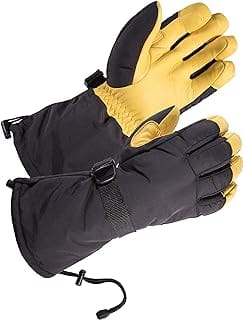
SKYDEER's genuine deerskin gloves are aimed at someone willing to spend more for leather construction and substantial listed insulation. The palm is deerskin leather, while the back uses stretch water-repellent nylon to balance weather protection with movement. Reinforced fingertips and thumb address high-wear areas, and the 150 g 3M Thinsulate layer is paired with a fast-drying lining. An adjustable pull strap with button helps refine wrist fit and block wind. Buyers often describe the gloves as well made, warm and true to expected fit. The harder truth is value: one purchaser found them only moderately insulating around -20°C and questioned the cost. Leather also demands slow drying and occasional treatment. This pair suits a skier who prefers the feel and durability potential of leather and expects cold conditions, but it is not the automatic answer for exceptionally cold days or a limited budget.
Check SKYDEER Deerskin Ski Gloves on Amazon for current availability.
Pros
- Genuine deerskin palm and reinforced fingertip and thumb areas
- 150 g 3M Thinsulate insulation with moisture-managing lining
- Stretch water-repellent nylon back and adjustable wrist strap
Cons
- A buyer found the insulation only moderate around -20°C
- Leather needs more care than a fully synthetic glove
Minthouz Heated Ski Gloves
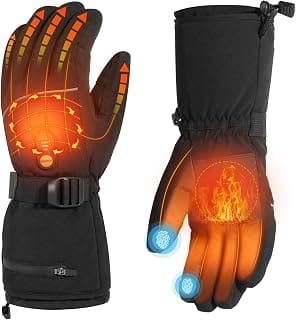
The Minthouz heated gloves are for skiers and outdoor workers whose hands stay cold despite conventional insulation. Dual rechargeable 7.4V 3000mAh batteries power three heat modes, with the manufacturer listing two to 6.5 hours of heat depending on the setting. The six-layer construction includes weatherproof and windproof protection, insulation, a heat layer and soft lining. There is also a two-finger touchscreen design, which is useful when stopping to check a phone. Buyer feedback is enthusiastic about quick warmth, multiple settings and use during snow clearing, though the review count is much smaller than for the established non-heated picks here. These gloves require more attention than standard ski gloves: batteries must be charged, runtime must be managed, and the pair costs more. They make the most sense for genuine cold-hand problems, long cold exposure or severe conditions, not simply as an upgrade for mild ski days. For more battery-powered options, including mittens and liners, see our best heated gloves in Canada roundup.
Check Minthouz Heated Ski Gloves on Amazon for current availability.
Pros
- Rechargeable batteries with three listed heat settings
- Six-layer shell combines weather protection, insulation and heat
- Two-finger touchscreen design avoids some glove removal
Cons
- Battery runtime and charging add planning to every outing
- Higher complexity and a smaller buyer-review base than several alternatives
Choosing the right ski gloves in Canada
Start with the conditions you actually ski in, not the coldest temperature you have ever seen on a forecast. Resort skiing in dry interior snow can reward a breathable leather glove, while wet snow, rain-snow mix and frequent falls call for a waterproof barrier and a cuff that closes securely over or under a jacket sleeve. For lift-served skiing, wind exposure on the chair often matters as much as the air temperature.
Gloves give each finger its own space, which helps with pole straps, zippers and phone use. Mittens hold fingers together and are usually the better bet for people whose fingertips get cold first. Insulation alone is not enough: a wet glove loses much of its usefulness, and a cramped glove restricts the small air space that helps hands stay warm.
For occasional skiers, a sensible insulated waterproof glove is usually the practical starting point. Regular skiers may prefer a tougher palm and shell that can stand up to many days handling skis and bindings. People with persistently cold hands should consider a mitten or a heated option, while accepting the extra bulk, cost and maintenance that can come with those choices.
What to look for: insulation, waterproofing, and fit
Look for three systems working together. First is insulation: 3M Thinsulate and polyester thermal fills trap air around the hand. More insulation can help on cold chairlifts, but it can also make a glove bulkier and reduce dexterity. Second is weather protection. A waterproof membrane or insert is more reassuring for slushy snow than a surface coating alone, while leather needs care to retain its water resistance.
Third is fit. The glove should reach past the wrist and close snugly enough to block snow, yet leave room to flex fingers and hold a pole. Adjustable wrist straps and longer cuffs are useful when skiing through fresh snow or when jacket sleeves do not seal particularly well. A removable or touch-capable design is convenient, but warmth and dryness deserve priority.
Materials tell part of the story. Reinforced synthetic palms suit skiers who want grip with less upkeep. Pigskin and deerskin can offer pliability and durability, but leather gloves require drying and occasional treatment. Read the listed size chart rather than assuming your usual clothing size will translate perfectly.
How warm is warm enough? Matching gloves to your skiing conditions
There is no universal temperature rating for ski gloves, because wind, humidity, activity level, circulation and fit all change the result. A mild, active day may suit a lighter insulated glove. Long chairlift rides, wind-exposed runs and temperatures below roughly -15°C create a stronger case for thicker insulation, a mitten shape, or both.
For typical resort days around freezing, prioritize waterproofing and a reliable cuff seal. In colder, drier Canadian climates, insulation and wind protection rise in importance. The Carhartt and Kinco options make sense for skiers who also need a winter work glove, while the Tough Outdoors mitten is worth considering when finger warmth matters more than detailed tasks.
If cold fingers regularly cut ski days short, do not expect a thin touchscreen glove to solve the problem. Use a warm primary pair, keep hands dry, avoid overtight sizing, and carry a backup pair if conditions are wet. Rechargeable heated gloves can add a heat source, but their battery runtime means they need planning for full days away from charging.
Waterproof vs. water-resistant: keeping hands dry on the slopes
Waterproof and water-resistant are not interchangeable terms. A water-resistant outer fabric can shed light snow and brief moisture, but may eventually wet out in persistent slush or when gloves spend time in snow. A glove with a membrane or waterproof insert adds a barrier beneath the shell, which is the more suitable construction for wet snow days.
Cuffs and closures matter too. Snow can enter from the wrist during a fall or while adjusting bindings, then melt against the lining. A long cuff paired with an adjustable wrist closure offers more protection than a loose pull-on opening. Carhartt’s adjustable strap and fleece cuff, and Hikenture’s long adjustable cuff, are examples of features aimed at this weak point.
Leather deserves a separate note. Pigskin can remain pliable after getting wet, according to Kinco, but that does not remove the need to dry it properly and maintain it with an appropriate leather treatment. One buyer specifically points to added water protection after applying a snow treatment to the Kinco gloves. Treat that as a maintenance step, not an out-of-box guarantee.
Glove liners and layering: when to use them
A thin liner can make sense for very cold days, but only if the outer glove has enough room. Compressing insulation or cramming fingers into a snug glove can make hands colder, not warmer. Choose a liner that is smooth, thin and moisture-managing rather than a bulky knit layer.
Liners are useful for skiers who need to remove an outer glove to manage a zipper, phone or binding without exposing bare skin. They can also add a modest warmth buffer on chairlifts. A touchscreen outer glove may reduce how often that is necessary, although touchscreen performance should be viewed as a convenience feature rather than a replacement for warmth.
For most people, improve the outer glove first: correct sizing, reliable weather protection and enough insulation solve more problems than layering. If you use liners, try them with the outer pair before a ski trip and make sure the cuffs still work with your jacket. Bring a dry spare pair on wet days; changing gloves can be more effective than adding another layer to a saturated pair.
Grip and dexterity: poles, zippers, and phone use
Skiing involves many small tasks: threading pole straps, buckling boots, opening a pocket and using a lift pass. Gloves generally make those jobs easier than mittens. Reinforced palms can help with pole grip and the repeated wear from carrying skis. The Carhartt has grippy palms, while TRENDOUX lists reinforced polyurethane leather palms and a digital grip design.
Touchscreen fingertips are helpful for checking a map or coordinating with friends without exposing skin to the cold. Hikenture offers thumb and forefinger touchscreen points, and TRENDOUX lists touchscreen fingertips. Expect them to be less precise than a bare finger, especially if the screen is wet or if the glove fit leaves excess material at the tip.
Mittens trade some control for warmth. They remain a sensible choice for skiers who value warm fingers over quick phone use, especially on cold lift days. If you choose leather, the Kinco and deerskin models offer a more traditional work-glove feel and tough palm material, but they do not list touchscreen compatibility. Keep your priorities clear rather than expecting one pair to do everything.
Sizing tips: how to get the right fit for comfort and warmth
Measure first, then use the manufacturer’s chart for the exact model. A useful starting measurement is palm circumference: wrap a tape measure around the palm just below the knuckles, excluding the thumb. Kinco specifically directs buyers to use this measurement and match it to its size chart.
A correctly sized glove lets fingers reach close to the ends without pressing hard against them. You should be able to curl your fingers around a pole grip and close the wrist adjustment without strain. Too-tight fingertips cool quickly; too much extra length can interfere with pole handling and touchscreen pads. Account for a thin liner if you plan to wear one.
Buyer feedback reinforces the value of caution. Carhartt purchasers frequently mention a smaller fit, including one reviewer who preferred an extra-large size despite not considering their hands especially large. Tough Outdoors buyers also note that the mittens can run somewhat small. Those comments are not a substitute for a size chart, but they are a good reason to check measurements instead of ordering automatically.
Care and storage: extending glove life
Dry ski gloves after every outing, especially after wet snow days. Open wrist closures, separate paired gloves and allow air to circulate at room temperature. Avoid placing them directly on a radiator or other intense heat source, which can stress synthetic coatings, membranes, adhesives and leather. Do not store them damp in a boot bag or car overnight.
Brush off dirt when gloves are dry and follow the maker’s care directions if supplied. Leather needs more attention than synthetic material. Let leather dry slowly, then use an appropriate leather conditioner or water-repellent treatment when needed; this helps preserve suppleness and weather resistance. Do not treat every leather product with the same compound without checking compatibility.
For battery-heated gloves, remove or disconnect batteries for storage as directed by the manufacturer, keep contacts dry, and recharge only with the intended charging equipment. Before ski season, inspect seams, palms, straps and buckles. It's a good moment to check your helmet too — our best ski helmets in Canada guide covers fit, certification and when to replace one. Small problems are easier to manage before a cold day on the hill than after a cuff fills with snow.
Frequently asked questions about ski gloves in Canada
Are waterproof gloves worth choosing for wet Canadian ski days?
Yes. A waterproof membrane or insert is worth prioritizing for wet snow, slush and days close to freezing, when moisture can soak into less protected gloves. Also look for a cuff and wrist closure that limit snow entry. Waterproofing does not remove the need to dry gloves fully after skiing.
Should I choose mittens or gloves for colder skiing?
Mittens are usually the warmer shape because fingers share heat in one compartment. Choose them for very cold days or if your fingertips regularly get cold. Gloves are better for pole straps, zippers, lift passes and other fine tasks. A warm glove with the right fit can still be the better choice for skiers who value dexterity.
Which ski gloves offer touchscreen use without removing them?
The Hikenture ski gloves list touchscreen-compatible thumb and forefinger tips. The TRENDOUX gloves list touchscreen fingertips, and the Minthouz heated gloves list a two-finger touchscreen design. Touchscreen capability is convenient, though screen moisture and glove fit can affect precision.
Are rechargeable heated gloves worth choosing for Canadian skiing?
They can be worthwhile for people who consistently struggle with cold hands, ski in severe cold, or spend long periods outdoors beyond skiing. The trade-offs are battery charging, added bulk and limited runtime. For a regular resort skier with no circulation concerns, a properly fitted waterproof insulated glove or mitten is often simpler.
How do I measure my palm for correctly sized ski gloves?
Wrap a flexible tape measure around the fullest part of your palm just below the knuckles, leaving out the thumb. Compare that circumference with the manufacturer’s size chart for the specific model. Check finger length as well, and allow only enough room for a thin liner if you intend to wear one.