Heads up: some of the links in this post are affiliate links. That means if you click and purchase, we may get a commission. It's how we keep this site running without cluttering it with ads.
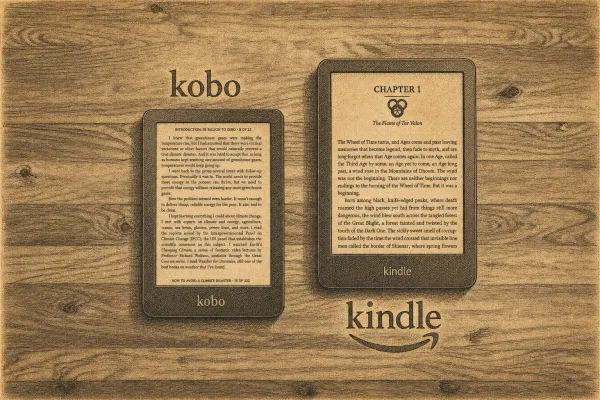
Kobo vs Kindle is one of the few buying decisions where the Canadian answer genuinely differs from the American one — and the reason has nothing to do with screen size or battery life. It comes down to whether you borrow books from your public library.
This comparison puts the two mid-range readers most Canadians actually cross-shop side by side: the Kobo Clara BW at about $160 CAD and the Kindle Paperwhite at about $185. Both are excellent devices. One of them fits how Canadians read considerably better.
The Short Answer
Choose the Kobo Clara BW if you:
- Borrow ebooks from a Canadian public library — this is the big one
- Already own EPUB books, or buy from anywhere other than Amazon
- Want the smaller, lighter reader for one-handed reading and coat pockets
- Would rather not add another device to the Amazon ecosystem
Choose the Kindle Paperwhite if you:
- Buy your books and want the largest catalogue and the most frequent sales
- Want the bigger 7-inch screen and the longest battery life on the spec sheet
- Have a Kindle library already — your existing books don't transfer
- Subscribe to Kindle Unlimited, or plan to
Canadian price gap: the Clara BW runs about $159.98 CAD against $184.99 for the Paperwhite — roughly $25, which is the smallest factor in this decision.
The Library Question That Decides It for Most Canadians
Both companies let you read library books. They do not both let you read library books in Canada.
Libby, the app nearly every Canadian public library uses for ebooks, includes a "send to Kindle" feature that pushes a borrowed title straight onto your device. OverDrive, the company behind Libby, states plainly that this feature works with U.S. libraries only. If you borrow from Vancouver Public Library, Toronto Public Library, or a branch in Moncton, that button is not for you.
Kobo took the opposite approach: OverDrive support is built into the device itself. You sign in with your library card in the settings menu, browse your library's collection on the reader, and borrow directly. No phone, no computer, no file transfer.
This one difference reshapes the entire comparison. A Canadian who borrows even a few books a month is choosing between a reader that handles library loans natively and one that requires sideloading files through a desktop app every time. If you buy every book you read, it doesn't matter at all — which is why the honest answer here splits by reader rather than crowning a winner.
Kobo Clara BW vs Kindle Paperwhite: The Specs That Matter
| Kobo Clara BW | Kindle Paperwhite | |
|---|---|---|
| Price (CAD) | ~$159.98 | ~$184.99 |
| Screen | 6" E Ink Carta 1300 HD | 7" glare-free display |
| Canadian library borrowing | Built-in OverDrive — borrow on the device | Send to Kindle is U.S. libraries only |
| File formats | EPUB and MOBI | Amazon formats — no native EPUB |
| Battery (listed) | About 2 weeks | Up to 12 weeks |
| Storage | 16 GB (~12,000 ebooks) | 16 GB |
| Waterproofing | IPX8 — 60 min in 2 m | Waterproof |
| Weight | 174 g | Heavier — larger screen |
| Subscription | Kobo Plus | Kindle Unlimited |
| Buyer rating | 4.6 stars (2,825 ratings) | 4.6 stars (10,066 ratings) |
| Best for | Library borrowers and EPUB owners | Buyers who want the biggest store |
Where the Kobo Clara BW Wins
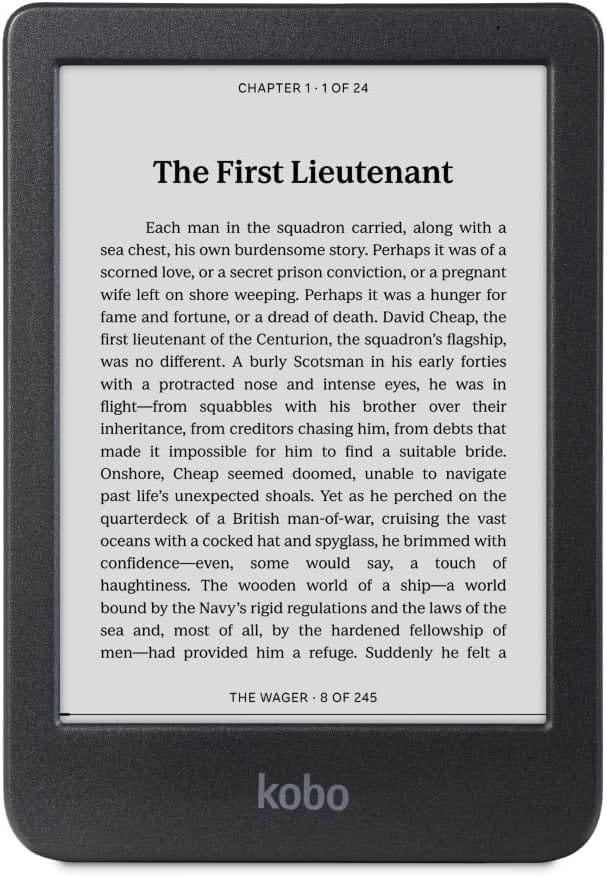
Library access, without the workaround. Covered above, and it is the reason most Canadians who switch, switch. The Kobo Clara BW signs into OverDrive with your library card and borrows directly.
It reads EPUB natively. EPUB is the format used by independent bookstores, Canadian small presses, public-domain archives, and most non-Amazon retailers. The Clara BW opens those files as-is. Getting the same book onto a Kindle means converting it or sending it through Amazon's delivery service first — workable, but a step you'll repeat forever.
It's smaller and lighter. At 174 g with a 6-inch screen, it's the more comfortable device to hold one-handed on a bus or in bed, and it disappears into a coat pocket. The trade-off is real: a 6-inch page fits less text, and readers with larger font sizes will page-turn noticeably more often.
ComfortLight PRO and IPX8. The front light adjusts brightness, colour temperature, and blue light for night reading, and the IPX8 rating covers 60 minutes in up to two metres of water — a genuine bath-and-lake-dock rating rather than splash resistance.
Where the Kindle Paperwhite Wins
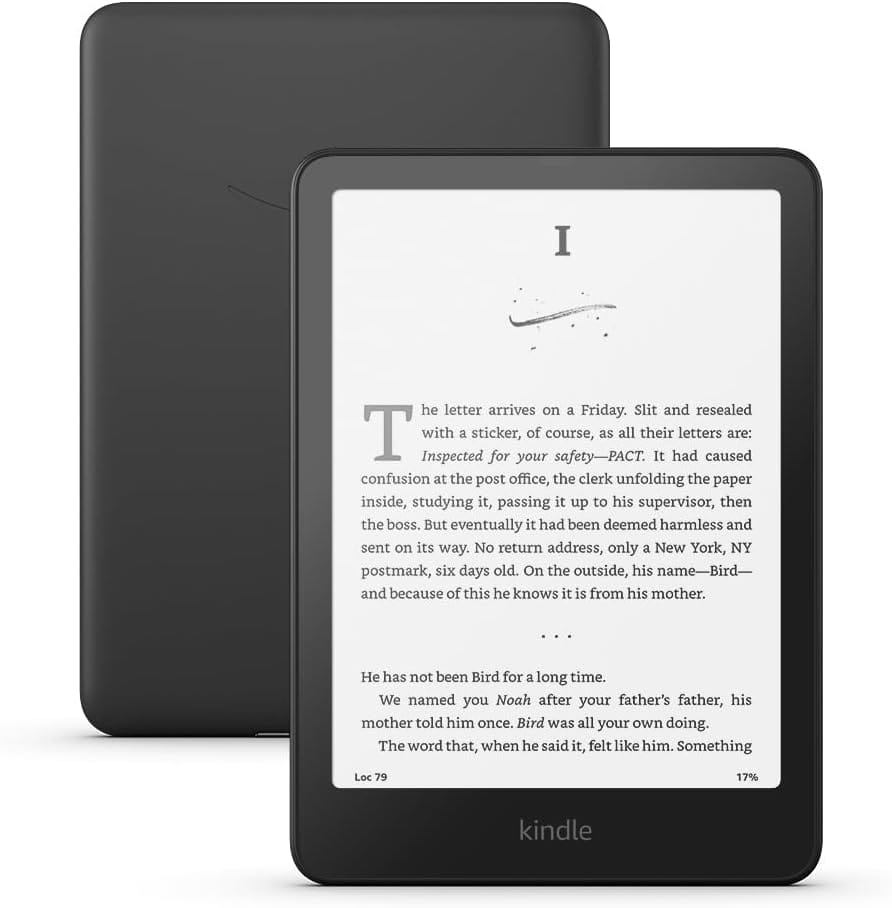
The catalogue, and the prices. Amazon lists over 15 million titles in the Kindle Store, and it discounts aggressively. If you buy most of what you read, the Kindle Paperwhite will find you more books, more cheaply, more often. Kobo's store is large and its sales are real, but Amazon's scale is not seriously contested.
Battery life on paper. Amazon lists up to 12 weeks per charge against roughly two weeks for the Clara BW. Both figures assume light daily reading, and in practice both devices charge far less often than a phone — but the gap on the spec sheet is substantial.
The bigger page. Seven inches against six is the most immediately noticeable difference when you pick both up. More text per page, fewer page turns, and a better fit for anyone reading at larger font sizes.
Your existing library. If you already own Kindle books, they stay on Kindle. Amazon purchases are locked to the Amazon ecosystem, and there is no supported way to move them to a Kobo. For a reader with a decade of Kindle purchases, this alone often settles the question — and it's worth being clear-eyed that the same lock-in applies in reverse going forward.
The Honest Trade-Offs
Neither device is a bad buy, and the differences that matter are structural rather than technical. Both are glare-free E Ink readers with 16 GB of storage, waterproofing, adjustable front lights, and buyer ratings of 4.6 stars. Nobody switching between them is going to find the reading experience itself dramatically better or worse.
What you're actually choosing is an ecosystem, and both of them lock the door behind you. Books bought from Amazon stay on Amazon; books bought from Kobo stay on Kobo. Whichever you pick, assume the purchases you make over the next five years are staying there.
There's also a third answer worth naming: if you read mostly library books and already have a tablet or phone you're happy reading on, the Libby app is free and neither device is necessary. E-readers earn their money on eye comfort and freedom from notifications, not on access.
The Canadian Angle
Beyond the library issue, a few things Canadian buyers should factor in.
Kobo is headquartered in Toronto. Rakuten Kobo is a subsidiary of the Japanese company Rakuten, so "buying Canadian" isn't quite the right frame — but the company is Toronto-based, and its store and library integration were built with Canadian readers as a core market rather than an afterthought. Amid ongoing trade tension with the United States, more Canadian shoppers are weighing where a company actually operates, and this is a case where the local option is genuinely competitive rather than a consolation prize.
Canadian pricing is close. The roughly $25 gap between these two is small enough that it shouldn't decide anything. Both go on sale periodically, and a sale can invert the difference entirely.
Library systems vary. Most Canadian public libraries use OverDrive/Libby, but a few use BorrowBox or other platforms with different device support. If library borrowing is your deciding factor, spend two minutes checking which platform your library uses before you buy.
How We Made This Comparison
The Canada Report doesn't personally test products, and we won't pretend otherwise. This comparison is built on manufacturer specifications verified against current Amazon.ca listings, OverDrive's own published documentation on Kindle library support, Canadian pricing at the time of writing, and the aggregate ratings of thousands of Canadian buyers. Where the two devices are genuinely close, we've said so rather than manufacturing a winner.
Which Should You Buy?
Buy the Kobo Clara BW if you borrow from a Canadian library, own EPUB books, buy from independent retailers, or want the lighter device. For the majority of Canadian readers who use their library card, this is the more practical machine, and it costs less.
Buy the Kindle Paperwhite if you already own Kindle books, buy rather than borrow, subscribe to Kindle Unlimited, or want the larger screen and longer battery life. Committed book buyers get more from Amazon's catalogue and pricing than they lose on library access.
Shopping for someone else? Our guide to the best voice-controlled devices for Canadian seniors covers adjacent picks worth considering alongside an e-reader.
Frequently Asked Questions
Can you borrow library books on a Kindle in Canada?
Not through Libby's send-to-Kindle feature — OverDrive limits it to U.S. libraries. Canadian Kindle owners can still read library books, but the route is indirect: borrow in Libby, download the EPUB, and transfer it to the device with Adobe Digital Editions on a computer, or read in the Libby app on a phone or tablet instead. Kobo devices avoid the detour entirely by borrowing on the device through built-in OverDrive.
Kobo Clara BW vs Kindle Paperwhite: which is better?
For Canadian library borrowers, the Clara BW, because it handles loans natively and costs about $25 less. For people who buy their books, the Paperwhite, because Amazon's catalogue is larger and its sales more frequent, and the 7-inch screen and longer listed battery life are genuine advantages. Both carry 4.6-star ratings and neither is a poor device.
Kobo Plus vs Kindle Unlimited — which is better value?
They work the same way: a monthly fee for unlimited access to a defined catalogue, not to everything in the store. Kindle Unlimited has the larger selection overall; Kobo Plus is often cheaper and offers ebook-only, audiobook-only, or combined tiers. Neither is worth subscribing to before checking whether the specific authors you read are actually included, since both catalogues lean heavily on independent titles.
Is Kobo Canadian?
Kobo was founded in Toronto and is still headquartered there, but it has been owned by the Japanese company Rakuten since 2012. So it's a Toronto-based company under foreign ownership — more locally rooted than Amazon, though not a wholly Canadian firm.
Can you read EPUB files on a Kindle?
Not directly. The Clara BW opens EPUB and MOBI files natively, which matters if you buy from independent bookstores or download public-domain titles. Kindles need the file converted or routed through Amazon's send-to-device service first, which works fine but adds a step every time.
Does Kobo or Kindle have better battery life?
On listed specifications, the Kindle Paperwhite claims up to 12 weeks per charge against roughly two weeks for the Clara BW. Both assume light daily reading with the front light low, and real-world results depend heavily on brightness and wireless use. In practical terms both are charged in weeks rather than days, but the Paperwhite has the clear advantage on paper.
The Bottom Line
This comparison usually gets written from an American desk, where the library difference doesn't exist and the Kindle wins on catalogue size. In Canada the calculation changes: if you use your library card, the Kobo Clara BW does something the Kindle Paperwhite simply cannot do here, and it costs less doing it. If you buy your books, Amazon's store and the larger screen are worth the extra $25. Decide which of those two readers you are, and the choice makes itself.