
Based on coverage from CBC, Toronto Star, CP24, Winnipeg Free Press, Weekly Voice, and CityNews.
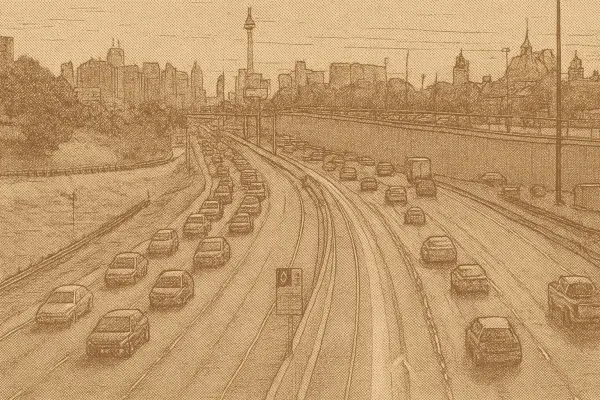
Ontario’s HOV lanes are about to get a lot less exclusive, at least when traffic is lighter.
The decision to open HOV lanes to solo drivers during off-peak hours reflects the Ford government's ongoing efforts to address transportation challenges, a topic that has been under scrutiny in light of recent developments such as the province's intervention in the Peel school board's financial management, as discussed in our previous coverage. For more context, see Ontario Government Takes Control of Peel School Board Amid Deficits.
The Ford government says it plans to open high-occupancy vehicle (HOV) lanes to solo drivers during off-peak hours on provincial highways, a change Transportation Minister Prabmeet Sarkaria argues will cut travel times and ease gridlock. The province says it will consult first, then set the details in regulation later this year.
Ontario HOV lanes could open off-peak
Sarkaria announced Tuesday the province wants to amend the Highway Traffic Act to allow single-occupant vehicles into HOV lanes during designated off-peak periods.
The government has not defined what “off-peak” means yet. Ontario says those hours will be chosen using traffic data and consultations, and they will not include the busiest weekday morning and evening commute periods. Outside those off-peak windows, the usual HOV rules would still apply.
Depending on which source you read, the rollout timeline is described a bit differently. The Canadian Press and CTV News Toronto both report the government is hoping to have the change in place by the end of this year. A provincial news release says the change would take place before the end of 2026, following consultation.
What the province says modelling shows
Ontario’s pitch is straightforward: open up road space that may be underused outside rush hour, and the whole system moves better.
Sarkaria’s office says Ministry of Transportation modelling shows the change would improve travel times for all users, with average speeds increasing in both the HOV lanes and the general-purpose lanes on major highways during off-peak hours.
What’s missing so far are the details behind that claim. The province has not publicly shared how much time drivers would actually save, or the specifics of the modelling used to reach that conclusion.
Sarkaria framed the move as an economic and quality-of-life issue, saying gridlock costs “billions of dollars” and takes time away from families and friends.
Who can use HOV lanes today
Right now, Ontario’s HOV lanes are reserved for vehicles with two or more occupants. Several categories are also allowed even with a single driver, including buses, licensed taxis, airport limousines, motorcycles, emergency vehicles, and green-plate vehicles.
Solo drivers can also get access in a limited way on certain routes: Ontario allows single-occupant vehicles with High-Occupancy Toll permits (obtained through a lottery) to pay to use HOV lanes on sections of the QEW, Highway 403, and Highway 410.
Under the proposed off-peak change, commercial motor vehicles longer than 6.5 metres would still be restricted from using HOV lanes.
How big Ontario’s HOV network is
Ontario says it currently has 237 kilometres of HOV lanes, with another 146 kilometres planned.
As Ontario prepares to implement changes to its HOV lane regulations, drivers may also want to consider practical solutions for winter driving conditions, such as investing in a quality windshield snow cover to make their mornings easier. For tips on choosing the best options, see our guide on best windshield snow covers for harsh Canadian winters.
The province also points to who’s actually on the road: government data show single-occupant vehicles made up 72 per cent of vehicles on provincial highways in 2022. The argument from Queen’s Park is that if most vehicles have one person in them, letting those drivers use HOV lanes during quieter periods could make better use of existing infrastructure.
The bigger gridlock politics around it
This announcement lands in the middle of the Ford government’s broader anti-gridlock push, which has included efforts like removing bike lanes in downtown Toronto and commissioning a $9-million study on the feasibility of a tunnelled highway under Highway 401.
Ontario is also drawing a clear line against toll-based solutions. The province has vowed not to introduce tolls or congestion pricing, and it passed legislation in 2024 aimed at preventing future governments from doing so.
Next steps are public consultations and deciding exactly when “off-peak” starts and ends, since that’s what will determine whether this feels like a meaningful change for drivers or just a narrow window on paper.
Support Independent Canadian News Analysis
The Canada Report is supported by readers like you. If this article helped you understand what’s happening, you can support our work with a one-time tip.
Support The Canada ReportSource 1 | Source 2 | Source 3 | Source 4 | Source 5 | Source 6