
| Sourced from 3 independent sources (4 reports) · 1 point in dispute |
EnergyNow, Culture Alberta, and Head Topics
Sources agree on most key facts but differ on 1 point.
10 key facts · 7 corroborated · 1 disputed
Where sources differ
Size of the Sunday protest in Morinville
EnergyNow: Hundreds of protesters gathered outside the county office.
Culture Alberta: Dozens of people gathered outside the Sturgeon County Centre.
Head Topics: Dozens of people protested in Morinville.
Why some reports were counted once
EnergyNow and Calgary Journal — the same Canadian Press report, counted once.
When several outlets publish the identical article — most often because they all ran the same wire story from an agency like The Canadian Press — we count it as one source, not several. That keeps our source count a measure of independent reporting, not how widely a single story was syndicated.
Allegations described here are not proven in court unless stated.
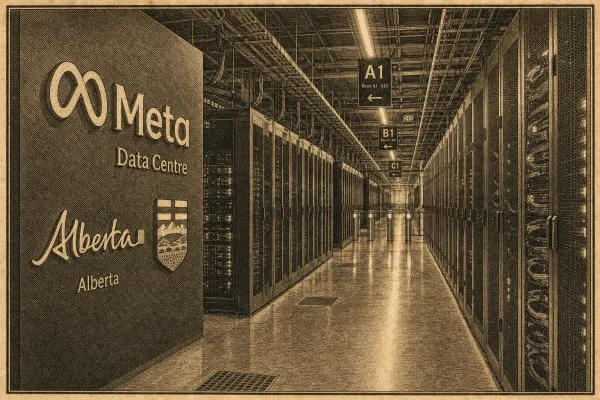
Protesters gathered in Morinville, Alta., on Sunday to oppose Meta’s planned data centre in Sturgeon County, turning concerns about water, electricity, climate and artificial intelligence into a public challenge to the tech giant’s first Canadian data centre.
The project is planned as a roughly one-gigawatt facility costing about $13 billion. Meta says it will be online within two to three years.
Protesters target Meta project
Ben Baril, a 20-year-old university student and one of the protest organizers, said the turnout surprised him.
“For a rainy day, on a long weekend, I wasn’t expecting this many people ... but it’s awesome,” Baril said. “We don’t want this data centre here, and we don’t want this data centre anywhere else.”
Opponents said the data centre would strain Alberta’s water supply and electricity grid, worsen the climate crisis and make AI-driven job losses more likely.
Jessica Tomashiro, who attended the rally, framed the concern in household terms.
“My water, my electricity prices are already high, so how much higher can they go?” she said.
For Baril, the project is not only about infrastructure. He said the expansion of artificial intelligence poses a threat to work, particularly for younger people.
“AI, for young people especially, represents a threat to our careers as it’s increasingly replacing what were good paying jobs,” he said.
Power demand under scrutiny
Premier Danielle Smith has said Alberta’s grid operator will use surplus energy to power the data centre until the natural gas-fired Greenlight Electricity Centre starts supplying it in 2030.
That interim period is already a point of tension. According to Culture Alberta, the Alberta Electric System Operator describes the temporary power draw as “bridging load” and said it is expected to increase pool electricity prices while reducing transmission costs.
Baril said protesters do not trust the government or Meta to manage the consequences of the buildout.
“I’ve been concerned about the climate crisis since I was eight years old,” he said. “The increased power generation is going to just obliterate our climate because of the amount of natural gas that we’re going to be using for this.”
Water assurances face mistrust
Smith and the province say the data centre will use a closed-loop cooling system and less water than a typical Alberta golf course.
That has not resolved concerns among opponents, who say the project would still put pressure on Alberta’s water supply. The dispute has become one of the central divides around the project: the province is emphasizing design and efficiency, while protesters are focused on the scale of the facility and the resources required to run it.
Sturgeon County Mayor Alanna Hnatiw said she has heard residents’ concerns and called them valid.
“At the heart of it is genuine care for our communities, resources and our environment, which are concerns we all share,” Hnatiw said. “Strong accountability frameworks provide necessary guardrails to protect citizens and our communities.”
Province pitches economic return
The province is also presenting the project as a major economic opportunity.
According to Culture Alberta, the province says Meta will fully fund the campus without subsidies and that the project will generate roughly $250 million a year in royalties, taxes, levies and transmission fees.
That argument has not won over protesters who see the data centre as a transfer of local resources to a global technology company.
“It’s an American billionaire and we do not need to be turning our resources over to somebody like that,” said Gerry Hofs, who attended the rally.
Emily Lachase, another protester, said her concern reaches beyond the local build.
“It’s important for us to keep our own creativity alive and make sure that we keep using our own brains instead of always relying on AI,” she said.
Permit process adds tension
The timing of local approvals has also become part of the debate. According to Culture Alberta, Sturgeon County made data processing facilities a permitted land use in 2022, and Meta’s development permit was issued on June 16 before the project was publicly announced.
For opponents, that sequence reinforces a broader concern that the public is reacting after key decisions have already been made. For the province and Meta, the project is being framed around investment, future infrastructure and managed resource use.
Sunday’s protest showed that, for many residents and activists, the biggest questions remain unsettled: who benefits from a one-gigawatt AI facility, who carries the strain, and whether Alberta’s water and power systems should be asked to absorb it.
Reader-funded. No ads. No paywall.
The Canada Report is independent, reader-funded Canadian news — no advertisers, nothing behind a paywall, kept free for everyone. If you value it, you can help keep it that way.
Support The Canada Report →