

Based on coverage from CBC, The Globe and Mail, Toronto Star, Winnipeg Free Press, and Medicine Hat News.
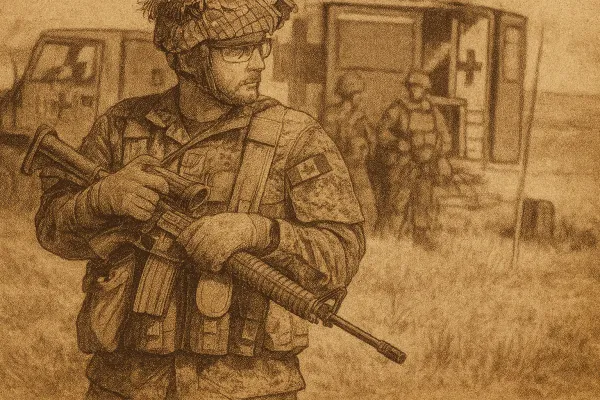
Ottawa is moving ahead with a major refresh of the Canadian Army’s standard-issue rifles, announcing a deal with Colt Canada that will eventually deliver more than 65,000 new weapons and could expand further if the Forces grow.
The federal government says the first batch will be bought through an expedited process run by the new Defence Investment Agency, with deliveries starting earlier than originally planned.
Ottawa to buy 65,402 new rifles
The headline number is 65,402 rifles under what National Defence calls the Canadian Modular Assault Rifle (CMAR) program. The government announced the plan at Colt Canada’s factory in Kitchener, Ont., with Defence Minister David McGuinty and Secretary of State for Defence Procurement Stephen Fuhr.
The purchase is split into two tranches:
- First tranche: 30,000 general service rifles over the next three years, with a contract value of $307 million. Multiple reports say deliveries are expected to begin in 2027.
- Second tranche: starting about four years from now, 19,207 more general service rifles plus full spectrum rifles designed for front-line combat and urban warfare.
One detail differs between sources: CBC reports 16,195 full spectrum rifles, while another report cites 16,165.
Replacing aging C7 and C8 rifles
The new CMAR rifles are meant to replace the CAF’s current C7 and C8 fleet, which has been in service for more than three decades. Fuhr described the existing rifles as having “served well” but being past their shelf life. Lt.-Gen. Mike Wright, the army commander, said the move brings “over 40 years of technology evolution” to soldiers and called it a practical upgrade in reliability and modern capability.
This isn’t a brand-new idea. CBC notes the replacement has sat on the military’s equipment list for years, but the timeline sped up after the Carney government boosted defence funding, including a $93.3 billion injection into National Defence this year.
Kitchener-based Colt Canada and Canadian content
A big part of the government’s pitch is that the rifles will be built in Canada. Colt Canada has committed to at least 80 per cent Canadian content, and Fuhr said that should create opportunities for suppliers across the country.
The Globe and Mail report adds some specific economic numbers Ottawa is using to justify the procurement: about $10 million annually added to GDP over the next five years and 70 new jobs at Colt.
On ammunition, the federal backgrounder and other reporting say it will also be made in Canada, though one report says much of it will be produced by a Quebec-based subsidiary of General Dynamics, a U.S. defence giant.
Faster Defence Investment Agency procurement process
The government is also using this contract to showcase how it wants defence procurement to work going forward.
Fuhr says the Defence Investment Agency accelerated the timeline by up to two years by using a “risk-based approach” that grew out of a COVID-era funding mechanism. In plain terms, once the Treasury Board approves a project considered lower complexity, it doesn’t need to keep returning for repeated approvals at every milestone.
The Globe and Mail reports the government chose a direct acquisition, pointing to Canada’s long relationship with Colt through the Munitions Supply Program dating back to the 1970s.
What comes next for Canada’s rifle program
The second phase doesn’t yet have a public price tag. CBC reports National Defence’s defence capabilities website estimates the overall CMAR program could land between $500 million and $1 billion.
CBC also reports that internal planning has left room for something much larger: a Defence Department equipment briefing dated July 2025 suggested rifle deliveries could be increased by up to 300,000 additional rifles, tied to discussions about drastically scaling up the reserves.
For most Canadians, the immediate impact is narrower: a Canadian factory gets years of work, and the Army starts a long-awaited swap of the rifles soldiers carry every day. The larger question, hinted at in the background documents, is whether this is just a replacement program or the early logistics of a much bigger force.
Support Independent Canadian News Analysis
The Canada Report is supported by readers like you. If this article helped you understand what’s happening, you can support our work with a one-time tip.
Support The Canada Report