
Based on coverage from CBC, Reuters, and The Guardian.
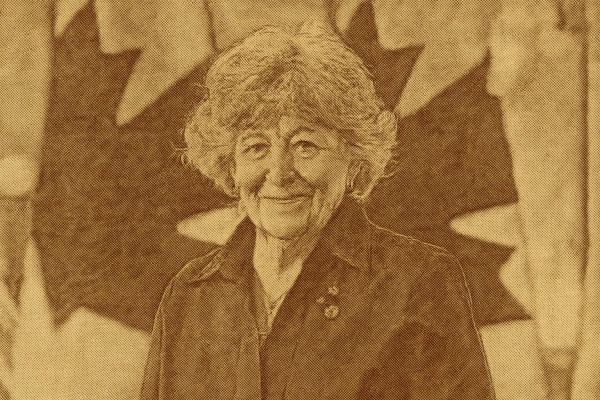
Prime Minister Mark Carney has picked former Supreme Court justice Louise Arbour to be Canada’s next governor general, with her installation set for June 8. Arbour, 79, will replace Mary Simon and become the King’s representative in Canada, a role that mixes ceremony with real constitutional responsibilities.
Carney framed the choice as a bet on institutions and public service, calling Arbour a “guardian of our constitutional order” and casting Canada as a “bastion of security, prosperity and justice” in a turbulent world. Arbour said she accepted “with a deep sense of duty,” pointing to the value of stable institutions guided by wisdom and a focus on the well-being of the country and the planet.
Louise Arbour named Canada’s next governor general
Arbour was born in Montreal and has built a career that spans Canadian courts and top international roles. Along with serving on the Supreme Court of Canada (appointed in 1999, retired in 2004), she held some of the most high-profile justice jobs outside the country: chief prosecutor for the international criminal tribunals for the former Yugoslavia and for Rwanda, and later the UN High Commissioner for Human Rights.
Carney said her appointment reflects the importance of global institutions, an argument he has leaned on in speeches, and praised her for holding powerful offices while also, in his words, holding institutions accountable.
What the governor general role does in Canada
The governor general is the representative of King Charles III in Canada. While the job is often described as largely ceremonial, it comes with key constitutional duties: swearing in governments, formally signing legislation, and the power to summon or dissolve Parliament. The governor general is also commander in chief of the Canadian Armed Forces.
That combination matters because the office sits at the intersection of Canada’s day-to-day political life and the constitutional rules that keep the system running during elections, transitions of power, and moments of uncertainty.
International justice record and major milestones
Arbour’s international reputation comes in large part from her work prosecuting war crimes connected to the conflicts in Rwanda and the former Yugoslavia. One major milestone highlighted in reporting: her work at the Yugoslavia tribunal helped lead to the indictment of Serbian president Slobodan Milošević, described as the first time an incumbent leader faced justice from an international tribunal.
Back in Canada, she has already been recognized at the highest level: she is a Companion of the Order of Canada and has received 42 honorary doctorates, tied to her legal work at home and abroad.
Succeeding Mary Simon amid language pressures
Arbour will take over from Mary Simon, appointed in 2021 by then prime minister Justin Trudeau and the first Indigenous person to hold the job. Simon’s term put a strong focus on Indigenous reconciliation and environmental causes. She also hosted major visits, including by the King and by Pope Francis, whose visit included an apology to survivors of Canada’s residential school system.
Simon’s first language is Inuktitut, and her struggles with French became a political issue because bilingualism carries heavy weight nationally. That context matters for Arbour’s appointment: Carney faced pressure to choose someone fluent in English and French.
Military culture reform experience returns to spotlight
Arbour is also known in Canada for her work on military reform. In 2021, she led an independent review of Canada’s military and recommended reforms aimed at addressing sexual misconduct and institutional culture. With the governor general serving as commander in chief, that experience is likely to draw attention as she steps into the vice-regal role.
Arbour’s installation is scheduled for June 8, marking a high-profile transition in one of Canada’s most tradition-heavy offices, now led by a jurist whose career has often centred on accountability and the rule of law.
Support Independent Canadian News Analysis
The Canada Report is supported by readers like you. If this article helped you understand what’s happening, you can support our work with a one-time tip.
Support The Canada Report