Based on coverage from Reuters, The Globe and Mail, The Globe and Mail, The Epoch Times, The Star, BNN Bloomberg, and StreetInsider.
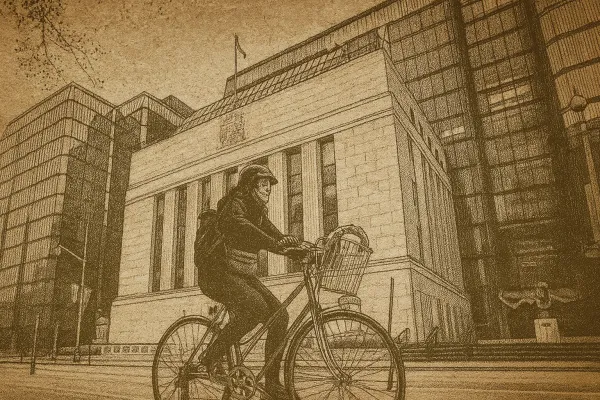
The Bank of Canada hit pause again Wednesday, holding its key policy rate at 2.25 per cent as the war in the Middle East sends oil prices sharply higher and complicates the inflation outlook.
The Bank of Canada's decision to maintain its key rate comes amid ongoing inflation concerns exacerbated by geopolitical tensions, a topic previously explored in our coverage of the bank's stance on inflation risks related to the Middle East. For more context, see our article on the Bank of Canada’s response to inflation pressures.
The decision was widely expected. The bigger message came in the bank’s tone: Governor Tiff Macklem said the BoC will “look through” the war’s immediate impact on inflation, but it’s prepared to act if higher energy costs start spilling into broader, persistent inflation.
Bank of Canada holds rate at 2.25%
The Bank kept the policy rate unchanged for a third straight meeting. Reuters notes the rate has been at 2.25 per cent since October, while other reports describe the bank being on hold since December. Either way, the stance is broadly described as neutral to slightly stimulative, aimed at supporting a weak economy while inflation has been close to target.
At the same time, Macklem stressed how tough it is to chart a path for rates right now, pointing to uncertainty in economic conditions and geopolitical risks.
Oil price shock raises inflation risks
The immediate problem for the BoC is energy. Benchmark oil prices have jumped more than 40 per cent in recent weeks, tied to the conflict involving the United States, Israel and Iran, and disruptions around the Strait of Hormuz. One report says the strait has been largely closed and normally carries about a fifth of global oil supplies.
In Canada, average gas prices have already risen by more than 30 cents a litre, and Macklem acknowledged that will push inflation higher in the coming months. His warning was blunt: the bank can tolerate a temporary jump, but won’t accept a scenario where high energy prices feed into other prices and wage or price-setting behaviour.
Weak Canadian economy meets sticky uncertainty
This is where it gets messy. Canada’s economy is already soft: GDP contracted in the fourth quarter of 2025, and February saw 84,000 jobs lost with unemployment rising to 6.7 per cent. The trade deficit widened in January, and business investment has been held back by trade uncertainty.
Inflation, meanwhile, has been trending lower. February inflation came in at 1.8 per cent, below the BoC’s 2 per cent target. Macklem also flagged that headline inflation is likely to rise partly because the oil spike is real, and partly because last April’s removal of the consumer carbon tax has been pulling down year-over-year inflation, an effect that won’t last forever in the annual comparison.
The BoC’s central dilemma is classic: higher rates could help lean against inflation but risk worsening an already weak economy; lower rates could support growth but risk reigniting inflation.
Tariffs and trade deal review add pressure
Beyond oil, several sources point to U.S. policy as another complicating factor. Reuters reports President Donald Trump’s tariffs have hit critical sectors, and there’s ongoing uncertainty about the review of the North American free trade deal involving Canada, the U.S., and Mexico, which Trump has frequently criticized.
Macklem described the uncertainty as “acute,” and said Canada is facing more volatility, not less.
What markets and economists expect next
Before this oil shock, some economists expected the BoC could stay on hold well into 2026. Now, the market mood is shifting. Reuters reported ahead of the decision that money markets weren’t pricing a cut this year and were betting on a 25-basis-point hike in December. After the decision, Reuters said markets firmed up those December hike bets.
Economists aren’t unanimous. Desjardins’ Randall Bartlett said it’s too early for the bank to react without first flagging developing risks, and he expected the BoC to stay on hold through year-end. BMO’s Doug Porter argued there’s still a stronger case for a cut later this year than a hike, suggesting higher oil prices should ease.
For Canadians, the near-term reality is pretty simple: the Bank isn’t cutting rates right now, gas is getting more expensive, and the next few inflation prints will matter a lot more than usual.
Support Independent Canadian News Analysis
The Canada Report is supported by readers like you. If this article helped you understand what’s happening, you can support our work with a one-time tip.
Support The Canada ReportSource 1 | Source 2 | Source 3 | Source 4 | Source 5 | Source 6 | Source 7