

Based on coverage from Toronto Sun, CNN, and Yahoo News Canada.
Ontario Court Upholds Forfeiture of $1.2 Million
In a legal saga that has stretched over 16 years, Marcel Breton, a Northern Ontario resident, has lost his battle to reclaim over $1.2 million in cash seized by police from his rural property near Thunder Bay. On Monday, the Ontario Court of Appeal upheld a 2023 ruling that the government is entitled to keep the majority of the money, except for $15,000 found inside his home. This decision marks the end of a convoluted legal journey that began in 2009 when police executed a search warrant at Breton's property.
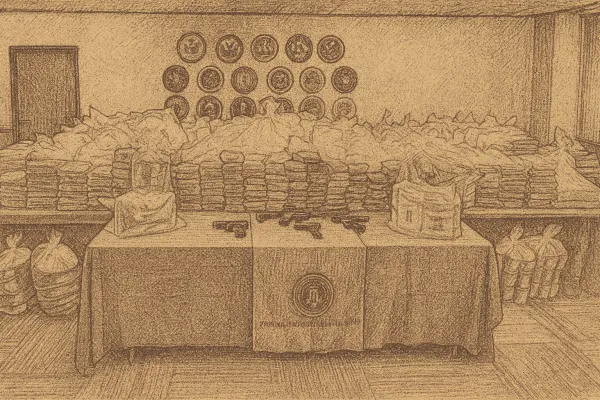
The initial search was conducted under the pretext of finding a handgun and related items. However, officers stumbled upon a significant amount of cash hidden in various locations, including $1.2 million buried in a Rubbermaid tub under the garage floor. Despite being acquitted of criminal charges related to the possession of proceeds of crime, Breton faced a separate legal battle over the fate of the seized money.
Support The Canada Report and help keep it ad-free and independent — click here before you shop online . We may receive a small commission if you make a purchase. Your support means a lot — thank you.
Legal Battle Over Seized Cash
Breton's legal troubles began when he was charged with multiple offences, including possession of the proceeds of crime. Although he was initially convicted, a retrial was ordered due to issues with the search warrants. In 2018, Breton was acquitted after a judge ruled that the evidence was obtained through an unreasonable search. The Crown, however, pursued a civil forfeiture case to retain the money, arguing that it was linked to criminal activity.
The trial judge, Justice Bruce Fitzpatrick, noted the unusual circumstances surrounding the cash. The money was found in the presence of drugs and drug paraphernalia, and most of it was in $20 bills, a denomination commonly associated with the drug trade. Breton's lack of reported income between 2001 and 2008 further fueled suspicions. Despite Breton's claims that he had won the money legally or earned it through a business, the judge was not convinced.
Implications of the Court's Decision
The Ontario Court of Appeal's decision underscores the complexities of balancing individual rights with the state's interest in combating crime. Legal experts have weighed in on the case, highlighting the challenges courts face in such situations. Sanaa Ahmed, a law professor at the University of Calgary, described the case as an example of "legalistic hair-splitting," where courts find ways to justify confiscating money despite an acquittal.
Michelle Gallant, a law professor at the University of Manitoba, emphasized the burden on Breton to prove the money's lawful origin, noting the suspicious nature of its storage. The court's ruling reflects a broader trend of prioritizing the state's interest in seizing assets linked to criminal activity, even when the accused is acquitted.
While Breton retains $15,000 found in his home, the decision to forfeit the rest of the money to the government highlights the enduring impact of legal battles over asset forfeiture. As the dust settles on this long-running case, it serves as a reminder of the intricate dance between justice and the law in Canada's legal system.