
Heads up: some of the links in this post are affiliate links. That means if you click and purchase, we may get a commission. It’s how we keep this site running without cluttering it with ads.
Twenty centimetres of overnight snow doesn’t look like much from your window—until you’re standing in front of a buried windshield at 7:10 a.m., in -25°C, already five minutes late. Your boots crunch on the packed snow, your breath hangs in the air, and your scraper makes that awful squeal as you carve at a solid sheet of ice welded to the glass. The wipers are frozen stiff, your fingers are going numb through your gloves, and the clock is ticking.
In the Prairies, that could mean -30°C in Saskatoon with a wind chill that feels closer to -40°C, turning a “quick” scrape into a full-body workout. In southern Ontario, it’s often worse in a different way: that lovely 10 cm of lake-effect fluff from last night has been topped with a crust of freezing rain, so you’re chiselling through layered slush and ice. On the BC coast, it’s heavy, wet snow mixed with road salt spray, while in Atlantic Canada a nor’easter can dump 30+ cm overnight, then refreeze everything into a concrete shell by morning.
Now contrast that with walking out, grabbing the corner of a winter windshield cover, and peeling the entire mess off in one smooth 10‑second motion. No more 10–15 minute scraping sessions in the dark, no more soaked sleeves from leaning over the hood, and no more wipers frozen to the glass. A good overnight windshield snow cover can turn that daily grind into a quick peel-and-go, even after a brutal storm.
This guide breaks down the best windshield snow covers that actually hold up in Canadian conditions: from fast, magnetic windshield covers for busy commuters, to heavy-duty, multi-layer car windshield snow covers for northern and rural drivers, to lightweight half-covers that double as summer sunshades. We’ll compare what works for street parking, condo lots, and open driveways, then walk through a buying guide and FAQs tailored to our unique mix of deep freeze, slush, and ice. If you’re tired of starting your day with a frozen workout, the right windshield ice cover might become your new favourite piece of winter gear.
Quick Overview: Our Top Picks
| Product | Best For | Why We Love It | Price |
|---|---|---|---|
| Quick pre-work departures | Heavy-duty, waterproof cover peels off in seconds, revealing a clear windshield instantly. | $29.99 CAD | |
| Gift-ready winter protection | Affordable, full-coverage design shields glass and mirrors from messy Canadian winter storms. | $16.99 CAD | |
| Compact cars needing max coverage | Extra-large panel protects windshield, wipers, roof edge, and mirrors from ice buildup. | $25.49 CAD | |
| Street parking and busy roads | Side-window coverage and reflective strips boost protection and night-time visibility in snow. | $32.00 CAD | |
| Harsh prairie-style winters | Military-grade, multi-layer build clings securely and shrugs off deep snow and ice. | $49.99 CAD |
Lamicall Windshield Cover for Ice and Snow
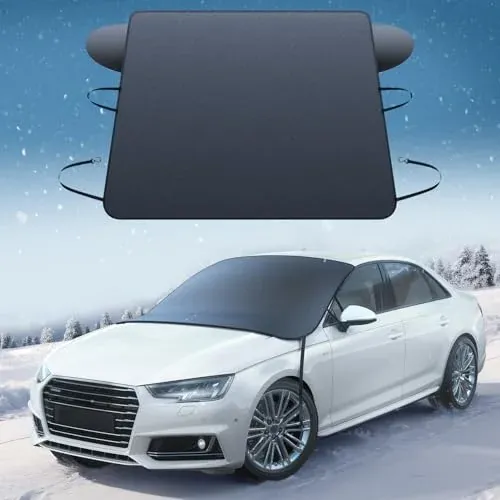
If you’re after a budget-friendly windshield snow cover that can handle messy Canadian winters, this Lamicall winter windshield cover is a strong contender. It uses heavy-duty 800D Oxford fabric with a PU waterproof coating to keep slush, wet snow, and freezing rain off your glass, which is ideal for coastal or lake-effect conditions. The brand leans hard into “1-second snow removal”: instead of scraping, you just peel the cover off and shake the snow away, which is a huge plus during early-morning commutes. At 122 cm high, 140 cm across the top and 157 cm across the bottom, it’s sized to fit most cars, SUVs, and smaller trucks—just measure before you buy. A mix of 5 magnets, door flaps, mirror straps, and wheel hooks helps it stay put overnight in windy parking lots, making it one of the more secure budget options for overnight windshield ice cover protection.
Pros
- Heavy-duty 800D Oxford fabric feels tough for the price
- Four-point anchoring system stays put in strong winds
- Fast on/off makes early-morning snow clearing painless
Cons
- Magnets may not align well on very curved windshields
Kekilo Windshield Cover for Snow and Ice
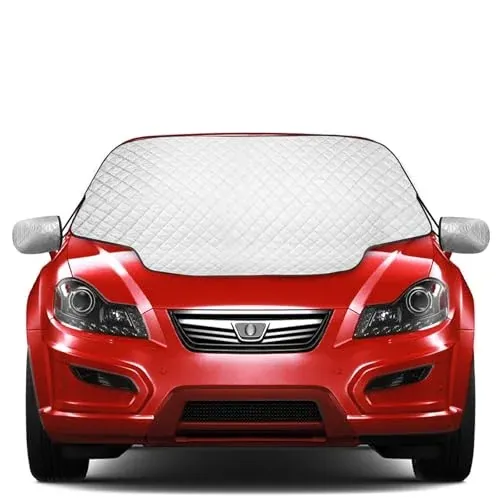
The Kekilo windshield snow cover is a very budget-friendly way to keep your glass clear through an overnight snowfall. It uses an upgraded 4-layer construction (aluminium film, spunlace cotton, non-woven fabric and soft liner) to block snow, sleet and freezing rain from bonding to the glass. That makes it a practical winter windshield cover for those -10°C to -25°C prairie mornings where scraping usually takes ages. This windshield snow cover also includes matching mirror covers, which is a nice touch if you’re tired of chipping ice off side mirrors. Magnets along the edge help keep the magnetic windshield cover in place, while the door flaps tuck inside to deter wind and casual theft. It’s marketed as a “fits most cars and SUVs,” so it’s best suited to general use on sedans, hatchbacks and smaller SUVs, especially if you want an affordable overnight windshield cover under $20.
Pros
- Very affordable option for basic winter windshield protection
- Includes matching covers for both side mirrors
- Four-layer design offers decent insulation and scratch protection
Cons
- “Fits most” sizing may be loose on larger SUVs
- Magnets can shift in strong prairie or coastal winds
AstroAI Windshield Cover for Ice and Snow
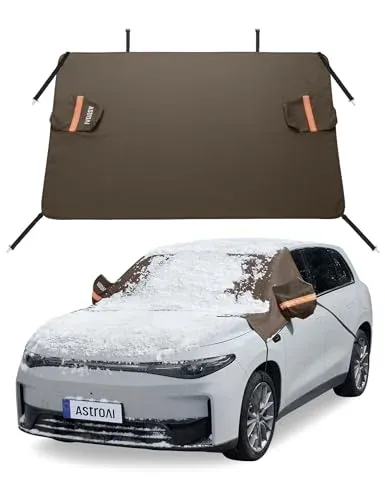
This budget-friendly windshield snow cover can handle messy Canadian shoulder seasons as well as mid-winter storms. The AstroAI winter windshield cover is worth a look. It uses a thick 600D Oxford fabric outer layer with a PU-coated interior, so slush, freezing rain, and wet snow don’t soak through and re-freeze on your glass. At 240 x 150 x 200 cm, it offers more coverage than many budget options, protecting not just the windshield but also the wipers, side mirrors, and even part of the roof. That extra coverage is especially handy during overnight snowfalls when ice can weld your wipers to the glass. The magnetic windshield cover is secured with elastic straps and wheel hooks, plus an anti-theft interior buckle, so it’s far less likely to blow off in prairie winds. It packs into a small storage pouch when you don’t need it.
Pros
- Large coverage protects roof, side windows, wipers, and mirrors
- Thick 600D Oxford fabric feels durable for harsh winters
- Anti-theft buckle and wheel hooks keep cover secure overnight
Cons
- One large size may fit loosely on smaller compact cars
Silverline Car Windshield Ice & Snow Cover
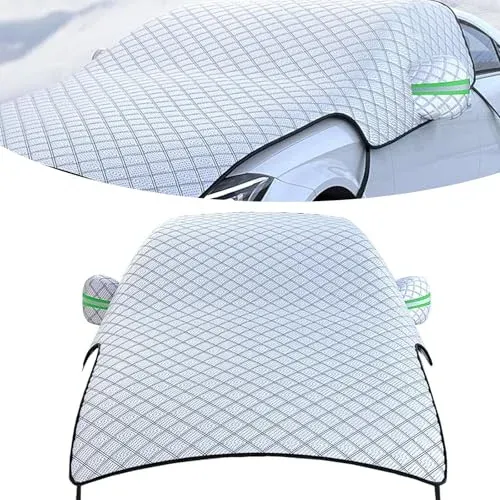
The Silverline Car Windshield Ice & Snow Cover is a budget-friendly option if you want more than just a basic windshield snow cover. This half car cover design shields your front windshield and side windows from snow and frost, while protecting your interior from harsh winter sun. Made from treated, wear‑resistant fabric, it’s designed to handle repeated freeze–thaw cycles and salty slush without fading or cracking too quickly. Reflective warning strips on the mirror covers add visibility when you’re parked on darker winter streets. There’s no published temperature rating or sizing chart, but for most sedans and small SUVs it should work as a simple, portable car windshield snow cover you can fold up and tuck in the trunk.
Pros
- Covers windshield and front side windows for added protection
- Reflective mirror strips improve visibility when parked at night
- Folds down small for easy year‑round storage in the car
Cons
- No clear sizing guidance for different vehicle types
DooGooCoo [Upgraded 7-Layer Car Windshield Snow Cover
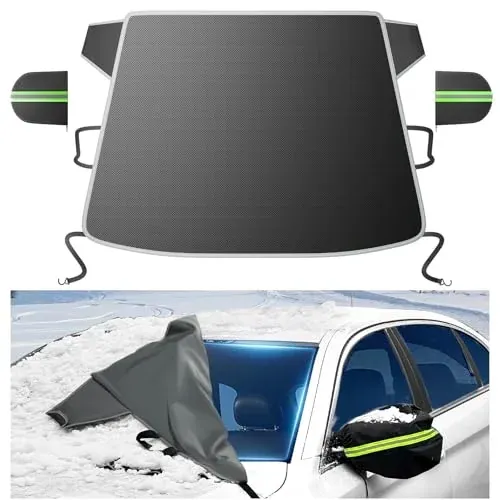
The DooGooCoo 7-layer winter windshield cover is another budget-friendly option for Canadians who are tired of scraping ice at 6 a.m. It’s designed as an overnight windshield cover that blocks snow, freezing rain, and frost so you can just peel it off and go. The multi-layer build (with a waterproof outer layer and padded inner layers) acts like a thermal blanket for your glass, helping reduce stubborn ice bonding in deep cold. It’s marketed as a universal-fit car windshield snow cover for sedans, SUVs, and light trucks, and the “medium” size is best suited to compact and mid-size vehicles. Strong side flaps and magnets help keep the magnetic windshield cover in place during windy Prairie storms, while reflective strips add visibility on dark winter mornings.
Pros
- Seven-layer build offers decent insulation against frost and ice
- Universal fit works for most cars, crossovers, and small SUVs
- Folds into a compact bag for easy year-round storage
Cons
- No long-term reviews yet to confirm real-world durability
Windshield Snow Covers vs Scrapers & De‑Icer: Which Do You Need?
A dedicated windshield snow cover saves you from scraping ice at 6 a.m. in ‑25°C, but it’s not the only option. Traditional scrapers and de‑icer sprays are cheap, easy to stash in the glove box, and work fine for occasional storms or milder regions like coastal B.C. The trade-off is time and frozen fingers: in places like the Prairies or Northern Ontario, chiselling through thick ice day after day gets old fast, and repeated scraping can leave micro-scratches in your glass.
A car windshield snow cover, especially a magnetic windshield cover or one that straps inside the doors, keeps snow and ice off the glass entirely. You just peel it off and go—much faster during an Ottawa or Montreal freezing rain event. However, it’s another thing to install and store, and cheap covers can flap in high winds or trap moisture if left on for days. For city drivers parking on the street or commuters leaving the car out overnight, a winter windshield cover is usually worth it. If you have a garage, carport, or you only see real snow a few times each year, a good scraper and de‑icer combo may be all you need.
Budget vs Premium: What’s the Difference?
Budget windshield snow covers in Canada typically run around $20–$35. They’re fine for occasional use or milder winters: simple polyester fabric, basic magnets, maybe elastic straps. The downside is thinner material that can freeze to the glass, weak stitching that rips in high winds, and magnets that may not hold during a Prairie blizzard. You’ll often replace them every season or two, so the “cheap” option can add up over time.
Premium winter windshield covers usually cost $45–$90. You’re paying for heavier, multi-layer fabric, better waterproofing, larger or rubber-coated magnets, side flaps that secure inside the doors, and full coverage for wipers and cowl vents. These handle ‑30°C cold snaps in Winnipeg or long freeze–thaw cycles in Southern Ontario without tearing or soaking through. You also tend to get better fit and storage bags. If you park outside nightly or live anywhere with regular snow and ice, a premium cover generally offers better value and less hassle. Budget covers are still reasonable for lighter use.
How to Choose the Best Windshield Cover for Canadian Conditions
Choosing the best windshield snow cover in Canada means thinking beyond basic frost protection. From damp, heavy snow in Vancouver to bitter -35°C windchill on the Prairies and freezing rain in Southern Ontario, your overnight windshield cover has to handle a bit of everything. A good winter windshield cover saves you time in the morning, protects your glass from ice scraping, and stays put even in strong winds. Focus on durability, secure attachment, and all-weather performance so you wake up to a snow-free, frost-free windshield.
Key Features to Look For
Material Quality and Insulation
For Canadian winters, material quality is what separates a one‑season gimmick from the best windshield snow cover you’ll use for years. Look for multi‑layer construction: a tough, tear‑resistant polyester or Oxford cloth outer layer, an insulated middle layer, and a soft, scratch‑free inner lining to protect your glass and wiper blades. Thicker covers help reduce ice bonding, especially when temperatures hover between -5°C and -15°C and moisture keeps refreezing. UV resistance is also helpful if you’ll leave it on in shoulder seasons. Avoid thin, single‑layer fabric that can freeze stiff, crack, or let ice bond directly to the glass.
Fit, Coverage and Vehicle Compatibility
A windshield cover for snow needs proper coverage to actually save you time in the morning. Check sizing carefully—many brands offer different lengths for sedans, SUVs, and trucks. In places like Calgary or Regina where drifting snow is common, you want a windshield cover that wraps around the sides and completely covers your wiper blades and the area where they rest, so snow doesn’t pack in underneath. Some models extend over the side mirrors as well, saving you even more scraping time in the morning. Make sure the cover sits flush with no big gaps where wind can get under; if you regularly see strong gusts off the Great Lakes or the Atlantic, a snug, tailored fit matters more than flashy extras.
Attachment System and Wind Resistance
How the cover attaches can make or break your experience on blustery Canadian nights. A magnetic windshield cover is quick to throw on, but check that the magnets are strong and properly encased to avoid scratching your paint. For coastal regions, where wind and freezing rain combine, look for multiple anchor points: door flaps that close inside the doors, elastic straps around mirrors, and sometimes wheel straps for extra security. An overnight windshield cover should still be there after a windstorm, not halfway down the street. Avoid designs that rely only on flimsy elastic hems, as these can stretch out or snap in cold.
Ice, Snow and Weather Protection Performance
Not all covers handle every type of winter weather equally. In areas with heavy overnight snowfall (20+ cm) followed by freeze-thaw cycles, you want a windshield cover that sheds snow easily and doesn't let slush soak through. Water-resistant or waterproof coatings are essential in regions with wet, heavy snow and near-zero temperatures. Look for reinforced edges and stitching—if the seams fail under the weight of snow or ice, you'll be back to scraping in bitter cold.
Ease of Use, Storage and Year‑Round Versatility
The best windshield snow cover is the one you’ll actually use every night, so convenience matters. Choose a winter windshield cover that you can install and remove in under a minute, even with gloves on. Wide pull tabs, labelled sides (driver/passenger), and a semi‑rigid structure all make life easier in a dark driveway. A compact storage bag is handy for tossing the cover in your trunk without tracking snow into the cabin. Some covers double as sun shields in summer; if you park outside where both UV and winter are intense, a reversible, all‑season design can offer better value than a single‑purpose cover.
Frequently Asked Questions
Q: Is it worth spending more on a premium windshield snow cover for Canadian winters?
In most Canadian cities, a premium windshield snow cover pays off quickly in time saved and reduced scraping. Models like the Lamicall Windshield Cover for Ice and Snow and the DooGooCoo Upgraded 7-Layer Car Windshield Snow Cover are built for heavier snowfalls common in the Prairies, Quebec, and Atlantic Canada. Their thicker Oxford or multi‑layer construction resists ice bonding better than thin budget covers. In milder coastal areas like Vancouver or Victoria, a lighter option such as the AstroAI Windshield Cover or Silverline Car Windshield Ice & Snow Cover can be enough, but premium covers still help with freezing rain. Over 3–5 winters, the extra durability, stronger magnets, and better mirror/wiper coverage usually mean fewer replacements, less windshield scratching from emergency scraping, and faster morning departures.
Q: How long does a windshield snow cover typically last in Canada?
Lifespan depends on fabric quality, UV exposure, and how often you use it, but in Canadian conditions most good covers last 3–5 winters. Heavy‑duty models like the Lamicall (800D Oxford) and DooGooCoo (7‑layer, “military‑grade” style build) are designed to handle repeated freeze–thaw cycles, road salt spray, and wet snow without quickly fraying or delaminating. In milder coastal climates where snow is less constant, lighter products such as the AstroAI or Silverline Car Windshield Ice & Snow Cover can last longer if you let them dry properly and avoid crumpling them when frozen. Replace your windshield ice cover when you see cracking, exposed inner layers, weakened magnets, or it no longer lies flat and seals against the glass.
Q: When should I replace my windshield cover for snow and ice?
Replace your windshield snow cover when it stops sealing well or shows structural damage. Key warning signs: frayed edges that let blowing snow under the cover, cracked or stiff fabric that won’t contour to the glass, or rusting/loosening magnets on magnetic windshield covers like those from Lamicall and Kekilo. If the elastic straps on a Silverline Car Windshield Ice & Snow Cover or mirror straps on the AstroAI or Kekilo covers lose tension, the cover can flap in strong Chinook or coastal winds and scratch paint. Also consider replacing if de‑icing chemicals or road salt have stained and stiffened the fabric after a couple of winters. As a rule, inspect each fall; if you wouldn’t trust it in a wet snowstorm or freezing rain event, upgrade before peak January–February cold.
Q: How do I know if a windshield snow cover will fit my car, SUV, or truck?
Check your windshield width and height and compare to the product’s dimensions. For example, the Lamicall Windshield Cover measures 157 cm x 122 cm, making it a good fit for most sedans, crossovers, and many mid‑size SUVs commonly seen in Canada (Civic, Corolla, CR‑V, RAV4, Escape). The DooGooCoo Upgraded 7‑Layer Car Windshield Snow Cover is designed as a universal fit for cars, SUVs, and trucks, which suits larger vehicles like F‑150s or Silverados parked outdoors. The AstroAI and Kekilo covers target cars and compact SUVs; they work well for smaller windshields. If your windshield height is close to the max spec, choose the larger option; too‑small covers leave exposed glass that will ice over in one night.
Q: What works best for BC coastal winters versus Prairie deep freeze conditions?
Coastal BC sees wet snow and freezing rain more than deep cold, so focus on waterproofing and quick drying. The AstroAI Windshield Cover and Silverline Car Windshield Ice & Snow Cover are good for these conditions: they’re lighter and easy to shake off slush and rain. In the Prairies, where temperatures often drop below −25°C and blowing powder is common, a thicker windshield cover for snow such as the Lamicall (800D Oxford) or DooGooCoo 7‑Layer offers better insulation against hard ice bonding and strong winds. Kekilo’s 4‑layer magnetic windshield cover with mirror coverage is a strong middle ground, handling both dry snow and occasional ice storms. Choose heavier multi‑layer covers for interior and northern regions, and lighter but waterproof options for milder, coastal climates.
Q: Magnetic windshield cover vs strap‑based cover: which is better in Canadian conditions?
Magnetic windshield covers like those from Lamicall and Kekilo are faster to install and remove, ideal for daily commuters. Magnets along the edge grip the vehicle’s frame, creating a tight seal that blocks drifting snow and freezing rain. However, in extremely strong winds, additional security from straps, featured on covers such as the AstroAI Windshield Cover and Silverline Car Windshield Ice & Snow Cover, can help prevent lifting. The DooGooCoo blends a heavier, multi‑layer build with a universal fit that usually includes more anchor points, which is great for trucks and SUVs. If you park in underground or sheltered lots, magnets are usually enough. If you regularly park in open, windy areas or on exposed driveways, consider strap‑equipped or hybrid designs for maximum stability.
Q: How do I properly clean and care for a winter windshield cover?
Shake off loose snow and ice first—never forcefully bend a frozen cover or you risk cracking layers, especially after a cold snap in cities like Edmonton or Winnipeg. For fabric covers like Lamicall, AstroAI, Kekilo, DooGooCoo, and Silverline, hand‑wash in lukewarm water with mild soap once or twice a season, more often if you drive on salty roads. Avoid harsh detergents or bleach, which can degrade waterproof coatings. Rinse well, then hang to air‑dry completely before folding; storing it damp in your trunk encourages mildew and odour. Don’t machine dry or leave it baking on a hot dash in summer. Inspect magnets and seams each fall; if stitches near mirror covers or edges start to loosen, consider light hand‑sewing repair or plan for replacement before serious winter weather.
Q: How do I choose between 4‑layer and 7‑layer windshield ice covers?
Layer count mainly affects insulation, stiffness, and durability. A 4‑layer windshield ice cover like the Kekilo balances flexibility and protection, making it ideal for most urban drivers in Southern Ontario, BC’s Lower Mainland, and the Maritimes where temperatures often hover around −10°C to 0°C with mixed snow and rain. A 7‑layer build like the DooGooCoo is better for severe cold (−20°C and below) and heavy snowfall, common in the Prairies, Northern Ontario, and Montreal. The extra layers improve resistance to ice bonding and tearing when frozen. However, thicker covers can be bulkier to store and slightly stiffer to handle.
Q: How much time and effort does using an overnight windshield cover actually save?
Using an overnight windshield cover can save 5–15 minutes per snowy morning, which adds up significantly over a Canadian winter. Instead of scraping ice and brushing 10–20 cm of snow off the glass, you simply pull off the Lamicall, AstroAI, Kekilo, DooGooCoo, or Silverline cover and give it a shake. You also reduce the need to run the car idling for de‑icing—helpful during anti‑idling enforcement in cities like Toronto and Vancouver, and easier on fuel costs. For early-morning commuters, school-run parents, or shift workers, that saved time can mean a more predictable routine. It also decreases the risk of scratching your windshield with aggressive scraping when you’re rushed or dealing with freezing rain crust.
Q: Will a windshield cover for snow help with frost and sun in shoulder seasons?
Yes, a good windshield cover for snow doubles as a frost guard and, in some cases, a sunshade. In fall and spring, when overnight lows can still dip below freezing, covers such as Lamicall, AstroAI, Kekilo, DooGooCoo, and Silverline prevent light frost from forming directly on the glass—so you can leave for work without scraping. The Silverline Car Windshield Ice & Snow Cover is specifically pitched as a half‑car cover sunshade as well, making it useful on bright but cold days when UV and glare are issues. While they won’t cool your car like a reflective summer shade in 30°C heat, these covers do reduce frost, pollen, and dust buildup during shoulder seasons, extending usefulness beyond peak winter months.
Final Thoughts: Making the Right Choice for Canadian Conditions
Choosing the right windshield cover for overnight snow in Canada means balancing protection, convenience, and durability against everything from wet Vancouver slush to frigid Prairie deep-freezes. For most drivers, the Lamicall Windshield Cover for Ice and Snow stands out as the best all-round choice, thanks to its reliable full-glass coverage, sturdy straps, and performance in heavy snowfall and deep frost. It’s especially well-suited to Canadians who park outdoors overnight and are tired of scraping thick ice before early-morning commutes.
If you regularly face high winds or drifting snow on the Prairies or in Atlantic Canada, the Kekilo Windshield Cover for Snow and Ice is a smart option, offering secure fitment and solid edge protection that helps keep blowing snow from sneaking underneath. For those looking to stretch their budget without sacrificing core protection, the AstroAI Windshield Cover for Ice and Snow delivers excellent value, with dependable insulation and coverage.
Before making your final decision, measure your windshield, think about where you park most often, and match your choice to your worst expected conditions—not just average days. Prioritise features like strong anchor points, coverage of wipers and side mirrors, and materials rated for sub-zero temperatures.
Take the next step now: pick the cover that best fits your vehicle and winter reality, and order it before the next storm rolls through. With the right windshield cover in place, you’ll spend less time scraping and more time getting on the road, ready for whatever a Canadian winter throws your way.