


Heads up: some of the links in this post are affiliate links. That means if you click and purchase, we may get a commission. It's how we keep this site running without cluttering it with ads.
At 7 a.m., a Calgary homeowner reaches for an app to warm up the house before breakfast; across Toronto, a condo owner with electric baseboards in every room is wondering whether a smart thermostat is even an option. Same goal—better control—but not remotely the same purchase. Furnaces, central air, heat pumps and most hot-water boilers use low-voltage wiring, while electric baseboards run on 120V or 240V line voltage. Get that distinction wrong, and the flashiest thermostat on the shelf can be unusable.
That’s why this guide starts with compatibility, then weighs scheduling, remote access, sensors and price. Four of these five picks are curated recommendations based on published specs, prices and user ratings. The top pick is different: TCR editor Steve Cogbill installed the ecobee Smart Thermostat Premium in his own home, and that section covers what the box doesn’t tell you. Picks run from $99 for smart baseboard control to about $291 for a premium learning thermostat. And since temperature is only one part of indoor comfort, our guide to Canadian humidifiers is worth a look too.
Quick Overview: Our Top Picks
| Product | Best For | Why We Love It | Price |
|---|---|---|---|
| Best overall for central HVAC | The included SmartSensor evens out hot and cold rooms, and a Power Extender Kit helps homes without a C-wire. | $278.01 CAD | |
| Hands-off learning schedules | Builds its own schedule, includes a room sensor and skips the C-wire in most homes. | $290.74 CAD | |
| Central HVAC on a budget | Covers furnaces, air conditioners and heat pumps with geofencing, vacation mode and ENERGY STAR certification. | $151.01 CAD | |
| Two-wire baseboards | Works on two- or four-wire baseboard setups with no hub, from a Quebec-based company. | $124.99 CAD | |
| Four-wire baseboards | Adds Wi-Fi scheduling, geofencing and HomeKit, Alexa and Google support to line-voltage heat. | $99.00 CAD |
ecobee Smart Thermostat Premium
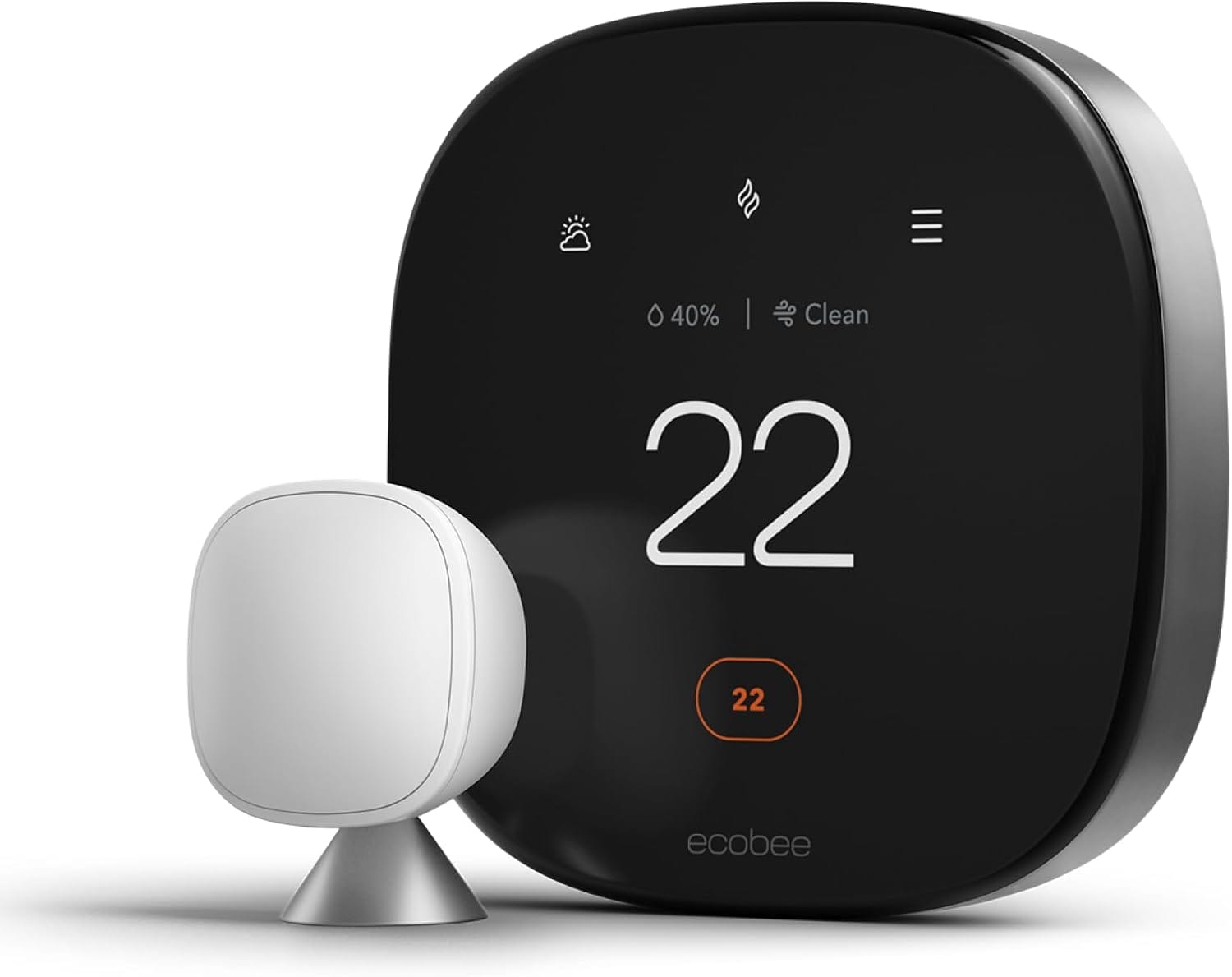
I installed this thermostat in my own home, so this section is first-hand. The other picks in this guide are researched recommendations based on specs and user reviews.
Made by Toronto-based ecobee, the Smart Thermostat Premium works with most 24-volt furnaces, air conditioners, heat pumps and boilers. It comes with a SmartSensor you place in another room, so the thermostat stops judging the whole house by the hallway. You also get a built-in air quality monitor, Alexa or Siri built in, a Power Extender Kit for homes without a C-wire and a three-year warranty. It sells for $278.01 with a 4.4-star rating from 878 reviews.
Why I bought it. We have forced-air heat and central air, and our house never agreed with itself. In summer, the downstairs office got uncomfortably cold while upstairs still needed cooling. I wanted a thermostat that cared about the rooms we actually use—the primary bedroom, the nursery and the office—rather than the hallway it’s mounted in. I now run three SmartSensors, the one in the box plus two more, so the thermostat works from readings across the house.
The install is where it got interesting. On paper, an ecobee install is simple: label the old wires and match them to the new base. Behind my old battery-powered Honeywell were four normal-looking wires. They didn’t go to the furnace. They went into a Fast-Stat, a box that squeezes heat, cooling and fan signals down a two-wire cable to a receiver at the furnace. No colour-matching guide covers that.
An electrician took a look and was upfront that HVAC controls weren’t his specialty. An HVAC company diagnosed it properly: I needed a new thermostat cable. But they wanted an electrician to run the wire before they’d come back to connect it, and two trades for a small job felt like overkill. So I bought a 15-metre roll of Southwire 18/5 thermostat wire at Canadian Tire for $69.99, and my dad helped me pull it through the joists. I removed the Fast-Stat at both ends, connected five wires straight through (R, C, W1, Y1 and G), and it worked.
How it’s been. It’s easy to use, noticeably better at evening out temperatures around the house and far more informative than the old Honeywell. What I can’t tell you yet is whether it saves money, because comfort isn’t savings. I’ll compare this winter’s heating bills and update this post with real numbers.
The takeaway. If the wires behind your thermostat run straight to the furnace, ecobee’s DIY install is as easy as advertised. In an older house, pop the cover first and look for a missing C-wire, a two-wire run or a mystery box like a Fast-Stat. The hard part of my install wasn’t the work. It was figuring out what the wires were actually doing.
Pros
- Included SmartSensor for more even room-by-room comfort
- Works with furnaces, central air, heat pumps and boilers
- Power Extender Kit in the box for homes without a C-wire
- Three-year warranty from a Canadian company
Cons
- Premium price
- Older or unusual wiring can turn the DIY install into a project
Google Nest Learning Thermostat
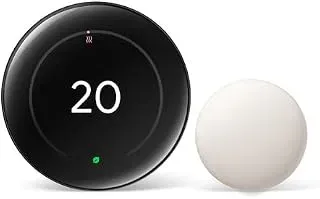
Auto-scheduling is the headline feature of the Google Nest Learning Thermostat (4th Gen): it learns the temperatures you set and when you set them, then suggests tweaks rather than making you build every schedule by hand. Google lists it as compatible with most 24-volt systems, including gas, oil and electric forced air, heat pumps and radiant heat, and says most homes won’t need a C-wire. The package includes a Nest Temperature Sensor for a room the hallway thermostat can’t read, and it works with Alexa and Gemini for Home. At $290.74 it’s the priciest pick here, but its 4.5-star rating from more than 2,400 reviews is the largest pool of feedback in this guide. It won’t work with line-voltage electric baseboards.
Pros
- Builds and fine-tunes its own schedule
- Room sensor included
- No C-wire needed in most homes
Cons
- Most expensive pick in this guide
- Needs a 24-volt system; won’t run electric baseboards
Honeywell Home T5
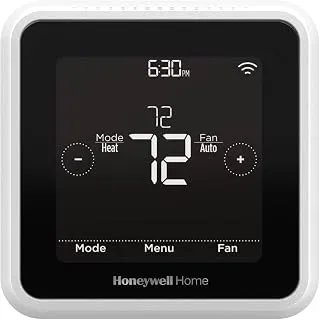
If you want solid smart control for a central system without paying for sensors, the Honeywell Home T5 covers the essentials. It works with 24-volt furnaces, air conditioners and heat pumps, and its 4.95-inch touchscreen handles seven-day scheduling, geofencing, auto-away, fan control and vacation mode. Auto changeover helps homes that switch between heating and cooling through the shoulder seasons, and it’s ENERGY STAR certified with a two-year warranty. At $151.01 with a 4.2-star rating from more than 1,400 reviews, it’s the most affordable central-HVAC pick here. The catch: it requires a C-wire, so check behind your current thermostat before ordering.
Pros
- Lowest price among the central-HVAC picks
- Seven-day schedules, geofencing and vacation mode
- ENERGY STAR certified
Cons
- Requires a C-wire
- No room sensor included
Sinopé TH1123WF
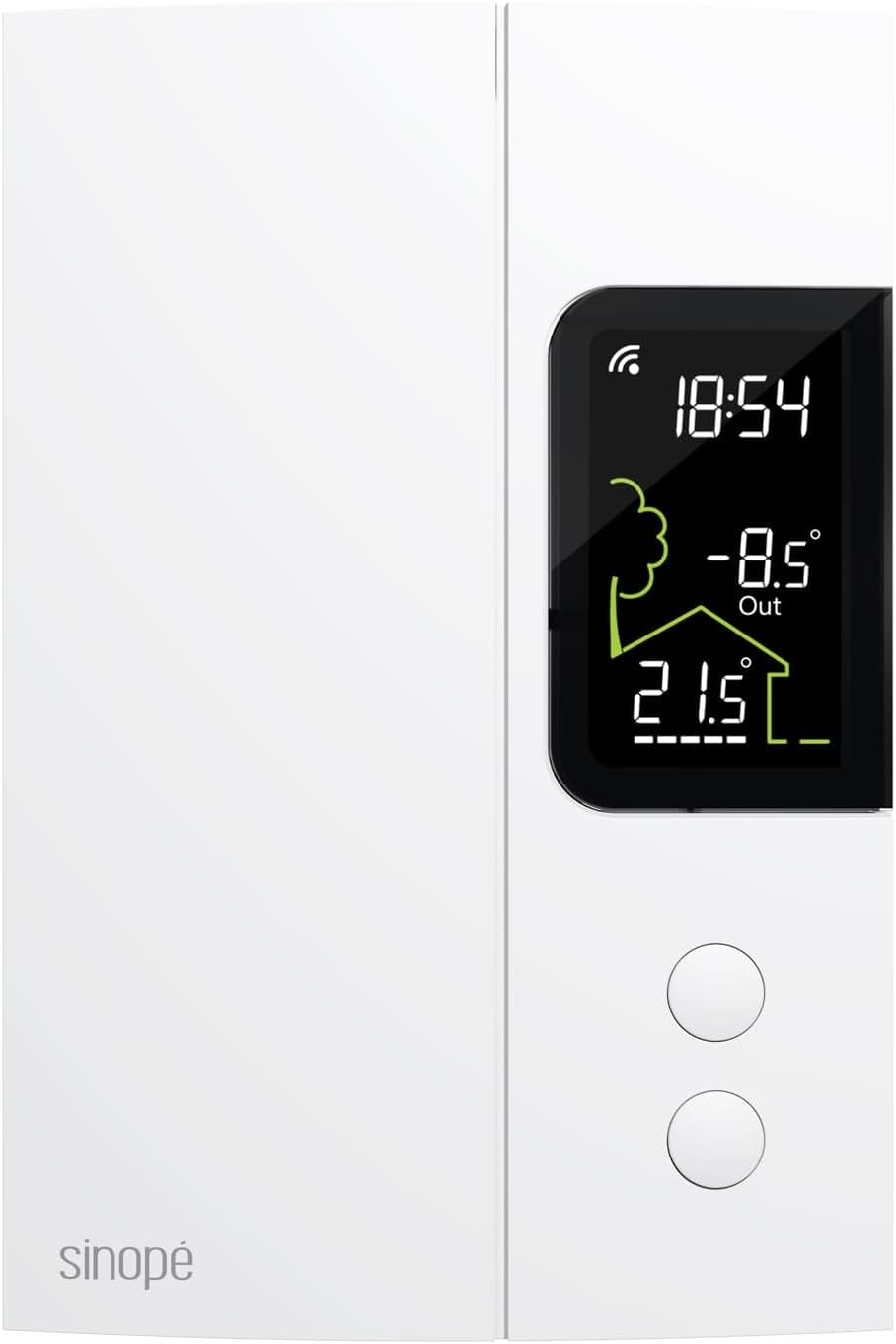
Plenty of Canadian homes with electric baseboards have only two wires at each thermostat, which rules out some smart models. The Sinopé TH1123WF, from Saint-Jean-sur-Richelieu, Quebec-based Sinopé Technologies, works with two- or four-wire connections and needs no hub. It controls baseboards, convectors, fan-forced convectors and radiant ceiling heat up to 3,000 watts at 240 volts. Through Sinopé’s Neviweb app, you get up to eight schedule periods a day, geofencing and real-time energy reports, and it works with Apple HomeKit, Alexa, Google and SmartThings. At $124.99, it holds a 4.6-star rating from 550 reviews and comes with a three-year warranty. It isn’t compatible with central HVAC systems or heated floors.
Pros
- Works with two- or four-wire baseboard wiring
- No hub required
- Energy reports and up to eight schedule periods a day
Cons
- You’ll need one per heated room
- Not for central HVAC or in-floor heating
Mysa LITE
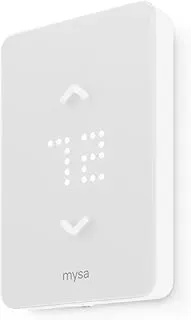
From St. John’s-based Mysa, the Mysa LITE is the least expensive way into smart baseboard heat at $99. It works with 120V to 240V line-voltage systems, including electric baseboards and fan-forced heaters, and adds remote control, seven-day scheduling, geofencing and Auto-Away mode over Wi-Fi and Bluetooth. It also works with Apple HomeKit, Alexa and Google, with a 4.5-star rating from 449 reviews. Check your wiring first: the Mysa LITE needs at least four wires, including a neutral or second line, and won’t work on two-wire installations. If you only have two wires, the Sinopé above is the better fit.
Pros
- Lowest-priced smart pick in this guide
- Seven-day schedules, geofencing and Auto-Away mode
- Works with HomeKit, Alexa and Google
Cons
- Needs four or more wires (neutral or second line); won’t work on two-wire setups
- Not compatible with low-voltage central HVAC
Smart Thermostats vs Programmable Thermostats: Is Wi-Fi Control Worth It?
Smart thermostats add app control, remote scheduling, geofencing and, in some cases, room sensors. That’s most useful in homes with changing routines or rooms that run warmer or cooler than the thermostat’s location. A conventional programmable thermostat can still handle a fixed weekday-and-weekend schedule for less money, with no Wi-Fi setup or app to manage, and it’s a sensible choice for households that keep regular hours. For electric baseboards, wiring matters more than features: the Sinopé handles two-wire setups, while the Mysa LITE needs four or more wires. Either one brings Wi-Fi scheduling to a room that used to have a dial.
What Does Spending More on a Smart Thermostat Actually Buy You?
The range runs from $99 for smart baseboard control to about $291 for a premium learning thermostat. At the top, extra money buys room sensors, better automation and more polish: the ecobee Premium adds an air quality monitor and a built-in voice assistant, while the Nest builds its own schedule from your adjustments. The Honeywell Home T5, at about $151, covers the essentials for central systems without a sensor. What spending more doesn’t buy is guaranteed savings. Those depend on insulation, heat source, household routines and realistic temperature settings. Warranties differ too: ecobee and Sinopé offer three years, Honeywell two. And before you buy, check with your utility, since many Canadian utilities offer smart thermostat rebates or demand-response programs that can bring the price down.
The Compatibility, Controls and Scheduling Details That Matter
Heating Type and Voltage Come First
Identify the system before comparing apps. Furnaces, central air conditioners and heat pumps use low-voltage (24V) wiring, which is what the ecobee Premium, Nest Learning Thermostat and Honeywell Home T5 are built for. Hot-water boilers usually use the same kind of wall thermostat: ecobee lists boilers as compatible and Google lists radiant heat for the Nest, though steam systems and individual radiator valves are a different case. Electric baseboards and convectors need line-voltage controls instead, which is where the Sinopé and Mysa LITE come in. Never mix the two. A low-voltage thermostat on a 240V circuit is a safety hazard, not just a dead thermostat.
C-Wires, Wire Extenders and Existing Controls
Many Wi-Fi thermostats need continuous power, usually from a C-wire. The Honeywell T5 requires one, the ecobee Premium includes a Power Extender Kit for homes without one, and Google says most homes won’t need a C-wire for the Nest. Older homes can hide surprises, though. Some have only two conductors running to the furnace, with a wire-extending module behind the old thermostat that makes it look like more—exactly what turned up in the ecobee install described above. If the wires behind your thermostat don’t run straight to the furnace, a new thermostat cable may be the cleanest fix. Line-voltage baseboard thermostats involve 120V or 240V wiring, so if you’re not comfortable with that, particularly in an older Montreal duplex or an Atlantic Canadian home with several baseboard zones, hire a qualified electrician.
Schedules, Geofencing and Everyday Energy Habits
Smart controls can reduce wasted heating and cooling, but savings depend on the schedule you actually follow. The Honeywell T5 and Mysa LITE offer seven-day programming and geofencing, the Sinopé allows up to eight schedule periods a day, and the ecobee Premium uses occupancy sensing to adjust when the house is empty. The Nest builds a schedule from your adjustments, which may suit households with changing work hours. None of them can erase the cost of keeping a drafty house at a high temperature all day, so pair automation with realistic setpoints and proper weather sealing.
Room-by-Room Temperature Control
A single hallway thermostat may not reflect the temperature in an upstairs bedroom, a sunny living room or a basement office, especially in larger Prairie homes where temperatures can vary substantially between floors. The ecobee Premium and Nest Learning Thermostat both include a room sensor, and ecobee sells extra SmartSensors (about $92 for a two-pack) for more rooms. Baseboard homes already have room-by-room zones, so a Sinopé or Mysa LITE in each room preserves that control rather than forcing the whole house onto one schedule. And for the one room that never quite warms up, a heated blanket is a cheaper fix than cranking the whole house—see our picks for the best heated blankets in Canada.
Smart-Home Platforms
Choose integrations that fit the devices already in your home. The ecobee Premium works with Alexa, Apple HomeKit, Google Assistant and SmartThings, and has Alexa or Siri built in. The Sinopé and Mysa LITE both support HomeKit, Alexa and Google, the Honeywell T5 is Alexa-ready, and the Nest works with Alexa and Gemini for Home. Voice control is convenient, but it should never outweigh heating compatibility or installation cost.
Frequently Asked Questions
Which smart thermostat will work with my home’s heating system?
Start by identifying the control type, not the fuel. Furnaces, heat pumps, central air and most hot-water boilers use low-voltage wiring; electric baseboards need a line-voltage model. For low-voltage systems, the ecobee Smart Thermostat Premium is our top pick. For baseboards, choose the Sinopé TH1123WF if you have two wires at the thermostat or the Mysa LITE if you have four or more. Check terminal labels, voltage and the number of zones before ordering.
Do I need a C-wire or professional installation?
Check the wiring before shopping. The Honeywell T5 requires a C-wire, the ecobee Premium includes a Power Extender Kit for homes without one, and the Nest doesn’t need one in most homes. If the wires behind your old thermostat connect to a module rather than running straight to the furnace, you may need new thermostat cable; an HVAC technician can confirm. Never connect a low-voltage thermostat to 120V or 240V baseboard wiring. Turn off power at the breaker and photograph the old connections before you start.
Will a smart thermostat actually lower my energy bills in Canada?
Savings depend far more on settings than on the thermostat itself. Use schedules or occupancy sensing to lower the heat during regular absences, avoid huge setbacks that force long recovery times, and keep cooling targets realistic. With rates climbing—Manitoba Hydro rates are rising 10.7% over three years, for example—even modest savings add up, but insulation, heat source and occupancy can outweigh any app feature. Compare utility bills across similar weather periods to see what has actually changed.
What should I budget for a smart thermostat that offers good value?
Budget by heating setup first. For baseboards, smart control starts at $99 for the Mysa LITE or about $125 for the Sinopé, per room. For central HVAC, the Honeywell T5 costs about $151, while the ecobee Premium and Nest Learning Thermostat run about $278 and $291 with a room sensor included. Pay for sensors, voice assistants or learning schedules only when your household will actually use them, and check for a utility rebate before you buy.
How long do smart thermostats last, and what maintenance do they need?
Manufacturers don’t publish a set lifespan, but a wall thermostat commonly lasts a decade or more; for smart models, the practical limit is often how long the app and firmware stay supported. Warranties give a baseline: three years for ecobee and Sinopé, two for Honeywell. Maintenance is light. Dust the unit once a year, keep it clear of lamps and drafts, replace room-sensor batteries when prompted, and confirm Wi-Fi and schedules still work after changing routers.
Which Smart Thermostat Is the Best Fit for Your Canadian Home?
Start with what heats your home. For furnaces, heat pumps, central air and most boilers, the ecobee Smart Thermostat Premium is our top pick at $278.01: the included SmartSensor tackles the hallway-thermostat problem, the Power Extender Kit helps homes without a C-wire, and it carries a three-year warranty from a Toronto company. If you’d rather the thermostat build its own schedule, the Google Nest Learning Thermostat is the premium alternative at $290.74, and the Honeywell Home T5 covers the essentials for $151.01.
Electric baseboard homes need a different approach. The Sinopé TH1123WF, at $124.99, is the safer bet for common two-wire setups and needs no hub. If your baseboard thermostats have four or more wires, the Mysa LITE adds Wi-Fi scheduling for $99.
Before ordering, pull the cover off your current thermostat and confirm the voltage, the number of wires and where they actually go. Choose the thermostat that fits your wiring first, then pay for the features you’ll use.