
| Sourced from 3 independent sources (4 reports) · no points in dispute |
Castanet, CBC, and Penticton Western News
Several key facts are reported by only one outlet so far.
9 key facts · 2 corroborated · none disputed
Why some reports were counted once
CBC and Winnipeg Free Press — the same Canadian Press report, counted once.
When several outlets publish the identical article — most often because they all ran the same wire story from an agency like The Canadian Press — we count it as one source, not several. That keeps our source count a measure of independent reporting, not how widely a single story was syndicated.
This summary is compiled from the independent sources listed above.
Summerland’s wildfire story has entered a hard second chapter: the flames are no longer the only emergency.
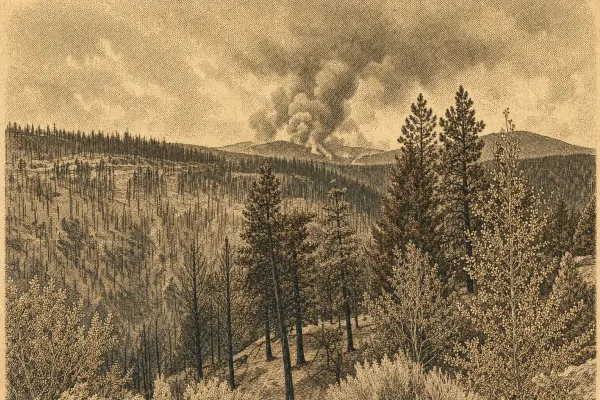
The Bald Range Wildfire west of Summerland destroyed or damaged about 150 structures and forced thousands of people in Summerland and surrounding rural communities from their homes. CBC reported that one woman died while trying to get out of the Summerland-area wildfire.
Donations to be matched
According to Castanet, the federal government will match donations by Canadians and corporations to the Red Cross’s British Columbia Wildfires Appeal, retroactive to Aug. 4 and continuing until Sept. 5, 2026. The money is for wildfire disaster relief in affected B.C. communities, including Summerland.
Summerland Mayor Doug Holmes told Castanet he was pleased to hear the news. Federal Emergency Management and Community Resilience Minister Eleanor Olszewski said the support would help communities hit by wildfires across British Columbia, including those affected by the Bald Range Wildfire.
“Basically, Red Cross’ approach is: ‘What do you need? What does the community need?’” Holmes said, according to Castanet. “Part of our recovery plan is to figure out what our needs are, and then Red Cross will be there to help us implement that.”
The announcement gives residents, businesses and local leaders one clearer path for help. But it does not answer the larger question facing many people who lost homes, property or income: when will recovery money actually arrive?
Recovery payments remain uncertain
Castanet reported there is no timeline for recovery payments from disaster assistance programs, including the federal Disaster Financial Assistance Arrangements program.
Olszewski acknowledged the pressure on governments to move quickly. “We totally understand how devastating this is for communities, and that it is an imperative to get money from the province to communities, and then from the federal government to the provinces as quickly as we can,” she said, according to Castanet.
That uncertainty is now part of daily life in a community where the emergency has shifted from evacuation to rebuilding. The scale of the damage is already plain: roughly 150 structures destroyed or damaged, and thousands of people uprooted from Summerland and nearby rural areas.
Fire now classified as held
CBC reported that the B.C. Wildfire Service now classifies the Summerland-area blaze as being held. According to CBC, the service expects the fire to remain within its roughly 252-square-kilometre perimeter west of Summerland, and it is no longer listed as a wildfire of note.
That status change is meaningful, but it does not erase the damage already done. For evacuees, a fire being held can mean the beginning of return, inspection, insurance calls and the long work of figuring out what is left.
It also comes with grief. CBC reported that one woman died while trying to escape the wildfire, a loss that sits alongside the property damage and displacement as part of the human cost of the disaster.
Officials ask visitors to return
As the immediate threat to structures eased, local and provincial officials began urging people to come back to Summerland, Penticton and the broader Okanagan to support farms, restaurants, hotels and tourism businesses, according to Penticton Western News.
“My ask of all of you is, this is a beautiful part of the world, and as we look towards the long weekends ahead, it is safe to come back, book hotel visits, and support local businesses here,” Forests Minister Ravi Parmar said, according to the outlet.
Penticton-Summerland MLA Amelia Boultbee made a similar appeal. “The summer’s not over, and Summerland and Penticton are open for business, so please come out and support your local farmers, support your local restaurants and hotels,” she said, according to Penticton Western News.
The province has lifted its wildfire-related state of emergency and is lifting its off-road vehicle ban, Penticton Western News reported. Officials also warned that fire season is not over and restrictions can return.
“We know that our fire seasons are more intense and they are longer, but we don’t need these tools at this time,” Parmar said, according to the outlet. “If we need these tools in the future, we will use them.”
Boil-water advisory continues
Even as officials encourage visitors to return, Summerland remains under a boil-water advisory, and Interior Health has not cleared it to be lifted, according to Penticton Western News.
Holmes said the community is still dealing with concerns that extend beyond the fire’s perimeter.
“We know we have concerns about our watershed and the impact it’ll have on our drinking water in long term; recovery isn’t something that just happens overnight,” Holmes said, according to Penticton Western News. “It’s a long term thing and we’re in this for the long haul.”
Reader-funded. No ads. No paywall.
The Canada Report is independent, reader-funded Canadian news — no advertisers, nothing behind a paywall, kept free for everyone. If you value it, you can help keep it that way.
Support The Canada Report →