
Heads up: some of the links in this post are affiliate links. That means if you click and purchase, we may get a commission. It’s how we keep this site running without cluttering it with ads.
At 3 AM on a January night, the icy draft snaking under the bedroom door tells a story the thermostat doesn't. It says 19°C, but that cold line of air is back, pulling heat out of the room and money out of the wallet with every gust of wind.
Whether in a drafty Toronto apartment, a century home in Montreal, a rental in Vancouver, or anywhere across North America, door and window gaps are silent budget killers. That thin line of cold air under the door isn't just uncomfortable—it's costing real money every single day of winter. Energy experts estimate that air leaks around doors and windows can account for 25-30% of heating costs in an average home.
While The Canada Report typically focuses on solutions for Canadians, door and window drafts are a challenge shared by neighbours just south of the border. From Minneapolis to Maine, Detroit to Denver, the same brutal winter cold demands the same practical solutions. This guide covers products available in both the US and Canada because everyone dealing with -20°C winters deserves a warm, draft-free home.
The good news? Sealing those gaps is one of the cheapest and most effective ways to cut heating bills. Door seal tape, weather stripping, and draft stoppers cost $10-30 but can save hundreds over a winter. No contractor needed, no special tools required—just peel, stick, and immediately feel the difference.
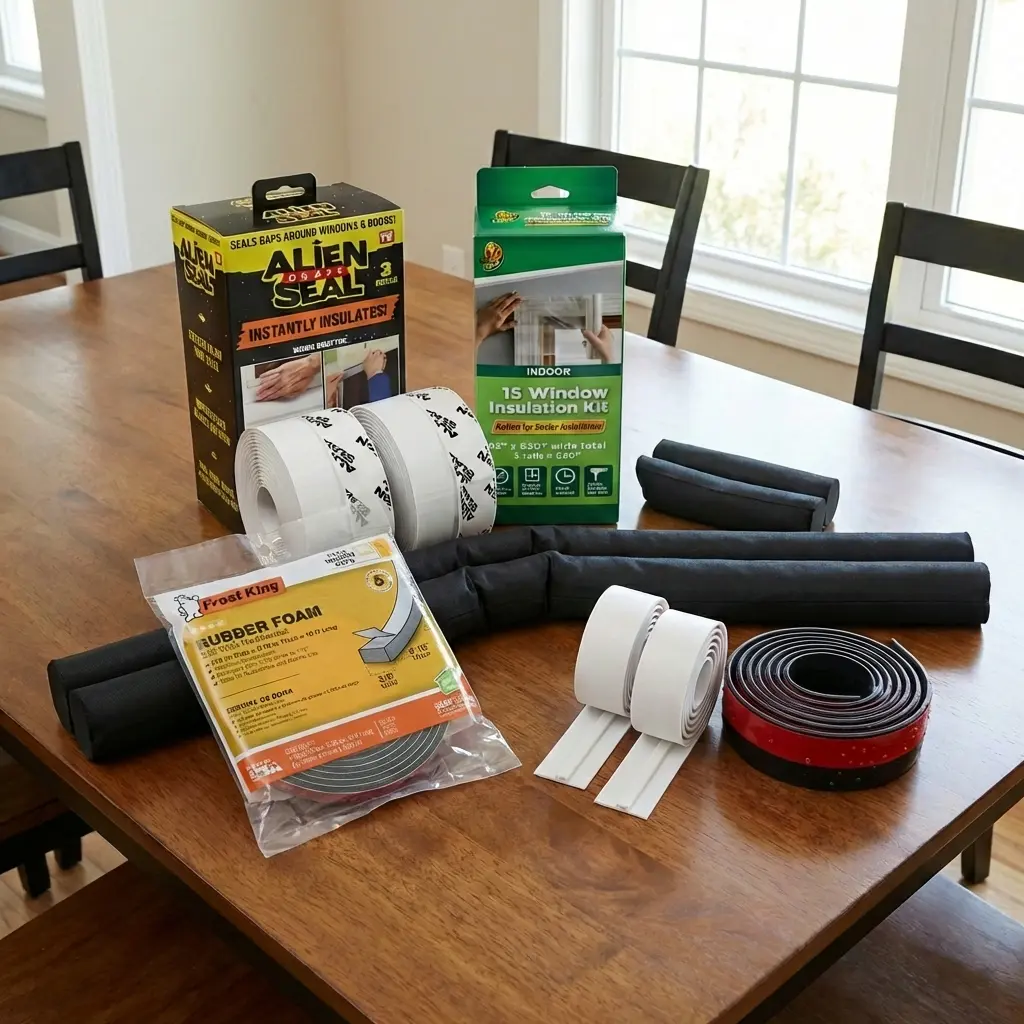
In this guide, the best door seal tape and weather stripping options for 2026 are covered, from the wildly popular Alien Draft Seal to budget-friendly alternatives that work just as well. Whether sealing exterior doors against Prairie cold snaps, fixing leaky windows, or just trying to keep bedroom doors from letting hallway air in, the top options are compared here. For even more ways to stay warm in winter without cranking the heat, this is the place to start.
Quick Overview: Our Top Picks
| Product | Best For | Why It Stands Out | Where to Buy |
|---|---|---|---|
| Alien Draft Seal Tape | Most Effective Seal | Crystal-clear silicone that disappears on trim while blocking serious drafts. The #1 choice. | |
| Frost King Foam Weather Stripping | Budget Pick | Affordable foam tape that seals small to medium gaps on doors and windows effectively. | |
| Suptikes Rubber Weather Stripping | Large Gaps | D-profile rubber seal perfect for older doors with bigger gaps and uneven frames. | |
| Holikme Adhesive Door Sweep | Bottom of Doors | Silicone door sweep that sticks to the bottom edge and stops under-door drafts cold. | |
| Everlasting Comfort Draft Stopper | Under-Door Solution | Dual-sided foam tube that slides under doors—no adhesive, renter-friendly. | |
| Duck Brand Window Insulation Kit | Windows | Shrink-film window sealing kit that creates an insulating air pocket over glass. |
The #1 Pick: Alien Draft Seal Transparent Silicone Weather Stripping
Where to Buy:
🇨🇦 Amazon Canada
🇺🇸 Amazon USA
Also available at Home Depot and Walmart
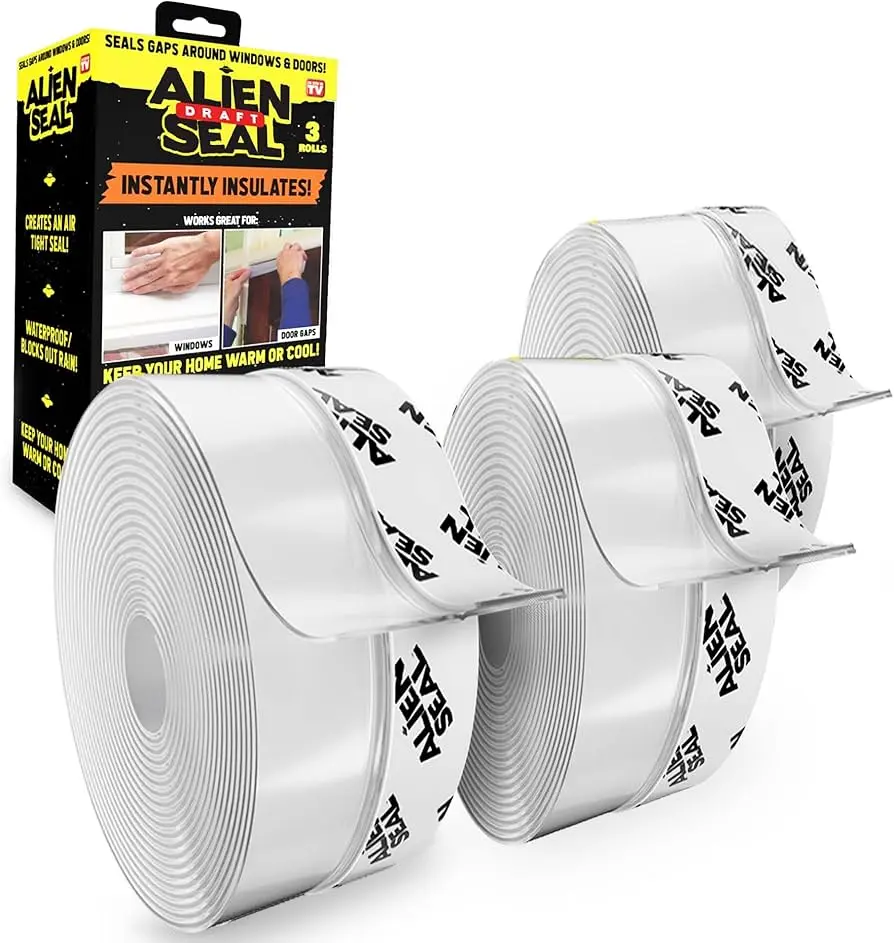
For anyone searching for "alien tape" or "door seal tape," this is the product that consistently tops recommendation lists. The Alien Draft Seal is a transparent silicone weather stripping tape that has become a go-to choice for sealing doors and windows across North America, and the reasons are clear—it delivers results.
The package includes three rolls totalling 49 feet (15 metres) of flexible, clear silicone tape that's 1.4 inches (3.6 cm) wide. The transparency is a major advantage because it virtually disappears on white door frames, window trim, and glass—no ugly black foam tape ruining the aesthetic. The silicone material stays flexible in extreme cold (rated down to -40°C) and heat (up to 200°C), so it won't crack, shrink, or lose adhesion through temperature swings like cheaper foam options.
Why It's the Top Pick
The Alien Draft Seal outperforms traditional foam weather stripping in three key areas. First, the silicone is remarkably durable—it compresses to fill gaps but springs back to its original shape, maintaining a tight seal season after season. Second, the adhesive backing is genuinely strong. Once pressed down on a clean, dry surface, it stays put through door slams, temperature changes, and daily wear. Third, it works on multiple surfaces: wood, metal, glass, tile, and plastic, making it versatile for doors, windows, shower enclosures, and even RV applications.
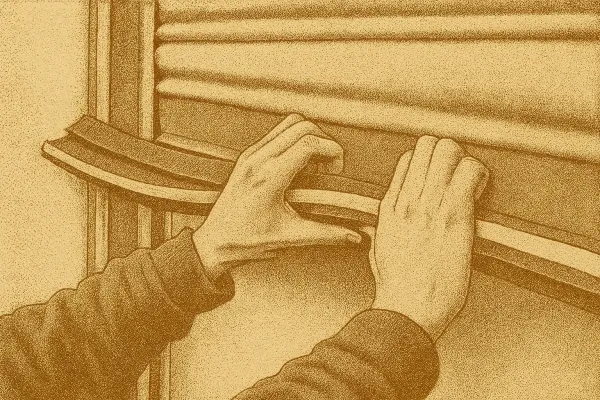
Installation takes about 5 minutes per door or window. Clean the surface with rubbing alcohol, let it dry, peel off the backing, and press the tape firmly into place along the door or window frame. For doors, apply it to the frame (not the door itself) where the door closes against it. For windows, run it along the sash where the window meets the frame. The silicone compresses when the door or window closes, creating an airtight seal that blocks drafts, dust, and noise.
Real-World Performance
Reports from users who installed the Alien Draft Seal on leaky patio doors during -20°C cold snaps show consistent results. Before installation, cold air rushing in along entire door frames and frost forming on the inside of glass are common complaints. After applying the tape, the draft disappears. Temperature measurements taken 3 feet from doors often show improvements of 2-3 degrees, which means furnaces don't have to work as hard—translating directly to lower heating bills.
The clear silicone truly is nearly invisible on white trim. From a few feet away, it's undetectable. This matters for renters worried about damage deposits, or for anyone who doesn't want their home to look wrapped in duct tape. The only time it's really noticeable is when running a finger along the frame and feeling the slight ridge.
Pros
- Crystal-clear silicone is nearly invisible on most trim and glass
- Extremely durable—stays flexible in extreme winter cold and summer heat
- Strong adhesive that won't peel off easily once installed
- 49 feet of tape covers multiple doors and windows in one purchase
- Blocks drafts, noise, dust, and insects effectively
- Works on wood, metal, glass, tile, and plastic surfaces
Cons
- More expensive than basic foam tape (but far more durable)
- Adhesive can be tricky to remove without leaving residue
- May not fill very large gaps (better for gaps under 1/4 inch)
Best For
- Anyone wanting the most effective, longest-lasting door and window seal
- Renters who need a discreet solution that won't damage paint or trim
- Homes with white or light-coloured trim where clear tape blends in
- Sealing patio doors, entry doors, bathroom doors, and windows
- Anyone tired of replacing foam tape every year
Best Budget Alternative: Frost King Foam Weather Stripping
Where to Buy:
🇨🇦 Amazon Canada
🇺🇸 Amazon USA
Also available at Home Depot, Lowe's and Canadian Tire
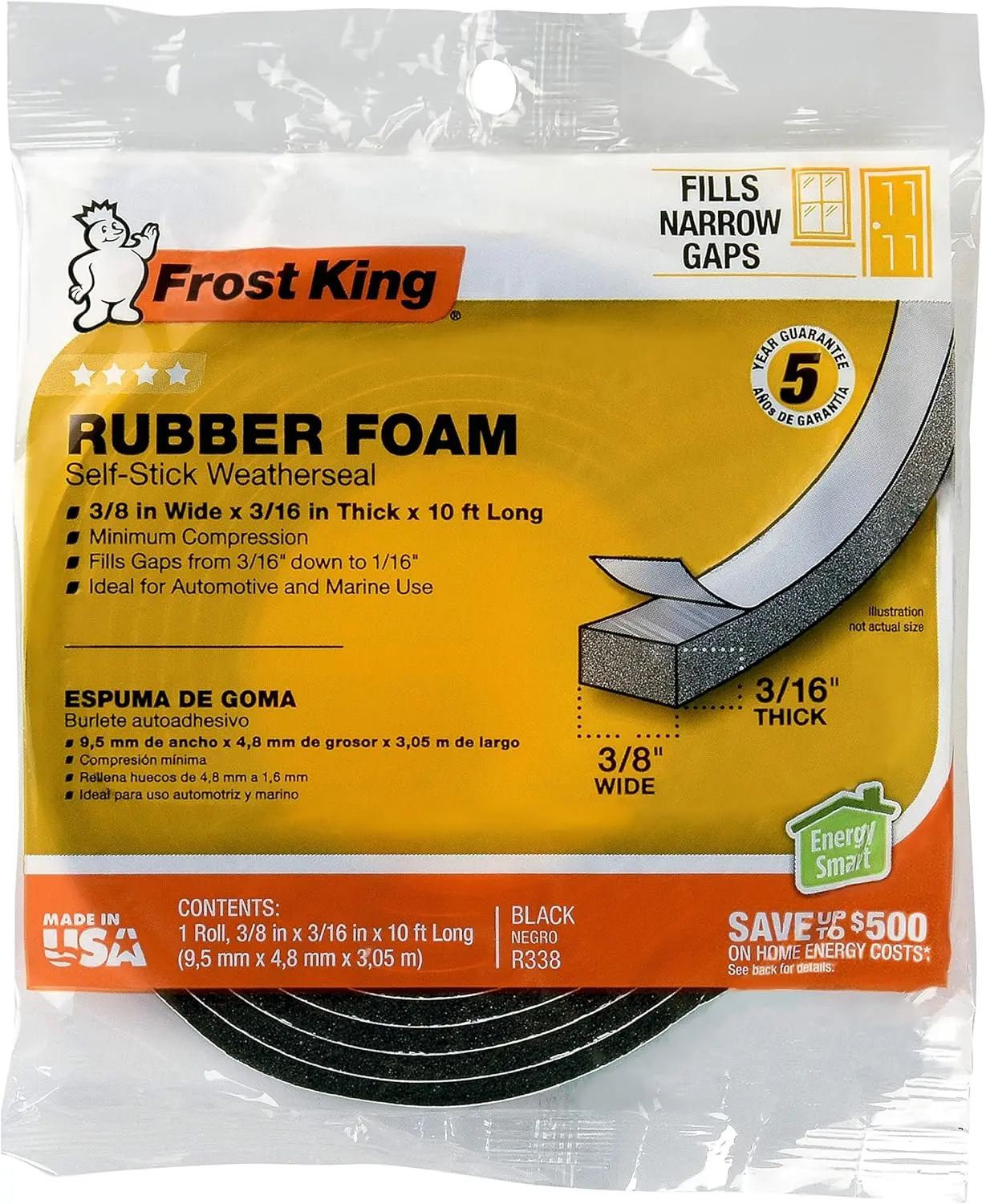
Not everyone wants to spend $18 on weather stripping, especially when sealing multiple doors and windows. The Frost King foam tape is the best budget option that still delivers results. For under $7, it provides 17 feet of self-adhesive foam tape that's effective for small to medium gaps (under 1/8 inch).
This is standard foam weather stripping—nothing fancy, but it does the job. The foam compresses when the door closes, filling the gap and blocking drafts. The adhesive backing sticks well to clean wood, metal, and painted surfaces. It's not as durable as the Alien silicone tape—expect to replace it every 1-2 years with heavy use—but at this price point, that's acceptable. Three to four interior doors can be sealed for the price of one roll of Alien tape.
When to Choose This Over Alien Draft Seal
Foam tape is the better choice for tight budgets, sealing interior doors where appearance matters less, or temporary living situations requiring just one winter's worth of coverage. It's also a good option for testing whether weather stripping helps before investing in premium silicone. Foam typically removes more cleanly than silicone when it's time to take it down.
Skip it for exterior doors exposed to weather, areas with large temperature swings, or anywhere a truly invisible seal is desired. The foam is noticeable on white trim, and it degrades faster in harsh conditions than the Alien Draft Seal.
Pros
- Very affordable—seal multiple doors for under $10
- Easy to cut to length with scissors
- Effective for small gaps on interior doors
- Simple peel-and-stick installation
- Available at most hardware stores
Cons
- Visible on light trim
- Foam compresses permanently over time and loses effectiveness
- Not as durable as silicone in extreme temperatures
- Needs replacement every 1-2 years with regular use
Best for Large Gaps: Suptikes Rubber D-Profile Weather Stripping
Where to Buy:
🇨🇦 Amazon Canada
🇺🇸 Amazon USA
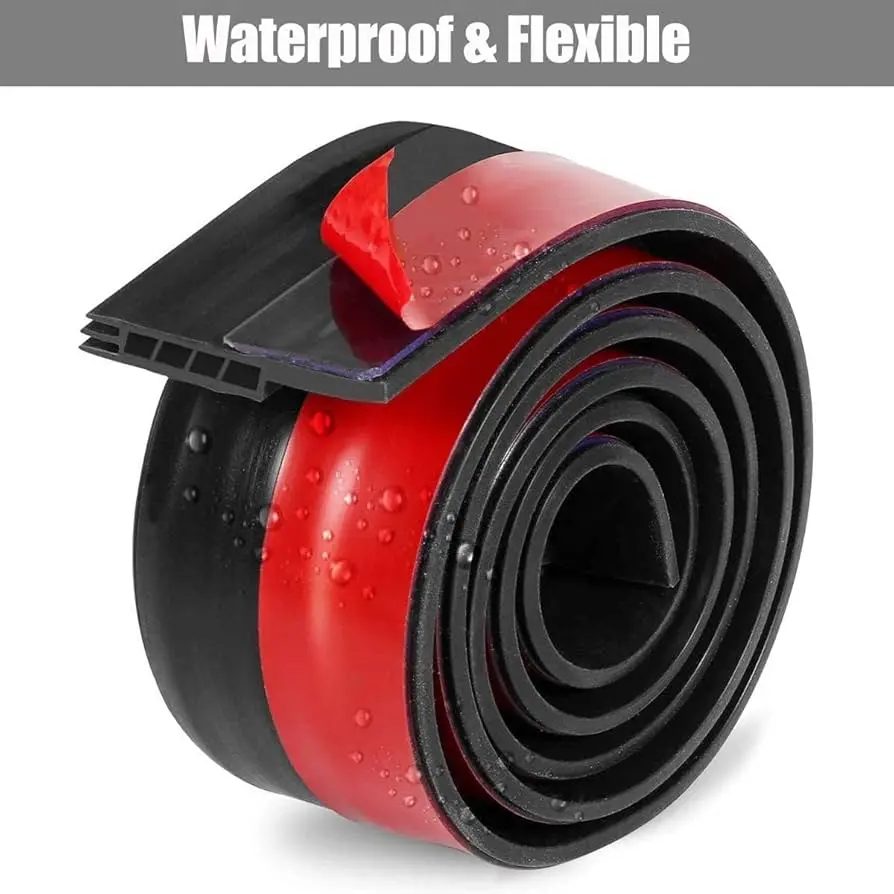
For old doors with 1/4 inch gaps, uneven door frames, or windows that rattle because the sash doesn't fit tight anymore, the Suptikes rubber D-profile weather stripping is built for these situations. The D-shaped cross-section (imagine a capital D lying on its side) is thicker and more robust than flat foam or thin silicone tape, allowing it to fill larger gaps while still compressing enough to let the door close properly.
The package includes two rolls totalling 26 feet (8 metres) of rubber stripping that's about 3/8 inch thick. The rubber is dense and durable—it won't flatten out like cheap foam, and it bounces back even after thousands of door closings. This is the solution for older homes with settling foundations, warped door frames, or anywhere the gap between door and frame is noticeably wide.
Installation and Performance
The D-profile design means one side is flat (with adhesive) and the other side is rounded. The flat side sticks to the door frame, and when the door closes, the rounded side compresses against the door edge, creating a seal. Because it's thicker than standard weather stripping, it accommodates uneven gaps—if one part of a door frame has a 1/8 inch gap and another part has a 1/4 inch gap, the rubber compresses more where needed and less where it doesn't.
This product is particularly popular in prairie provinces like Manitoba and Saskatchewan where older homes have foundation settling issues, and in humid coastal areas like BC where wood frames expand and contract seasonally. It's also excellent for sealing basement doors, garage doors, and workshop doors where gaps are typically larger.
Pros
- Handles gaps up to 1/4 inch that thinner tapes can't seal
- Durable rubber material that won't flatten permanently
- Works well on uneven or settling door frames
- Strong adhesive backing rated for temperatures down to -30°C
- Black rubber is professional-looking and less noticeable than foam on dark frames
Cons
- Too thick for small gaps under 1/8 inch
- More expensive than basic foam tape
- Can be tricky to cut cleanly (use sharp scissors or a utility knife)
- Black colour shows on white trim
Best Door Bottom Seal: Holikme Adhesive Door Sweep
Where to Buy:
🇨🇦 Amazon Canada (2-pack)
🇺🇸 Amazon USA (2-pack)
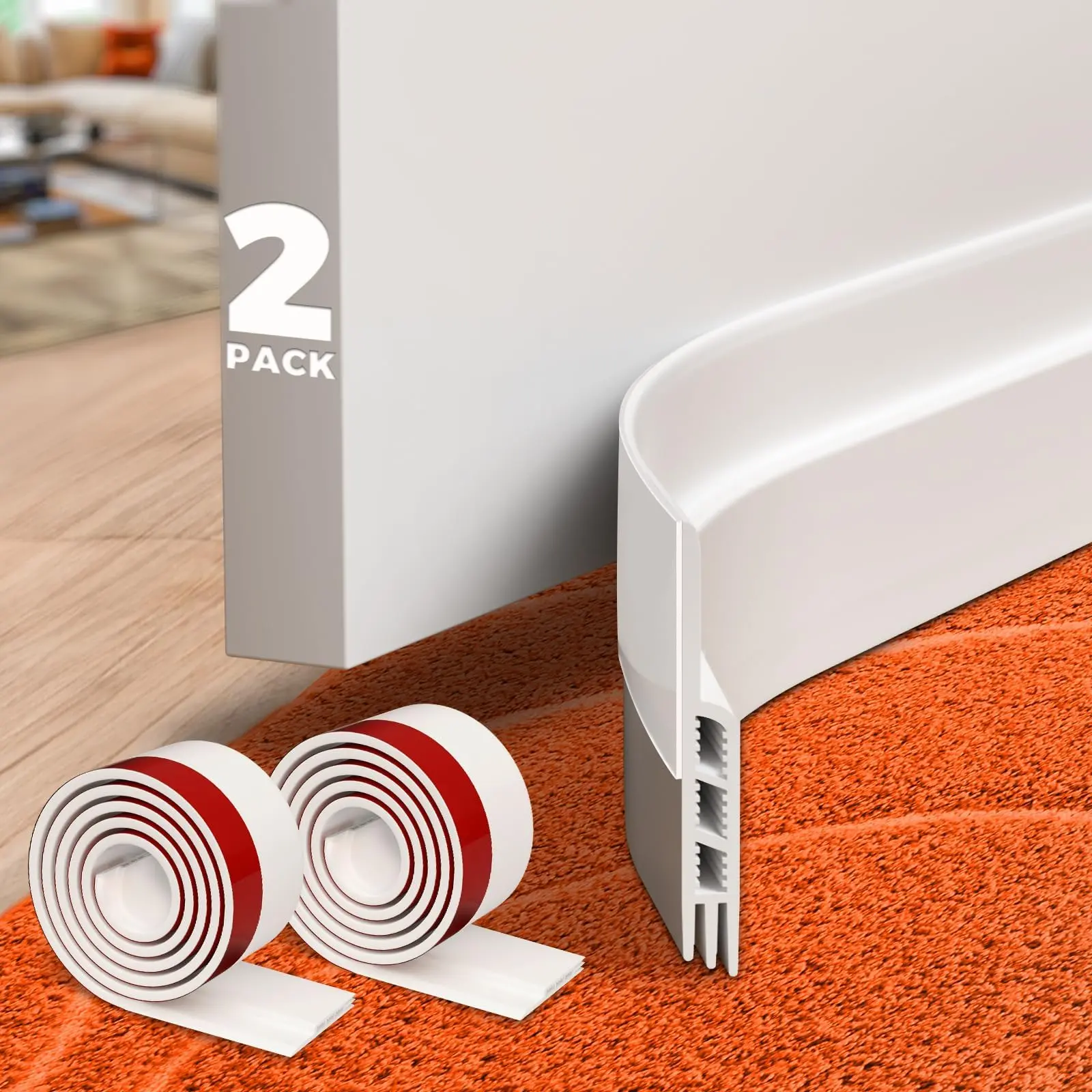
The gap under doors is often the biggest source of drafts, and regular weather stripping applied to the frame doesn't help with that. A door sweep is needed—a strip that attaches to the bottom edge of the door itself and seals against the floor or threshold when the door is closed.
The Holikme door sweep is a silicone strip (not foam) that's 2 inches wide and 37 inches long. The adhesive backing sticks to the bottom of the door, and the flexible silicone hangs down to touch the floor, blocking that infamous cold air snake that creeps under doors in winter. Two come in a pack, sufficient for a bedroom and bathroom, or a front door and back door.
Why Silicone Over Brush or Foam
Most budget door sweeps use brush bristles or foam, which wear out quickly from foot traffic and dragging across carpet or tile. Silicone is far more durable—it flexes when doors open and close but doesn't fray, crush, or wear thin. It also creates a better seal because silicone naturally conforms to uneven floors, whereas brush bristles might leave gaps on textured tile or warped hardwood.
The installation is straightforward: wipe the bottom of the door with rubbing alcohol, let it dry, peel off the adhesive backing, and press the sweep onto the door bottom. The key is getting it at the right height—the silicone should just brush the floor when the door is closed, not drag heavily (which makes the door hard to open) or leave a gap.
Pros
- Silicone is far more durable than foam or brush sweeps
- Blocks under-door drafts completely when installed correctly
- Strong adhesive rated for both indoor and outdoor use
- Stays flexible in extreme cold (won't crack like foam)
- Two-pack is great value for sealing multiple doors
- Also blocks dust, light, and noise from under doors
Cons
- Adhesive is very strong—difficult to reposition once stuck
- Can peel paint or finish when removed
- May not stick well to rough or unfinished wood
- Not suitable for very high-pile carpet (too much drag)
Best Renter-Friendly Option: Everlasting Comfort Under Door Draft Stopper
Where to Buy:
🇨🇦 Amazon Canada
🇺🇸 Amazon USA
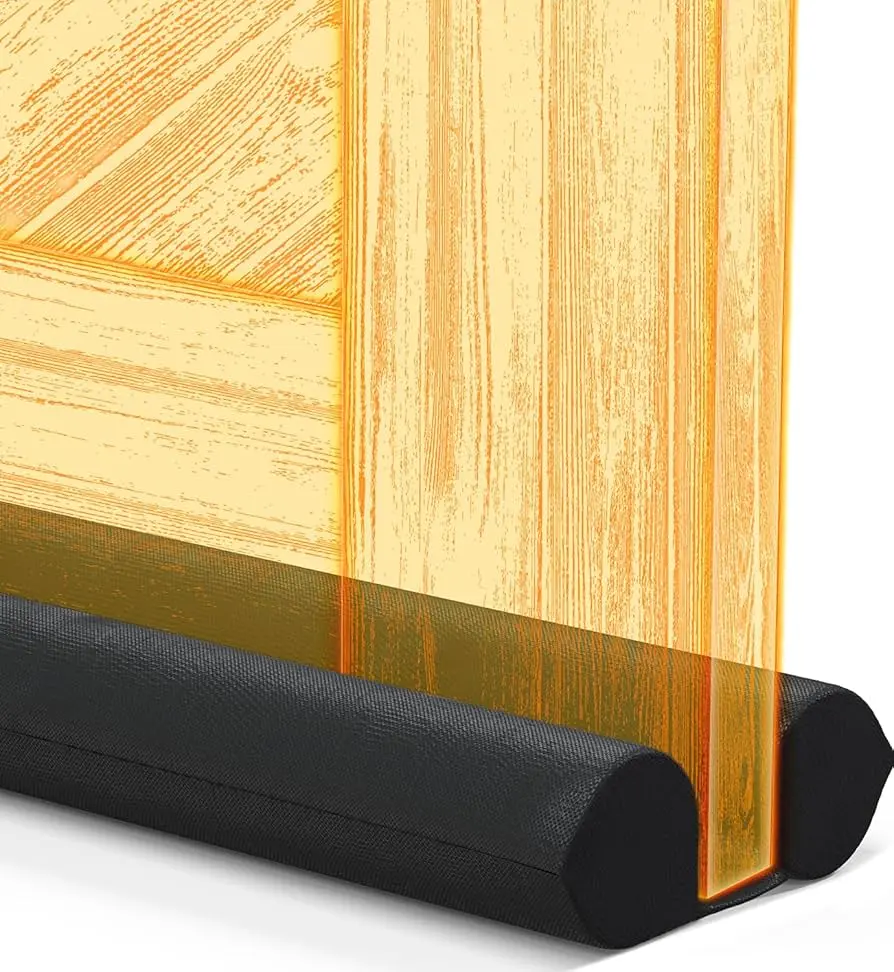
For renters who don't want to stick anything to doors or frames (damage deposit concerns), or anyone needing a portable solution that works on multiple doors, the Everlasting Comfort draft stopper is the answer. This is a dual-sided foam tube covered in polyester fabric that slides under the door from the inside—no adhesive, no installation, no commitment.
The stopper has two foam tubes (one for each side of the door) connected by a hinge, so it wraps under the door and seals the gap from both sides. It fits standard doors from 30 to 36 inches (76 to 91 cm) wide. When opening the door, simply step on it or kick it aside, then slide it back when closing the door. Those looking for more ways to maintain warmth without permanent modifications might also consider heated blankets as a supplementary solution.
When This Works Better Than Adhesive Solutions
This is the better choice for rental apartments or houses where modifying doors isn't allowed, frequent movers wanting to take their draft blocker with them, or temporary door blocking (like closing off unused rooms in winter to save heat). It's also excellent for bedroom doors at night—it blocks the draft, plus light and noise from the hallway, making for better sleep.
The trade-off is convenience. Adhesive door sweeps like the Holikme stay put once installed, but this needs repositioning every time someone opens the door. In a high-traffic area like a kitchen doorway, that gets annoying quickly. But in a bedroom or home office that only opens a few times a day, it's perfect.
Pros
- Zero installation—slides under door and works immediately
- Completely renter-friendly, no adhesive or damage
- Portable—take it when moving
- Blocks light and noise as well as drafts
- Machine washable cover (remove foam first)
- Works on carpet, tile, hardwood, and laminate
Cons
- More expensive than adhesive solutions
- Needs repositioning after opening the door
- Can get kicked aside by pets or children
- Doesn't work well on very uneven floors or very high thresholds
Best for Windows: Duck Brand Indoor Window Insulation Kit
Where to Buy:
🇨🇦 Amazon Canada
🇺🇸 Amazon USA
Also available at Home Depot, Lowe's and Walmart
Door seals are crucial, but windows are often the biggest heat loss culprit, especially with single-pane glass or old, drafty double-panes. Weather stripping around window frames helps, but for maximum insulation, nothing beats a window shrink film kit.
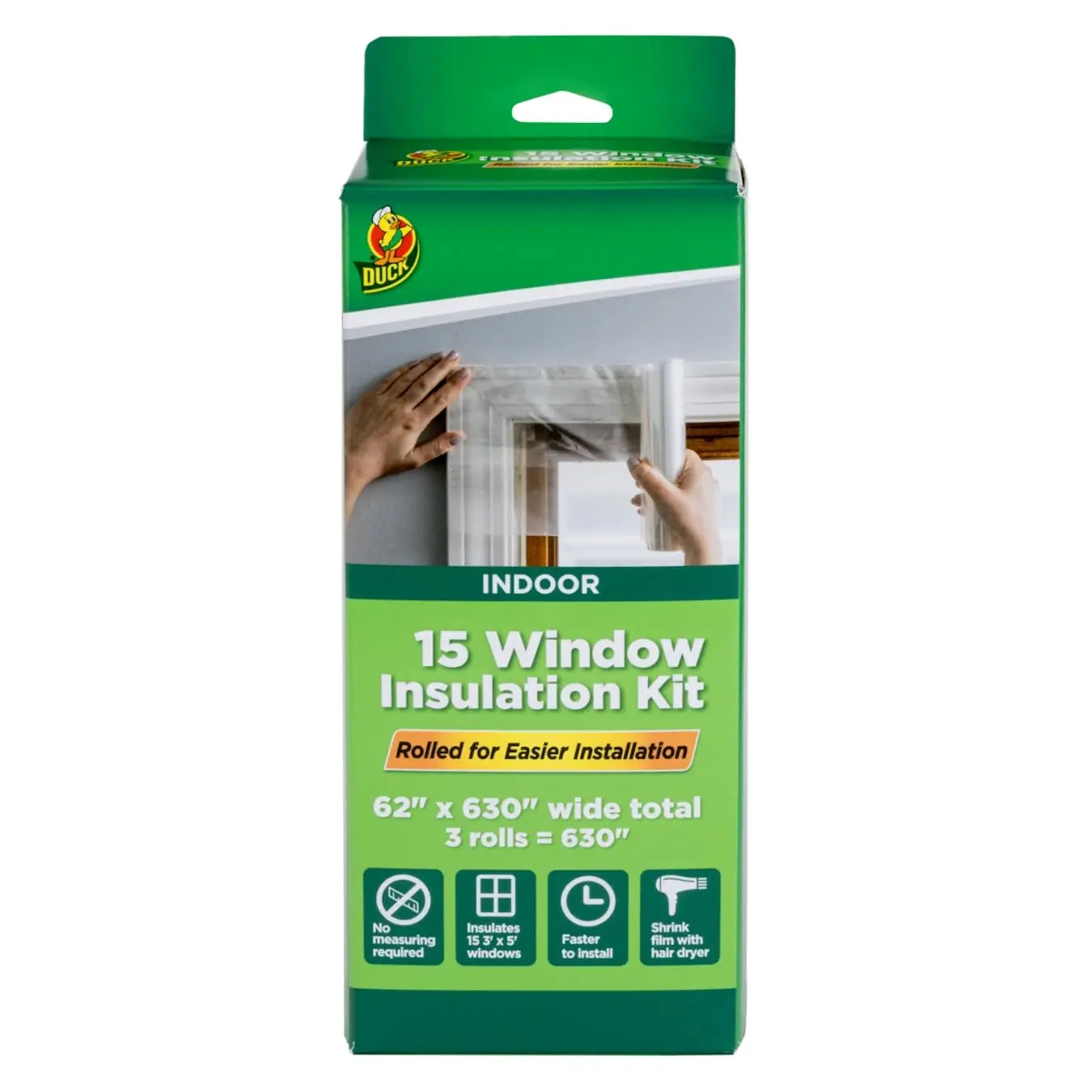
The Duck Brand window insulation kit includes clear plastic film and double-sided tape. The film tapes over the entire window frame (on the inside), then a hair dryer heat-shrinks the film until it's taut and nearly invisible. This creates a dead air space between the film and the glass, which acts as insulation. The trapped air is one of the best insulators that can be added to a window without replacing the glass itself.
How Much Difference Does It Make?
User reports from installations on north-facing bedroom windows during -30°C weeks show consistent patterns. Before the film, cold radiating off the glass from 2 feet away and frost forming on the inside corners of window frames every night are common. After installation with the Duck Brand kit, the cold radiation stops. The glass remains cold to touch, but the film (and the air gap behind it) prevents that cold from spreading into the room. Bedrooms become noticeably warmer, and furnaces run less.
The film is clear but not perfectly invisible—there's a slight haziness up close, like very clean cling wrap. From across the room, it's not noticeable. It stays up all winter and comes off in spring with a gentle pull, leaving minimal adhesive residue that wipes off with rubbing alcohol.
Installation Tips
Clean window frames thoroughly with rubbing alcohol before applying the tape. Any dust or grease will cause the tape to fail, and the film will sag. Apply the film with 1-2 inches of slack (don't pull it tight initially), then use a hair dryer on medium heat to shrink it. The film will tighten up dramatically as it heats, pulling out all the wrinkles. Don't overheat one spot or the film can tear—keep the hair dryer moving.
Pros
- Dramatically reduces heat loss through single-pane or drafty windows
- Creates an insulating air gap that's more effective than just sealing cracks
- Nearly invisible once heat-shrunk properly
- Lasts all winter and removes cleanly in spring
- One kit covers up to 5 large windows (depends on window size)
- Significantly cheaper than replacing windows
Cons
- Windows can't be opened once film is installed (seasonal commitment)
- Installation takes 15-20 minutes per window
- Visible haziness up close, though not from across the room
- Won't work on windows that need to open regularly
How to Choose the Right Weather Stripping for Your Needs
With so many options, how does one know which door seal tape or weather stripping to buy? Here's a quick decision framework based on specific situations:
Choose Alien Draft Seal Tape If:
- The best overall performance is desired and $18 is acceptable
- Sealing doors or windows with small to medium gaps (under 1/4 inch)
- A nearly invisible solution on light-coloured trim is needed
- Tired of replacing foam tape every year
- Renting and need something discreet but effective
Choose Frost King Foam Tape If:
- Budget is the #1 concern
- Sealing interior doors where appearance doesn't matter as much
- In a temporary living situation needing just one winter's worth
- Testing whether weather stripping helps before investing in premium options
Choose Suptikes Rubber Stripping If:
- Larger gaps (1/8 to 1/4 inch) exist that thinner tape can't handle
- Door frames are uneven or warped
- Living in an older home with settling foundation issues
- Sealing a basement door, garage door, or workshop door
Choose Holikme Door Sweep If:
- Under-door drafts are the main problem
- A permanent, adhesive solution for door bottoms is preferred
- Silicone durability over foam or brush options is desired
- Need to seal both interior and exterior door bottoms
Choose Everlasting Comfort Draft Stopper If:
- Renting and can't modify doors
- A portable solution that moves is desired
- Blocking bedroom doors at night and want noise/light blocking too
- Repositioning it after opening the door is acceptable
Choose Duck Window Kit If:
- Windows are the primary heat loss source
- Single-pane or very old double-pane glass exists
- Those windows don't need to open in winter
- Maximum insulation improvement for minimal cost is desired
Installation Tips That Actually Matter
The difference between weather stripping that works great and weather stripping that peels off in a week often comes down to installation. Here are the tips that actually make a difference:
Surface Prep is Everything
Adhesive weather stripping needs a clean, dry surface to stick properly. "Clean" doesn't mean "looks clean"—it means wiped down with rubbing alcohol and allowed to dry completely. Dust, oils from hands, old paint, and moisture will cause adhesive failure. Taking 5 minutes to prep the surface right means weather stripping will last years instead of weeks.
Measure Twice, Cut Once
Nothing is more frustrating than cutting seal tape too short and having a gap at the end. Measure the door or window frame before starting, add an inch for overlap at corners, and cut carefully with sharp scissors. For corners, cut at 45-degree angles for a clean mitre joint rather than just butting the ends together.
Apply Pressure for 30 Seconds
After sticking weather stripping in place, press it firmly for 30 seconds along its entire length. This activates the adhesive and ensures full contact. Many adhesives are pressure-activated and won't reach full strength until pressed hard for a bit.
Wait Before Closing the Door
Give adhesive weather stripping at least an hour to set before closing the door against it. If the door closes immediately, the seal might stick to the door edge instead of the frame. For heavy-duty adhesives like the Holikme sweep, wait 24 hours before subjecting it to full use for maximum bond strength.
Test for Gaps
After installation, close the door and look for light coming through gaps. Better yet, have someone stand outside with a torch at night whilst looking from inside in the dark—any light leaks show exactly where drafts are still getting through. Add extra strips or reposition as needed.
How Much Money Will This Actually Save?
Let's talk real numbers. How much will sealing doors and windows actually cut from heating bills?
According to Natural Resources Canada, air leaks can account for 25-30% of heat loss in a typical home. If monthly heating bills are $200 in winter, that's $50-60 leaking out through gaps. Sealing doors and windows won't capture all of that loss—maybe half—but even $25-30 per month over a 5-month winter means $125-150 in savings.
The products in this guide cost $7-30 each. Sealing three main exterior doors and the leakiest windows might cost $75-100 total. That pays for itself in the first winter and continues saving money every winter after. For broader strategies on maintaining wellbeing during long, cold winters, these physical comfort improvements make a real difference.
The energy savings are valuable, but the comfort improvement is immediate and dramatic. No more cold drafts along the floor, no more sitting close to the baseboard heater, no more sleeping under three blankets. Homes actually feel warm at 19-20°C instead of needing to crank it to 23°C to compensate for drafts.
Frequently Asked Questions
Q: What's the difference between door seal tape and weather stripping?
These terms are often used interchangeably, but technically "door seal tape" usually refers to adhesive strips stuck to door or window frames, whilst "weather stripping" is a broader term that includes tapes, sweeps, gaskets, and other products designed to seal gaps. In practice, when someone searches "door seal tape," they're usually looking for adhesive strips like the Alien Draft Seal or foam tape, whereas "weather stripping" might include door sweeps and threshold seals as well.
Q: Will door seal tape work on exterior doors?
Yes, but not all types. Silicone-based seals like the Alien Draft Seal and rubber stripping like the Suptikes product are rated for outdoor use and handle temperature extremes, moisture, and UV exposure. Foam tape is fine for interior doors but degrades faster on exterior doors exposed to weather. For under-door gaps on exterior doors, use a silicone sweep like the Holikme.
Q: How do I seal a door with a large gap at the bottom?
For gaps over 1/2 inch, regular weather stripping won't work well. Three options exist: install a door sweep (like the Holikme) that extends down to reach the floor, use a threshold seal (a raised strip that attaches to the floor under the door), or use an under-door draft stopper (like the Everlasting Comfort) which bridges large gaps by having foam on both sides of the door.
Q: Can I use Alien Draft Seal on windows?
Yes, absolutely. The Alien Draft Seal works excellently on windows. Apply it to the window sash where the window closes against the frame. For double-hung windows, apply it to the horizontal rail where the upper and lower sashes meet, and around the frame where the sashes close. For casement windows, apply it to the frame where the window presses when latched. The clear silicone is nearly invisible on window glass and white trim.
Q: How often do I need to replace door seal tape?
Foam tape: 1-2 years on interior doors, 6-12 months on exterior doors. Silicone tape (Alien): 3-5 years or longer with proper installation. Rubber stripping (Suptikes): 3-4 years. Door sweeps (Holikme): 2-3 years. The main factors affecting lifespan are exposure to weather, how often the door is used, and whether the surface was clean when installed.
Q: What's the best door seal for an apartment or rental?
For renters, prioritise removable solutions that won't damage doors or frames. The Everlasting Comfort under-door draft stopper is ideal—zero installation, completely non-damaging, and portable. For adhesive solutions, the Alien Draft Seal's clear silicone is discreet and comes off cleaner than foam tape.
Final Thoughts: Stop Paying to Heat the Outdoors
Every dollar spent heating a home should stay inside that home, not leak out through gaps under doors and around windows. Door seal tape and weather stripping are some of the highest-ROI home improvements possible—they're cheap, easy to install, and pay for themselves in lower heating bills within weeks.
For those wondering where to start, the Alien Draft Seal for doors and windows with small gaps, the Holikme door sweep for under-door drafts, and the Duck window kit for the coldest windows make a solid foundation. That $50-60 investment will make homes noticeably more comfortable and cut 10-20% off winter heating costs.
The best time to seal a home was last autumn before the cold hit. The second-best time is right now. Don't wait for next winter—every day delayed is literally money out the window (and under the door).