

Based on coverage from Global News and Castanet.
Researchers at UBC Okanagan have unveiled a promising new device designed to assist individuals suffering from hand tremors, a condition affecting millions globally. This innovative wearable brace aims to significantly reduce involuntary movements associated with neurological disorders like Parkinson's disease.
UBC Okanagan's Innovative Tremor-Reducing Device
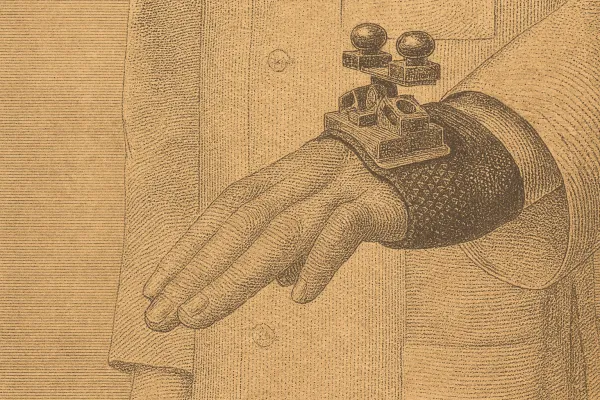
The team at the School of Engineering at UBC Okanagan has developed a lightweight hand brace that stands out from existing treatments. Unlike traditional methods that often require medication, surgery, or electronic devices, this new brace operates without batteries or motors. Instead, it uses a principle known as tuned mass damping. This technique involves magnets and springs working together to counteract the involuntary shaking by creating an opposing force.
Jared Borsheim, a first-year engineering graduate student involved in the project, describes the device as easy to use, requiring users to simply slide their hand into the brace. The simplicity and non-invasiveness of the device make it a potentially attractive option for those seeking alternatives to more conventional treatments.
Promising Results from Experimental Testing
Dr. Hadi Mohammadi, the engineering professor leading the project, highlights the significant impact the brace could have on patients' lives. Experimental testing has shown that the device can reduce tremors by up to 80 per cent. Mohammadi explains that the brace works by treating the tremor as a mechanical wave and generating a counter wave to cancel it out. This approach allows for voluntary movement to continue largely unhindered while dampening involuntary fluctuations.
The research, published in the Journal of Medical Engineering & Technology, has already demonstrated impressive results in laboratory settings. Tests on a mannequin arm showed a reduction in unidirectional tremors by 79 per cent and omnidirectional tremors by 73 per cent. However, further clinical trials involving human participants are necessary to confirm its effectiveness in real-world scenarios.
Path to Market and Future Developments
While the brace is nearing the final stages of development, it still requires more clinical trials and Health Canada approvals before it can be made available to the public. The team is optimistic that the device could reach consumers within the next year.
Charis Ondrik, another first-year graduate engineering student, expressed satisfaction with the project's progress, noting the potential impact on patients' lives. The device is designed to empower individuals by allowing them to regain some control over their movements, reducing their reliance on family support.
As the team at UBC Okanagan continues to refine the device, the potential for this innovative brace to improve the quality of life for those affected by hand tremors is significant. With further testing and regulatory approvals, this Canadian-made solution could soon offer a new level of independence and confidence for many.
Support Independent Canadian News Analysis
The Canada Report is supported by readers like you. If this article helped you understand what’s happening, you can support our work with a one-time tip.
Support The Canada Report